

Tag: photojournalismhub


Photojournalism Hub x Riverside Studios 25th September

25th September 2024, 7 pm
Riverside Studios
101 Queen Caroline Street
London W6 9BN
To join: HERE
We are thrilled to introduce award-winning photographers Anselm Ebulue and Mark Chapman at the In Focus event on the 25th of September. Both photographers bring a unique perspective to the photographic medium, transitioning from deeply personal, introspective, visceral stories on loss and mourning to powerful, straightforward documentary photography.
Anselm Ebulue is a documentary photographer based in London. He was a winner in the 2018 and 2020 Portrait of Britain award and was awarded a scholarship for the LCC x Magnum Documentary Photography Short Course. He has recently graduated from the MA Photojournalism and Documentary course at UAL. His work has been published in a variety of publications and clients include The Guardian and Observer, The Modern House, Time Out Magazine and Red Bull.
Anselm will be presenting ‘Whims of the Rye’ which is an ongoing documentary series exploring Ebulue’s personal relationship with Peckham, in south east London. Ebulue’s approach is visceral, making pictures of mundane spaces that resonate with his emotive reactions where memory and change intersect. The work expresses a sense of loss, mourning the transformation of an area in a state of rapid flux that is most clearly evidenced by its gentrification.
Ebulue is particularly interested in the relationship Black communities have with Peckham and through documentation, hopes to highlight the significance of the area to the Black diaspora. Whims of the Rye serves as both a celebration and preservation of the Black communities who have called Peckham home for many decades.
Mark Chapman is an award-winning photographer and film-maker based in Gateshead, North East England and London. His moving-image work has been screened internationally across narrative, documentary and experimental contexts.
Chapman’s debut photobook ‘God’s Promises Mean Everything’ explores isolation and displacement via a long-term study of a hostel resident from Teesside. The book was published by internationally renowned Dewi Lewis Publishing and launched during Photo London at Somerset House in May 2024.
Mark will be speaking about ‘God’s Promises Mean Everything’, an immersive long-term character portrait that extends over seven years, but limits its perspective to a single room. Haunted by the spectre of the family he lost, Derek, a hostel resident from Teesside lives without the social safety nets many of us take for granted. Mark was given unique access to document Derek’s life over several years and the project seeks to elevate a working class story that would otherwise go unacknowledged.
The images are an inseparable mix of the self-aware and spontaneous, candid and constructed. Seeking to explore the boundaries between filmmaking and photography practice, I want to tell urgent contemporary stories that are also rigorous aesthetic constructions. However, my aim is not straightforward realism, but rather to transform. My work moves between naturalism and expressiveness, altering the shape of the real world into something disturbing and mysterious.
This is now the third project in which Derek has appeared (across film and photography): his unifying presence creates a constellation of individual projects across disciplines that have now become an open-ended archive of experience. The Dewi Lewis Publishing website: https://www.dewilewis.com/products/gods-promises-mean-everything

Selene Magnolia Gatti: Mediterranean Christmas at the World’s Deadliest Sea Border

The history of migration across the Mediterranean goes back thousands of years. In recent years, tens of thousands of people have crossed the Mediterranean by boat from North Africa and Turkey to seek asylum or to migrate to Europe. The central Mediterranean Sea is the Europe’s deadliest frontier. In 2014 and 2015, about 320,000 people crossed the sea from North Africa to Europe, mainly ending up in Italy and Malta. The next year, the vast majority of migrants crossing to Europe did so in the Eastern Mediterranean, landing on Greek islands close to the Turkish coast. Altogether, however, the most dangerous route is still in the central Mediterranean where distances are longer and the weather more unpredictable.
In 2023 alone, at least 3,129 men, women and children trying to cross into Europe were reported missing or dead at sea – an average of 8 people per day. This makes 2023 the deadliest since 2017. While Libya remains the main point of departure, during 2023 the number of boats leaving from Tunisia have increased dramatically. The majority of migrants are being smuggled by human traffickers who charge thousands of euros for a vague promise to take migrants to the closest EU territory. Most of these migrants are subject to serious abuse prior to their departure and there’s no guarantees of ever making it to Europe.

Since 2014 around 30,000 migrants have been confirmed dead at sea but the reality is that many more attempt the crossing and lose their lives without ever being found. With legal pathways to gaining entry to the EU not an option for most refugees detained in or transiting through Libya or Tunisia, risking their lives at sea is the only way out the country.
The stories of those who make it to Europe mostly have a similar theme. In the places where they were waiting for passage to Europe they were often working for no money, being kidnapped for ransom and facing horrendous violence, murders, forced eviction, destruction of property, detention and arbitrary arrests, even if they were on their way back to their country of origin. Thousands of migrants find themselves in an impossible situation. Either they endure abuse in the transit countries or risk the journey to Europe.

‘Libya is so hard for us. We are stuck. We can’t move on and we can’t travel back where we came from. That’s why we take the risk and cross the sea. This journey is the journey of life or death. A journey of no return’ says one of the lucky ones who was rescued by a boat chartered by Sea Watch, an NGO that patrols the Mediterranean and assists migrant boats in distress.
The accounts of the ‘journey of life or death’ told by so many survivors are equally harrowing. Overcrowded and unseaworthy boats, no food or water for days, struggling people driven to despair by exhaustion, dehydration and extreme temperatures combine with the gravest discomfort in cramped decks, sea sickness, storms and other adverse weather to test even the strongest-willed. Most journeys cover a distance of between 400 and 500 km to Italian and Maltese shores. SOS calls are systematically bounced between various European authorities and coast guards often resulting in them being ignored or actioned after an agonising wait. Many boats capsize or sink before rescue craft make their way to the scene.


Through the most recent deals with Libya and Tunisia, the EU has increasingly trained, financed and strengthen the unofficial coast-guards of the northern African countries to reach as many boats as possible. The unscrupulous so-called Libyan coast guard and Tunisian authorities unlawfully bring the migrants back to the place of abuse they had escaped from. Libya, a country that has been in a state of de facto civil war since the overthrow of Muammar Gaddafi in 2011, is officially deemed ‘unsafe’ by international law, and interceptions violate the fundamental human right of non refoulement. Only 5% of the migrants leaving the North African coasts reach Italian or Maltese territory independently. The vast majority are rescued by the Italian coast guard and non- profits operating their own rescue missions to try and prevent more deaths.

‘They use Black people [people] to make money there. So if you don’t have the money you will have to die there or live in pain’ recalls another person rescued by a patrol boat in the Mediterranean. ‘The life in Libya is very tough, it’s by God’s grace that I’m still alive today. Because sometimes you go to work, you work with them and maybe they don’t want to pay you: they can take your life there.’
Non-governmental organisations carrying out search and rescue (SAR) operations have been a constant presence in the Mediterranean since 2014, seeking to fill the void left by the lack of state-organised SAR operations. The European Union, and especially Italy, are increasingly implementing stricter migration policies, essentially criminalising NGOs carrying out SAR activities.

After systematic cases of arbitrary seizures of the rescue ships and prosecution of crews, the recent practice of assigning distant ports for disembarkation, for example, keeps rescue ships away for days from the search and rescue area in the central Mediterranean where most of the emergencies occur. Despite the challenges, a number of non-profit organisations, such as Sea-Watch portrayed in this work, continue their tireless search and rescue activities at sea, in solidarity with the most criminalised: the people fleeing in search of a safer future.

Selene Magnolia Gatti is an Italian award-winning IFJ, NUJ freelance photojournalist based in Northern Italy and Berlin. Her work spans multiple issues, including questions of environmental and social justice, food production, migration, as well as gender related and contemporary political issues. She works on assignment and independent projects. Since 2023 she is represented and distributed by Panos Pictures. Raised in the Italian Dolomites, where she developed a strong bond to the natural environment, she has a background as emergency nurse, volunteer medical personnel in humanitarian crises, and academically qualified linguist, before shifting to and studying photojournalism. She has worked for a number of publications such as Der Spiegel, The Guardian, de Volkskrant, Il Reportage, Il Manifesto, amongst others. She also works for some of the leading environmental media agencies and a number of international no profits. Some of her photographic work on intensive food production is featured in the book ‘Hidden – Animals in the Anthropocene’, awarded ‘Photography Book of the Year’ by POY (2021). Her long-term project Zor, which portrays life in the biggest so-called ghetto in Europe, was exhibited at Perpignan’s Visa Pour L’Image photojournalism festival 2022. Her work was recognised by British Journal of Photography (2023), Siena Photography Awards (2022), London Photography Awards (2022), Prix de la Photographie Paris (2022), TIFA, MIFA, BIFA (2022), Kolga Tbilisi (2022), Global Billboard Project (2021), among other winning entries. She was selected for the Hamburg Portfolio Review in 2023. In 2023, she is the yearly Senior Fellow of WeAnimals Media Agency and a recipient of the European Environmental Journalism Fund grant for an ongoing project about the impact of factory farming.
Selene Magnolia Gatti
+4901634853065
selenemagnolia@protonmail.com
Instagram

BECOME A PJH MEMBER
Consider becoming a member of the Photojournalism Hub and receive the benefits of free access to events, members only events, Photojournalism Hub resources, premier editorial content, members photography exhibitions, discounts on our courses and training, whilst you will be supporting our work advocating, advancing social justice and human rights. Please consider supporting the Photojournalism Hub with a regular amount each month. Thank you. JOIN US HERE

Communities
The Photojournalism Hub is proud to present the latest edition of documentary photography and writings from our workshop participants. This issue focuses on the theme of ‘Communities’ in its broadest sense.
Our participants have captured stories using a social documentary approach, reported directly on community events, and explored the meaning of community from both personal and broader perspectives.
We feature stories of communities of skaters, Meanwhile Gardens and the fight for its survival, exploring graffiti as a community voice, local venues that forms hubs of community attraction and support, and much more. Additionally, we present stories that have been taken abroad as some participants find that communities is what they feel they belong to.
The photo stories in this edition demonstrate a strong level of ownership of the medium of photography and visual narrative. I am delighted to share them with you.
The Photojournalism Hub photography magazine is published by the Photojournalism Hub CIC and produced with participants of the documentary photography workshops. To learn more about the workshops please contact: admin@photojournalismhub.org
Support us
Help us to sustain our mission of photojournalism for action- change. Your donations and membership will help us transform lives through photography projects and education.

Featured Photographers
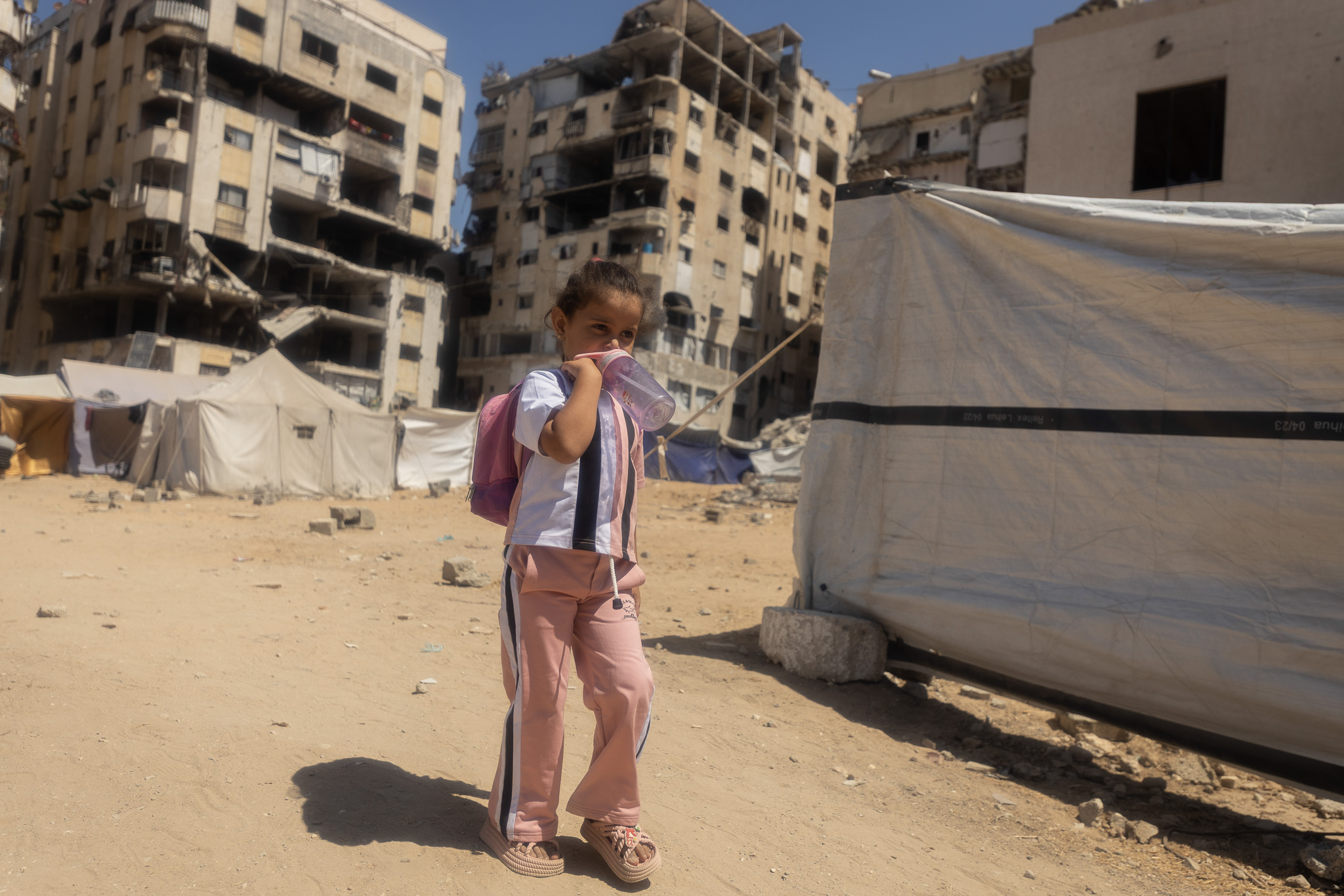
Between Gaza and Naples. A Childhood Story
Between Gaza and Naples. A […]
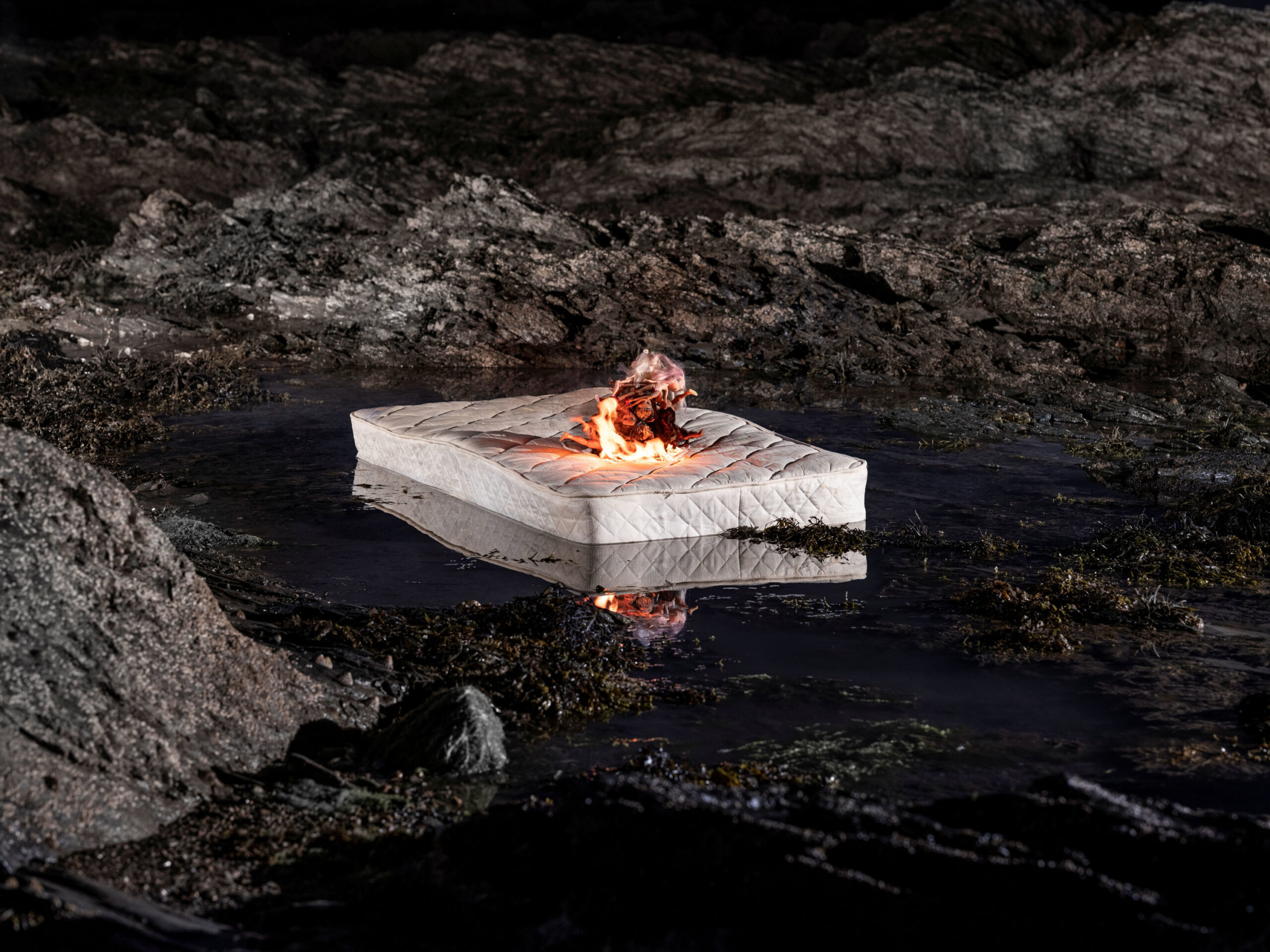
FIREHAWKS
Photography setting fire to childhood […]

Remembering Grenfell
The Ethiopian community mourn the […]

Bruno Saguer: Oxidorphines
We are delighted to present […]

Marcia Michael: The Family Album
Experience a powerful reimagining of […]

Selene Magnolia Gatti: Mediterranean Christmas at the World’s Deadliest Sea Border
December 2023, Mediterranean sea. People […]


Photojournalism Hub x Riverside Studios 03rd June

03rd June 2024, 7 pm
Riverside Studios
101 Queen Caroline Street
London W6 9BN
To join: HERE
We are honoured to present renowned and award winning photographers Mariusz Smiejek and Roland Ramanan to the In Focus event on the 3rd of June. Both photographers’ long term work are deeply rooted in the documentary photography tradition presenting social justice issues combined with strong visual narratives.
Mariusz Śmiejek is an independent photographer, visual storyteller, and educator with over 20 years of experience specializing in capturing the raw narratives of human and social conditions. Renowned for documenting a wide range of subjects including post-conflict communities, refugee crises, child slavery, human trafficking, and systemic abuse. Recipient of prestigious awards in international photography competitions, his work has been exhibited globally and featured in renowned publications globally including The New York Times, National Geographic, and the British Journal of Photography, among many others. www.mariuszsmiejek.com
Not Surrendering tells a visual story specifically about the struggle of loyalists to shape a distinct identity in post-conflict Northern Ireland. The documentary narrative introduces us to the daily lives of the local British working-class as well as members of its illegal paramilitary groups. Recognised as terrorist organizations until recently, these associations still carry weight, sow fear, and control Northern Ireland’s Ulster.
By focusing on the spaces which the book’s subjects inhabit, aspects of their daily lives, and the particularities of their neighbourhoods separated by ominous ‘peace walls,’ the photography brings to the fore the psychological state of siege which permeates working-class districts in Northern Ireland. The story also spotlights the atmosphere of despair which accompanies each successive generation – trapped socially and mentally in unprocessed traumas from which it cannot escape.
The aim of the Not Surrendering is to increase awareness and knowledge about processes of reconciliation in post-conflict societies that are divided territorially, politically, nationally, and religiously.
The story this volume highlights the difficulties NGO and other grassroots projects face while working with difficult youth from families deeply involved in the conflict.
The photographic images illustrate the tensions arising during celebrations of national identity, during which especially members of paramilitary groups openly fan the flames of hatred towards their neighbours. This directly affects the indoctrination of the youngest who actively participate in numerous events of this type, leading often to recruitment of young people into paramilitary associations or organised criminal groups.
This has been a personal, individual project from the very beginning to the end (2010-2020); partly supported at the very end stage by Artists Emergency Programme grant from the Arts Council of Northern Ireland and The National Lottery.
Roland Ramanan is a London based documentary photographer, born in 1966 with a background in music and education. He developed a passion for photography around 2010, initially through street photography. In 2012 he started a long term documentary project on a vulnerable group of people who gravitate towards a corner of east London called Gillett Square which is to be published by Dewi Lewis as the book “Dominoes”. This work has been featured in Vice magazine among others and has won various awards including being shortlisted for the Royal Photographic Society documentary awards 2023. In 2022 he was one of the finalists in the Portrait of Britain awards. Roland’s current project focuses on the London roller skate scene and its relationship to black culture. https://rolandramanan.com/
Dominoes is a unique and vibrant mosaic of the lives that float in and around a particular corner of Hackney in London’s East End. The book is populated by intimate pictures of people who have experienced addiction and pain as well as the deep joys of the community of which they are a part. Gillett Square was derelict and underdeveloped for years until, in the 1990s it became an experiment in urban regeneration. Like the Dominoes they play in the square, those lives are often precarious. For ten years from 2012 I was privileged to be allowed into the lives and homes of some of those I have met, to photograph their fights and struggles; their families and their lovers. Some of these people are now my friends and some are no longer with us. The participants I am closest to form the heart of the book and I’m sure that bond will continue. The work gives us honest glimpses into lives that we may often turn away from but always with a sense of hope. Dominoes touches on universal themes of love, death, hope and the evolution of urban communities.
BECOME A PJH MEMBER
Consider becoming a member of the Photojournalism Hub and receive the benefits of free access to events, resources, premier editorial content, portfolio reviews, and discounts on entry to our photography exhibitions, training and in our shop, whilst you will be supporting our work advocating, advancing social justice and human rights, amplifying community voices and enhance access to media to those facing social, economic and structural challenges. If there were ever a time to join us, it is now. Support the Photojournalism Hub from as little as £1 every month. If you can, please consider supporting us with a regular amount each month. Thank you. JOIN US HERE

Angelo Scelfo: The Strip

Italy: Marina di Acate – April 2024.
It has been called the ‘transformed belt’ and consists of a set of territories in southern Sicily where greenhouse farming activities have replaced the original crops. This transformation has led to the partial destruction of dune environments with the consequent pollution of the coast, the loss of biodiversity and a strong marginalisation of migrant communities. In fact, migrants are the majority of the workforce.
Those who work in the greenhouses are also hidden from the rest of the community as they live, in most cases, in rural settings and in employer-provided housing that is often shacks or company sheds. Throughout the area, entry into the labour market is a profoundly precarious process, marked by daily relationships and articulated solely in terms of exploitative relationships.

In recent decades, the number of greenhouses on the island has practically tripled. An example is the case of Santa Croce di Camerina (RG) in which has the highest percentage ratio of migrant population employed in agriculture and the municipality hosts half of the foreign population registered in the province. A simple estimate of the area covered by the greenhouses, which changes every year, shows an area of about 61 square kilometres surrounding the town.
The NGO Emergency operates in the entire area of the transformed belt. In addition to having a psychological support programme for the labourers, it is vital for those who otherwise would not have access to basic health services.
Finally, there is the environmental factor. Greenhouse agriculture requires an intensive use of pesticides and fertilisers that lead to a progressive loss of fertility and a high rate of soil consumption. Residues seem to be a determining factor in the pollution of water analysed by ISPRA. The institute calculates that at least 66,176 tonnes of fertilisers are released annually into the island’s agricultural systems. To this is added atmospheric pollution from dioxins due to the numerous fires lit at the end of the day to burn greenhouse maintenance waste often made of plastic.


Further links:
https://www.instagram.com/lo_scelf
https://www.facebook.com/paul.ferdinand.984
Bio
Angelo Scelfo, Italian photojournalist based in Bologna (Italy). Born in October 1979 in Bologna and grown up in Sicily. I studied philosophy at Università degli studi di Palermo and photography at ISFCI in Rome. Since 2005 I have been involved in photography, today I dedicate myself full time to photojournalism as a freelancer. I also like to write: the world of self-productions and fanzines has always been the most congenial to me. I live between Bologna, Rome and Palermo.
INSTAGRAM | FACEBOOK | TWITTER
+39 351 6151659

Photojournalism Hub x Riverside Studios 22nd April

22nd April 2024, 7 pm
Riverside Studios
101 Queen Caroline Street
London W6 9BN
To join: HERE
Photojournalism Hub and Riverside Studios are delighted to announce Sascha Klamp and Valeria Luongo as the featured photographers for ‘In Focus,’ a captivating series of photography events. This series present photographers whose work engage with social documentary photo storytelling, using the lens as a powerful tool for engagement, exploration and raising awareness. The event includes presentations, live interactive Q&As and a social.
Our guests of this edition have a background or work with an anthropological approach, using documentary photography to present stories that capture and explore community and individual memory, archives and rituals.
Valeria Luongo is an Italian documentary photographer, filmmaker, and anthropologist who’s based between Mexico and the UK. Her photographic approach is characterised by working on long term projects. Her work explores stories regarding gender, spirituality and rituals and has been featured in National Geographic, The Guardian, BBC, GEO Magazine and exhibited internationally.
“When Women Fly” is a project about a group of indigenous women from Cuetzalan del Progreso, Mexico, challenging gender roles by participating in a traditionally male ritual called Danza de los Voladores.
The ritual begins with a ceremonial dance. Five participants then ascend a 30-metre pole and jump off the top, head first, tied to ropes as they revolve around the pole towards the ground.
Historically, only men were allowed to partake in the ritual. However, a few women in Cuetzalan have recently joined the practice. The flying women defy traditional gender roles, symbolising transformation within their social context. Since 2022 I’ve been working alongside several women and girls who fly, documenting their everyday lives among their community.
Sascha Klamp is a British/German multi-award winning Documentary Filmmaker, Photo-documentary Journalist and Producer based in London, UK. He spent the majority of his career as an investor and entrepreneur which enabled him to travel across frontier and emerging markets. His photography practice centres on highlighting social impact and social justice affairs which is deeply rooted in his curiosity to learn more of the world around him. He tells frontline human and community stories based on empathy for the situation and the people involved. His thinking is informed by his interest in ethnology and social anthropology. Sascha exhibited a small selection of his The Art of Seeing, The Art of Remembering project in London in November 2022. His work was highly commended by the TPF Social Documentary Awards (Professional Category, Series) for his The Art of Seeing, The Art of Remembering work. Sascha completed his MA Photojournalism & Documentary Photography studies at the University of the Arts (Distinction), London. He also holds an MBA (Bayes Business School, London) and a Masters in Law, LLM (King’s College, London), and a BSc International Securities, Investment & Banking from Henley Business School (ICMA Centre). Filmography: “The Art of Seeing, The Art of Remembering” (2022), “The Blockade” (2023).
In a remote village in Kosovo, the past casts a long shadow. A single family of 2500 souls, now in its 13th generation, struggles to find its place in a changing world. Based on the Directors engagement with the community and renowned Community Archival work, KINSHIP tells the story of one family’s search for belonging.
We meet Rabit, the community’s Doctor, who recounts his heart-breaking tale of being ‘gifted’ to his uncle as a young boy. An all too common practice rooted in ancient customs. He grapples with the trauma of his stolen innocence. Meanwhile, Couple Mumin and Qamile Dermaku tell their moving story of how they met, the challenge he went through gifting a brother to a neighbour and his wife’s struggle to join the ‘jungle’ of a remote community. Expecting mother Florentina faces her own struggle. Pregnant with her first child, she dreams of a better future. But is that future possible here? Or must she also make the painful choice to leave everything she has ever known behind? The village Elders tell their stories aided by black-and-white photographs sourced from their family photo albums. They recount stories of happier times but also times of conflict and change. These memories contradict with the experience of the younger generations who cannot imagine a rural life with its limited resources and opportunities. Joining the diaspora is a potential way out to seek a fortune and future elsewhere. The cleric focuses on holding the community together. But his own story contradicts the ambitions of his community. The state looks away from the Kanun law/ tradition (Kanun of Lek Dukagjini). The honour code (vendetta in Italy) contradicts with the country’s ambition to become a full EU member. We engage with Child Psychologists who explain the harm done to children being gifted to family members and how that trauma informs their choices. Running away from it all sounds like a sound choice for many.
BECOME A PJH MEMBER
Consider becoming a member of the Photojournalism Hub and receive the benefits of free access to events, resources, premier editorial content, portfolio reviews, and discounts on entry to our photography exhibitions, training and in our shop, whilst you will be supporting our work advocating, advancing social justice and human rights, amplifying community voices and enhance access to media to those facing social, economic and structural challenges. If there were ever a time to join us, it is now. Support the Photojournalism Hub from as little as £1 every month. If you can, please consider supporting us with a regular amount each month. Thank you. JOIN US HERE

CAPTURING CRISIS
In this new edition of ‘Capturing Crisis’ youth photography magazine, we present a special edition on a local coffee shop to learn of its championing and success. We present a photo essay on the charity Nourish Hub documenting its cycle of sustainability, healthy and free food for all.
Our young team also reported on Free Palestine local and national responses. And we present evocative images at Meanwhile Gardens, a photo story on volunteers creating a community garden at Factory Quarter in west London.
In the last pages, we present the world of teenagers and friends, and a few portraits from a series of portraits of staff at The Globe, the dedicated Shakespeare Theatre in central London. We hope you enjoy Capturing Crisis youth magazine!
Capturing Crisis is a youth documentary and photojournalism magazine. All features and photographs are created by participants of ‘Stories, Reporting Mag, Photography Course’.
The magazine provides the opportunity for youths who never had access to, to share their photography and photo stories to a large audience. Photojournalism Hub is committed to providing opportunities and support to youths, enabling equality in accessing opportunities for further education and work in the photo industry.
Capturing Crisis magazine is a testament of the great work and inspiring contribution of our youths.
The project is supported by the NHS west London trust, Hammersmith and Fulham Council and Sobus.