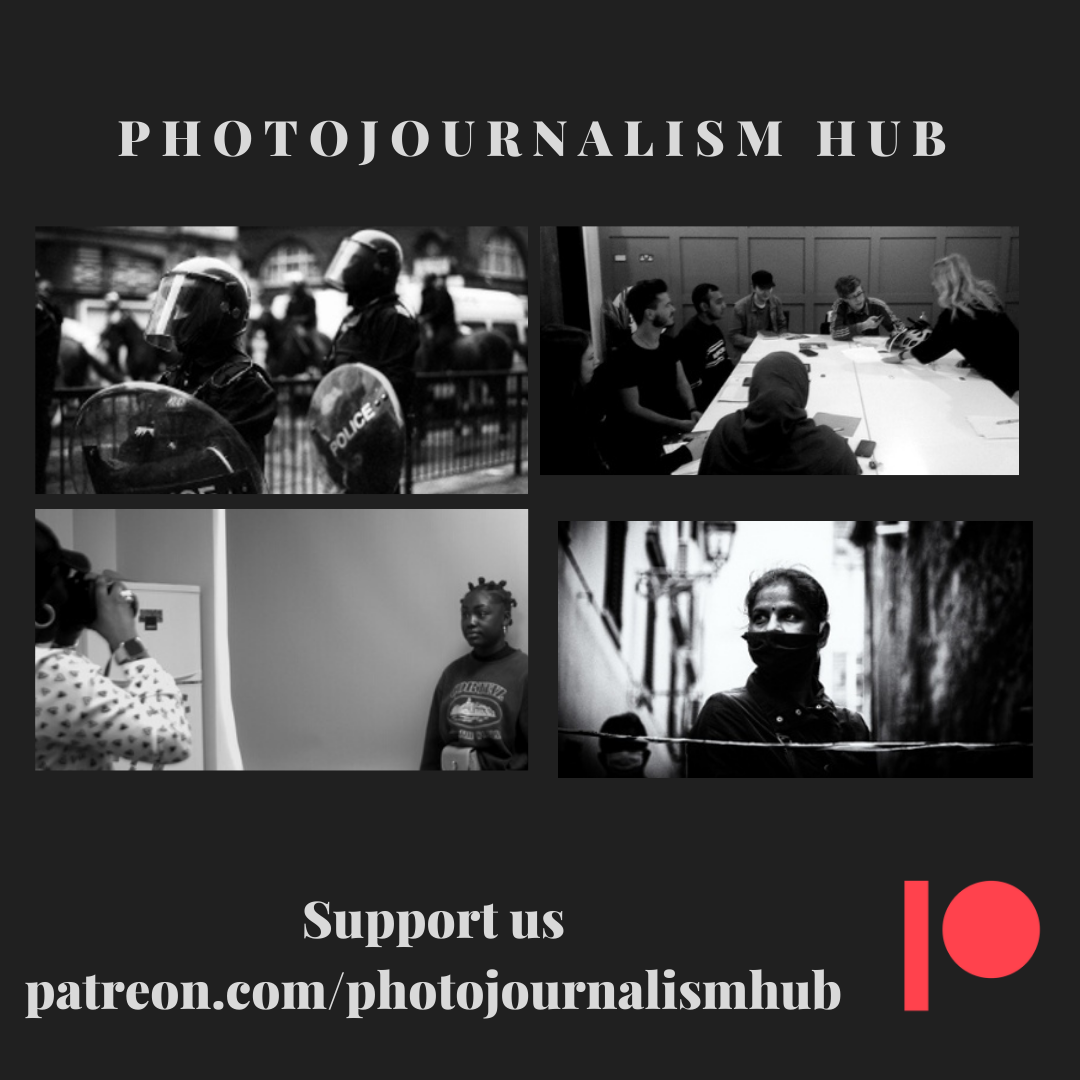
The Photojournalism Hub Calendar 2026 showcasing the incredible work of photojournalists and documentary photographers who have contributed to our mission.
This is the story of Mary, born on the 2nd of May 1994 in Mushalash, a small town in Lagos State in Nigeria. Her grandmother called her Tinuola, meaning “full of wealth” in the Yoruba language.
After a journey of more than 2.500 miles and endless time, which took her from Lagos to Benin City, then to Kano, Agadez in Niger and finally to the seaport city of Zuara in Libya, she arrived in Sicily in October 2014 and was transferred to Florence shortly afterwards. Following the end of one of the hospitality projects, she was transferred to Chivasso, a small town near Turin in 2017. Mary is a guest of the Mary Poppins association, a non-profit organisation that works with trafficked women.
The journey that carries me to Chivasso is much shorter, just a few minutes’ drive from Turin, where I live and work. I turn to Mary Poppins thanks to the advice of a friend who works for the cooperative as an operator. After a series of introductory interviews I met Mary in April 2018. Time carried me to become her friend. Her white brother. That is what she calls me now when she has to introduce me to her friends.
In 2019, Mary leaves the project and starts a new life. A life not easy and full of difficulties, made of mistakes, steps forward, passions, pain, humiliation. A long bureaucratic path to regularization on Italian ground and the search for a job.
This is a small story about the world around her and her incredible story.
It’s the story of our friendship.
Mary poses for a portrait I took of her at the Sacra di San Michele. A place I absolutely wanted her to see given its strong spirituality. Sant’Ambrogio di Susa, February 2020.
Mary and Kate are getting ready for another birthday party for a friend of theirs who is in the Mary Poppins shelter project. Chivasso, July 2018.
Mary and her roommates during a birthday party for their friend’s daughter. Chivasso, May 2018.
Mary shows signs of Libya on her body, of the exploitation she was subjected to and the voodoo ritual she underwent before leaving for Europe. She has a story no different from the thousands of other girls imprisoned in hot spots and forced into prostitution to pay off the debt contracted for the journey. A debt tha strangles them and forces them to be trafficked. San Sebastiano da Po, May 2018.
With the arrival of 2022, it has been more than two years since Mary has been undocumented, officially illegal. So, we decide it is time to begin to find a way out of this state of slumber and malaise. Through old contacts in the hospitality world and a lawyer friend, Mary is placed in a new project. Turin, March 2022.
Mary jealously preserves this photo. It’s the only photo of her mum with her and her brother. Her mother unfortunately died when she was still a child and Mary grew up with her grandmother in a house outside the city. Chivasso, May 2018.
The first trial period, the first activated internship is officially over. It lasted six months. The tailoring job currently is the only way she can afford money to help pay her rent and everything else. Turin, February 2023.
Mary poses for a portrait in the room of her host cohousing. Turin, March 2023.
Federico Tisa – BIO From architectural studies to photography the step is short
Federico Tisa Turin. April 1982. In 2013, following a trip to Perugia, Federico fell in love with documentary photography and totally dedicated himself to this new direction, which became totalizing and inspiring. In 2015 he obtained a master’s degree at the Italian Institute of Photography in Milan. He continued his studies in photojournalism in Rome, where he completed a master’s degree in photojournalism in 2017, focusing on the use of photography as a means of communication dedicated to an anthropological narrative and the development of medium- and long-term projects. His work explores the human condition from a broad perspective, with a focus on the social and cultural context. Since 2017, Federico has been working as an independent photographer and his work is published by national and international magazines.
It has been called the ‘transformed belt’ and consists of a set of territories in southern Sicily where greenhouse farming activities have replaced the original crops. This transformation has led to the partial destruction of dune environments with the consequent pollution of the coast, the loss of biodiversity and a strong marginalisation of migrant communities. In fact, migrants are the majority of the workforce.
Those who work in the greenhouses are also hidden from the rest of the community as they live, in most cases, in rural settings and in employer-provided housing that is often shacks or company sheds. Throughout the area, entry into the labour market is a profoundly precarious process, marked by daily relationships and articulated solely in terms of exploitative relationships.
In recent decades, the number of greenhouses on the island has practically tripled. An example is the case of Santa Croce di Camerina (RG) in which has the highest percentage ratio of migrant population employed in agriculture and the municipality hosts half of the foreign population registered in the province. A simple estimate of the area covered by the greenhouses, which changes every year, shows an area of about 61 square kilometres surrounding the town.
The NGO Emergency operates in the entire area of the transformed belt. In addition to having a psychological support programme for the labourers, it is vital for those who otherwise would not have access to basic health services.
Finally, there is the environmental factor. Greenhouse agriculture requires an intensive use of pesticides and fertilisers that lead to a progressive loss of fertility and a high rate of soil consumption. Residues seem to be a determining factor in the pollution of water analysed by ISPRA. The institute calculates that at least 66,176 tonnes of fertilisers are released annually into the island’s agricultural systems. To this is added atmospheric pollution from dioxins due to the numerous fires lit at the end of the day to burn greenhouse maintenance waste often made of plastic.
Bio Angelo Scelfo, Italian photojournalist based in Bologna (Italy). Born in October 1979 in Bologna and grown up in Sicily. I studied philosophy at Università degli studi di Palermo and photography at ISFCI in Rome. Since 2005 I have been involved in photography, today I dedicate myself full time to photojournalism as a freelancer. I also like to write: the world of self-productions and fanzines has always been the most congenial to me. I live between Bologna, Rome and Palermo.
After years of documenting the lives of individuals in insecure housing in London, a clear pattern emerges: a significant portion of this demographic comprises single mothers in either no or low-paid employment. This raises the pressing question: why are so many women and their children being failed so profoundly?
Melissa fled domestic violence, seeking refuge far from her former home. However, living in a shipping container with her three young children has aggravated her depression and anxiety, failing to provide the safety and comfort she desperately needs.
Since 2006, Francesca recounts: “I have been evicted 3 times. The first time, I was living in a private rented accommodation through Hammersmith and Fulham council. I was living with my two children and expecting a third child when I was handed over an eviction notice. I was made homeless and then the council offered me a home in East London. My only financial support was my work as a mobile hairdresser and my clients, my children’s school and everyone I could ask any support to, is living in West London, however I had no where to go. I checked the place and it was rife with crime and I did not want my children to live there so I refused. Then they looked for a place for me in the private rented sector. I was told to go to Ealing Housing Team and at first they sent me to Willesden Green to live in one room. We had to move out and had to rent a storage for all my things. I could not live there with the children going to school miles away. Everyday they were late at school and getting detention so I went back to the council and told them of these challenges and that was when I was allocated a container flat in Meath Court in west London.”
Francesca and her three young children have been evicted many times before being moved to Meath Court.
Francesca has 3 children who in their entire lives have only lived in temporary accommodations. Living in the shipping containers is very difficult with no space for any privacy. One of the children, who has asthma, sleeps in the kitchen. On the very first day they moved into the container, he had an asthmatic attack.
Families that live in the containers report their shock when they first arrived at the site, some at first not realising that the shipping containers were to become their homes.
“How could it be humanly possible that containers could be offered as homes?”
Nathalie Bangama, from Congo, with three children, moved to Meath Court after a fire destroyed her home last year. Despite living in Ealing for over 15 years, she was shocked to be offered shipping containers as housing instead of promised flats. She couldn’t believe it, knowing even in Congo, women and children aren’t housed this way.Nathalie is a single parent and she has had to strlie is a single parent and she has had to struggle with being on her own with three children and with the awful circumstances of her living conditions at Meath Court.
Similarly to many other women, Nathalie could not believe her eyes when she was given shipping containers as a home. “Even in Congo, we don’t house women and children in shipping containers.” Nathalie Bangama, originally from Congo, has three children 15 years old, 4 years old and 9 months and she ended up at Meath Court after her house caught fire. When she was given the keys to the container flat, she was crying and crying. She was told that within 6 months, she would be given a proper flat, but 2 years later she is still waiting.
Another resident of Meath Court is Melissa, a victim of domestic violence that was to be housed, in a different borough under the protection scheme. Melissa and her three small children were housed in the shipping containers. It has led her to depression and anxieties. Living in a container, it has not helped her to heal from her traumatic experiences. Instead, it is continuously making her feel unsafe and deeply anxious about herself and her children as the environment is characterized by rampant drug use, theft, and a pervasive sense of insecurity.
Like herself, many women in Meath Court have experienced sexual harassment and incidents of intimidation by drug users using the shipping containers as a space to deal, or to sleep for the night. “There was an incident of a woman falling down from the stairs and she is currently in coma – Melissa recounts. And my front door was tempered and broken, she continues- and I have taped it with a black bin bag and I am still waiting for someone from the council to come to repair it. I feel very anxious about my safety and that of my children.” Melissa’s broken door was not repaired at the time of my interview with her, weeks after the incident. Her rent is £370.55 + £19.05 service charge per week to live in shipping containers without a secure front door.
When Zara received the one-bedroom flat, she had just given birth. Her baby was only a week old. Given the top floor, she found walls riddled with bullet-like holes from the previous tenant’s mental health struggles. It was a frightening, lonely, and disheartening experience for a first-time mother.
When Zara was given the one bedroom flat she had just given birth. Her baby was one week old. She was given the last floor and one which all the walls were plastered by bullet like holes. She was told that the previous resident was suffering mental health issues and was using a hammer to bang the walls. “It felt scary, lonely and very disheartening for a first time mother who had just given birth.” Since living in the container, her wellbeing is deteriorating. She has pleaded to be allocated even in another one-bedroom in the containers, one without the violent markings on all the walls, but her pleas have gone unanswered.
Following the unanswered calls for the installment of security cameras or the placement of a security guard at Meath Court, women have resorted to create a WhatsApp group to ensure each other’s safety by sharing their whereabouts.
As policymakers and stakeholders seek solutions to London’s homelessness crisis, it is crucial to recognize and address the specific challenges faced by women. Failing to do so not only perpetuates the cycle of homelessness, but also deepens existing inequalities within society.
The question arises: why have so many women and their children been failed so miserably? Is it due to perceived vulnerability and social standing, perpetuating prejudices that hinder their access to decent living conditions?
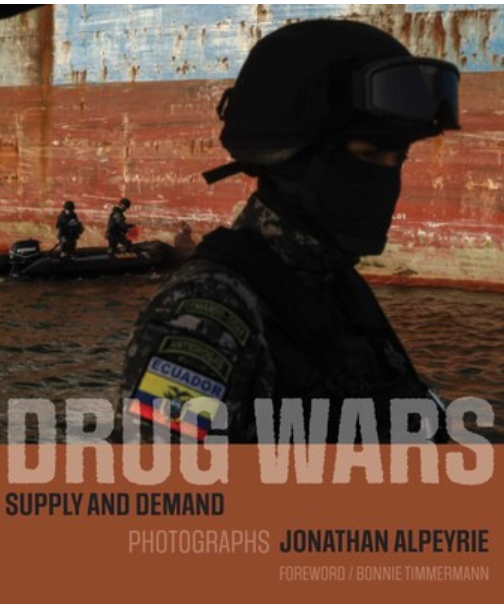
Jonathan Alpeyrie’s career spans over two decades, has brought him to 35 countries, and has covered 14 conflict zone assignments, in the Middle East and North Africa, the South Caucasus, Europe, North America, and Central Asia.
Born in Paris in 1979, Jonathan Alpeyrie moved to the United States in 1993. He graduated from the Lycée Français de New York in 1998 and went on to study medieval history at the University of Chicago, from which he graduated in 2003. Alpeyrie started his career shooting for local Chicago newspapers during his undergraduate years. He spent a month driving across the country to create my first photo essay like a professional. The essay focused on the remnant of the Communist era heavy industry. His driver at the time took him to all the major industrial sites, visiting abandoned factories and taking photographs of what once was. The decaying infrastructure was a fascinating reminder of a collapsed system barely 10 years prior.
After graduating from the University of Chicago in the spring of 2003, Jonathan was sent off to start his first dangerous photo essay which he hoped at the time would help me further to launch his career as a photojournalist. He spent over a month covering gang activity in the Congolese capital of Kinshasa. With the photo essay completed, he returned home and was quickly picked up by Getty images for the reportage section after it was noticed by some editors at the NYC office. 2004, was a watermark year for Jonathan as he started covering wars that very same year, from West Africa to the Caucasus, all for Getty Images.
I became a war photographer in order to immerse myself into historical situations to then report them back to the public. Cut and dry
Jonathan Alpeyrie
With almost a decade of experience behind him and half a dozen wars under my belt, Jonathan decided to go on his own and leave the agency business partially behind. Dealing directly with his own clients while still working for various photo agencies, he started covering wars in the Middle East and Central Asia, furthering his resume as a war photographer. A year later, the Arab Spring launched a new phase in his career. With the various conflicts erupting all around the Middle East, Syria started to attract war reporters from all over the world interested in covering this new hot conflict. After two trips to the war-torn country in 2012, Jonathan decided to return in 2013. It happened after he was kidnapped for three months by Islamic rebels.
By 2014, right after his release from Syria, he embarked on another voyage, this time into Slavic land to start covering the new hot war: Ukraine. After almost 14 months of coverage, he was injured during a gun battle in Mariupol.
That year his career took another turn as he almost permanently stopped working for agencies and focused on some of his big clients like Vanity Fair, CNN, and others, which, interestingly was a reminiscence of the earlier part of his career when he was solely doing photo essays and almost no news. He focused on personal projects which took him closer to a region a new from his previous travels like Mexico and Central America while keeping an eye on South America.
After a hiatus from covering wars, he went to Iraq to cover the battle of Mosul in 2017, and took another break from war in 2018, except for some time spent on the front lines in Ukraine, he decided to focus on the drug wars in South America, and more specifically in Brazil. Covid19 cut short his project and focused on the pandemic with an exception: the war in Armenia at the end of 2020.
The War in Ukraine since 2014 never ended but rather was in a state of hiatus with more upsurge of fighting once in a while. February 2022, with the Russian invasion of its neighbor, has had everyone surprised by the scale of its aggression. When the fighting erupted he was in Mexico shooting a story on the drug war, as soon as his assignment ended he departed for the front in Central Ukraine. He spent a month covering the war between the two Slavic nations. Once more, he was drawn back into a conflict.
Alpeyrie has worked as a freelancer for various publications and websites, such as the Sunday Times, Le Figaro Magazine, ELLE, American Photo, GLAMOUR, Aftenposten, Le Monde, & bbc among others. Jonathan Alpeyrie’s career spans over a decade, and has brought him to over 36 countries, covered 14 conflict zones assignments, in the Middle East and North Africa, the South Caucasus, Europe, North America and Central Asia. A future photography book about wwii. Veterans with verve editions are in the works.
Alpeyrie has been published in magazines such as: Paris Match, aftenposten, times (Europe), Newsweek, Wine Spectator, Boston Globe, glamour, bbc, vsd, Le Monde, newsweek, Popular Photography, Vanity Fair, La Stampa, cnn, and Bild Zeit, elle Magazine, Der Spiegel, Le Figaro, marie claire, The Guardian, The Atlantic.
Jonathan Alpeyrie www.jonathanalpeyrie.com E: peloponnessian@hotmail.com @Jonalpeyrie
BECOME A PJH MEMBER
Consider becoming a member of the Photojournalism Hub and receive the benefits of free access to events, Photojournalism Hub resources, premier editorial content, portfolio reviews, photography exhibitions, discounts on our courses and training, whilst you will be supporting our work advocating, advancing social justice and human rights. If there were ever a time to join us, it is now. Support the Photojournalism Hub from as little as £1 every month. If you can, please consider supporting us with a regular amount each month. Thank you. JOIN US HERE
Hundreds protest outside Home Office against Rwanda deportation plan and they shout ‘Refugees are welcome here’. This is the message voiced by demonstrators opposing the government policies which sees deportation of some refugees to Rwanda.
The government claims the policy, belonging to the Nationality and Borders Act, of removing migrants who arrive in the UK illegally will deter people from making dangerous channel crossings, however many including bishops of England have condemned the move as being uncompassionate and intricately divisive and racist.
Among the huge numbers of protesters, many MPs voiced their anger at the policy, including former Labour leader Jeremy Corbyn who spoke out: “It is an utter disgrace that the British government and other European governments are proposing to outsource refugee processing as Australia. We have to say, ‘Absolutely no!”
Campaign groups such as Care4Calais , activists from various campaign groups gave speeches and chanted: “say it loud, say it clear, refugees are welcome here”.
The effort of these groups, PCS Union and Stand Up to Racism organisations, and all those that have opposed the policy, have mounted a forceful legal challenge to stop the first scheduled flight to Rwanda as part of the offshore detention plan. Solidarity is uniting people as more protests are organised to challenge the government plans.
BECOME A PJH MEMBER Consider becoming a member of the Photojournalism Hub and receive the benefits of free access to events, PJHub resources, editorial content, annual portfolio reviews and photography exhibitions, and lots more! whilst supporting our work advocating, advancing social justice and human rights through engaging the public to independent photojournalism and documentary photography. How to join HERE
Paris, 2 June 2020: The demonstration in support of the family of Adama Traoré, a black boy died on 19 July 2016 in the barracks of the “gendarmerie” of Persan ( Val d’Oise), collected more than 20,000 people gathered outside the Court of Paris despite the prohibition of the (Prefecture). An appeal to demonstrate was launched in the previous days by the committee “Justice pour Adama” denouncing a “rejection of justice” in a case that became for its defenders the symbol of the fight against police violence: in four years, three medical investigations have denied the responsibilities of the “gendarmes”, then that a private one ordered by the family of Adama states the opposite.
The demonstration follows the spear in recent days of the hashtag #Moiaussijaipeurdevantlapolice and the assassination of the afro-American George Floyd’s in the US. Assa Traoré, sister of Adama, in an interview with Franceinfo said that the death of Floyd recalls that of Adama relaunching this link in another statement issued to BFMTV where he declares that “the indignation denounced in the United States is the same as what happens in France.” After a peaceful start marked by choruses and applause, the police used force to disperse the huge crowd, causing rioting for hours in the area surrounding the Tribunal.
During the Italian National Republic Day on the 2nd June, a group of women stands in solidarity with the Black Lives Matter movement. The name of the group ‘Rete Donne Migranti e Figlie’, literally translating’ Network of Migrant women and daughters’ organised the protest in a significative place; by the monument that remembers the Italian deaths in the Battle of Dogali in 1887 during the Italian colonisation of Eritrea. On the group’s facebook page the aims of the protest are as follow: ‘June 2nd, 2020- there is nothing to praise. Today we celebrate the Italian Republic based on class, gender and race discrimination and on migrants’ exploitation and criminalization.’