
Photography in Public Space
By Cinzia D’Ambrosi
Editor’s note: This article was first published in What the Records Show, Cinzia D’Ambrosi’s independent publication dedicated to investigative reporting, documentary photography, interviews and cultural analysis. It is republished here for the Photojournalism Hub community.
Festival La Gacilly Baden Photo transforms the city into an open-air gallery. Through a conversation with festival co-founder Lois Lammerhuber, Cinzia D’Ambrosi reflects on the power of photography to shape public space, provoke dialogue and deepen our understanding of the world.
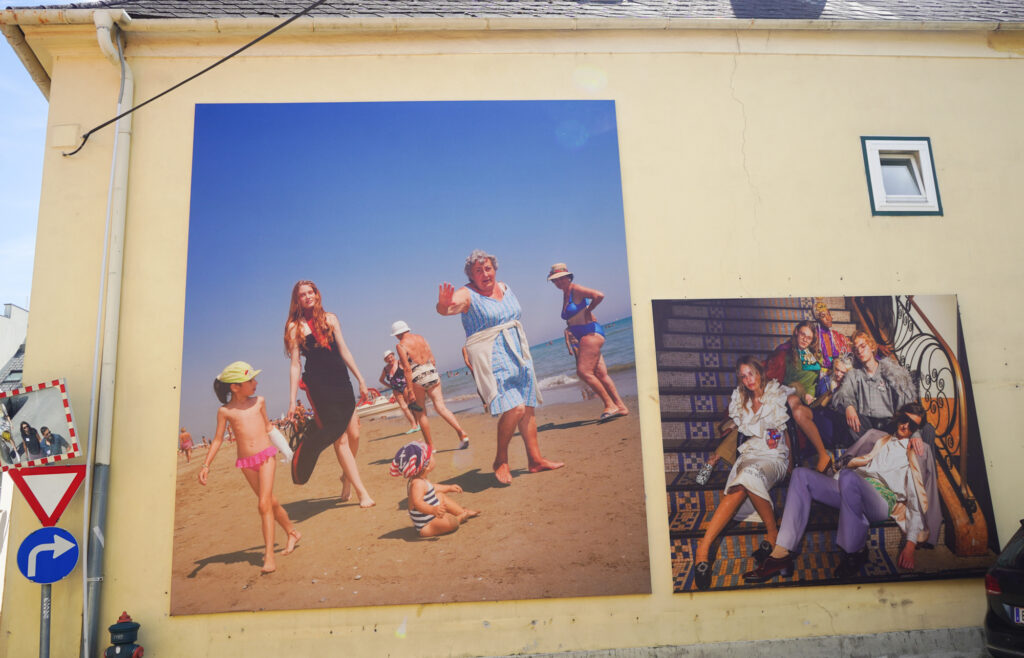
There is something quietly radical about encountering serious photography outdoors. Not in a gallery, not behind a ticket desk, but embedded in the life of a city in its gardens, along its streets, in spaces where people are simply getting on with their day. That is the founding proposition of Festival La Gacilly-Baden Photo in Baden, Austria, and walking through it for the first time, I understood why it matters. You do not have to seek the work out. You do not have to know who Don McCullin is, or what Martin Parr has spent his life looking at. You can be passing through, your eye caught by something large and arresting on a wall, and suddenly you are inside a conversation you did not know you were joining. Whether you are conscious of it or not, you are living it. And that, in a time when photography is everywhere and yet somehow increasingly invisible, feels like something very meaningful.
This year’s edition, So British!, takes its title from its celebration of British photography, but the festival’s ambition reaches well beyond national identity. Rather than presenting a fixed definition of what British photography is, the programme reveals a shared sensibility that has shaped generations of photographers. It is a tradition rooted in close observation rather than spectacle, attentive to the lives of ordinary people and often characterised by irony, humour and an acute awareness of class and social difference. British documentary photography has long balanced empathy with restraint, allowing images to ask difficult questions without prescribing easy answers.
That sensibility runs through the work on display. Martin Parr’s satirical observations expose the absurdities of consumer culture with wit and precision. Mike Taylor’s photographs of football supporters capture not only collective passion but also rituals of belonging and identity. Mary Turner has spent decades documenting communities too often overlooked, while Sir Don McCullin’s uncompromising images remain among the defining works of humanitarian photojournalism. Their practices differ profoundly, yet together they demonstrate a tradition less concerned with isolated moments than with a sustained engagement with society and the people who inhabit it
I asked Lammerhuber when and how a theme gets decided. “The themes for each edition are collectively decided,” he told me. “Our team of three people may champion different topics, and while everyone has their own opinions, there is general agreement on the importance of each subject. Rarely much argument, as all subjects ultimately are important.”
Sitting with Lois, it became clear that the theme functions as a framework rather than a constraint. Each photographer retains a distinct voice within it. The programme moves in a deliberate, linear way through what Lois describes as the human condition: beginning with people, suffering and endurance, before expanding outward into environment, science and technology. It is a journey that asks something of the viewer at every stage.
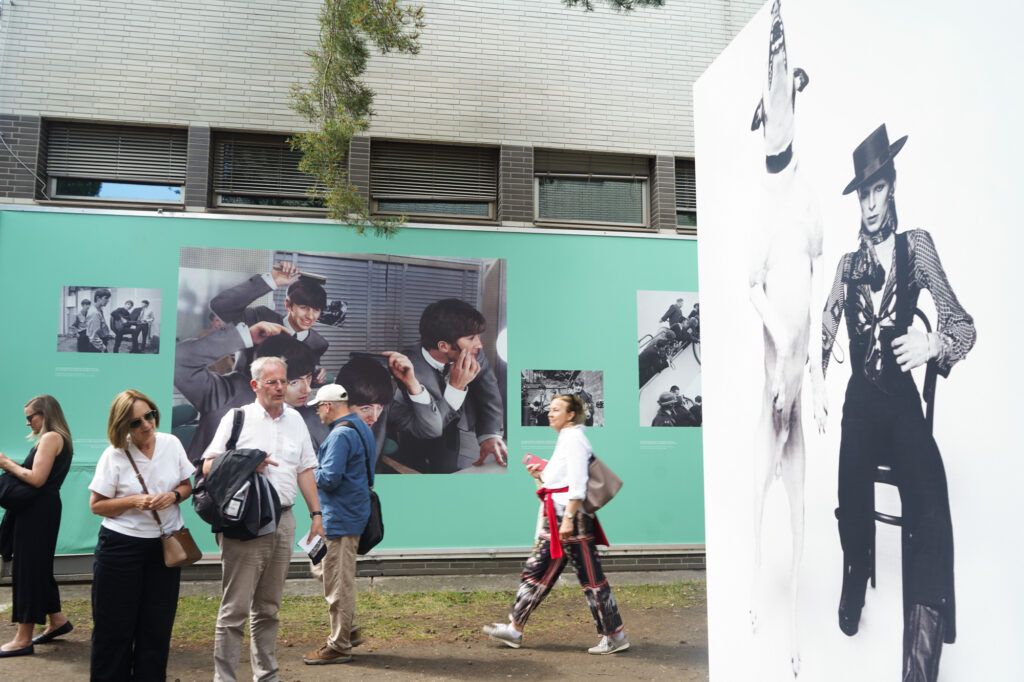
As I thought back to my walk through the festival the previous day, I realised how carefully the exhibitions had been sequenced. One seemed to lead naturally into the next, creating a sense of progression rather than interruption.
That sense of connection extended beyond the exhibition route itself. During the opening week, Lammerhuber brings together 152 photographers, curators and journalists in the same hotel, many of whom have never met before. Conversations continue over breakfast, during walks through the exhibitions and long into the evening. Photography becomes not only something displayed but something shared. As one of this year’s guests, I found those exchanges almost as memorable as the exhibitions themselves.
As our conversation continued, I asked Lois how he would know the festival had achieved its purpose. He answered that it was important to him that visitors leave with an open question, something unresolved, provoked by the work they had seen. Not conclusions, but thought.
The festival embraces an impressive breadth of practice, from classic photojournalism and documentary photography to street photography, portraiture and long-term visual storytelling. Yet despite the diversity of approaches, the exhibitions remain connected by a shared concern with the urgent issues shaping contemporary society.
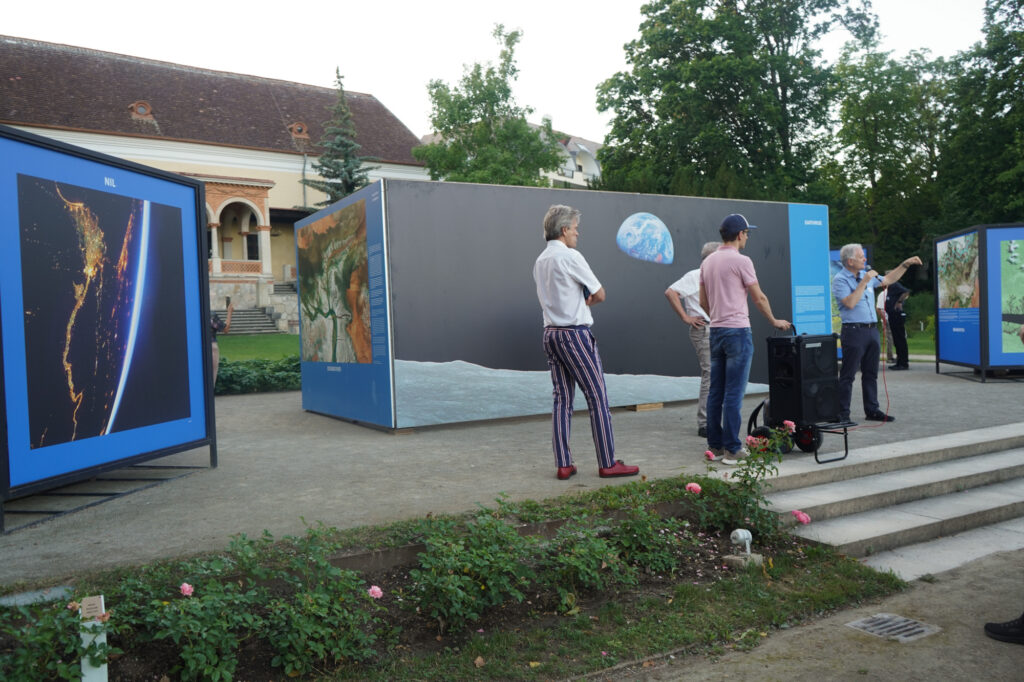
In the Science and Technology section, the festival’s invitation to reflect becomes something closer to humility. Curated by river scientist Helmut Habersack and photographer-publisher Lois Lammerhuber, Water is Life brings together scientific knowledge and documentary photography to confront one of the defining challenges of our time: the future of the planet’s freshwater. Among the works, a NASA photograph of Earth seen from space arrests the viewer. The image is iconic, yet encountered here outdoors, woven into the rhythm of everyday life, it acquires a renewed power. Our planet appears as a small, fragile sphere suspended in the vastness of space, reminding us of both its beauty and its vulnerability.
From this perspective, statistics become profoundly human. More than eight billion people depend on a finite supply of freshwater, while climate change, pollution and unsustainable consumption place increasing pressure on rivers, lakes and aquifers across the world. The exhibition succeeds because it transforms these abstract realities into something deeply felt. Rather than overwhelming visitors with data, it invites them to pause, to reconsider their place within the natural world, and to recognise that water is not merely a resource but the foundation of all life. By combining scientific insight with the emotional power of photography, Habersack’s contribution demonstrates how visual storytelling can bridge the gap between knowledge and understanding. It reminds us that protecting water is not simply an environmental imperative, it is a profoundly human one.
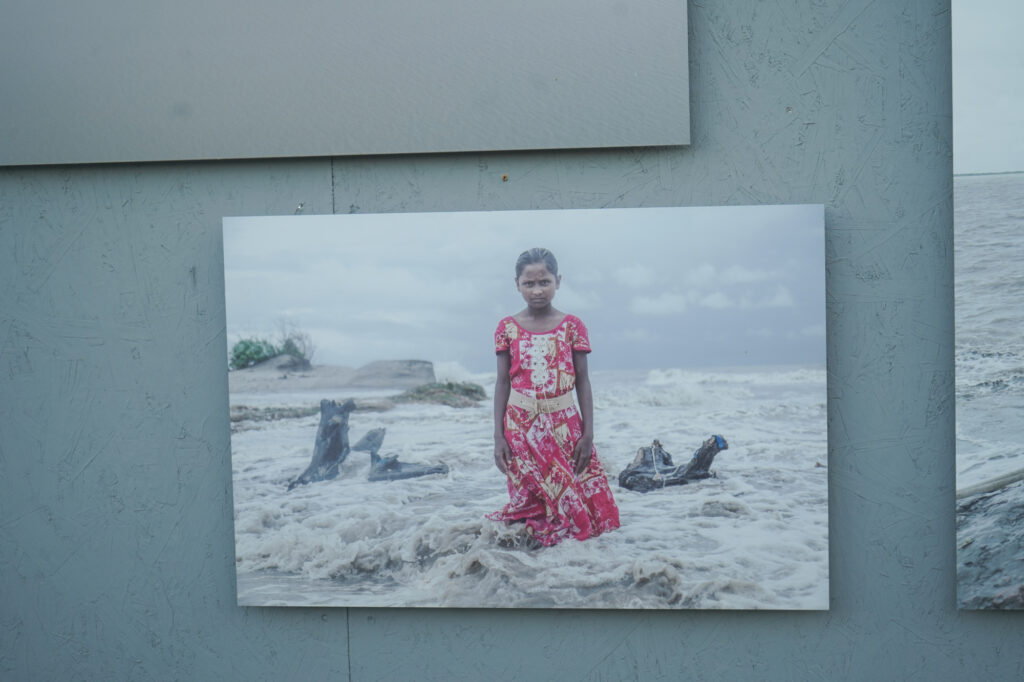
Among the photographers Lammerhuber spoke about with particular feeling was Supratim Bhattacharjee a photographer based in India whose work documents the devastating impact of climate change on his country and its people. What makes his practice distinct is not only the quality of the documentation, but the position from which it is made. He is not an outside witness.
He is living the reality he photographs. As rising seas and extreme weather reshape parts of India, the burden falls hardest on those with the least. His photographs are not made from outside the story but from within it.
A photographer who is both witness and subject does not resolve those questions. But they shift something fundamental.
The image carries a different kind of authority, not the authority of distance, but of proximity. Of skin in the game.
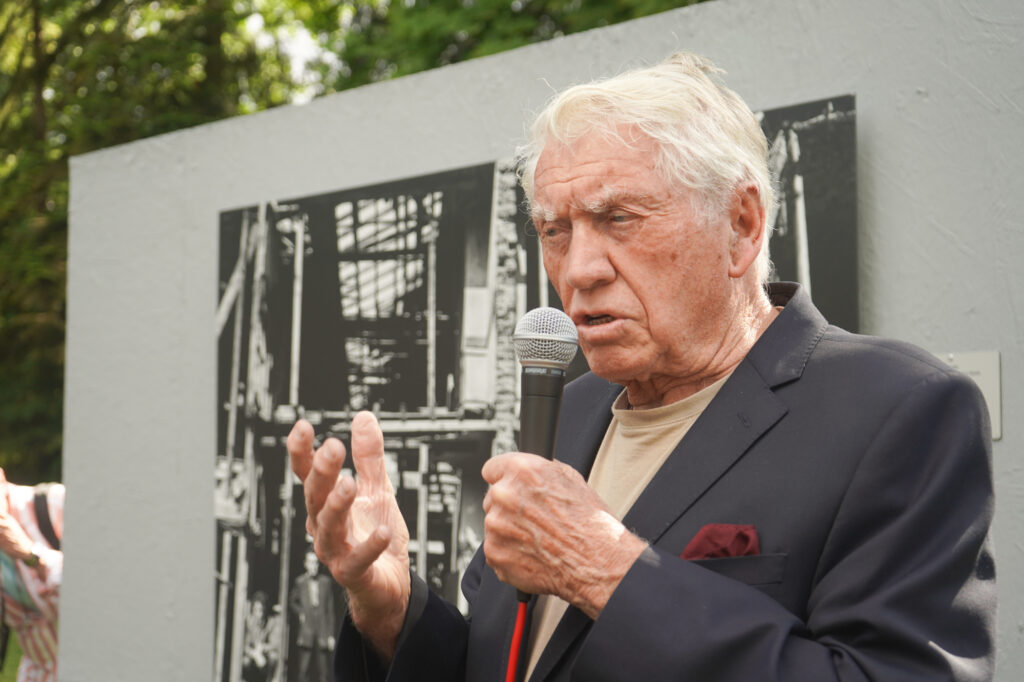
Those same questions about witnessing, responsibility and representation echoed throughout the festival. They returned with particular force when Sir Don McCullin spoke about his own work. Much of documentary photography’s history has been built on the figure of the outsider, the photographer travelling to witness suffering that is not their own. That tradition has produced extraordinary work, but it has also raised difficult questions about representation, power and authorship. Hearing him speak at the festival’s Opening was one of those rare moments that lingers long after the event has ended. Sir McCullin spoke with remarkable candour about the photographs on display, revisiting the circumstances in which they were made and the difficult decisions that shaped them. He reflected on the lengths he went to in order to bear witness, placing himself amid war, famine and unimaginable suffering and questioned whether those choices had always been right.
Was it right to photograph people at the very limits of human suffering? Was it ethical to go as far as he did in pursuit of an image? Did the act of witnessing justify the personal and moral cost?
These are not questions Sir McCullin has answered and left behind. They remain unresolved, continuing to accompany him decades after the photographs were made. That ethical restlessness, the willingness to question his own actions rather than defend them, is what distinguishes him not only as one of the world’s greatest photojournalists, but as one of its deepest moral voices. Standing before those photographs while listening to the man who made them was a powerful reminder of what photography, at its most committed, can carry. Each image is more than a document of history. It is also a record of the choices, risks and responsibilities behind its making. Sir McCullin’s reflections revealed that the greatest burden is not simply witnessing suffering, but living with the knowledge of what it took to bear witness.
Lammerhuber sees no contradiction in presenting McCullin’s moral questioning alongside contemporary photographers confronting climate change, migration and environmental collapse. For him, the festival is not organised around aesthetics alone, but around photography’s capacity to deepen public understanding of the human condition. The conversations that begin in front of a photograph continue long after visitors have walked away. In an age saturated with images, that ability to make us stop, look and think may be photography’s greatest achievement.
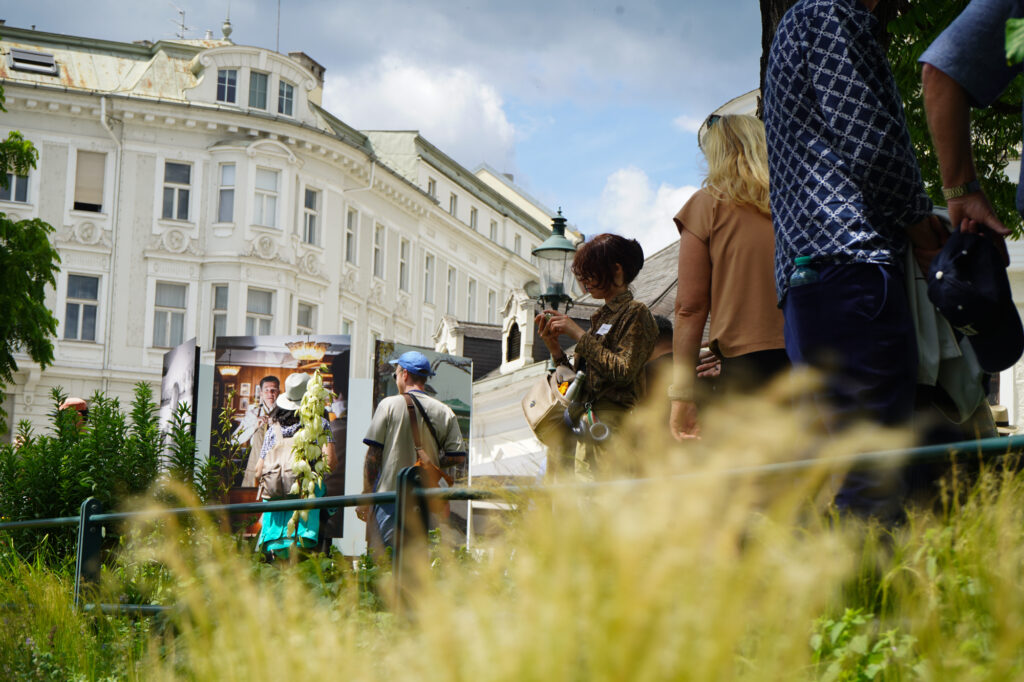
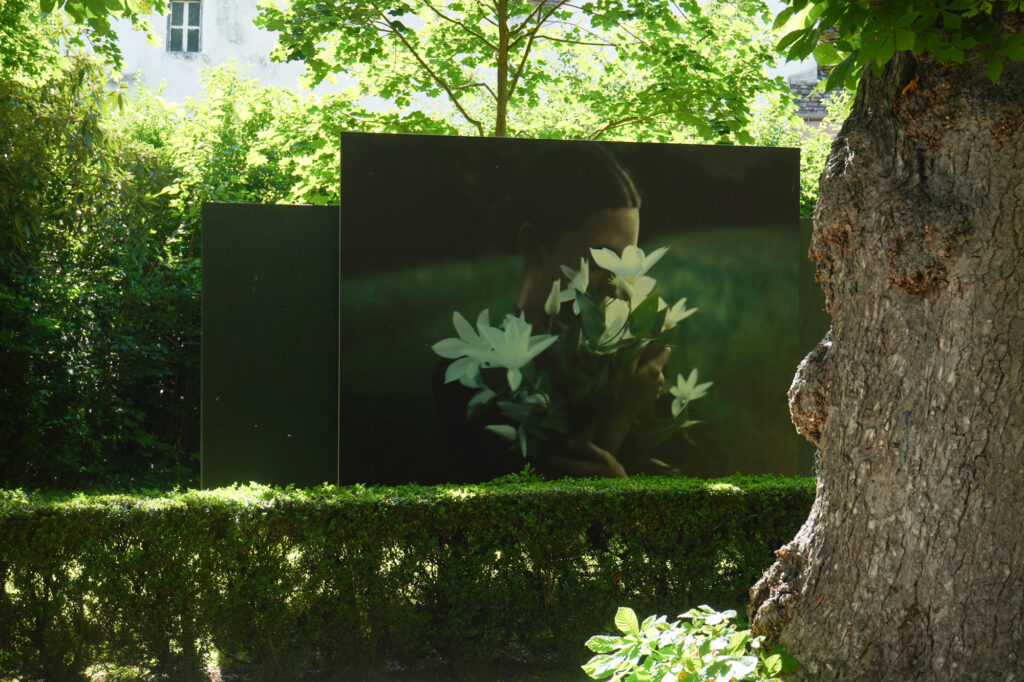
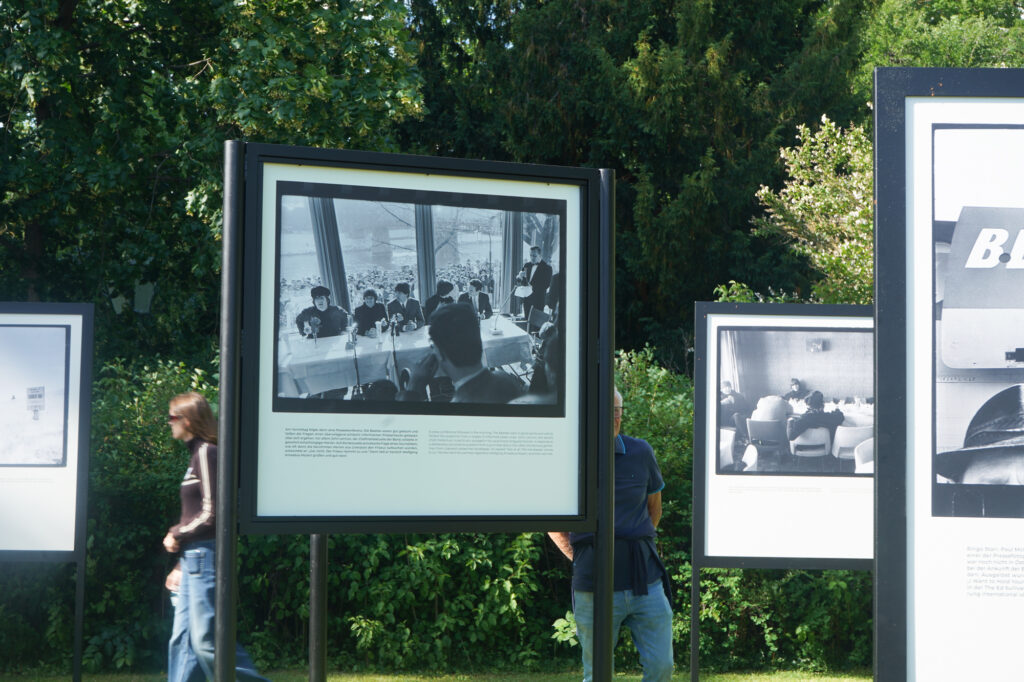
La Gacilly-Baden Photo is Europe’s largest open-air photography festival, extending across 7km of the city. © Cinzia D’Ambrosi
That may ultimately be what Festival La Gacilly Baden Photo does so well. It does not ask us simply to admire photographs. It asks us to live with them, to carry them beyond the exhibition walls and into our own lives. By placing photography in public space, the festival dissolves the boundaries between art and everyday experience, between observer and participant. Images of war, climate change, migration and human resilience are encountered not in isolation, but as part of the ordinary rhythm of the city, inviting everyone into the conversation.
As I left Baden, I realised I was carrying more than memories of remarkable exhibitions. I was carrying the questions they had left behind. Questions about who tells stories and who has the right to tell them. About what it means to bear witness. About our responsibility, not only as photographers but also as viewers.
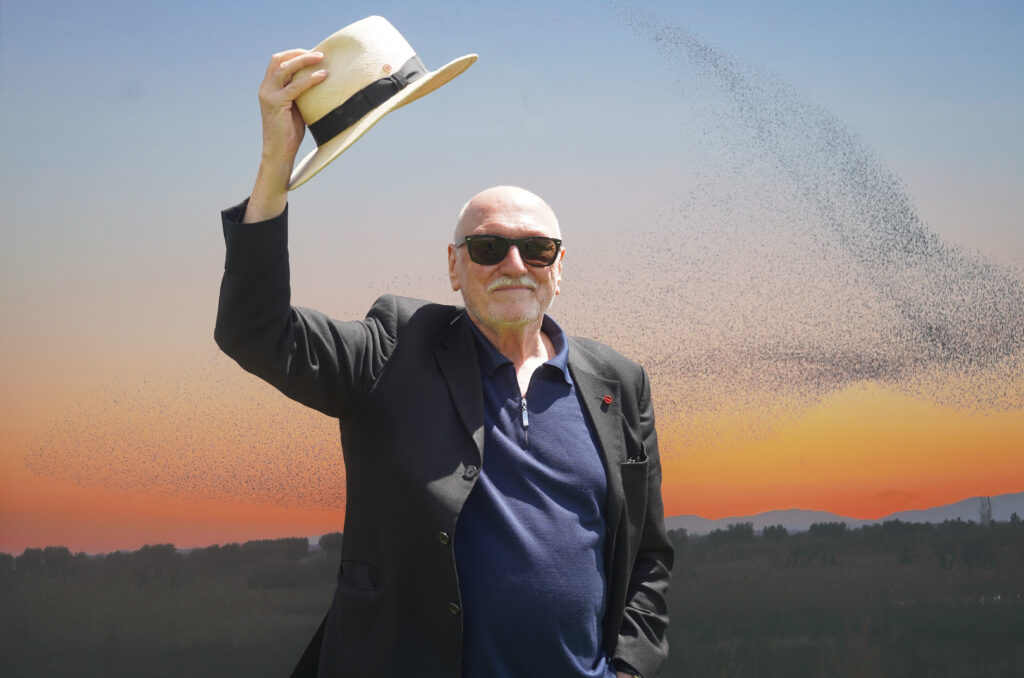
When I asked Lois Lammerhuber what success looks like for the festival, his answer felt inevitable. He was not interested in visitors leaving with certainty. What mattered, he said, was that they left carrying a question, something unresolved that would continue to accompany them long after they had gone home.
Not conclusions. Thought.
Words by Cinzia D’Ambrosi
Photographs © Cinzia D’Ambrosi
cinziadambrosi.com
@cinziadambrosi
This article was first published in What the Records Show, Cinzia D’Ambrosi’s independent publication on investigative reporting and documentary photography.


