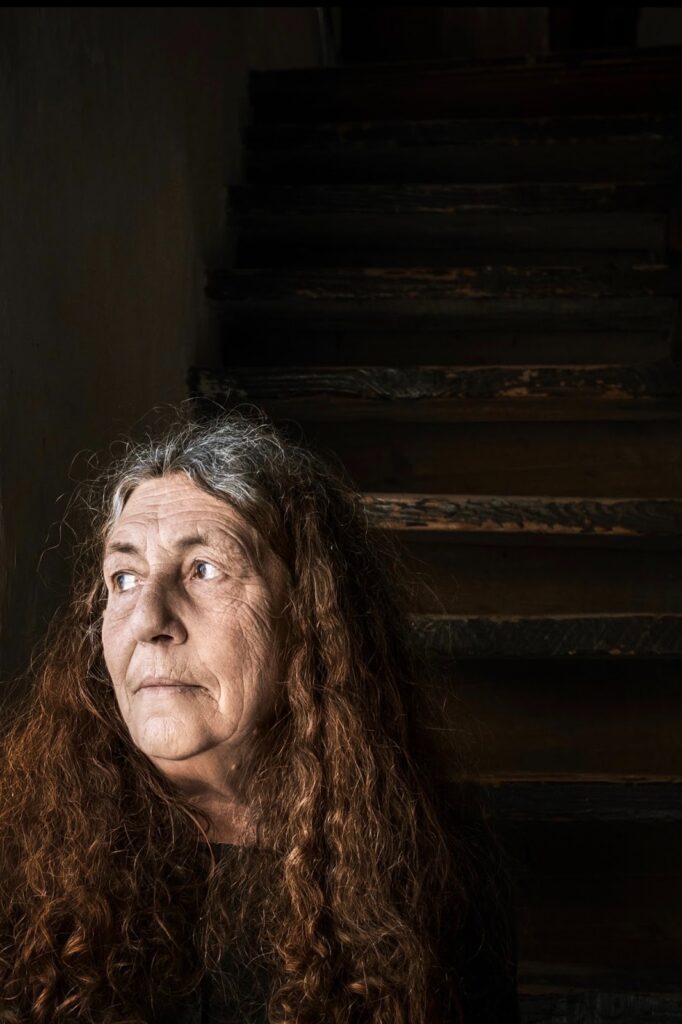
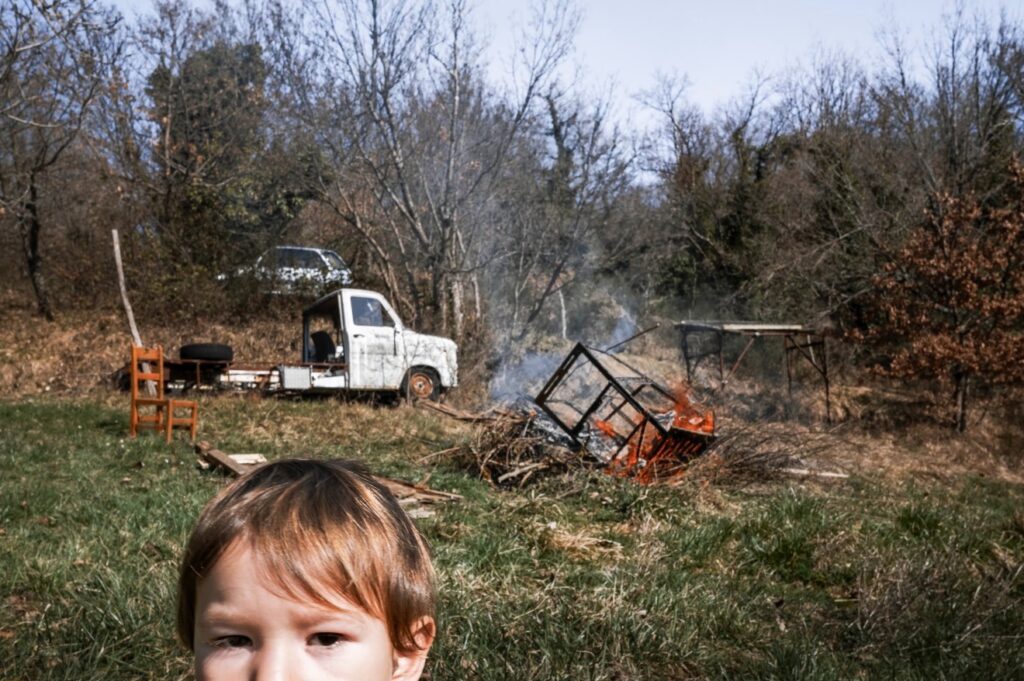
Films as a Tool for Social Change

Richard Zubelzu and Magda Calabrese’s Documentary Stories

For the past few years, Spanish filmmaker Richard Zubelzu has contributed his work and experience to Photojournalism Hub, sharing a commitment to documentary storytelling that places human rights, social justice and underrepresented communities at the centre of visual narratives. His collaboration with the Hub reflects a shared belief in the power of documentary filmmaking to create dialogue, challenge perceptions and amplify voices that are often overlooked.

Through its programme of exhibitions, screenings and educational initiatives, Photojournalism Hub supports documentary practitioners whose work explores social issues, challenges dominant narratives and creates space for diverse perspectives. By creating spaces for documentary photography and film, the Hub aims to connect audiences with stories that explore human experiences and communities whose perspectives are too often absent from mainstream narratives.

Together with producer and screenwriter Magda Calabrese, Richard has developed an extensive body of documentary work exploring themes including human rights, social justice, equality and the experiences of marginalised communities. Their films use personal stories to examine wider social questions and invite audiences to reflect on some of the challenges facing society today.

Through their independent production company, Objetivo Family Films, they continue to bring these stories to audiences around the world. Their documentaries are also available to viewers in the United Kingdom through Prime Video, making their socially engaged storytelling accessible to a wider audience. Rather than simply documenting events, their films explore the human experiences behind wider social and political issues. By focusing on individuals and communities whose stories often remain absent from mainstream media, their documentaries encourage audiences to reflect on resilience, identity, justice and social change.

“We believe documentaries can build bridges between cultures and help audiences understand realities beyond their own borders. Our goal is to tell stories that inspire reflection, dialogue and greater awareness of the challenges and achievements of people around the world,” say Zubelzu and Calabrese.

Their work reflects the belief that documentary filmmaking is more than recording events, it is a powerful means of fostering understanding, encouraging empathy and inspiring meaningful conversations across cultures.

Featured Documentaries by Richard Zubelzu and Magda Calabrese available in the UK via Prime Video:

Offside
A compelling documentary exploring why so few openly gay male footballers compete at the highest levels of professional football. Through interviews with players, journalists, campaigners and figures from across the football world, the film examines the cultural pressures, discrimination and fear of exposure that continue to shape the experiences of LGBTQ+ players, while questioning what still needs to change for the sport to become truly inclusive.

Reinosa 1987: The Price of Industrial Restructuring
A documentary examining the social consequences of industrial restructuring in Spain during the 1980s and the struggle of workers defending their communities and livelihoods.
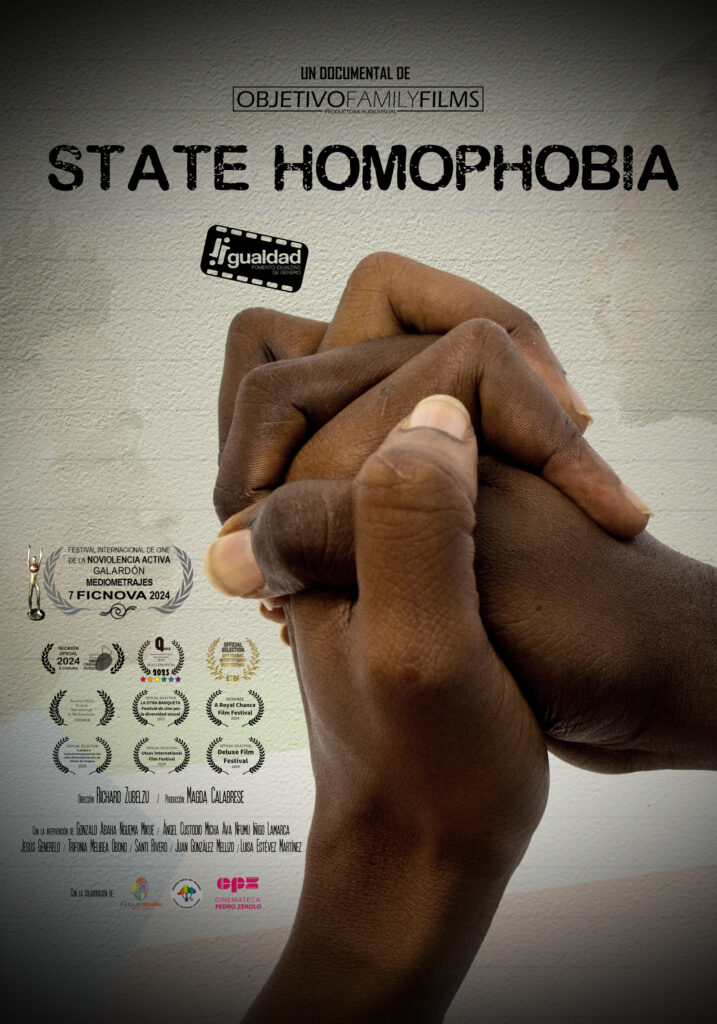
Homophobia of State
An international human rights documentary investigating discrimination and persecution against LGBTQ+ communities in countries where sexual diversity continues to face legal and institutional repression. 
The Battle of the Wind
A reflection on territory, rural life, sustainability, and the relationship between people and their environment. 
Argüeso Castle: Culture, Tradition and Modernity
An exploration of Spanish cultural heritage through one of the most emblematic historical sites in northern Spain.

Saudade In this short documentary film, Zubelzu and Calabrese want to bring to the life story of Benita Navacerrada, daughter of Facundo Navacerrada Perdiguero, founder of the UGT in San Sebastián de los Reyes in 1936, who was shot against the walls of the Colmenar Viejo cemetery on May 24, 1939. This parish cemetery is where the second phase of exhumations of the mass graves of victims of Francoist repression has recently begun. This is the first exhumation of a civilian mass grave in the Community of Madrid, and where 91-year-old Benita patiently waits, day after day, for her father to appear. Watch on Prime Video

About the Filmmakers

Richard Zubelzu is a Spanish filmmaker, director and documentary producer whose work explores human rights, social justice, historical memory, cultural heritage and environmental issues. Through independent documentary filmmaking, he focuses on stories and communities often absent from mainstream narratives, using film as a tool for dialogue, awareness and social reflection. His documentaries have reached international audiences through festivals, cultural institutions and streaming platforms, including Prime Video.

Magda Calabrese is a producer, screenwriter and documentary filmmaker whose work focuses on socially engaged storytelling and projects exploring equality, migration, historical memory, environmental issues, cultural identity and human rights. Through research-driven productions, she works to bring complex social issues to wider audiences and amplify perspectives that deserve greater visibility.

Together, Richard Zubelzu and Magda Calabrese are the founders of Objetivo Family Films, an independent European production company dedicated to documentary storytelling with social purpose. Their films combine investigative research and human-centred narratives to explore contemporary challenges and encourage dialogue across cultures. Watch Richard Zubelzu and Magda Calabrese’s documentaries

Richard Zubelzu and Magda Calabrese’s documentaries demonstrate the power of film to explore complex social issues through human stories. Their work reflects the belief shared by Photojournalism Hub that visual storytelling can create empathy, challenge perceptions and contribute to meaningful conversations around justice and equality. Discover more documentary photography, film screenings and storytelling projects from Photojournalism Hub through our upcoming events and programmes.

All Credits photos and videos © Richard Zubelzu, © magda.calabrese
Photography in Public Space

By Cinzia D’Ambrosi

Editor’s note: This article was first published in What the Records Show, Cinzia D’Ambrosi’s independent publication dedicated to investigative reporting, documentary photography, interviews and cultural analysis. It is republished here for the Photojournalism Hub community.

Festival La Gacilly Baden Photo transforms the city into an open-air gallery. Through a conversation with festival co-founder Lois Lammerhuber, Cinzia D’Ambrosi reflects on the power of photography to shape public space, provoke dialogue and deepen our understanding of the world.

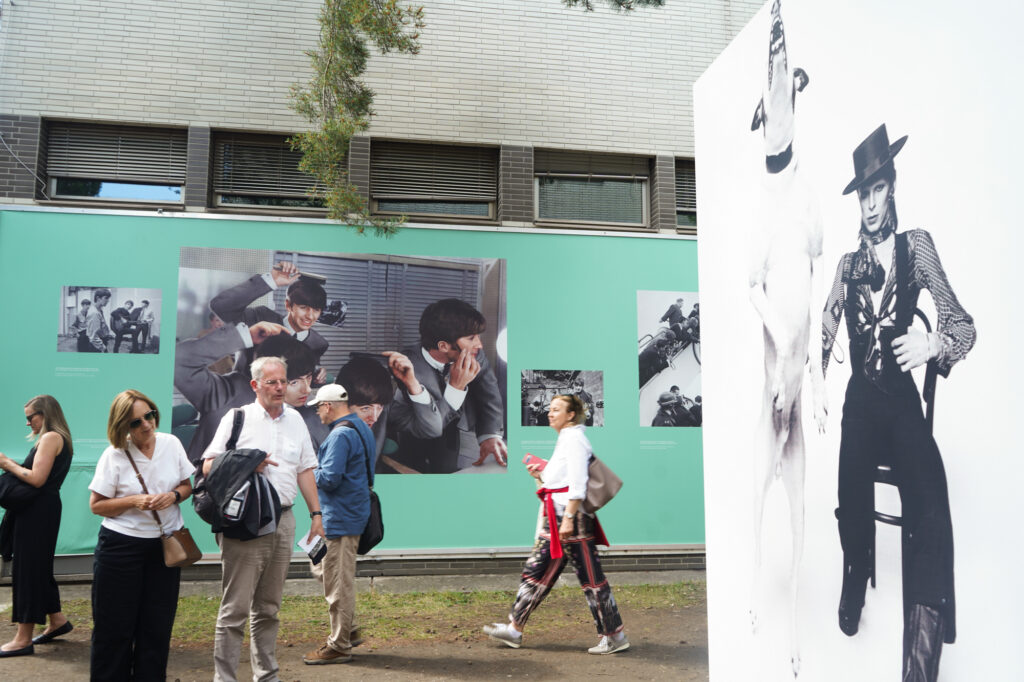
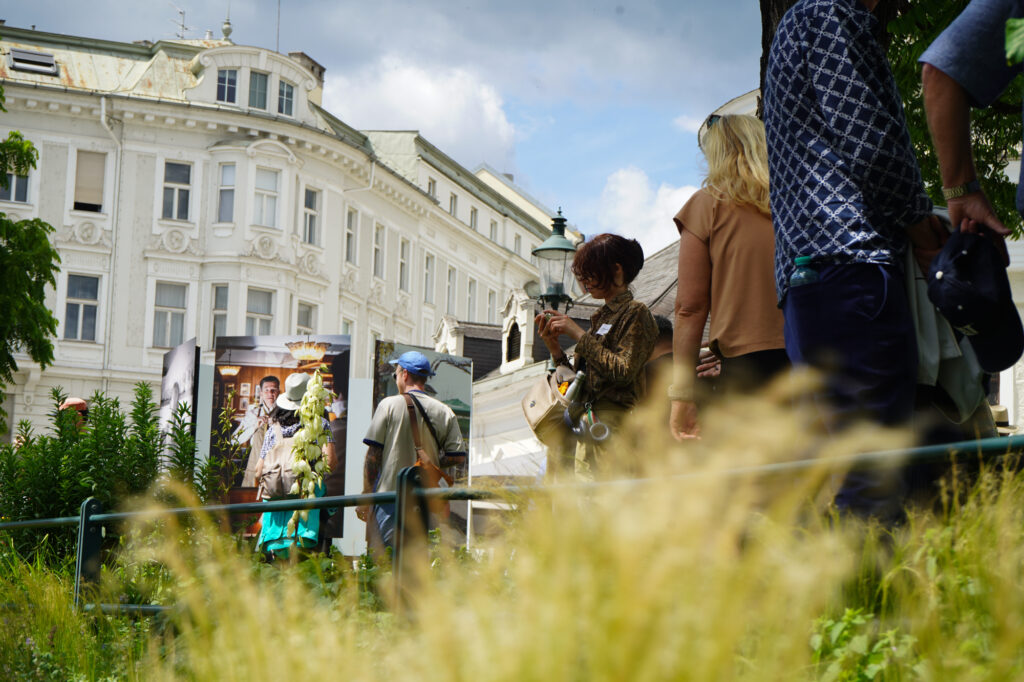
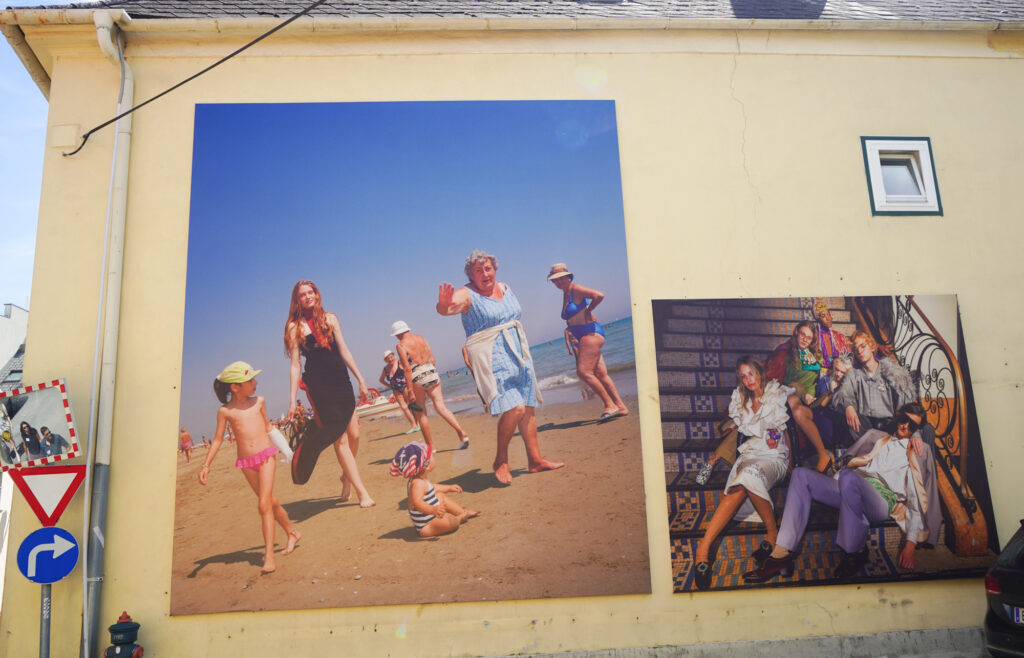
Martin Parr’s photographs on display at Festival La Gacilly Baden Photo, Baden, Austria. Photo: © Cinzia D’Ambrosi

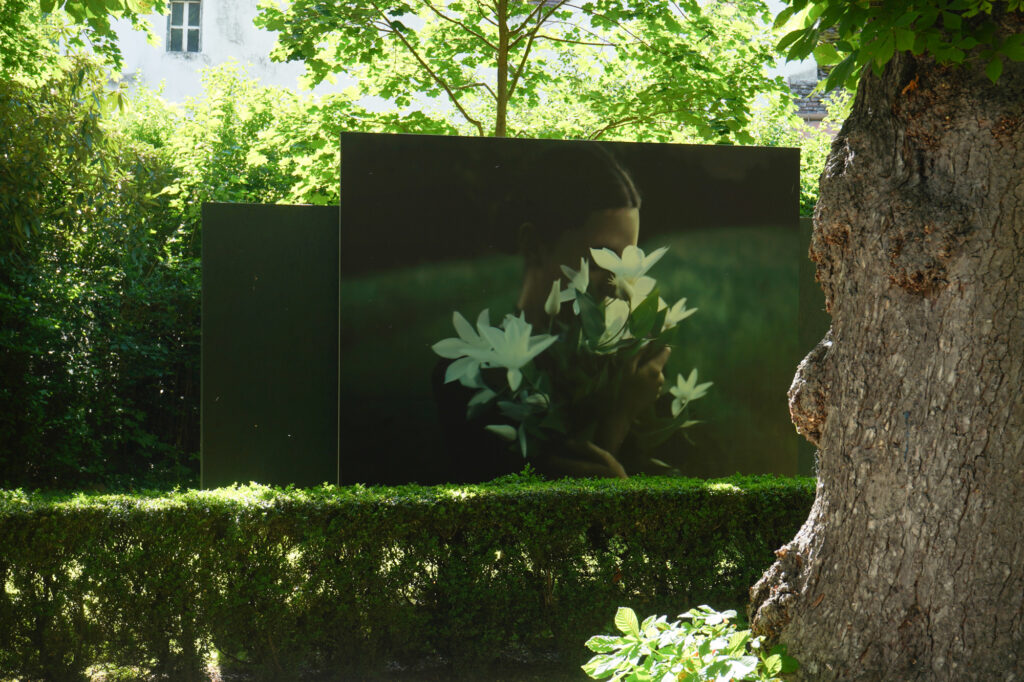
There is something quietly radical about encountering serious photography outdoors. Not in a gallery, not behind a ticket desk, but embedded in the life of a city in its gardens, along its streets, in spaces where people are simply getting on with their day. That is the founding proposition of Festival La Gacilly-Baden Photo in Baden, Austria, and walking through it for the first time, I understood why it matters. You do not have to seek the work out. You do not have to know who Don McCullin is, or what Martin Parr has spent his life looking at. You can be passing through, your eye caught by something large and arresting on a wall, and suddenly you are inside a conversation you did not know you were joining. Whether you are conscious of it or not, you are living it. And that, in a time when photography is everywhere and yet somehow increasingly invisible, feels like something very meaningful.
This year’s edition, So British!, takes its title from its celebration of British photography, but the festival’s ambition reaches well beyond national identity. Rather than presenting a fixed definition of what British photography is, the programme reveals a shared sensibility that has shaped generations of photographers. It is a tradition rooted in close observation rather than spectacle, attentive to the lives of ordinary people and often characterised by irony, humour and an acute awareness of class and social difference. British documentary photography has long balanced empathy with restraint, allowing images to ask difficult questions without prescribing easy answers.
That sensibility runs through the work on display. Martin Parr’s satirical observations expose the absurdities of consumer culture with wit and precision. Mike Taylor’s photographs of football supporters capture not only collective passion but also rituals of belonging and identity. Mary Turner has spent decades documenting communities too often overlooked, while Sir Don McCullin’s uncompromising images remain among the defining works of humanitarian photojournalism. Their practices differ profoundly, yet together they demonstrate a tradition less concerned with isolated moments than with a sustained engagement with society and the people who inhabit it
I asked Lammerhuber when and how a theme gets decided. “The themes for each edition are collectively decided,” he told me. “Our team of three people may champion different topics, and while everyone has their own opinions, there is general agreement on the importance of each subject. Rarely much argument, as all subjects ultimately are important.”
Sitting with Lois, it became clear that the theme functions as a framework rather than a constraint. Each photographer retains a distinct voice within it. The programme moves in a deliberate, linear way through what Lois describes as the human condition: beginning with people, suffering and endurance, before expanding outward into environment, science and technology. It is a journey that asks something of the viewer at every stage.

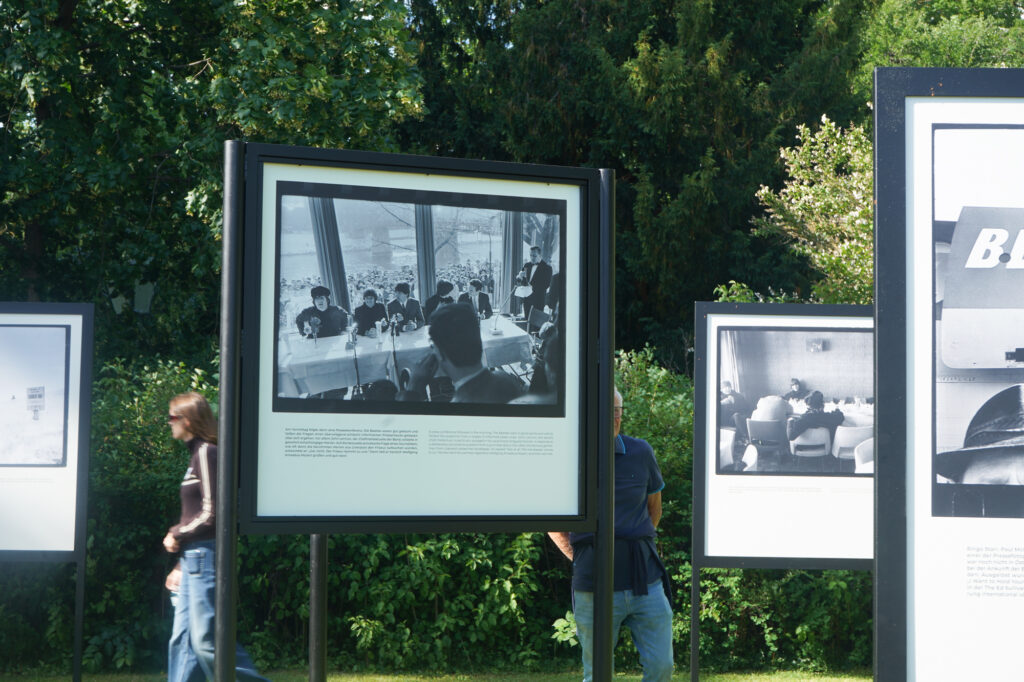
Visitors pause before Terry O’Neill’s “Swinging London” exhibition at Festival La Gacilly Baden Photo, Baden, Austria, featuring his images of the Beatles and David Bowie. © Cinzia D’Ambrosi

As I thought back to my walk through the festival the previous day, I realised how carefully the exhibitions had been sequenced. One seemed to lead naturally into the next, creating a sense of progression rather than interruption.
That sense of connection extended beyond the exhibition route itself. During the opening week, Lammerhuber brings together 152 photographers, curators and journalists in the same hotel, many of whom have never met before. Conversations continue over breakfast, during walks through the exhibitions and long into the evening. Photography becomes not only something displayed but something shared. As one of this year’s guests, I found those exchanges almost as memorable as the exhibitions themselves.
As our conversation continued, I asked Lois how he would know the festival had achieved its purpose. He answered that it was important to him that visitors leave with an open question, something unresolved, provoked by the work they had seen. Not conclusions, but thought.
The festival embraces an impressive breadth of practice, from classic photojournalism and documentary photography to street photography, portraiture and long-term visual storytelling. Yet despite the diversity of approaches, the exhibitions remain connected by a shared concern with the urgent issues shaping contemporary society.

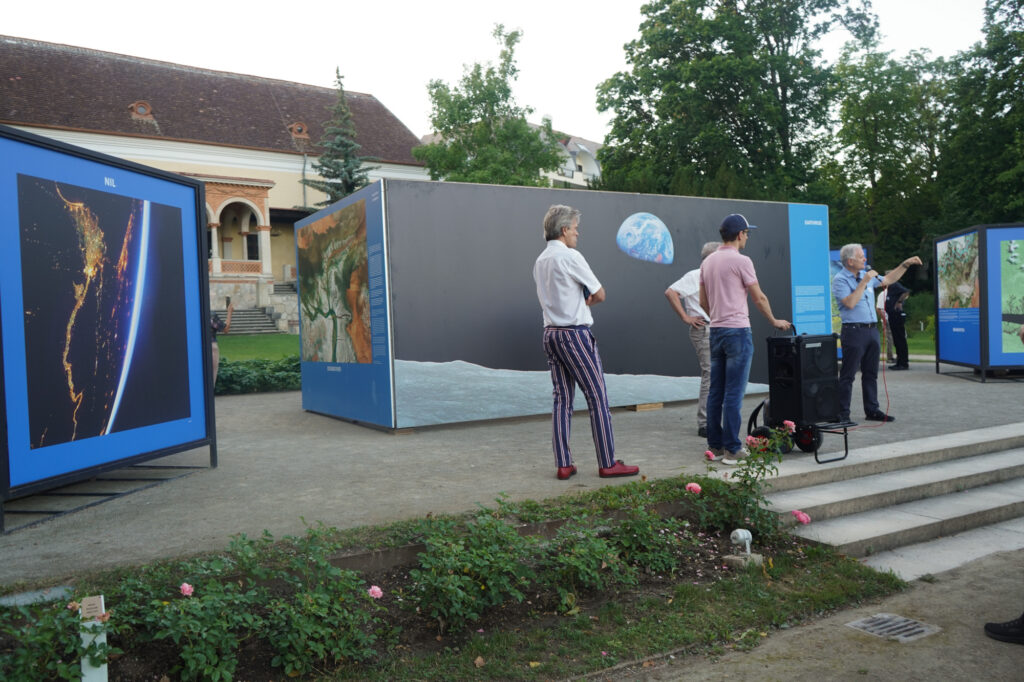
Helmut Habersack and Lois Lammerhuber present Water is Life, bringing scientific knowledge and documentary photography together to highlight the future of the planet’s freshwater. © Cinzia D’Ambrosi

In the Science and Technology section, the festival’s invitation to reflect becomes something closer to humility. Curated by river scientist Helmut Habersack and photographer-publisher Lois Lammerhuber, Water is Life brings together scientific knowledge and documentary photography to confront one of the defining challenges of our time: the future of the planet’s freshwater. Among the works, a NASA photograph of Earth seen from space arrests the viewer. The image is iconic, yet encountered here outdoors, woven into the rhythm of everyday life, it acquires a renewed power. Our planet appears as a small, fragile sphere suspended in the vastness of space, reminding us of both its beauty and its vulnerability.
From this perspective, statistics become profoundly human. More than eight billion people depend on a finite supply of freshwater, while climate change, pollution and unsustainable consumption place increasing pressure on rivers, lakes and aquifers across the world. The exhibition succeeds because it transforms these abstract realities into something deeply felt. Rather than overwhelming visitors with data, it invites them to pause, to reconsider their place within the natural world, and to recognise that water is not merely a resource but the foundation of all life. By combining scientific insight with the emotional power of photography, Habersack’s contribution demonstrates how visual storytelling can bridge the gap between knowledge and understanding. It reminds us that protecting water is not simply an environmental imperative, it is a profoundly human one.
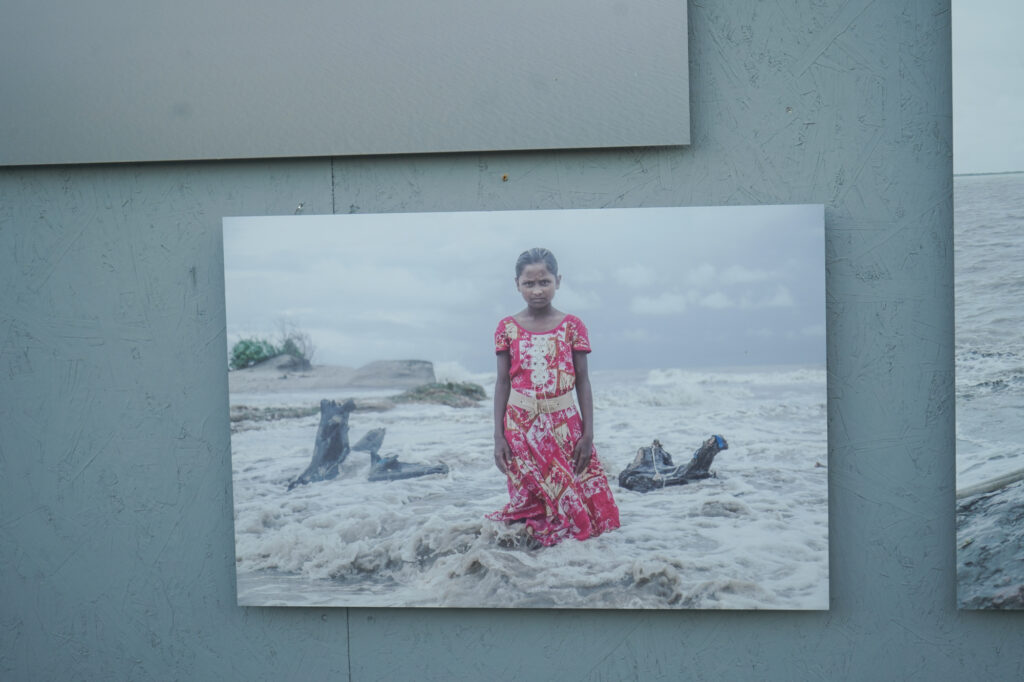
Supratim Bhattacharjee’s work brings attention to the impact of extreme weather and rising sea in parts of India. © Cinzia D’Ambrosi

Among the photographers Lammerhuber spoke about with particular feeling was Supratim Bhattacharjee a photographer based in India whose work documents the devastating impact of climate change on his country and its people. What makes his practice distinct is not only the quality of the documentation, but the position from which it is made. He is not an outside witness.
He is living the reality he photographs. As rising seas and extreme weather reshape parts of India, the burden falls hardest on those with the least. His photographs are not made from outside the story but from within it.
A photographer who is both witness and subject does not resolve those questions. But they shift something fundamental.
The image carries a different kind of authority, not the authority of distance, but of proximity. Of skin in the game.

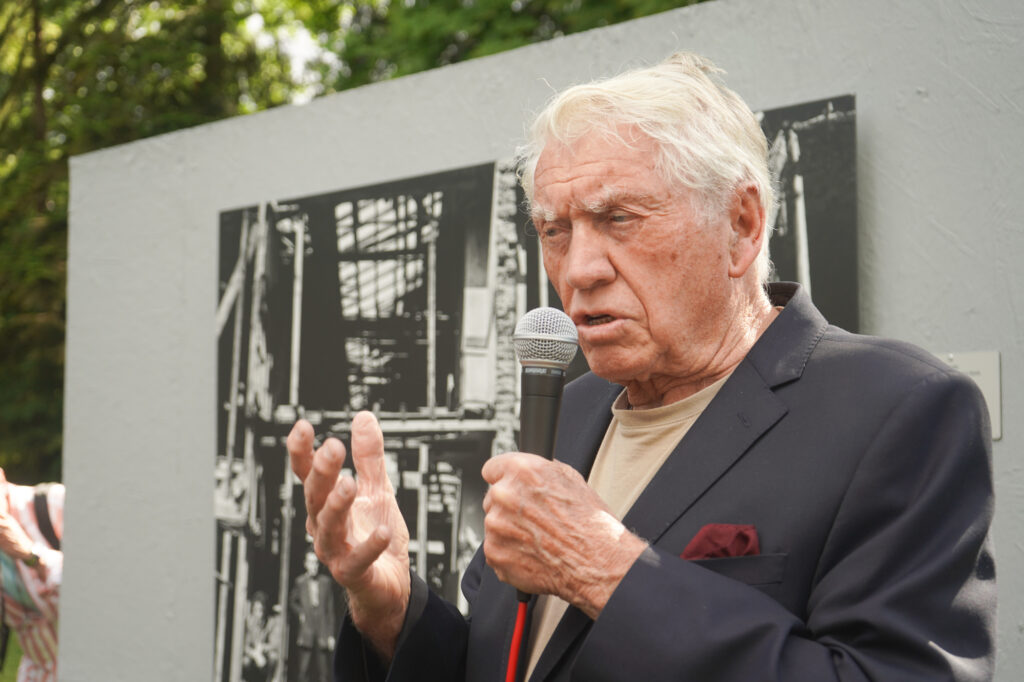
Sir Don McCullin, the legendary British photojournalist, was a guest of honour at the Festival. © Cinzia D’Ambrosi

Those same questions about witnessing, responsibility and representation echoed throughout the festival. They returned with particular force when Sir Don McCullin spoke about his own work. Much of documentary photography’s history has been built on the figure of the outsider, the photographer travelling to witness suffering that is not their own. That tradition has produced extraordinary work, but it has also raised difficult questions about representation, power and authorship. Hearing him speak at the festival’s Opening was one of those rare moments that lingers long after the event has ended. Sir McCullin spoke with remarkable candour about the photographs on display, revisiting the circumstances in which they were made and the difficult decisions that shaped them. He reflected on the lengths he went to in order to bear witness, placing himself amid war, famine and unimaginable suffering and questioned whether those choices had always been right.
Was it right to photograph people at the very limits of human suffering? Was it ethical to go as far as he did in pursuit of an image? Did the act of witnessing justify the personal and moral cost?
These are not questions Sir McCullin has answered and left behind. They remain unresolved, continuing to accompany him decades after the photographs were made. That ethical restlessness, the willingness to question his own actions rather than defend them, is what distinguishes him not only as one of the world’s greatest photojournalists, but as one of its deepest moral voices. Standing before those photographs while listening to the man who made them was a powerful reminder of what photography, at its most committed, can carry. Each image is more than a document of history. It is also a record of the choices, risks and responsibilities behind its making. Sir McCullin’s reflections revealed that the greatest burden is not simply witnessing suffering, but living with the knowledge of what it took to bear witness.
Lammerhuber sees no contradiction in presenting McCullin’s moral questioning alongside contemporary photographers confronting climate change, migration and environmental collapse. For him, the festival is not organised around aesthetics alone, but around photography’s capacity to deepen public understanding of the human condition. The conversations that begin in front of a photograph continue long after visitors have walked away. In an age saturated with images, that ability to make us stop, look and think may be photography’s greatest achievement.

La Gacilly-Baden Photo is Europe’s largest open-air photography festival, extending across 7km of the city. © Cinzia D’Ambrosi

That may ultimately be what Festival La Gacilly Baden Photo does so well. It does not ask us simply to admire photographs. It asks us to live with them, to carry them beyond the exhibition walls and into our own lives. By placing photography in public space, the festival dissolves the boundaries between art and everyday experience, between observer and participant. Images of war, climate change, migration and human resilience are encountered not in isolation, but as part of the ordinary rhythm of the city, inviting everyone into the conversation.
As I left Baden, I realised I was carrying more than memories of remarkable exhibitions. I was carrying the questions they had left behind. Questions about who tells stories and who has the right to tell them. About what it means to bear witness. About our responsibility, not only as photographers but also as viewers.

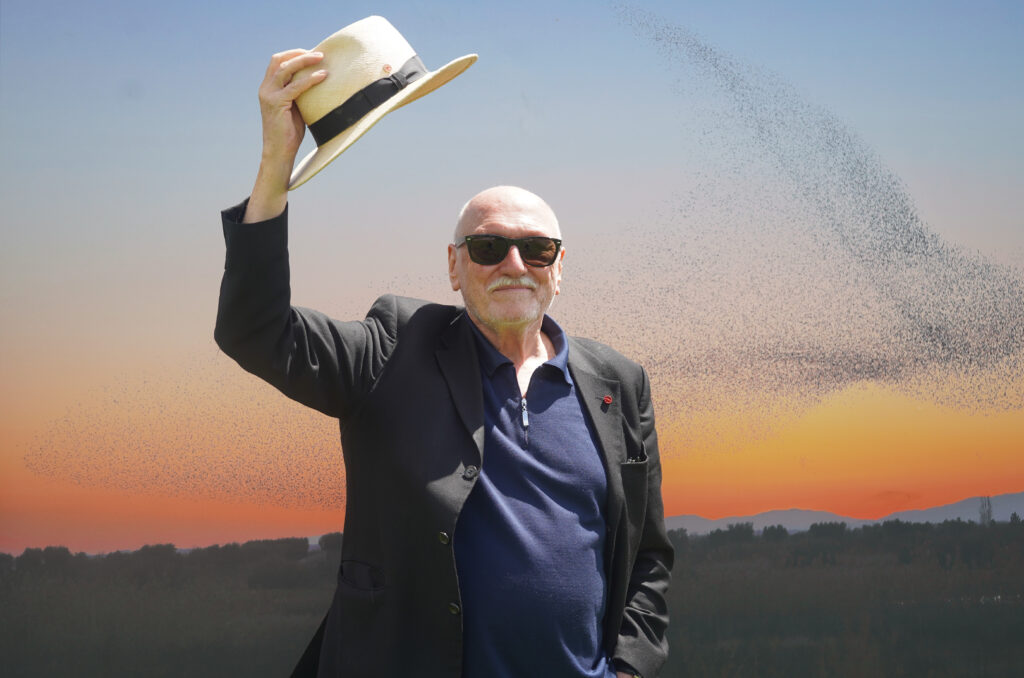
Lois Lammerhuber photographed by Cinzia D’Ambrosi in front of one of his photographs at the festival. © Cinzia D’Ambrosi

When I asked Lois Lammerhuber what success looks like for the festival, his answer felt inevitable. He was not interested in visitors leaving with certainty. What mattered, he said, was that they left carrying a question, something unresolved that would continue to accompany them long after they had gone home.

Not conclusions. Thought.


Words by Cinzia D’Ambrosi
Photographs © Cinzia D’Ambrosi

cinziadambrosi.com
@cinziadambrosi

This article was first published in What the Records Show, Cinzia D’Ambrosi’s independent publication on investigative reporting and documentary photography.

Beneath the Forest’s Footsteps by Leonardo Petrucci

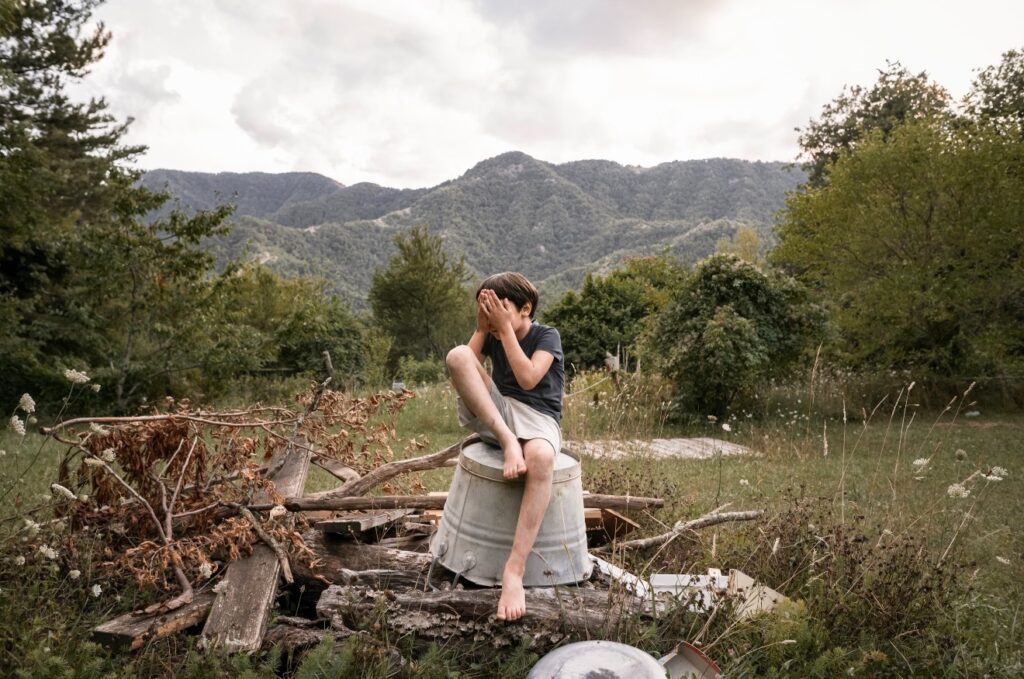
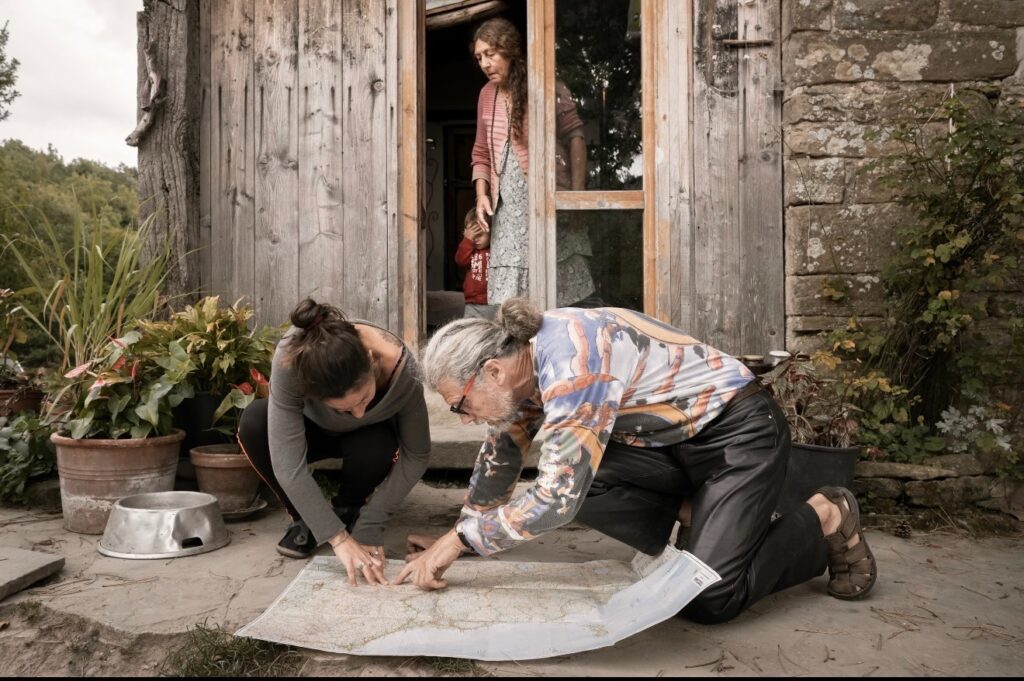
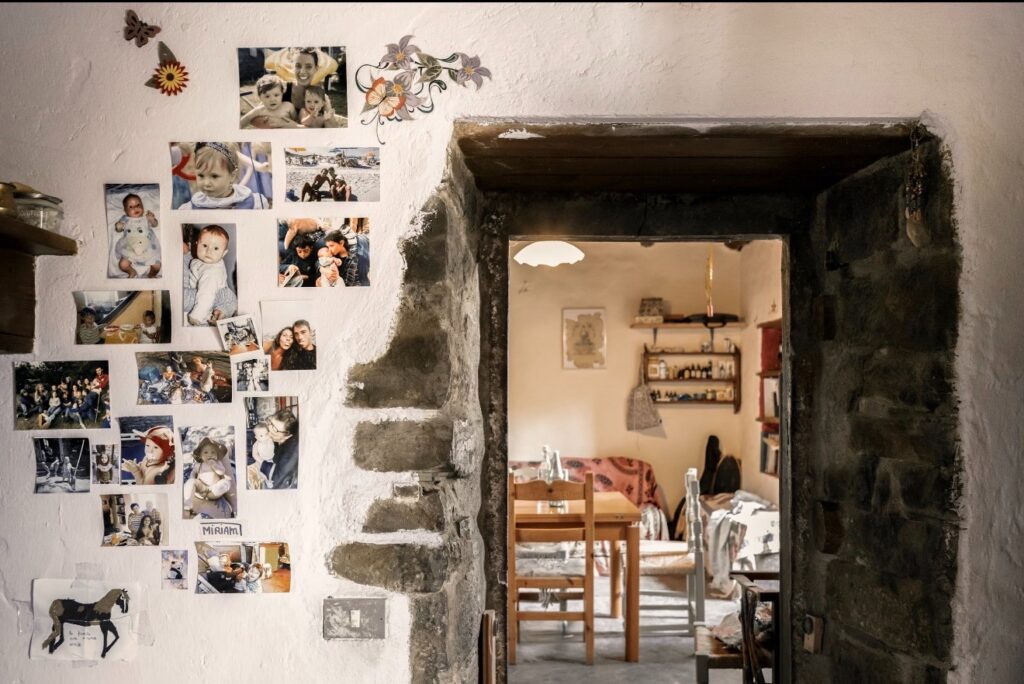
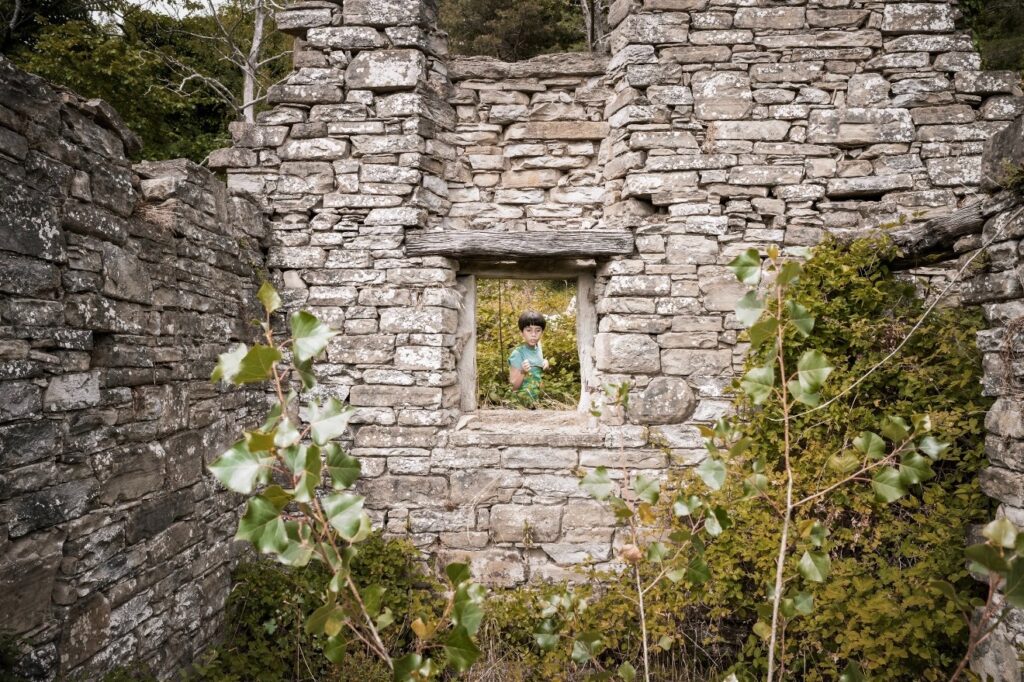
Photojournalism Hub is delighted to present Leonardo Petrucci as our Featured Photographer. His work explores diverse societal themes, with a primary focus on community across Italy. In this work, Petrucci presents the photo story Beneath the Forest’s Footsteps showing a post-war communal revival of a rural area. 
Petrucci explains: “Until the Second World War, the Campanara area was a thriving agricultural zone: the valley was dotted with wheat fields and inhabited by numerous farming families, who lived in scattered rural houses. As in many rural areas of the Apennines, the years following the war saw a strong depopulation. Homes and farmland were gradually abandoned, and nature slowly reclaimed its space. We are on the border between Tuscany and Emilia-Romagna, sheltered by the Apennines. Hidden deep within the forest, and still difficult to reach today, lies Campanara, a singular place dominated by a church that has never been deconsecrated, standing beside an ancient rural house.
From the 1960s onwards, Campanara became a small “hippie” commune, an experiment in communal living that attracted dozens of people. Over time, however, the area experienced a new wave of depopulation, until only one family remained to preserve its original spirit.
Silvia is considered one of the “souls” of Campanara, a figure who has kept the initial vision alive through the decades. Her children and grandchildren grew up on the mountain and, in turn, have contributed and continue to contribute to the evolution of this way of life.
Theirs is a story of resilience. They have faced isolation, the restoration of abandoned buildings, and the creation of a sustainable way of living in an area long left to itself. They chose to step away from consumerism and the fast pace of modern society, rediscovering values such as sharing, solidarity, and self-sufficiency.”

About the photographer

Leonardo Petrucci (Rome,1999) is a photographer specialized in photojournalism and reportage.
With a keen focus on socially and anthropologically relevant themes, his work seeks to explore the  human experience in relation to the cultures and habits of the places they live.
Narrative lies at the core of his works, as he combines texts and images to reconstruct stories of places and people .
His work aspires to remind us that, no matter the differences, human experiences are deeply interconnected.

Leonardo Petrucci www.leonardopetrucciphoto.com
@_leonardopetrucci

All photos & text copyright: Leonardo Petrucci

Bruno Saguer: Oxidorphines

We are delighted to present Bruno Saguer as our featured photographer this month. His photographic stories shed light on some of the most harrowing labour conditions, conveyed with a poetic vision and powerful sensitivity that both compel and move us deeply.

This work is neither a protest nor a technical chronicle, but an aesthetic immersion into the decaying beauty of corrosion, into the imprint that time and human toil leave on every stranded hull. Photography as an addiction to decomposition, to the texture of the ephemeral.


From its nest, the seagull takes off over the sea. From the shipyard, the vessel sets sail. Everything tastes of salt. The salt of life, the salt of death.

To launch, to hoist, to depart, to sail, to weather the storm, to board, to dock…
A ship always carries the emotional weight of a journey toward the horizon, rocked by waves.
Whether carrying people, treasure, or trade, every ship bears the significance of its voyage.
Iodine drifts in the air, sea spray weaves into tangled hair flowing in the wind. A maritime symphony whispers all around.
But many ships don’t reach a dignified end. After 20 or 30 years riding the waves, they’re cast aside, pushed to die like abandoned animals, left to scavengers.

Bound for slaughter.

Some places in the world have become their graveyards. And the locals—made their executioners.
But this isn’t Père Lachaise in Paris. No Balzac, Camus, Chopin, Oscar Wilde, or Jim Morrison lie here. Instead, ships bear flags of convenience—fiscal loopholes, legal evasions, flags with no country.

There is no grey bin for maritime waste.
No final place where all things belong.
They simply end. Nowhere.

Eid Mubarak. August 2012. Chittagong, Bangladesh.

A northern “still life” made of open-air scrap. These shores should be erased from nautical charts, kept beyond the reach of any compass or bearing.

The poetry of the sea ends here. The carnage begins.
No blood is spilled—only oil, diesel, and thick, contaminating fluids.

Dignity slips through the scuppers.
Humiliation pools in the bilges at the end of this tragic journey.

Paints, heavy metals, asbestos—
A corrosive cocktail you won’t find on a Mediterranean cruise.
There will be no dinner at the captain’s table tonight.

No necks are cut, but every part of the ship is dismantled—hull to deck, cabins to engine room, even the prized bridge, where only hours before the horizon was scanned from a privileged perch.

The swords and guillotines of old revolutions are now acetylene torches and cutting saws.

A metallic roar.
No siren songs here—just horns of iron pain.

Tons of steel are fed into the maw of shredders.
As far as the eye can see, rusted carcasses marooned at low tide.
No longer sand, but rare metals of another periodic table.
Human termites gnaw at metal, wood, plastic, rope.

Dusk falls on the “unshipyard” of cruise liners, cargo ships, and freighters.
Floodlights flicker on.
Stripped of rest, the pillaging continues—plates, bolts, no loose ends.
In three to six months, the vessel is no more.

A ship scrapped in three or four months in Bangladesh nets a million dollars in return—on a five-million-dollar investment.

And yet, this apocalyptic landscape seduces.
It releases photographic endorphins.
The eye, the camera’s viewfinder—both tint crimson under a leaden sky.

Steel skeletons run aground in rhythm with the tides.
Swarms rush port and starboard, scrambling for the best loot—not astrolabes or sextants, but lifeboats, portholes, wires, propellers, spark plugs, pistons, lamps, sensors, sonar, radar, GPS.
All of it cloaked in raw rust.

Rust merchants. Steel auctions.
Everything is for sale. Even souls.
Recycling without activism—just a euphemism.
Melted down, but not damned.

Some pieces will sail again—aboard new vessels, or hanging in chic homes and restaurants.
Better that than being left to rot on a deserted beach after a failed escape from a cyclone.

Such is the cycle of the sea.
Knots and nautical miles become cubic meters of waste and steel.

Personal stories cling to these corroded remains.
Like that of Hossain Khatun. A Bengali man, generations deep, rooted in toxic mud.
His descendants likely will be too.
There’s no way out, unless you swim—to nowhere.

His nephew Kamal, 14, walks him to the shoreline each day as the fishermen return.
If the tide’s low, they can get closer.
Hossain is 64 and blind. Kamal guides his arm so he can stretch his hand toward the fishermen and beg.

Kamal has spent nearly all his life working in the yards.
The toxicity took his vision.
Hossain is on the same path—unless he’s hurt first (they use the blind to crawl into dangerous crevices of the ships), or unless he tries to swim away…

To earn a plate of rice or dhal, they cut through plates of steel.
They travel from Panchariya to Faujdarhat—almost 20 km of sandy graveyard.
No insurance. No safety gear.

Roughly 200,000 souls live trapped like fish in a stagnant pond.
Over 80 yards compete for the dying.

But the rust—captivates.

Nearly one in five of the world’s aging ships end up here.

Many NGOs have reported the working and environmental conditions.

That ship lamp from the Singaporean vessel “Green Earth” will look lovely somewhere.
It’s docked in port now, set to sail for Malaysia tomorrow.
But it’ll be back.
I won’t.

How strange that so much decay can be so visually fascinating.
Corrosion addiction could be the title of this landscape.

Thankfully, my memories are rusting.
Only images remain.
Another contradiction.

Anchored in rust, one becomes a witness to one of the most extreme forms of circular economy—a cycle both toxic and hauntingly poetic.

Bruno Saguer

“The greatest photos are those no camera can capture, yet only a photographer can see. My quest is never to miss one again.”

Born in Barcelona in 1972, half French and half Spanish, my earliest memories of photography are rooted in the dim red glow of my father’s darkroom at home. A passionate Nikon enthusiast, he introduced me to the magic of framing life in black and white. Though he passed away when I was 18, his legacy deeply shaped how I perceive the world through a lens.
My journey as an amateur photographer truly began with my Nikon D700 and a humble Tamron 17-50 lens, ignited by a simple desire to feed my curiosity. My first solo photo trip was to India, a welcoming place where capturing slices of everyday life and close portraits came naturally.
Inspired by a mesmerizing documentary about the shipbreaking yards in Bangladesh, I organized a photographic expedition with friends, driven not by activism but by a fascination with the stark beauty of rusted giants awaiting dismantlement. From bustling Dhaka to the surreal graveyard of ships extending for kilometres, the contrast between human vitality and industrial decay was captivating. Beyond the dismantling itself, it was the vibrant recycling economy—shops filled with salvaged lamps and life jackets—that left a lasting impression. One such lamp now hangs in my home, a constant reminder to seek out the next photographic journey.
Balancing the roles of father and founder of an advertising and branding agency, my greatest challenge remains finding time to pursue these personal photographic projects, each an exploration waiting patiently for its moment. My job has also exposed me to brilliant work, and both creativity and art direction continually spark my curiosity. Among the photographers I admire most right now is Edward Burtynsky. Of course, I follow many others, specially Martin Parr, and depending on the mood—documentary, street, colour, black & white, or portrait—but I find Edward’s perspective uniquely compelling. Website | Instagram | Email

Photos and Words ©Bruno Saguer

Angelo Scelfo: The Strip


Italy: Marina di Acate – April 2024.

It has been called the ‘transformed belt’ and consists of a set of territories in southern Sicily where greenhouse farming activities have replaced the original crops. This transformation has led to the partial destruction of dune environments with the consequent pollution of the coast, the loss of biodiversity and a strong marginalisation of migrant communities. In fact, migrants are the majority of the workforce.

Those who work in the greenhouses are also hidden from the rest of the community as they live, in most cases, in rural settings and in employer-provided housing that is often shacks or company sheds. Throughout the area, entry into the labour market is a profoundly precarious process, marked by daily relationships and articulated solely in terms of exploitative relationships.

In recent decades, the number of greenhouses on the island has practically tripled. An example is the case of Santa Croce di Camerina (RG) in which has the highest percentage ratio of migrant population employed in agriculture and the municipality hosts half of the foreign population registered in the province. A simple estimate of the area covered by the greenhouses, which changes every year, shows an area of about 61 square kilometres surrounding the town.

The NGO Emergency operates in the entire area of the transformed belt. In addition to having a psychological support programme for the labourers, it is vital for those who otherwise would not have access to basic health services.

Finally, there is the environmental factor. Greenhouse agriculture requires an intensive use of pesticides and fertilisers that lead to a progressive loss of fertility and a high rate of soil consumption. Residues seem to be a determining factor in the pollution of water analysed by ISPRA. The institute calculates that at least 66,176 tonnes of fertilisers are released annually into the island’s agricultural systems. To this is added atmospheric pollution from dioxins due to the numerous fires lit at the end of the day to burn greenhouse maintenance waste often made of plastic.

Further links:

https://www.instagram.com/lo_scelf

https://www.facebook.com/paul.ferdinand.984

Bio
Angelo Scelfo, Italian photojournalist based in Bologna (Italy). Born in October 1979 in Bologna and grown up in Sicily. I studied philosophy at Università degli studi di Palermo and photography at ISFCI in Rome. Since 2005 I have been involved in photography, today I dedicate myself full time to photojournalism as a freelancer. I also like to write: the world of self-productions and fanzines has always been the most congenial to me. I live between Bologna, Rome and Palermo.

Angelo Scelfo photographer

INSTAGRAM | FACEBOOK | TWITTER

+39 351 6151659

‘Refugees are welcome here’

Cinzia D’Ambrosi and Safeena Chaudhry

Hundreds protest outside Home Office against Rwanda deportation plan and they shout ‘Refugees are welcome here’. This is the message voiced by demonstrators opposing the government policies which sees deportation of some refugees to Rwanda.

©Safeena Chaudhry

The government claims the policy, belonging to the Nationality and Borders Act, of removing migrants who arrive in the UK illegally will deter people from making dangerous channel crossings, however many including bishops of England have condemned the move as being uncompassionate and intricately divisive and racist.

Among the huge numbers of protesters, many MPs voiced their anger at the policy, including former Labour leader Jeremy Corbyn who spoke out: “It is an utter disgrace that the British government and other European governments are proposing to outsource refugee processing as Australia. We have to say, ‘Absolutely no!”

Former Labour Party Leader, Jeremy Corbyn outrage and concern of the new policy. ©Cinzia D’Ambrosi
Bell Ribeiro-Addy MP was among the speakers in support to refugees not being deported to Rwanda. ©Cinzia D’Ambrosi

©Safeena Chaudhry

©Safeena Chaudhry

©Cinzia D’Ambrosi ©Cinzia D’Ambrosi

©Safeena Chaudhry

Campaign groups such as Care4Calais , activists from various campaign groups gave speeches and chanted: “say it loud, say it clear, refugees are welcome here”.

©Cinzia D’Ambrosi

The effort of these groups, PCS Union and Stand Up to Racism organisations, and all those that have opposed the policy, have mounted a forceful legal challenge to stop the first scheduled flight to Rwanda as part of the offshore detention plan. Solidarity is uniting people as more protests are organised to challenge the government plans.

Photography : Cinzia D’Ambrosi and Safeena Chaudhry

Text & photo editor : Cinzia D’Ambrosi | Photojournalism Hub

BECOME A PJH MEMBER 
Consider becoming a member of the Photojournalism Hub and receive the benefits of free access to events, PJHub resources, editorial content, annual portfolio reviews and photography exhibitions, and lots more! whilst supporting our work advocating, advancing social justice and human rights through engaging the public to independent photojournalism and documentary photography.  How to join HERE