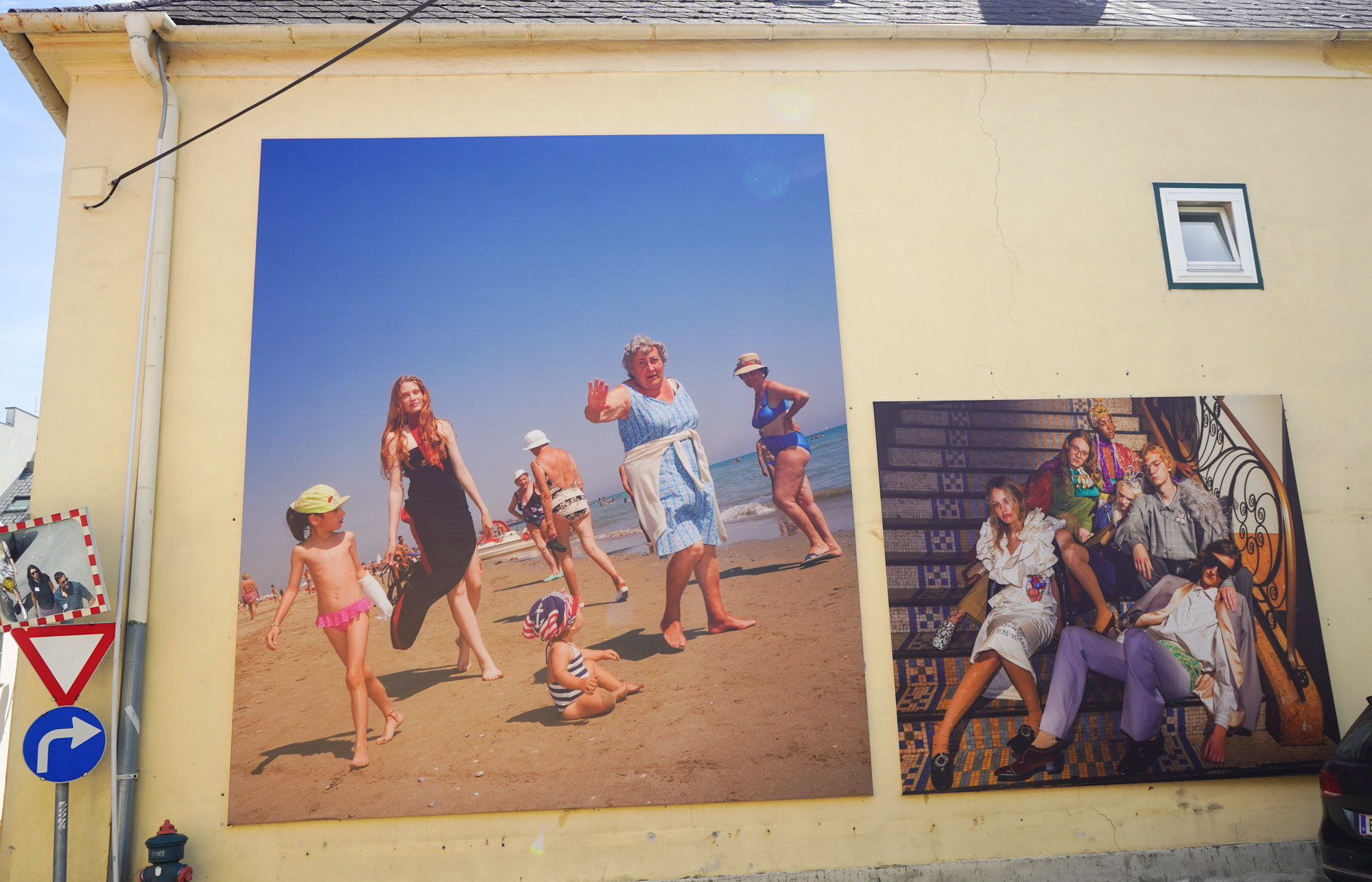
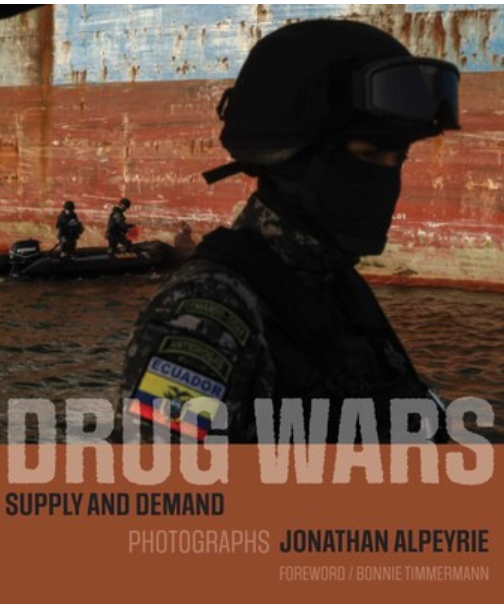
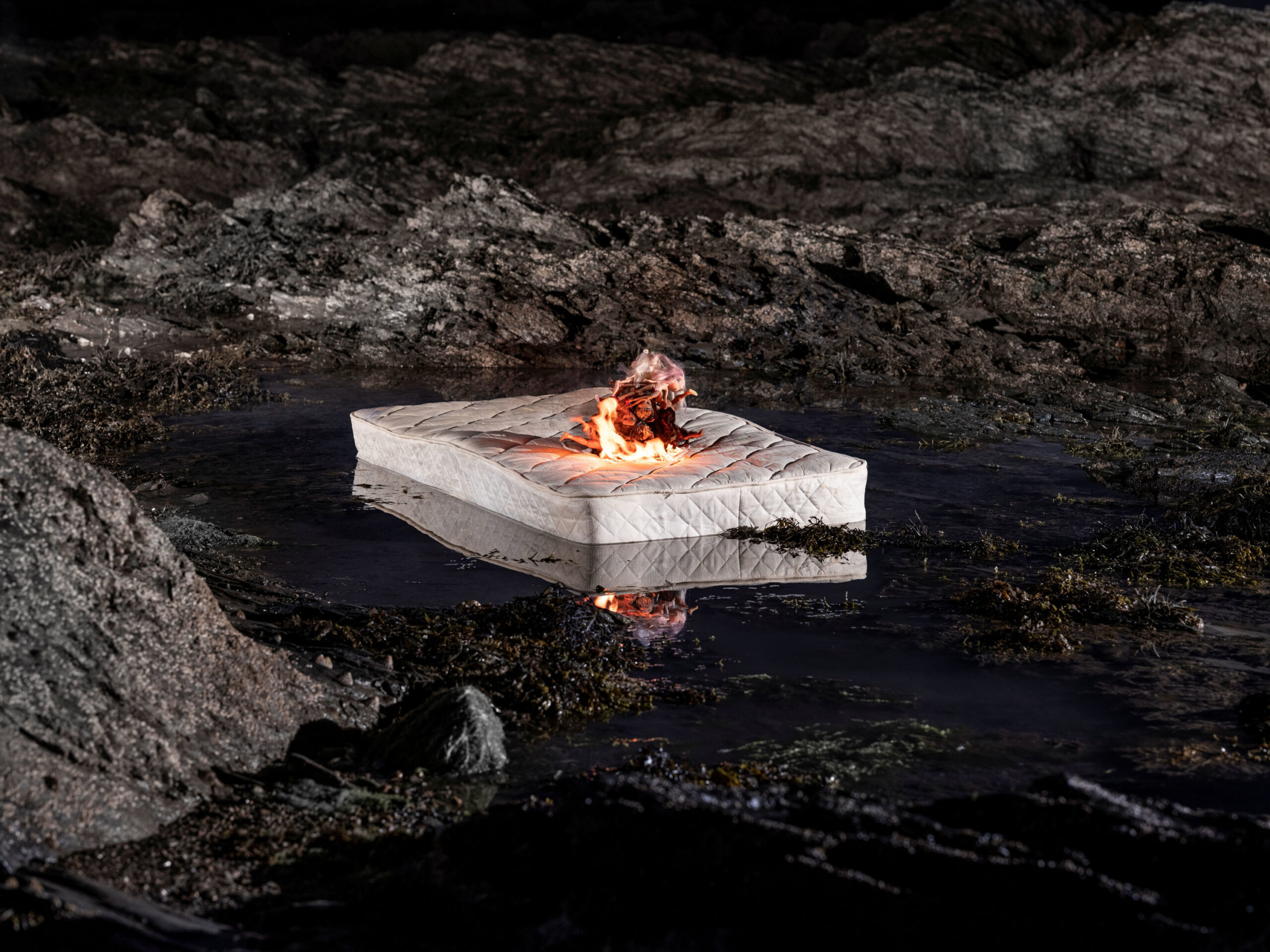
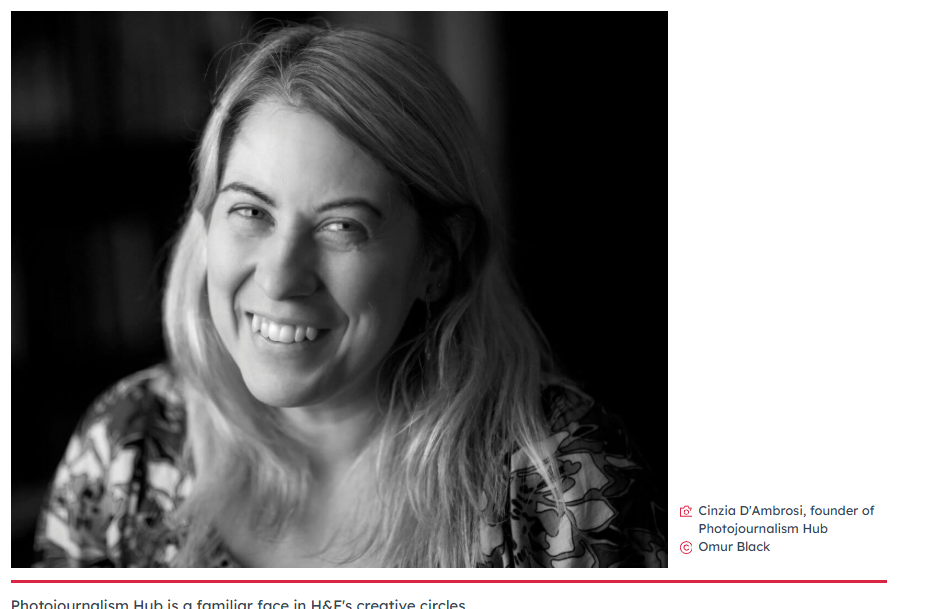
The Photojournalism Hub Calendar 2026 showcasing the incredible work of photojournalists and documentary photographers who have contributed to our mission.
Photojournalism Hub Cinzia D’Ambrosi and Miriam Sheikh is honoured for the opportunity to interview Ed Ram and Wangui Kimari on their collaboration that has led to As We Lose our Fear, a photography exhibition presented at the Mathare Social Justice Centre in Kenya. The exhibition exposes police violence and extrajudicial killings in Kenya by presenting a series of photographs of victims holding a paper with the name of their loved ones killed by the police.
During the interview, we discuss the social background that has led to the collaborative project, police killings in Kenya and the grassroot movement and activism that Mathare Social Justice Centre has helped to form, and create empowering and important positive actions and changes.
From above Miriam Sheikh, Cinzia D’Ambrosi, Ed Ram and Wangui Kimari.
To learn more and/or to contact Ed and Wangui :
Ed Ram, journalist and documentary photographer, www.edram.org, @edr4m
The Desert Locust is considered the most destructive migratory pest in the world and a single swarm covering one square kilometre can contain up to 80 million locusts. (FAO)
One mega-swarm of locusts detected in 2020 in Kenya covered 240,000 hectares of land, an area the size of Luxembourg. (FAO)
At their peak earlier in early 2020, swarms were eating 1.8m tonnes of vegetation a day across 350 sq km the FAO says. (BBC)
It was predicted more than 25 million people in east Africa would experience food insecurity in 2020 with the locust infestations compounding the situation. (International Observatory Human Rights)
Georgina Smith is a photojournalist based in Nairobi, Kenya and recently appeared as a guest speaker at one of the Photojournalism Nights online events. At the event she spoke of the impact climate change induced locust plagues are having on pastoralist communities in the County of Isiolo, Kenya. Having grown up in a rural area of Zambia, Georgina has lived in close proximity to the natural environment herself, which is one of the reasons for her investigating this story. Below Georgina answers my questions regarding the locust plagues and highlights how the local pastoralist communities living on the ‘front lines’ of climate change are suffering human rights abuses.
How is climate change linked to the locust plagues in Kenya?
‘With the story that I was working on for the locust invasion most people are saying there was a climate (change) link. This is because the increased heavy rainfall meant that there was more breading going on in the locus populations, so that combined with some other things meant that there was this huge influx of locusts coming into Kenya from other parts of Africa such as Yemen and Somalia. When they arrived in Kenya last year (2019) it was the worst outbreak for 70 years. Most people had never seen them in that many numbers before, so it was quite a shock for people.’
What was your motivation for investigating this story?
‘I think it was the fact that at the beginning of 2020 and the end of 2019 there were all these news reports coming in about this invasion and that it was the worst one in 70 years. So that was the broad news story, but I really wanted to dig into it and find out who specifically was being affected as I knew in those areas there are pastoralist communities and they are very vulnerable communities anyways. They really are hit by so many different things; the impact of climate change in a normal year, by so many other elements and the weather. They are very close to the environment and so anything that happens they feel the impacts first.
The plagues also have impacts with regards to security and conflict, because once the food runs out for the animals, those herders have to take their animals to different pastures and perhaps trespass on other lands. So I was interested to show how these communities are struggling with those multiple impacts, and this was the time Covid had just hit so that was another thing. There was all these layers of challenges that they were facing.’
Is the locust plague causing food insecurity there?
‘Yes, so the issue was that the locusts were eating the food for the animals and in this area the community is very dependent on the animals. So if the animals die, which they did, they don’t have meat, milk and they don’t have income as they often rely on the animals for income as well. This created a triple effect in the sense that they basically lost everything. Also, some of the people we spoke to said some of the pesticides that were being sprayed (to kill the locusts) also killed some of the animals, but that hasn’t been verified. In any case the animals were being wiped out so the communities were being put in a very difficult situation.’
What type of practices were they putting in place to try and resolve the issue?
‘So they (the communities) were working with FAO the government to try and spray the locust swarms to stop them from spreading. That was the main effort that was happening. Yet, at the beginning of the pandemic there were some issues around the logistics of getting all of the equipment in place. But then as the pandemic went on that was less of an issue. So that was basically how they were trying to control it, and this was in July 2020. So that was the situation at that time.’
You mentioned earlier that the communities were having to trespass on land, did this cause conflict?
‘Well we didn’t see anything, but one of the people we spoke with who was a peace-broker as it were, said that she had worked with the communities to try and resolve conflict so it was definitely tense. But I haven’t seen anything as a result of that yet, but I could be wrong as I wasn’t there to see it.’
Will you be following up with the communities in the future?
‘Yes I think so, I haven’t done anything yet but I hope that it is something I can go back to and revisit as the locust plague is still a big problem at the moment and they didn’t manage to get rid of all of them. They come back once the seasons change so it is this constant cycle. Right now other people are following up with it.’
Is there anything you’d like to add about the communities and the impact this is having on their human rights?
‘I think something to add is that in general the poorest communities are the ones who are dependent on the land and are the ones who face the biggest impacts with regards to climate change. We all see the impact of climate change around the world but it’s the people who are living with the environment, on the front lines, who see these first. I’m sure there are things we can learn from these communities about how we can manage our natural resources and land better so that we don’t make these challenges worse.’
Claire Thomas is a photographer and photojournalist from Wales, UK, currently based between London and New York. Her photojournalism work focuses on issues relating to global political and military conflicts, human rights, and humanitarian and environmental crises. During her extraordinary career, Claire has produced compelling and timely images and has been extensively covering frontlines battles in ISIS in Iraq.
Q. How did you end up going to Iraq?
In December 2016, I decided to travel to Iraq independently with the goal of focusing on stories related to the military offensive to liberate the city of Mosul and the humanitarian crisis of people displaced by ISIS. Before that, I was based in Greece covering the refugee crisis where I met Kurdish and Iraqi families who had been displaced by ISIS. Hearing their stories, I wanted to better understand the horror that was driving people to flee their homes and risk their lives trying to reach the safety of European shores. As there was a lot of media attention on the war against ISIS in Mosul at the time, I decided to head to Erbil, the capital of the Kurdistan region of Iraq, and an entry point to Mosul.
Q. How long were you there for in total?Will you go back?
My first visit to Iraq was for just 2 weeks, but I returned a few weeks later and ended up living in northern Iraq for two and a half years. I’ve been back for a few short trips since I left in June last year, and I hope to return later this year or next year. Erbil was my home for a long time, and I became very fond of the place and the people, so I think I’ll always go back whenever the opportunity arises. There’s certainly no shortage of stories to cover in the country, and I’m particularly interested to follow the progress of rebuilding the city of Mosul, which was heavily bombed during the battle against ISIS.
Q. This is very traumatic work, what do you do to decompress after a trip like this? How do you look after your mental health while working?
I was lucky to have a great support network in Iraq, among other photographers and journalists, the medics I embedded with in Mosul, and also local friends and fixers. My way of decompressing is simply to talk about the situation, which helps me process my own thoughts and feelings, and I was glad that I had a lot of people I could talk to in Iraq.
I think it’s important to be aware of the emotional impact of doing this kind of work, and also to keep in mind that, as outsiders, it’s our choice to be there and we’re extremely lucky to be able to leave the war zone and go back to the safety of our homes at any time.
Of course, being confronted by violence and death is challenging and disturbing, and even more so is seeing people suffering the terror, pain and loss of war. The images that stick in my mind are of mothers crying over the bodies of their children, of soldiers wailing uncontrollably over a fallen comrade, of proud fathers broken by the loss of their loved ones, and the tearless look of shock on the faces of traumatised children. However, I try to focus my thoughts and energy on the incredible strength and resilience of the survivors and the people who helped them survive.
Q. I’m new to photojournalism – self teaching at the moment. How did you get started and did you go through formal means? And how did you get to work in Iraq? Did you pitch to someone as an independent? Would be great to know how it all works.
I’m also self-taught with no formal training in photojournalism. I studied Politics at University, and after I graduated I spent several years travelling and working overseas. During that time, I developed my interest and skills in photography, and eventually started doing some freelance photography work for my local newspaper in Wales. After a few assignments in Wales I travelled to Palestine where I began producing photo essays about life in the occupied West Bank, which I pitched to several mainstream media outlets.
As a freelancer, I really appreciate having the flexibility and freedom to choose which countries I work in and which stories I cover. Of course, that flexibility comes with the necessity for extreme self-motivation, self-discipline and organisation, as well as the financial burden of paying our own expenses in the hope of selling the work afterwards.
My decision to go to Iraq was one I made independently – I wasn’t sent there by any media outlet. Once I arrived in Erbil, I spoke with a lot of other journalists and fixers to better understand the context and get an idea of stories I could cover that weren’t as widely covered as the military operation in Mosul. In the beginning, I captured the content needed for the story I wanted to cover – photos and interviews – and then sent a pitch with a small sample of images to media outlets. Once editors got to know me and my work, I started to get more commissioned assignments, often working alongside a writer.
It took me a long time to understand how the industry works for freelancers. For me, the most difficult part about being a freelance photojournalist is not the photography or journalism work itself but finding ways to get the attention of editors and my work published. I’m still learning myself, and the best advice I can give is to be persistent and determined, and get to know the publications you want to contribute to.
Clare Thomas www.clairethomasphotography.com https://www.instagram.com/claire_thomas_photography/
The third Photojournalism Nights event guests speakers Jillian Edelstein, Roland Ramanan, Valentina Schivardi answer questions posed from the audience on their work and practice. Their answer lead us into their journey of resilience and commitment in voicing stories of prejudice, injustice and poverty.
From Sabrina Merolla : Well, you say you are not a photojournalist, but you are showing a stunning example of long-form traditional documentary photography. And the method you described, plus the interviews, make me think of serious socio-anthropological research perspectives. Out of curiosity: what do you teach and what kind of formation do you have? I would certainly say that I am working within the long form documentary tradition with people like Eugene Richards being a big influence. Richards was a social worker and I am a special needs teacher. I started as a primary school teacher and now I work with a local authority advisory service. I think this gives me a certain training to be able to work with people, empathise and present my ideas.
Really powerful stories and you have shown them all as whole human beings without judgement. You obviously gained their trust, how did you establish consent?
I establish consent by showing them honesty and trying to be clear about what I am doing. That was not always easy and I had set backs. A piece about my work in the local newspaper (which I thought was written sensitively) damaged my relationship with some individuals for a long time. I have more or less given up on trying to get formal written consent, I think it establishes more barriers than it removes. I try to show the work as its developing as much as I can practically can. At the start of the project I didn’t really know what my aims were, now I can be much clearer with people what I’m trying to do and that really helps to build trust. That, and just being there; relentlessly!
Roland, how do you feel about the work now and how do you see the work evolving or is it now finished.
Well, its not finished in terms of becoming a book. I have this on good advice from my mentor and others I trust so I need to keep working and thinking about different angles. Sometimes, nothing happens in the work and I get very down and frustrated but it just takes one good picture to lift my spirits. Just being there and hanging out for hours is something I find gets harder but its what I need to do. You need to find new angles to generate different situations. So at the moment , that means going to the foodbank/church and joining there – once it starts up again. That may lead to other things like photographing a baptism which would be amazing – tantalisingly now just out of reach. But I’m in no particular hurry.
Very interesting work but there are some ethical issues for me when photographing vulnerable people. Do you make people aware of the fact the photos are being made public? Do you get model release forms from people?
I did worry a lot, previously about model release but I don’t need it for a documentary/art project. It is non-commercial use. In the end, you simply have to demonstrate your own integrity and question your own motives over and over again. No model release is a substitute for that.
Roland Ramanan’s compelling image of Nina from his powerful ‘Gillett Square’ series is featured among other great photographers in Paul Sng’s This Separated Isle photobook, which is currently being crowdfunded on- https://www.kickstarter.com/projects/invisiblebritain/this-separated-isle If you can, please support this photobook of stories and portraits exploring concepts of identity in modern Britain.
How did you protect yourself from the trauma of these stories?
I think it was hard for people to see people (mainly men) who had performed unspeakable acts and atrocities, walk free …but the concept of forgiveness espoused by Tutu, Mandela allowed that to happen. It is to be commended and admired. It was a powerful ‘tool’ to call upon, to draw out, to involve many victims of human rights abuse, torture and conflict. The fact that it happened was remarkable. It helped. It may not have healed but it was powerful in the transition process. I don’t think it ever hoped to turn things around overnight. The compromise is that it is human fragility, survival , emotion at stake ; sadly we don’t seem to learn from history.The after effects of Apartheid and it’s ugly legacy will be felt for decades to come.I was lucky enough to be able to ‘come and go’ as I had my work, my family life in the UK, so being able to leave it, feel a certain distance from it and then later revisit the horror of it intermittently was an enormous saving attribute.
Excellent thanks! How long did you document their ceremonies and are you still in touch with the community? The first ceremony was back in 2009. Yes, we are still in touch – I’m still working on this project.
Just wondered why the men in this community were not featured so much in the photos?
I guess because women are more photogenic. I’m just kidding. Actually, there were more men than women featured in the editing I showed.
Is the project ongoing? what’s next?
Yes, it’s an ongoing project. I’d love to make a book next.
When you were working on the project were you thinking about making photographs for them at the same time as making pictures for yourself? Did you take different approach for these?
This is a very interesting question for me. Yes, when I’m working on this project I think about both taking pictures for them as well as for myself, which can be tricky. Luckily, it’s been clear in my head since the beginning: I was able to start this project because I was hired to take photos for them. This allowed me to find a point of entry to their community. When possible, I work with an assistant, to make sure that he/she can cover the event for them, so that I can focus on my own project.
Given that the subjects seemed very keen to pose, did you capture moments where subjects had their guards down?
Oh yes. This is a question I had in my head since the beginning. What makes a photograph a more authentic and honest representation of someone? On one hand, it’s fascinating to see how my subject is very conscious of the camera. There’s something very strong about the way they always seem to know exactly how to pose. On the other hand, I’m also interested in showing how contradictory and much more complex we can be, by trying to capture my subjects off guard.
Oh yes. This is a question I had in my head since the beginning. What makes a photograph a more authentic and honest representation of someone? On one hand, it’s fascinating to see how my subject is very conscious of the camera. There’s something very strong about the way they always seem to know exactly how to pose. On the other hand, I’m also interested in showing how contradictory and much more complex we can be, by trying to capture my subjects off guard.
The Photojournalism Hub Live Mini Talks: a series of conversations with photojournalists and practitioners on their work and on their experiences to share useful advices and insightful know-how on photography and current topics.
Cinzia D’Ambrosi, founder/director of the Photojournalism Hub is in conversation with Asha Mukanda, activist, writer and executive assistant of the Open Institute in Kenya. The conversation surrounds the impact that the current pandemic is having on the existing issue of health disparities and police brutality in Kenya.
Photographer and Photojournalism Hub collaborator Carli Adby in conversation with Cinzia D’Ambrosi, founder and director of the Photojournalism Hub discussing ongoing and future engagement programme of the PJH including an ongoing call for photographers and journalists on injustices and inequalities laid bare by Covid-19 and the Photojournalism Nights, an event dedicated solely to photojournalism.
Carli Adby from the Photojournalism Hub is in conversation with Suzanne Plunkett from Women Photograph discussing under representation in the photography industry and how we can lift the voices of ourselves and those around us, particularly those who otherwise are overlooked.
In Conversation with Suzanne Plunkett, Women Photograph – 12/06/20
‘Covering conflict in Iraq’ – in conversation with Claire Thomas – 29/05/20
‘Being a photojournalist on the frontlines‘ – in conversation with Felipe Paiva – 16/05/20
Cinzia D’Ambrosi, founder and director of the Photojournalism Hub introduces an ongoing series of mini Talks, live conversations on Insta with various practitioners to share useful and insightful topics.
In this podcast, freelance photojournalist Erica Dezonne is in conversation with Jamie Clark, our podcaster and photographer. Originally from Brazil and based in London, Erica is sharing her fascinating journey into capturing world events, news and stories through the camera lens. Erica’s career sees her working through the fast and challenging world of news for the RAC Group in Campinas, which is one of the biggest media company in the state of São Paulo in Brazil, all the way to reporting on the street of London. Her photography work has gained recognition in various awards finals, including the prestigious Esso final Award in 2011. Erica’s innate curiosity and passion that transpires in her reporting is splendidly summarized in her own words “with my Finnish heritage I had the bravery and courage to leave my comfort zone in Brazil and face what the world is saving for me.”
Podcast by photographer, videographer Jamie Clark, jamiephclark@yahoo.co.uk
HANNAH MORNEMENT
In this podcast, photojournalist and documentary photographer Hannah Mornement is interviewed by Jamie Clark about her photographic work The Road to Moteand her journey as a photographer. Through discussing her long form powerful project The Road to Mote and her personal journey into photojournalism and documentary photography , Hannah shares her working methods and she lets us into the intricacies of working as a photojournalist today. Her passion for humanitarian issues and her years’ long experience of working in challenging environments from Antarctica to Africa has led her to work alongside many international charities and NGO’s documenting complex humanitarian issues. In this podcast, Hannah talks about her photo stories of people relying on food banks in the UK, of children living in orphanages in Eastern Europe, of famine and food security in Africa, as well as discussing her role and the role of photojournalism in documenting social issues today.
Podcast by photographer, videographer Jamie Clark, jamiephclark@yahoo.co.uk
MINI TALKS
The Photojournalism Hub Live Mini Talks: a series of conversations with photojournalists and practitioners on their work and on their experiences to share useful advices and insightful know-how on photography and current topics.
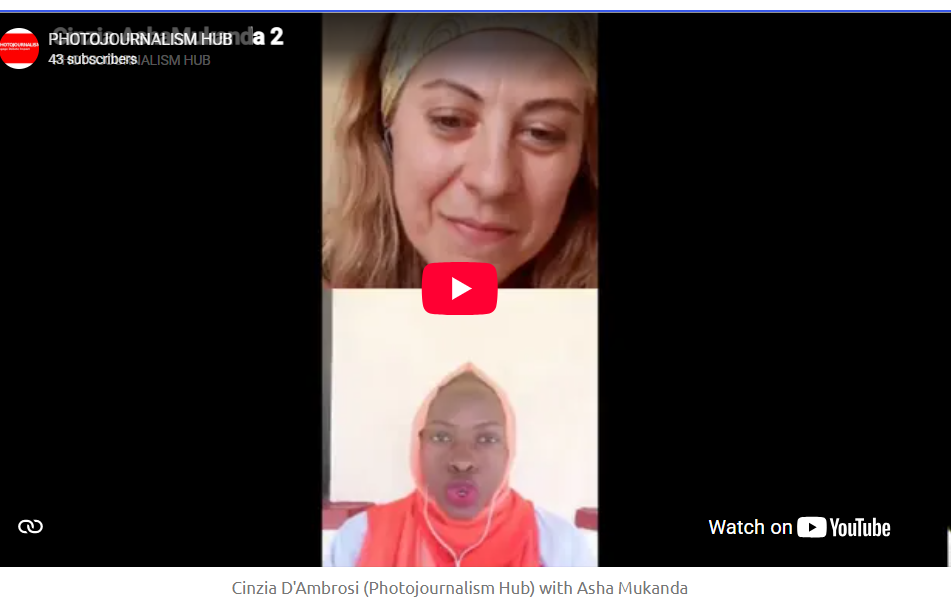
Cinzia D’Ambrosi, founder/director of the Photojournalism Hub is in conversation with Asha Mukanda, activist, writer and executive assistant of the Open Institute in Kenya. The conversation surrounds the impact that the current pandemic is having on the existing issue of health disparities and police brutality in Kenya.
Cinzia D’Ambrosi (Photojournalism Hub) with Asha Mukanda
Photographer and Photojournalism Hub collaborator Carli Adby in conversation with Cinzia D’Ambrosi, founder and director of the Photojournalism Hub discussing ongoing and future engagement programme of the PJH including an ongoing call for photographers and journalists on injustices and inequalities laid bare by Covid-19 and the Photojournalism Nights, an event dedicated solely to photojournalism.
Cinzia D’Ambrosi (Photojournalism Hub) with Carli Adby
Carli Adby from the Photojournalism Hub is in conversation with Suzanne Plunkett from Women Photograph discussing under representation in the photography industry and how we can lift the voices of ourselves and those around us, particularly those who otherwise are overlooked.
In Conversation with Suzanne Plunkett, Women Photograph – 12/06/20
Carli Adby and Suzanne Plunkett
‘Covering conflict in Iraq’ – in conversation with Claire Thomas – 29/05/20
Cinzia D’Ambrosi (Photojournalism Hub) and Claire Thomas
‘Being a photojournalist on the frontlines’ – in conversation with Felipe Paiva – 16/05/20
Cinzia D’Ambrosi (Photojournalism Hub) with Felipe Paiva
Cinzia D’Ambrosi, founder and director of the Photojournalism Hub introduces an ongoing series of mini Talks, live conversations on Insta with various practitioners to share useful and insightful topics.
https://www.youtube.com/watch?v=uo23gaYrE5w Photojournalism Hub Jamie Clark is in conversation with social documentary photographer David Hadland. David […]