The Photojournalism Hub Calendar 2026 showcasing the incredible work of photojournalists and documentary photographers who have contributed to our mission.
Photojournalism Hub is delighted to present guest photographers Evgeniya Strygina and Tori Ferenc for the IN FOCUS event on the 23rd June, 7:15 pm, hosted at Riverside Studios.
Both photographers explore themes of place, identity, and belonging from distinct yet complementary perspectives. Strygina’s minimalist landscapes, often void of people, reflect on space, architecture, and the quiet tension between presence and absence. Ferenc focuses on portraiture and documentary work, capturing the nuances of family, community, and our connection to nature. Together, their work forms a thoughtful dialogue on what it means to inhabit a space, physically, emotionally, and collectively.
Evgeniya Strygina (b. 1989) is a lens-based visual artist exploring urbanisation, contemporary landscape, and immigration. She honed her skills at the Fine Art Photography School, Moscow Museum of Modern Art, and PhMuseum. Since relocating to the UK in 2022, her work has been exhibited at Photo|Frome Festival, London Lighthouse Gallery, Cicek Gallery, and LoosenArt Gallery, with publications in Fisheye Magazine, Truth in Photography, Al-Tiba9 Art Magazine, and Artdoc Photography Magazine. Notable awards include the Top 150 MIRA Mobile Prize, MonoVisions Awards, and Photometria Awards judged by Martin Parr. In 2023, she held a solo exhibition after an art residency in Czechia. Her first photobook, Home from Home, is scheduled for release in 2025 with the publisher Ephemere. As a contemporary photographer with an interest in shooting both urban and natural landscapes, I make a point of keeping my images almost or totally uninhabited as I consider people to be but one part of the world as opposed to being its centre. Even in my pictures of architecture, obviously built by people for other people to use, I am fascinated by the space and its details rather than its occupants. Juxtapositions, interactions and contradictions, rhythms and rhymes – be they intended or otherwise – is what I never stop looking for in nature and cities. In an attempt to make the viewer see aspects of the landscape that routinely go unnoticed, I offer a different perspective on things and deliberately strip down the style of my photographs. Minimalistic and geometric, my pictures are both an experiment in deconstructing reality and a quest for quiet harmony in our noisy existence. Besides exploring the nature of space in my work, I am also keen on studying the notion of home, which could be both a place and a non-place, and portraying a longing for an environment you can call your own. This is probably because, being born in a small town and currently living hundreds of miles away from it, I cannot but wonder where I actually belong.
Tori Ferenc is a portrait and documentary photographer, born in Poland in 1989. In her work, Tori is focusing on the themes of identity, community, family dynamics, and exploring the relationship between humans and nature. Over the years, her projects have been shown at renowned exhibitions such as the Taylor Wessing Photographic Portrait Prize in 2021, the Hamburg Portfolio Review and Prix Virginia in 2022, and Rencontres d’Arles in 2023. She is a member of Women Photograph and Equal Lens. IN FOCUS is presented by the Photojournalism Hub in collaboration of Riverside Studios, bringing to the public compelling and thought-provoking contemporary documentary photography and photojournalism,
We are delighted to present Bruno Saguer as our featured photographer this month. His photographic stories shed light on some of the most harrowing labour conditions, conveyed with a poetic vision and powerful sensitivity that both compel and move us deeply.
This work is neither a protest nor a technical chronicle, but an aesthetic immersion into the decaying beauty of corrosion, into the imprint that time and human toil leave on every stranded hull. Photography as an addiction to decomposition, to the texture of the ephemeral.
From its nest, the seagull takes off over the sea. From the shipyard, the vessel sets sail. Everything tastes of salt. The salt of life, the salt of death.
To launch, to hoist, to depart, to sail, to weather the storm, to board, to dock… A ship always carries the emotional weight of a journey toward the horizon, rocked by waves. Whether carrying people, treasure, or trade, every ship bears the significance of its voyage. Iodine drifts in the air, sea spray weaves into tangled hair flowing in the wind. A maritime symphony whispers all around. But many ships don’t reach a dignified end. After 20 or 30 years riding the waves, they’re cast aside, pushed to die like abandoned animals, left to scavengers.
Bound for slaughter.
Some places in the world have become their graveyards. And the locals—made their executioners. But this isn’t Père Lachaise in Paris. No Balzac, Camus, Chopin, Oscar Wilde, or Jim Morrison lie here. Instead, ships bear flags of convenience—fiscal loopholes, legal evasions, flags with no country.
There is no grey bin for maritime waste. No final place where all things belong. They simply end. Nowhere.
Eid Mubarak. August 2012. Chittagong, Bangladesh.
A northern “still life” made of open-air scrap. These shores should be erased from nautical charts, kept beyond the reach of any compass or bearing.
The poetry of the sea ends here. The carnage begins. No blood is spilled—only oil, diesel, and thick, contaminating fluids.
Dignity slips through the scuppers. Humiliation pools in the bilges at the end of this tragic journey.
Paints, heavy metals, asbestos— A corrosive cocktail you won’t find on a Mediterranean cruise. There will be no dinner at the captain’s table tonight.
No necks are cut, but every part of the ship is dismantled—hull to deck, cabins to engine room, even the prized bridge, where only hours before the horizon was scanned from a privileged perch.
The swords and guillotines of old revolutions are now acetylene torches and cutting saws.
A metallic roar. No siren songs here—just horns of iron pain.
Tons of steel are fed into the maw of shredders. As far as the eye can see, rusted carcasses marooned at low tide. No longer sand, but rare metals of another periodic table. Human termites gnaw at metal, wood, plastic, rope.
Dusk falls on the “unshipyard” of cruise liners, cargo ships, and freighters. Floodlights flicker on. Stripped of rest, the pillaging continues—plates, bolts, no loose ends. In three to six months, the vessel is no more.
A ship scrapped in three or four months in Bangladesh nets a million dollars in return—on a five-million-dollar investment.
And yet, this apocalyptic landscape seduces. It releases photographic endorphins. The eye, the camera’s viewfinder—both tint crimson under a leaden sky.
Steel skeletons run aground in rhythm with the tides. Swarms rush port and starboard, scrambling for the best loot—not astrolabes or sextants, but lifeboats, portholes, wires, propellers, spark plugs, pistons, lamps, sensors, sonar, radar, GPS. All of it cloaked in raw rust.
Rust merchants. Steel auctions. Everything is for sale. Even souls. Recycling without activism—just a euphemism. Melted down, but not damned.
Some pieces will sail again—aboard new vessels, or hanging in chic homes and restaurants. Better that than being left to rot on a deserted beach after a failed escape from a cyclone.
Such is the cycle of the sea. Knots and nautical miles become cubic meters of waste and steel.
Personal stories cling to these corroded remains. Like that of Hossain Khatun. A Bengali man, generations deep, rooted in toxic mud. His descendants likely will be too. There’s no way out, unless you swim—to nowhere.
His nephew Kamal, 14, walks him to the shoreline each day as the fishermen return. If the tide’s low, they can get closer. Hossain is 64 and blind. Kamal guides his arm so he can stretch his hand toward the fishermen and beg.
Kamal has spent nearly all his life working in the yards. The toxicity took his vision. Hossain is on the same path—unless he’s hurt first (they use the blind to crawl into dangerous crevices of the ships), or unless he tries to swim away…
To earn a plate of rice or dhal, they cut through plates of steel. They travel from Panchariya to Faujdarhat—almost 20 km of sandy graveyard. No insurance. No safety gear.
Roughly 200,000 souls live trapped like fish in a stagnant pond. Over 80 yards compete for the dying.
But the rust—captivates.
Nearly one in five of the world’s aging ships end up here.
Many NGOs have reported the working and environmental conditions.
That ship lamp from the Singaporean vessel “Green Earth” will look lovely somewhere. It’s docked in port now, set to sail for Malaysia tomorrow. But it’ll be back. I won’t.
How strange that so much decay can be so visually fascinating. Corrosion addiction could be the title of this landscape.
Thankfully, my memories are rusting. Only images remain. Another contradiction.
Anchored in rust, one becomes a witness to one of the most extreme forms of circular economy—a cycle both toxic and hauntingly poetic.
Bruno Saguer
“The greatest photos are those no camera can capture, yet only a photographer can see. My quest is never to miss one again.”
Born in Barcelona in 1972, half French and half Spanish, my earliest memories of photography are rooted in the dim red glow of my father’s darkroom at home. A passionate Nikon enthusiast, he introduced me to the magic of framing life in black and white. Though he passed away when I was 18, his legacy deeply shaped how I perceive the world through a lens. My journey as an amateur photographer truly began with my Nikon D700 and a humble Tamron 17-50 lens, ignited by a simple desire to feed my curiosity. My first solo photo trip was to India, a welcoming place where capturing slices of everyday life and close portraits came naturally. Inspired by a mesmerizing documentary about the shipbreaking yards in Bangladesh, I organized a photographic expedition with friends, driven not by activism but by a fascination with the stark beauty of rusted giants awaiting dismantlement. From bustling Dhaka to the surreal graveyard of ships extending for kilometres, the contrast between human vitality and industrial decay was captivating. Beyond the dismantling itself, it was the vibrant recycling economy—shops filled with salvaged lamps and life jackets—that left a lasting impression. One such lamp now hangs in my home, a constant reminder to seek out the next photographic journey. Balancing the roles of father and founder of an advertising and branding agency, my greatest challenge remains finding time to pursue these personal photographic projects, each an exploration waiting patiently for its moment. My job has also exposed me to brilliant work, and both creativity and art direction continually spark my curiosity. Among the photographers I admire most right now is Edward Burtynsky. Of course, I follow many others, specially Martin Parr, and depending on the mood—documentary, street, colour, black & white, or portrait—but I find Edward’s perspective uniquely compelling. Website | Instagram | Email
Marcia Michael: The Family Album Sat 15 March – Sun 1 June | First Floor Gallery | Tue – Sun, 11am – 5pm | Fr
Experience a powerful reimagining of The Family Album, exploring the beauty and depth of family connections across time while celebrating the body as a site of history and memory. This first major solo exhibition by multidisciplinary artist Marcia Michael is a ‘massive love letter’ to family and celebrates the sense of belonging and joy found through family connections. The Family Album is a deeply personal exploration of kinship that pieces together a rich family history through contemporary photography, sculptures, ceramics, and print design. The works of the British artist of African and Caribbean descent centre around three interconnected series: The Study of Kin, The Family Album, and The Object of my Gaze. These moving collections, archived as a revolutionary act of remembrance, display Michael’s ongoing journey to reconnect with and preserve memory, love and identity. Michael’s intimate portraits of herself and close family members -particularly her mother – explore how the human body can serve as both a physical and emotional vessel for recorded histories. These works echo resilience across generations and highlight the uplifting power of family bonds. For The Family Album, MAC commissioned new pieces from Michael, including a unique necklace featuring miniature bronze sculptures representing the bodies of mother and daughter. Through her diverse artworks Michael aims to foster a sense of familiarity and belonging that are centred within the home. This showcase invites the visitor to reconsider the traditional interpretation of a family album and encourages them to (re)connect with their own family histories from a new perspective. Marcia Michael, the artist of The Family Album, said:
“The Family Album ultimately defines my unconditional love for my family past, present and future. It creates and holds space where images and artefacts lie in wait to be seen touched and remembered. It is always imagination that keeps the past alive! As time passes it becomes important that there is a place where one can access and retrieve the whispers of this past. As well as relocate their visual, tangible and auditory memories into the voices of new kin as they take over.”
About the artist, Marcia Michael Marcia Michael (b. 1973, London, UK) is an award-winning British multidisciplinary artist of Caribbean and African heritage who challenges the representation of the Black subject within the family album by reconstructing her own family archive. With great sensitivity toward her sitters and environments, her work encompasses captivating matrilineal photography, self-portraiture, moving images, sculptures, poetry, sound pieces, and drawings, using both traditional and non-traditional media. Through photography as both a mode of documentation and conversation, Michael renews and reimagines a transdisciplinary tradition of storytelling, seamlessly connecting past, present, and future. Her work guides the viewer on a journey through temporal dimensions, weaving together Black feminism, intergenerational visuality, African diasporic traditions, and the representation of the Black mothering body. Michael’s practice reimagines and restructures history through the empowered, political, and self-loving Black body. She studied photography at the University of Derby (1996) and earned an MA in Photography with distinction from the London College of Communication (2009). In 2024, she was awarded a Ph.D. from the University of the Arts London. Her body of work has been shown internationally. The Object of My Gaze, exhibited at Autograph ABP, London (2018), and Tate Britain (2022), builds on her earlier series The Study of Kin and The Family Album (2009). For more information, please visit: marciamicheal.co.uk.
Where Memory Meets Curatorship: Photojournalism Hub x Dominique Nok
Interview with Dominique Nok, 1873 Studios By Cinzia D’Ambrosi, documentary photographer and founder/director of the Photojournalism Hub.
What initially drew you to Marcia Michael’s work, and what made you decide topresent this exhibition? Around four years ago, I heard Marcia speak at a photography symposium in London. She showed images while reciting one of her poems and playing a sound piece of her mum laughing. Her intimate, unfiltered, and pure body of work—and the way she described her relationship with her late, beloved mother—touched me. After the event, I went up to her and we spoke briefly. From that moment, I knew I needed to learn more about Marcia and her work—and that the world around me should too. So, when the opportunity came at Midlands Arts Centre (MAC)—a place where I knew people who look like Marcia, our family members, and myself are warmly welcomed—I did not hesitate to put her forward. Knowing that Birmingham is home to many people from Africa and of African descent, I knew her work would speak to them, and that it would acknowledge what and who needs to be acknowledged.
What does this exhibition reveal about the ways diasporic communities preservememory and identity across generations? The answer to this question could easily become a whole essay—there is so much to say about preserving memory and diasporic identity across generations. I am, therefore, going to try to give an answer in the best possible way. We know that people from the African diaspora take pride in things like food, dress, music, and our ability to withstand hardship. These elements have hugely contributed to our identity and are ingrained in our memory. Amongst ourselves, we celebrate this—think of birthday parties at a family member’s house, and weddings. What we are often less aware of are the many stories we carry within us and unconsciously pass on to others. This is something Marcia spoke about again and again—and something she tenderly and beautifully portrays through her work. “The body is more than just a host; it carries countless stories.” Yes, Marcia presents several ways to preserve memory through archives, and photography by documenting her close family members, showing their facial features, their hair, and body parts like fingernails and feet. But it goes so much further and so much deeper. Identity is found in connection and here, she gently and cleverly shifts the narrative—from being othered to belonging, from hatred to love.
“The body is more than just a host; it carries countless stories.”
With a frightening and atrocious past—one that we, as people from the African diaspora, are still unpacking and healing from—there is still so much more to uncover. I am talking about a beautiful history that was concealed, forbidden to speak about or act upon, and has not been accessible through disclosed records of the past. In this exhibition, Marcia offers another way to enter this hidden family history: by engaging with stories that have been shared with her, using different mediums to tell those stories, and allowing her imagination to reveal and communicate what known and written history alone cannot. These found truths can hereafter develop into connection with the people around us, those who came before us and create pathways to develop an identity of belonging for future generations.
Can you share a bit about the curatorial process, were there particular challenges orbreakthroughs in how to present such personal, intimate work in a public space? Marcia’s practice is deeply layered. Nothing about it is linear—everything can be viewed from multiple angles. Each piece she creates is made with the utmost care and carries profound meaning. Capturing the essence of what she was trying to communicate was, I believe, my biggest challenge. It took time to truly grasp the depth of her work, but once I did, I was able to present it in a way that a wider audience could connect with and understand. While safeguarding personal elements and allowing Marcia to express what she felt comfortable to share, I sought to preserve the intimacy and care she has within her practice. Producing an experience for visitors—one that would allow them to encounter Marcia’s work in an impactful way, resonating with their own family histories was my focus. Because of the strong bond that runs through the lineage of Marcia’s mother, I wanted to create a kind of womb—an inner space. A space that feels homely and holds stories. A space that is accessible, where people can walk through—into other dimensions of the work—connecting the three bodies of work: The Family Album, The Object of My Gaze, and The Study of Kin. When I presented my vision, MAC’s Artistic Director and CEO, Deborah Kermode, said, “Dominique, we’ve never done something like this—but it’s not impossible you know.” Her trust meant the world to me. MAC has been phenomenal in facilitating this exhibition—they truly are an amazing arts institution. The structure of the inner space and the layout I envisioned on paper took far more effort to bring to life. At times the fantastic technicians at MAC were pushed to their limits—but they did it!
What legacy do you hope The Family Album leaves for audiences and future artistsalike? I hope that visitors will be touched in a way that, through art and creativity, they begin to uncover what is hidden within them. Whether by observing and allowing the work to spark emotion—something they can then explore further—or by beginning their own journey of discovery through their own creativity. That could be through photography, poetry, dance, collage, or anything really, that helps them to (re)connect with what lies inside and open a dialogue with themselves and/or their loved ones.
To future artists, I want to say: do not limit yourself. You are not a one-trick pony. You can explore multiple mediums, also at the same time, you can wear multiple hats. You hold the power to shift narratives—and to change the world around us! As Marcia would say: “Let’s just play!” You never know what beauty might come from it—unless you try.
About the curator, Dominique Nok Dominique Nok (b. 1977, Paramaribo, Suriname) is a Black female portrait photographer and curator, born in Paramaribo, Suriname, raised in Amsterdam, and based in London. She has over 20 years’ experience as a commercial photographer and holds a bachelor’s degree in (Photo) Journalism and a master’s in curating. Her work has been featured in The Guardian, BBC Midlands, ITV.com, and The Voice of Holland, with exhibitions at Midland Art Centre, Harris Museum, and FUJIFILM House of Photography. Dominique’s curatorial career began with the We Are Here exhibition for UKBFTOG (UK Black Female Photographers). Since then, she has created platforms for predominantly female (and female-identifying) artists, collaborating with individuals and collectives such as Maryam Wahid, Sharon Walters, and the Mixed Rage Collective. Dominique is passionate about advancing equal representation for artists from the African diaspora and those of Global Majority heritage. For more information, please visit: 1873studios.com.
About Midlands Arts Centre (MAC) For over 60 years, Midlands Arts Centre (MAC) has connected people with creativity. MAC is a contemporary arts centre and independent charity, with the mission to make art an important part of people’s lives. Set in the magnificent surroundings of Cannon Hill Park in Birmingham, MAC is the number one visited free attraction in the West Midlands. At the heart of MAC is a focus on sustainability, accessibility, and inclusion. MAC works extensively to support international and local artists, and develop programmes for and with our local community. MAC is a registered charity supported by players of People’s Postcode Lottery through the Postcode Culture Trust and Arts Council England.
Midlands Arts Centre (MAC) Cannon Hill Park, Birmingham, B12 9QH Registered charity no. 528979
Facebook: @Midlands Arts Centre – MAC X (formerly known as Twitter): @mac_birmingham Instagram: @mac_birmingham TikTok: @midlandsartscentre
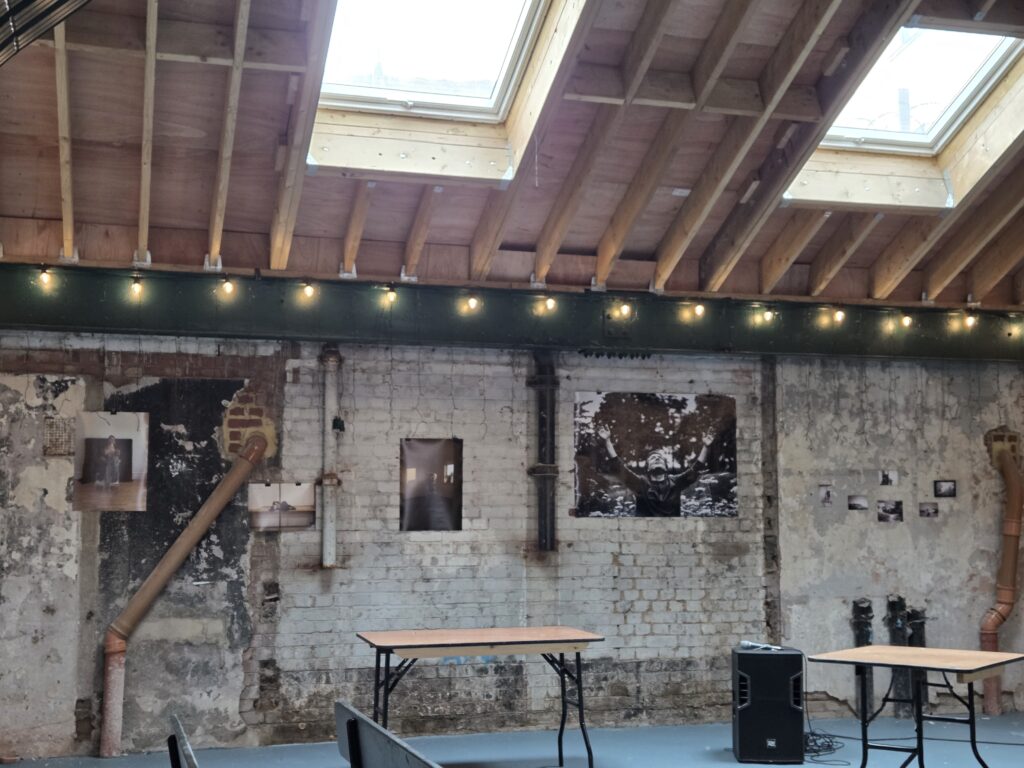
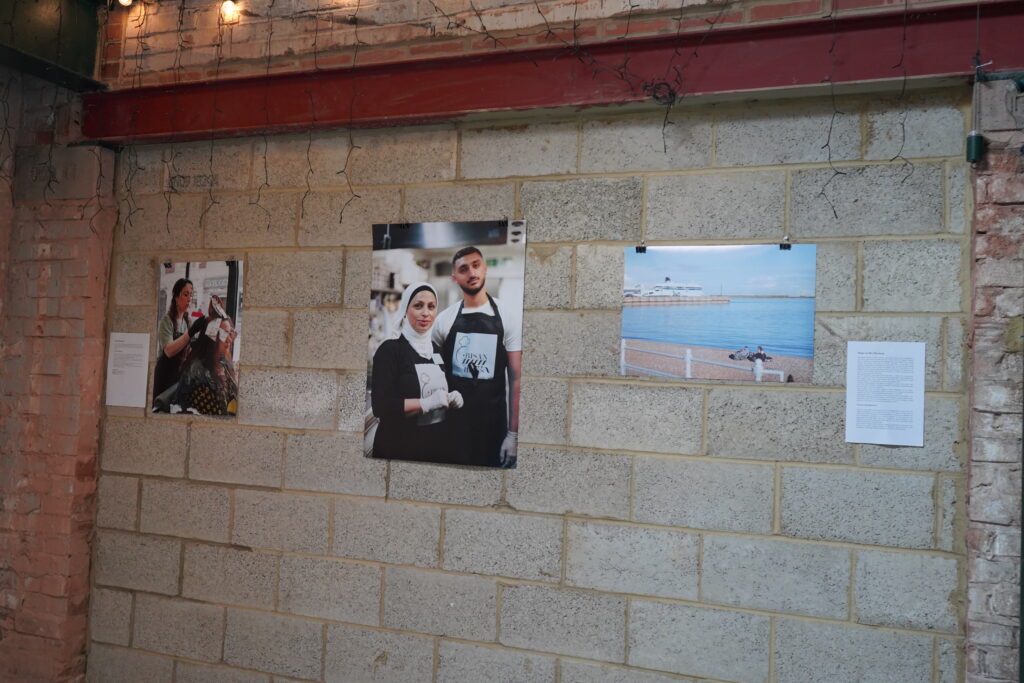
Photojournalism Hub presents IAm Your Local…, a photography exhibition in collaboration with Hikayetna at LondonShepherd’s Bush Market marking Refugee Week 2025.
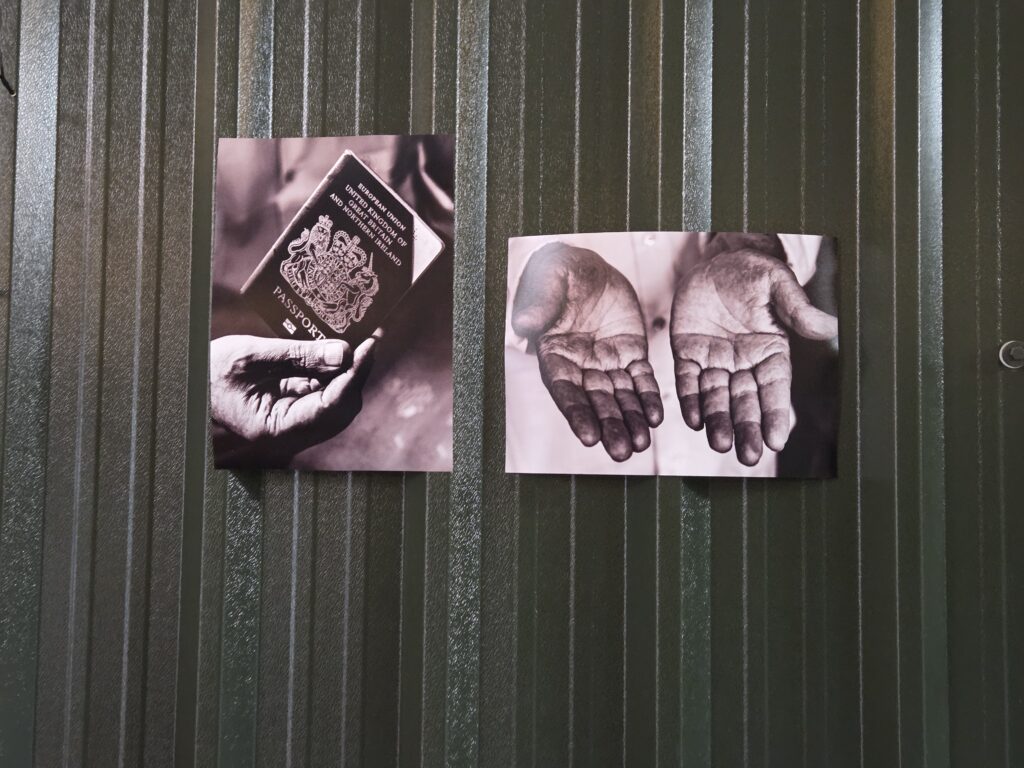
“I Am Your Local…” features work by photographers from migrant and refugee backgrounds, offering unique insights into lived experiences, personal perspectives, and deep connections with their subjects.
At a time when migration is often framed through the lens of crisis, “I Am Your Local…” shifts the narrative by centering the voices and visions of those with lived experience, reclaiming space and dignity through the act of visual storytelling. The exhibition also speaks to urgent contemporary issues—including border politics, identity, and belonging—offering a deeply human perspective on today’s global and local realities.
The selected photographs communicate the immense resilience of migrants and refugees as they navigate grief, isolation, language barriers, and the challenges of adapting to life in a new country.
Supported by H&F Council, “I Am Your Local…” celebrates and honours the everyday contributions of migrants and refugees in our society, while fostering meaningful connections with the wider community.
The exhibition also highlights the power of photography as a creative tool for expression, empowerment, and social change.
“I Am Your Local…” shines a light and provides a tool to share the personal stories of the many individuals who are an integral part of our society, yet are often anonymised by a broad narrative that only sees them as migrants or refugees rather than as the chef, the doctor, the teacher, the volunteer, and so forth. It provides a space to reclaim identity and celebrate the many roles’ migrants and refugees hold in our communities.” – Cinzia D’Ambrosi
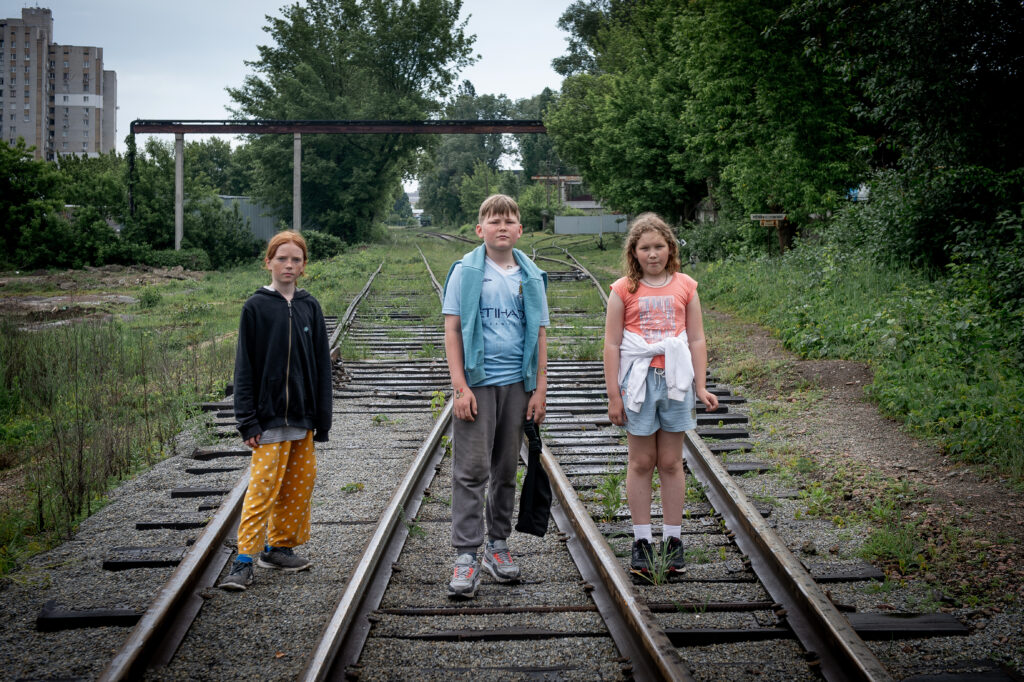
“I Am Your Local…” features the photographic work of Annie Gentil-Kraatz, Evgeniya Strygina, Manuela Federl, Maria Tomas Rodrigues, Nafisa Elfatih Elmahina, Natalia Sharomova, Nuriya Aliyaskarova, Olena Vasiukevych, Richard Zubelzu, Serbest Salih, Shasheet Alaa, and Uwera Djamilla.
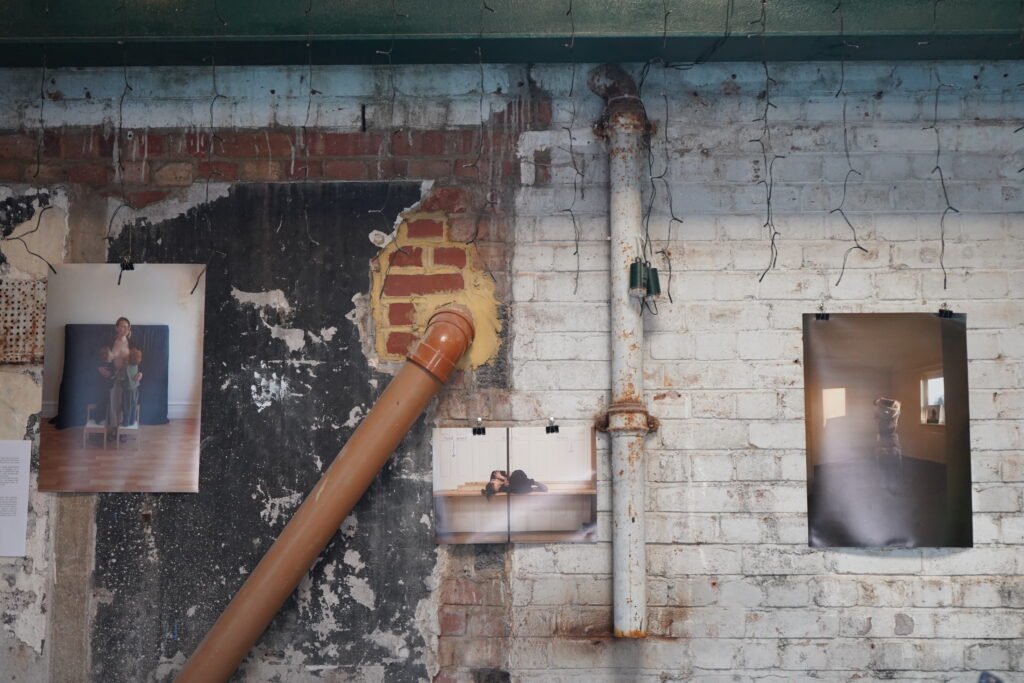
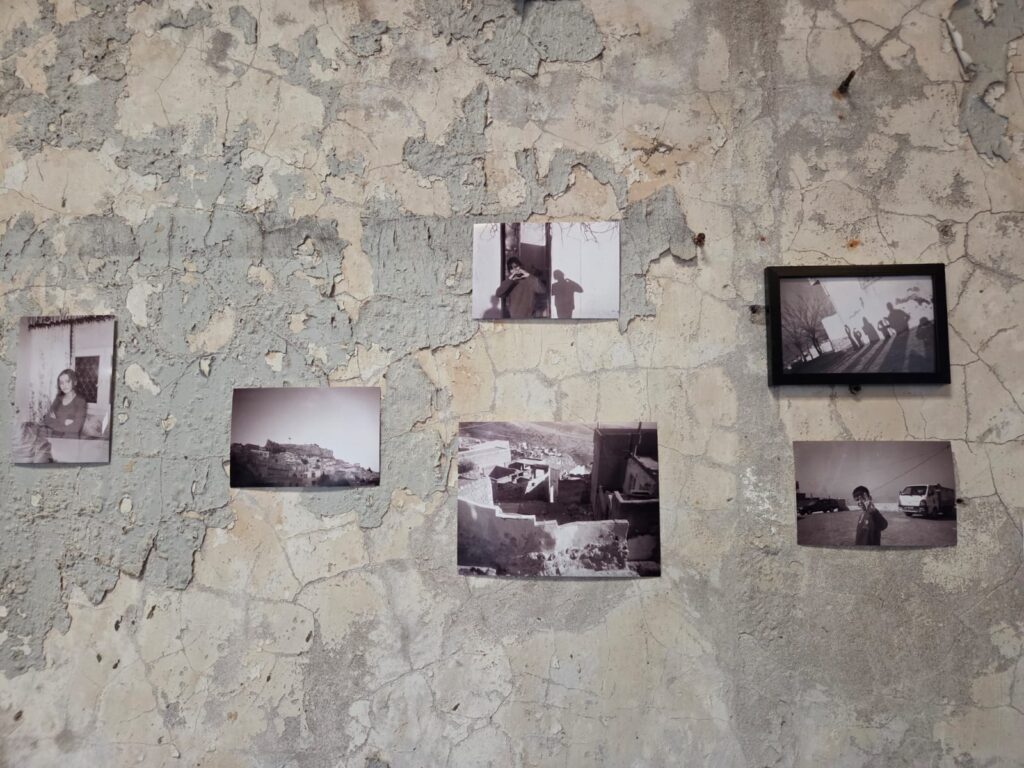
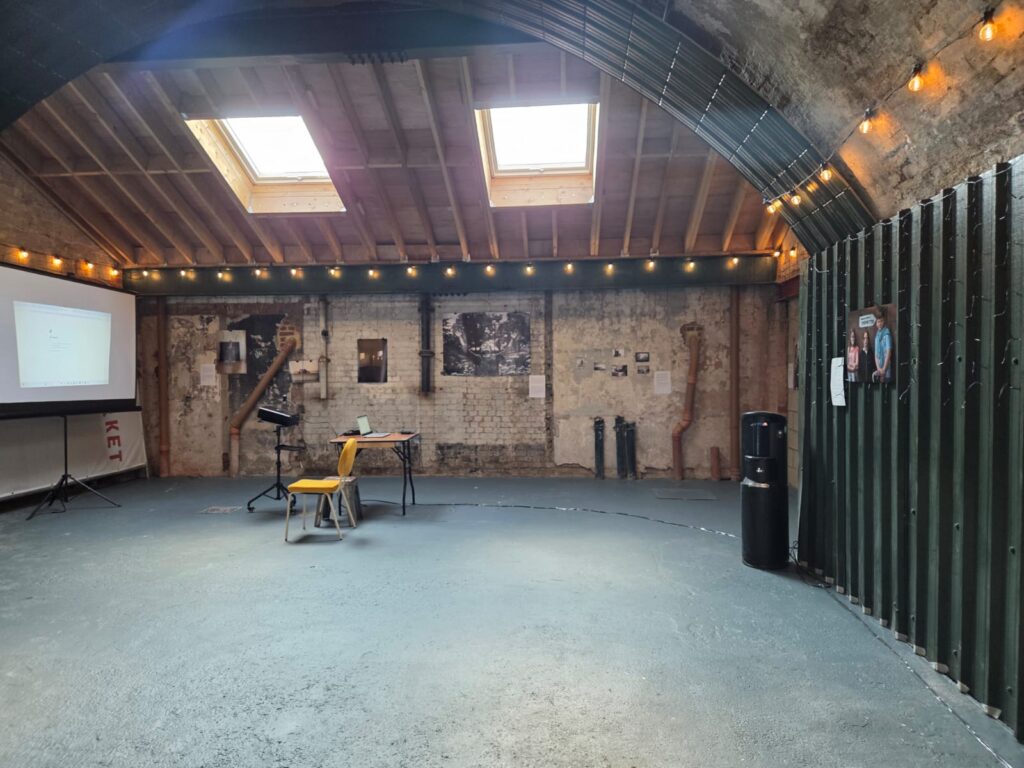
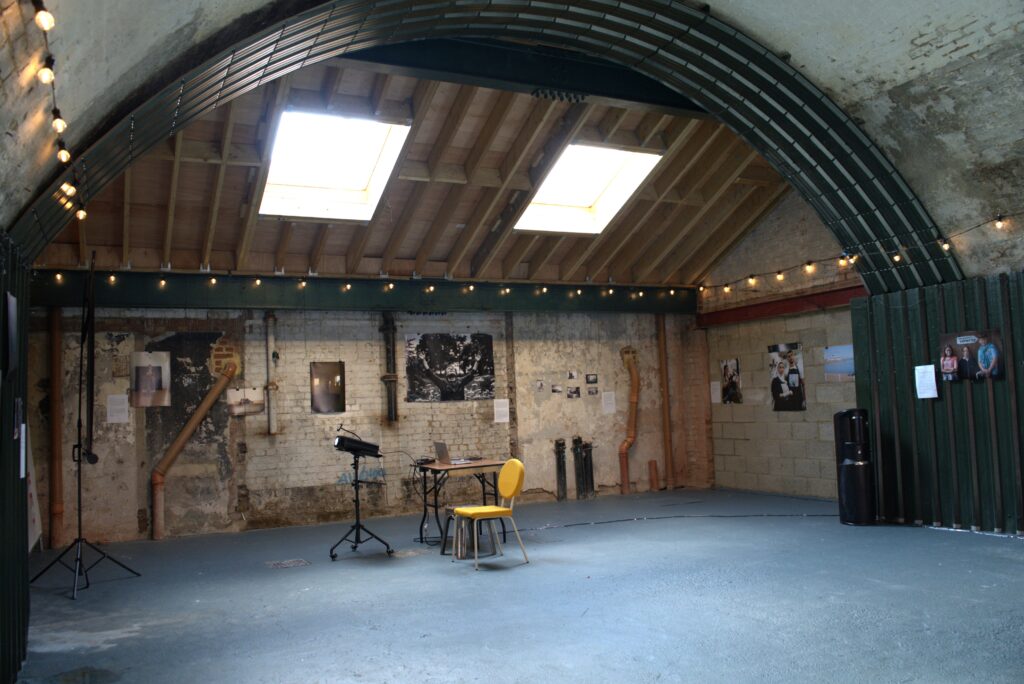
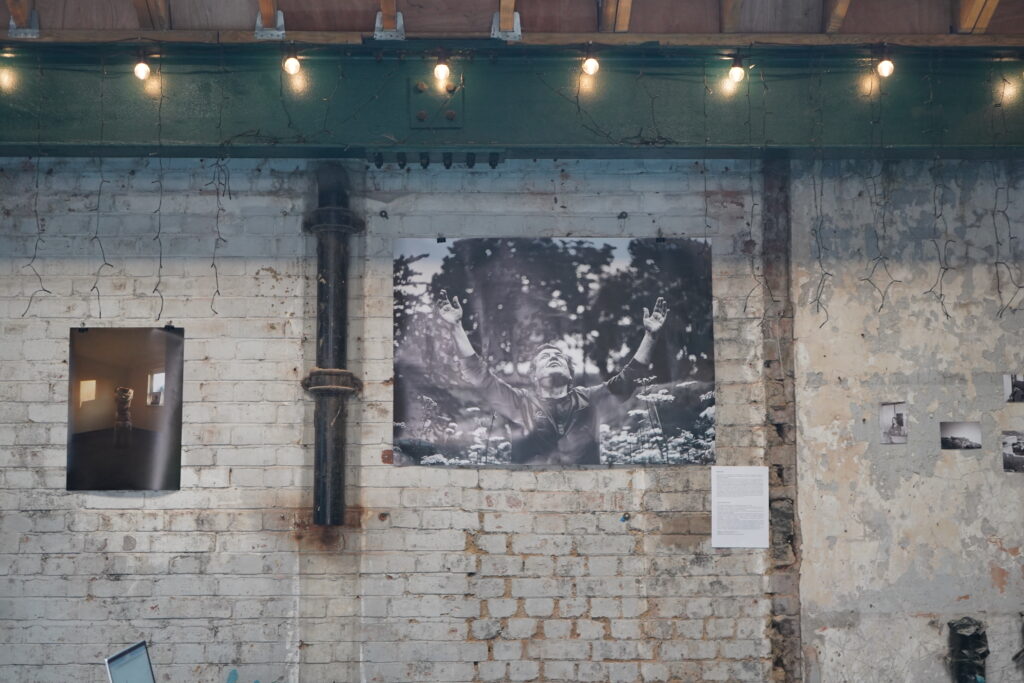
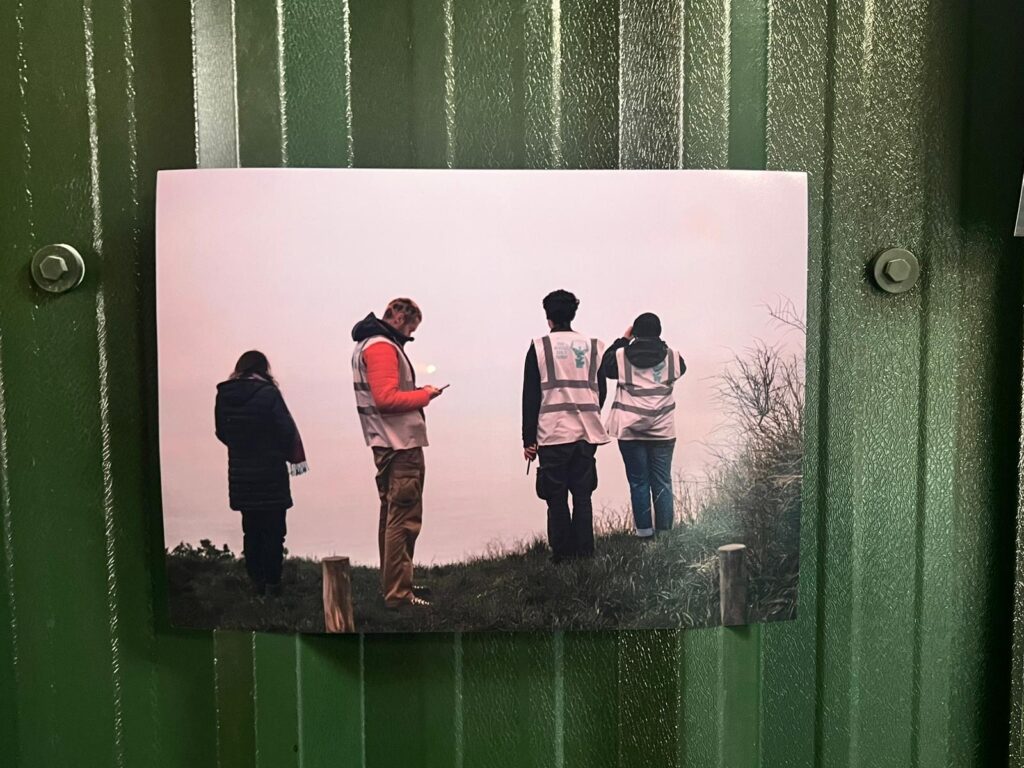
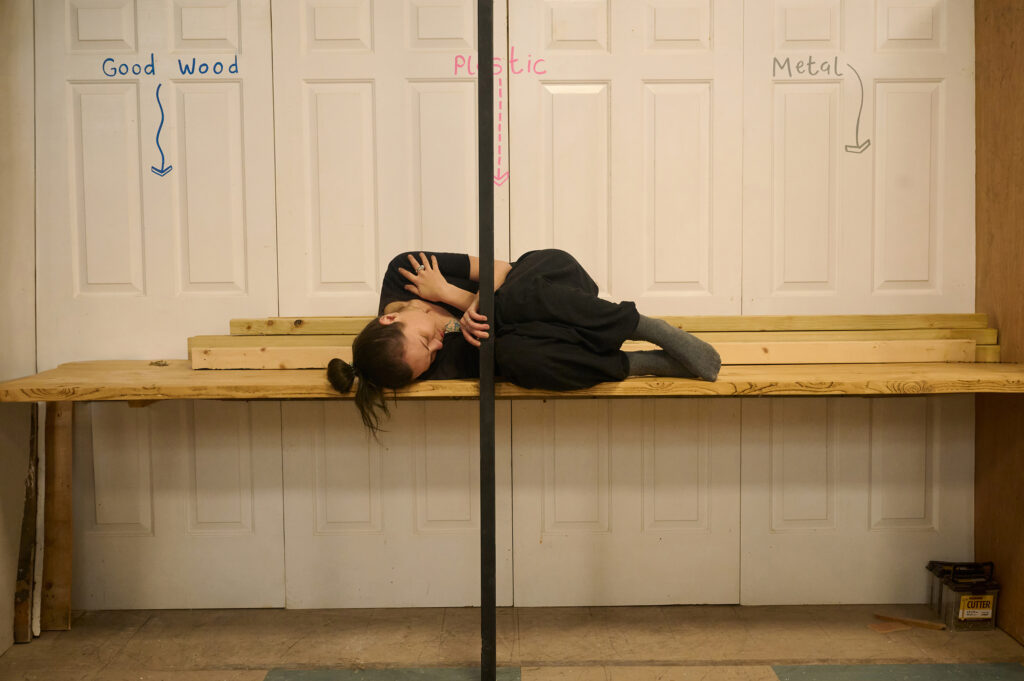
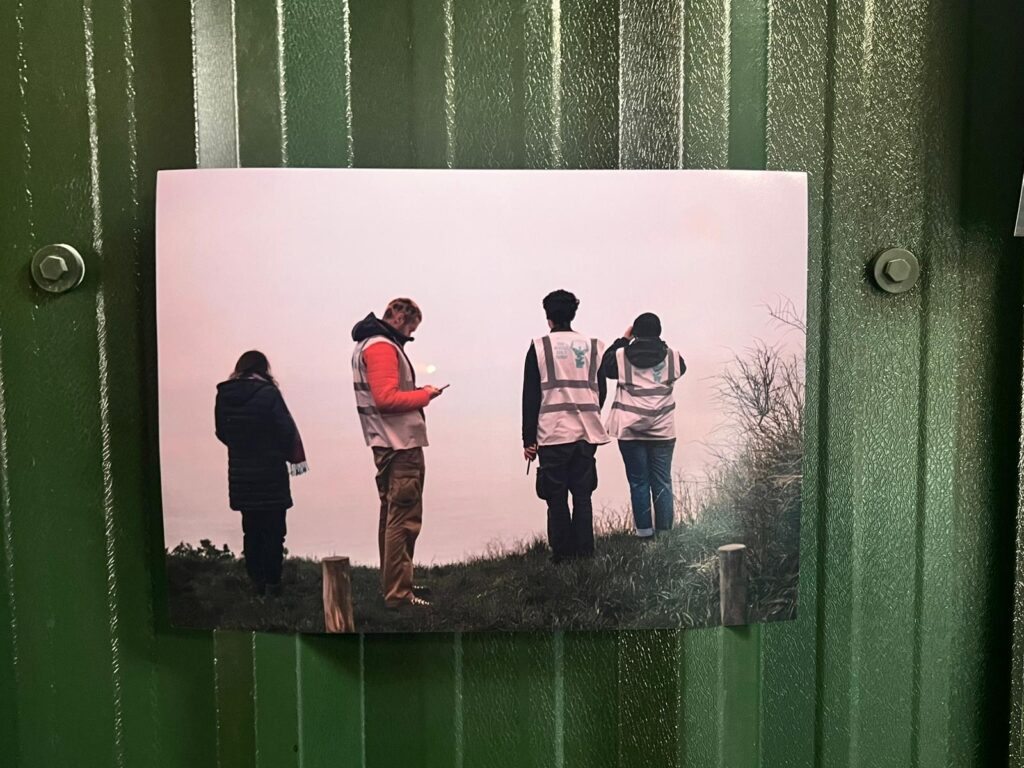
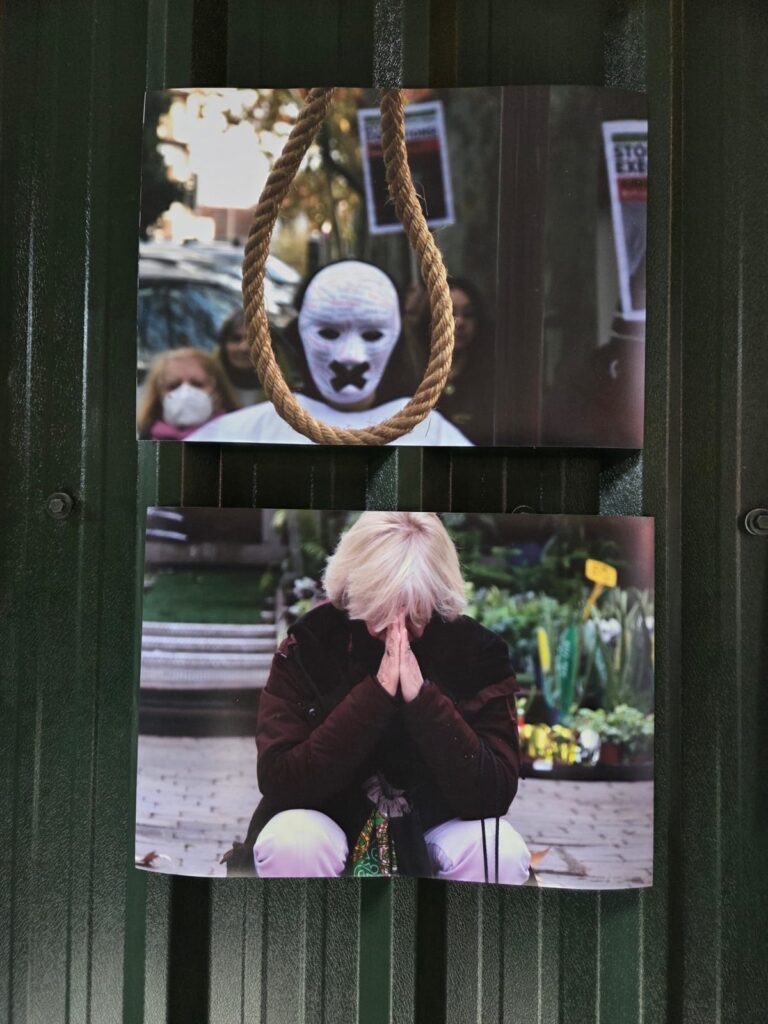
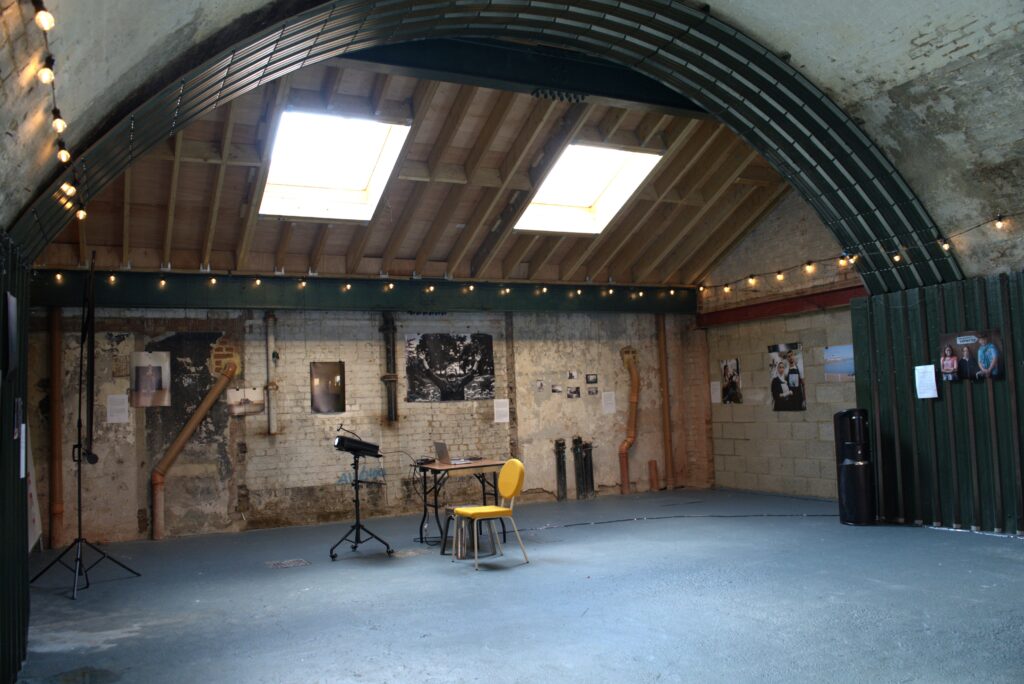
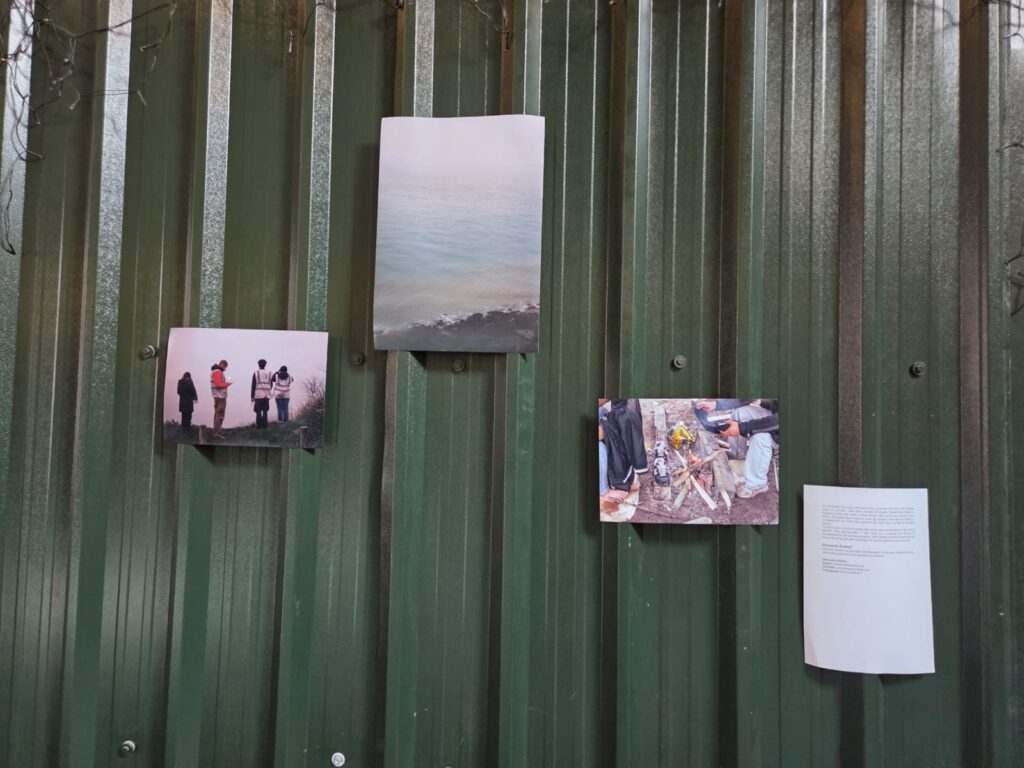
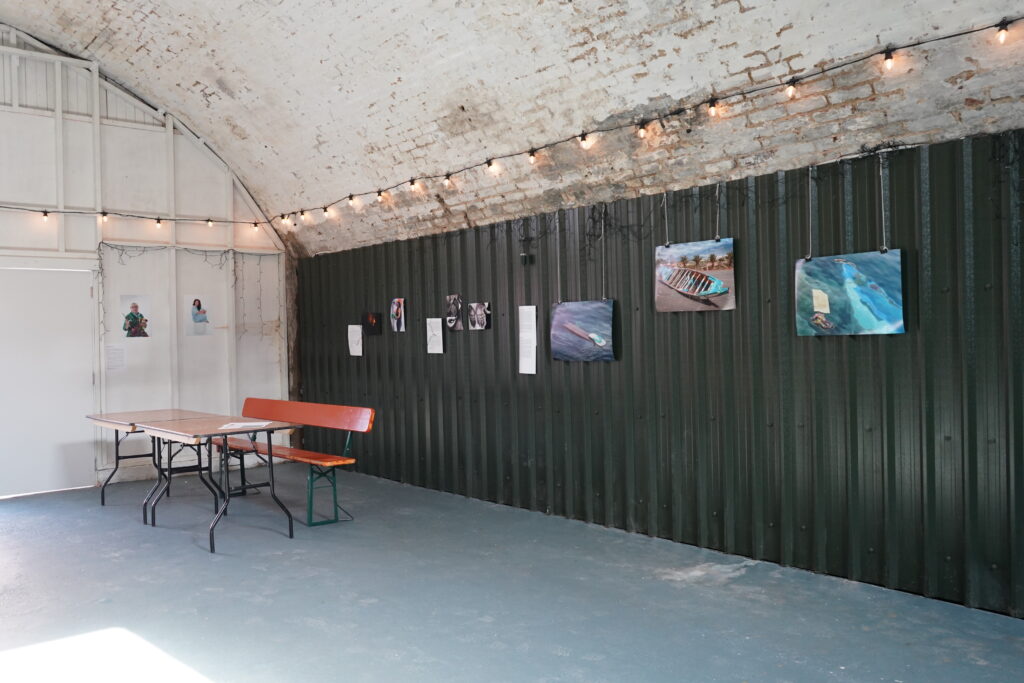
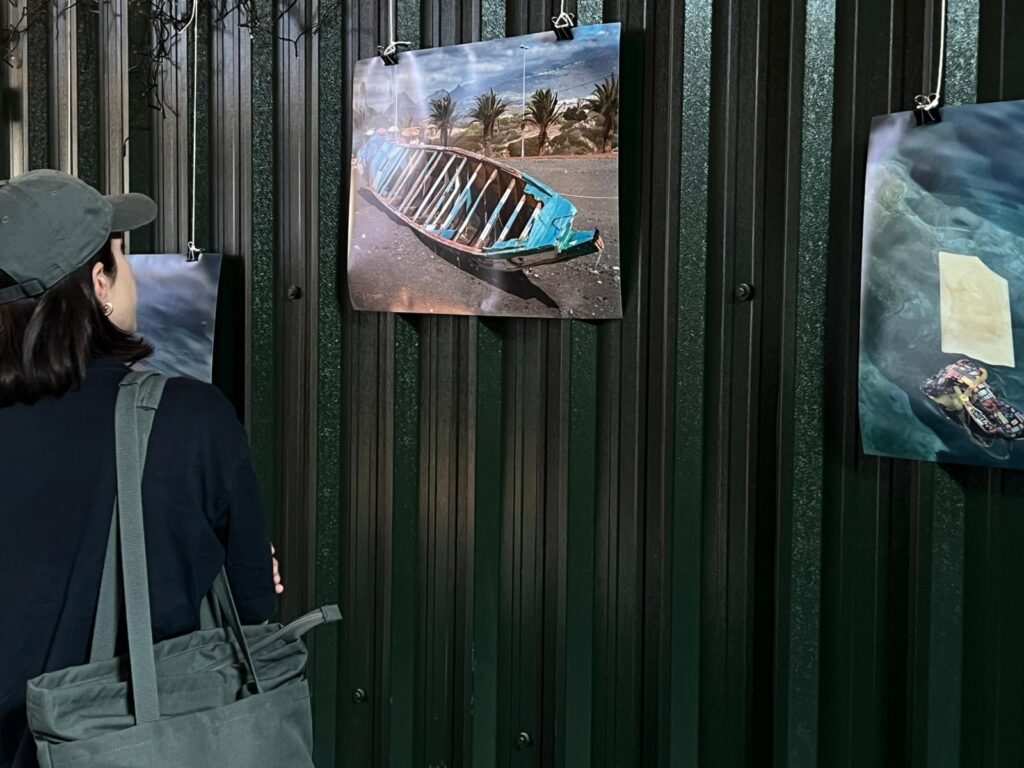
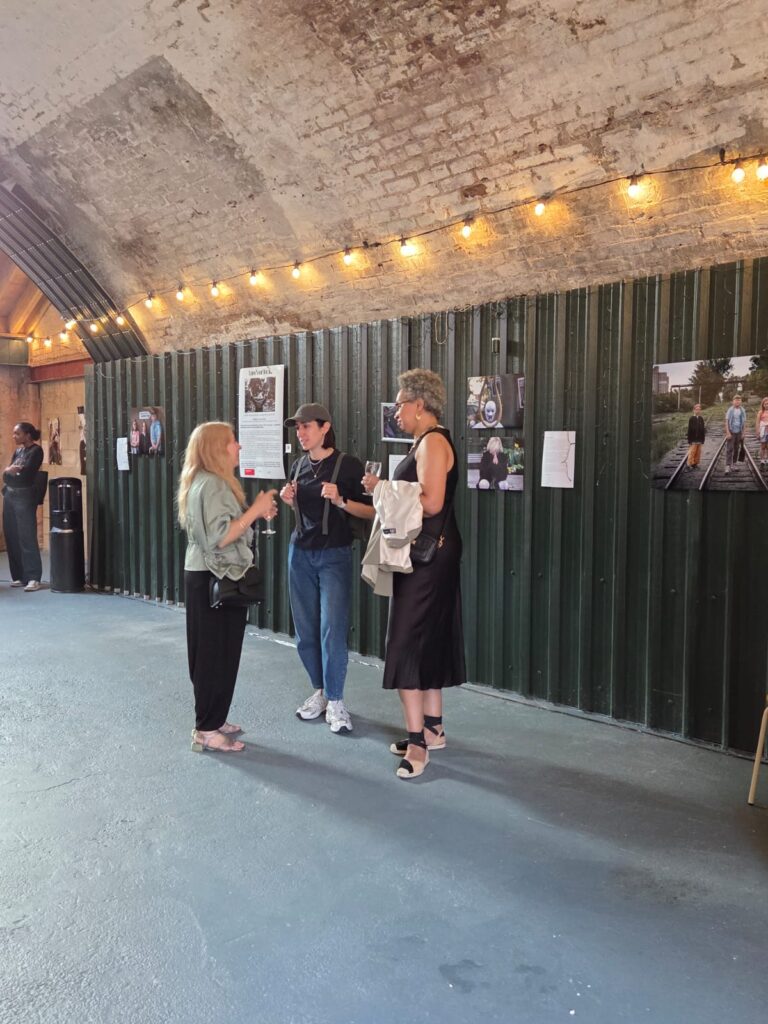
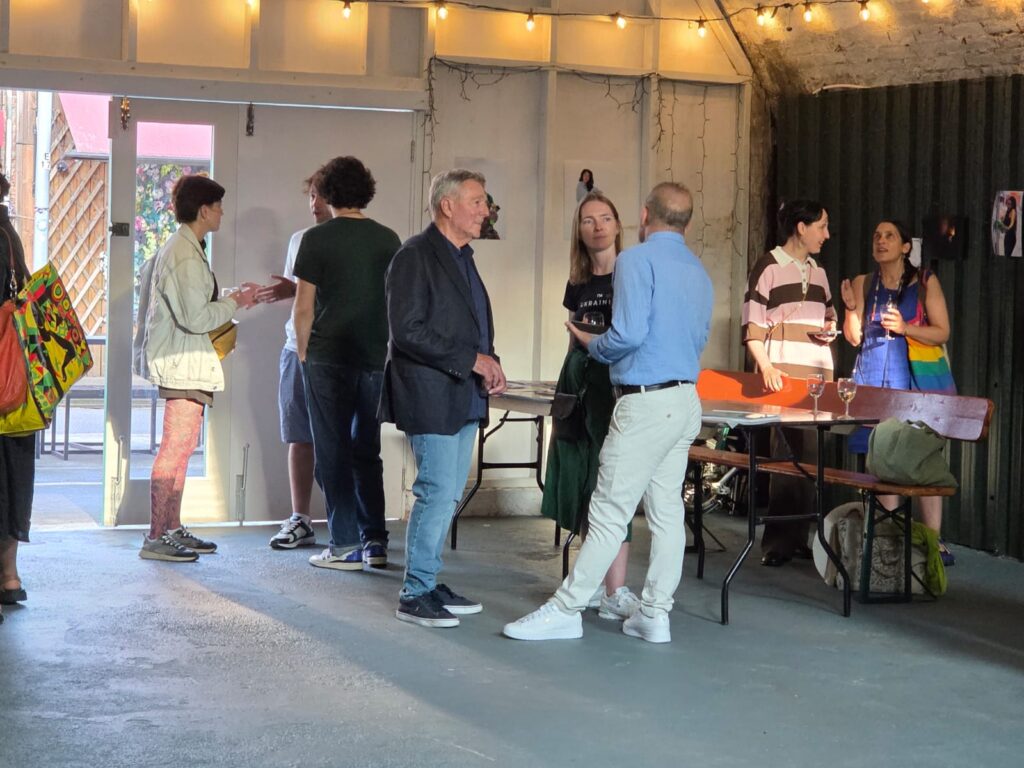
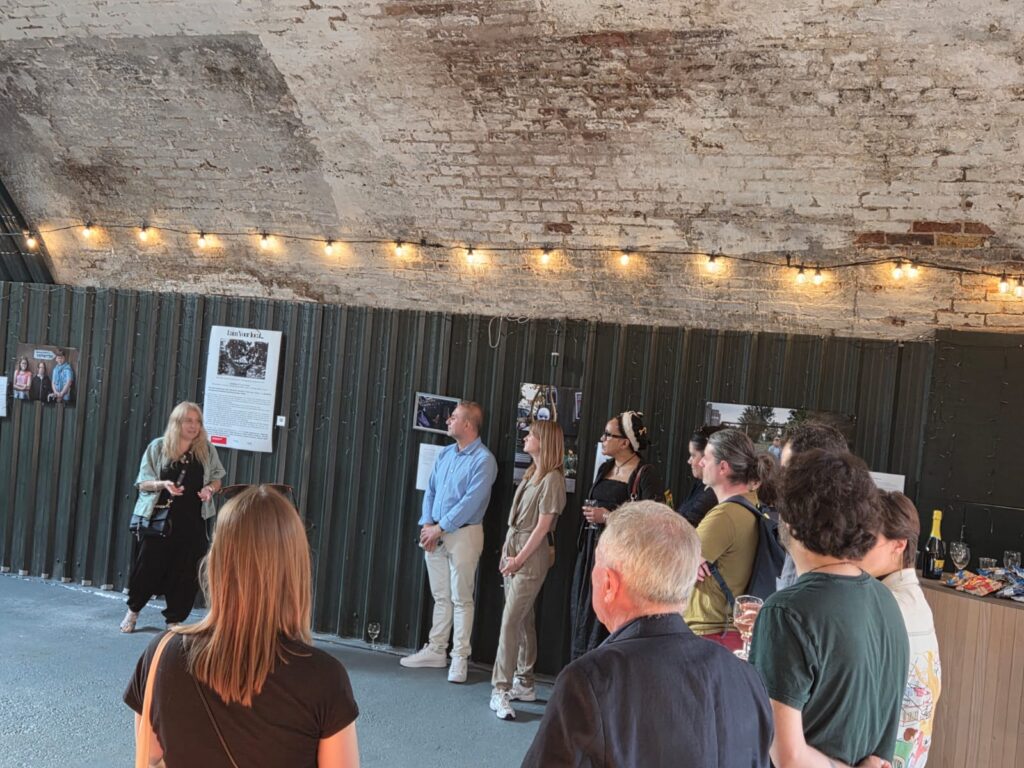
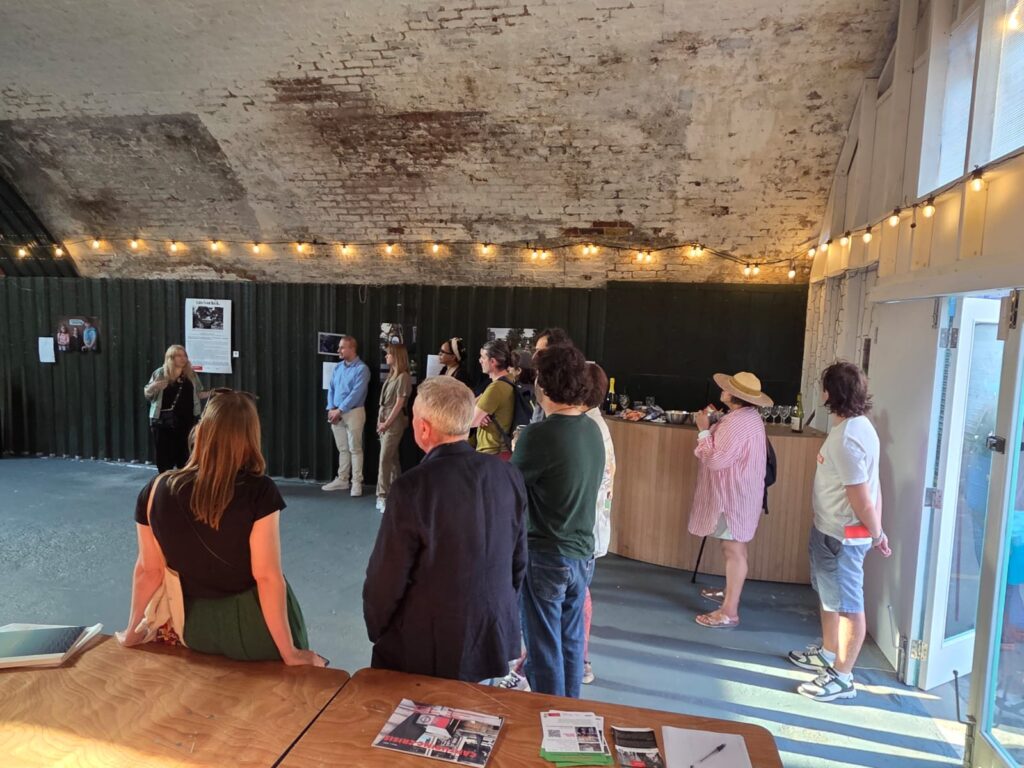
Photos from the exhibition (installation shots, close-ups of work on the walls, exhibition design).
THE OPENING
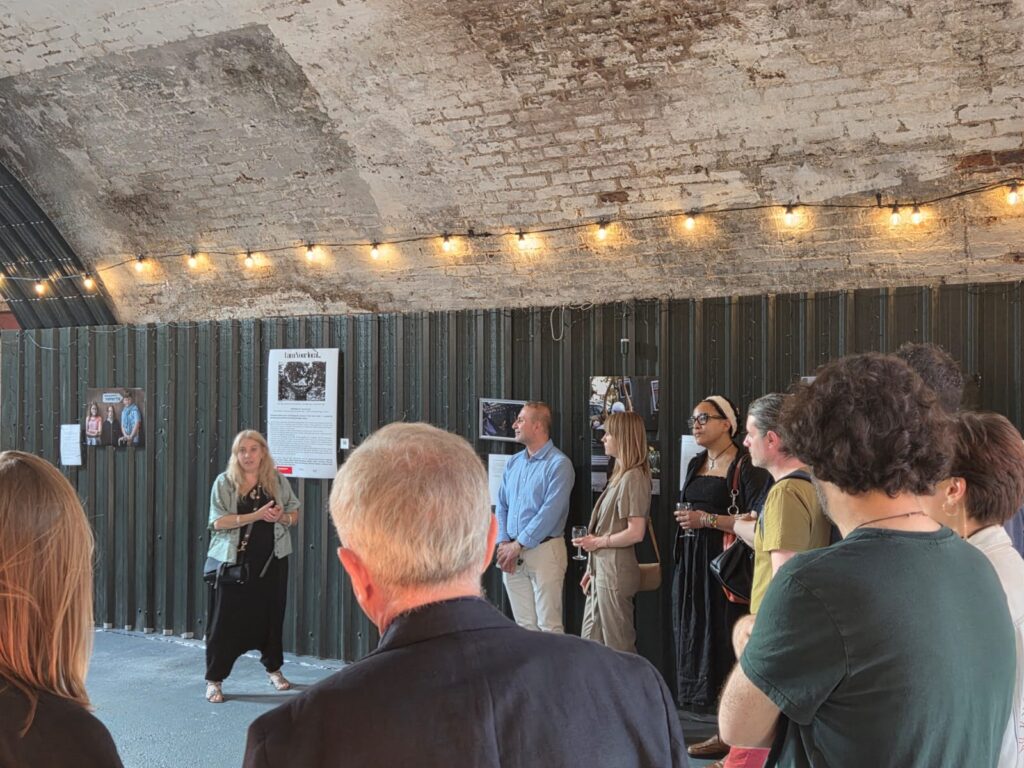
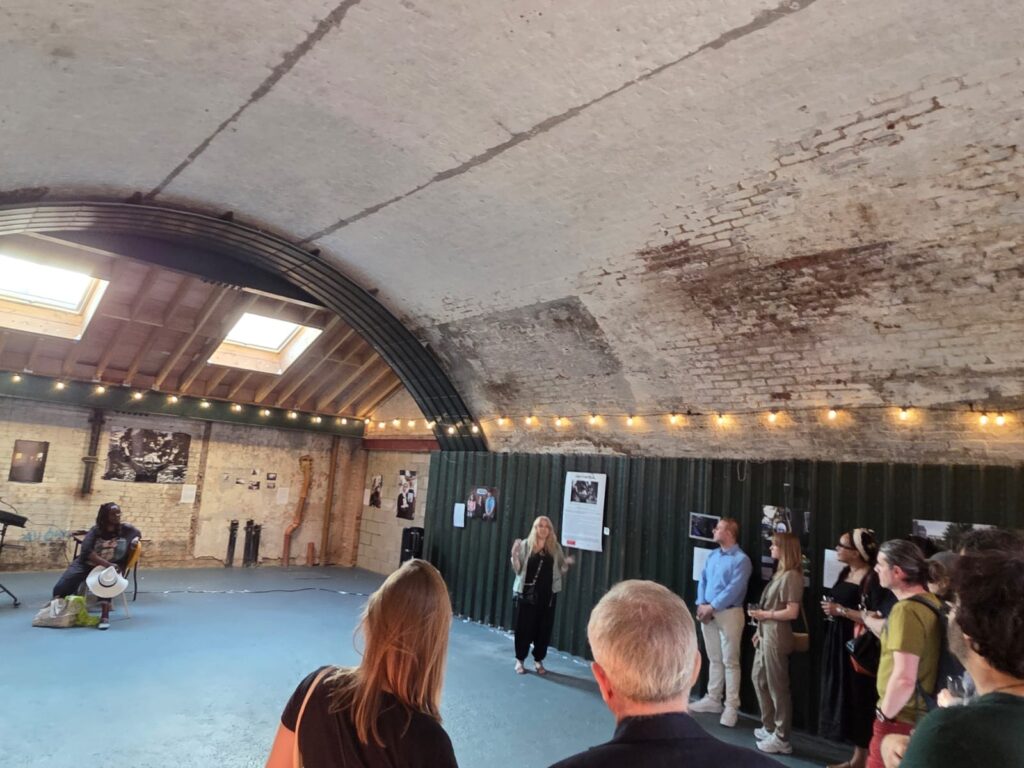
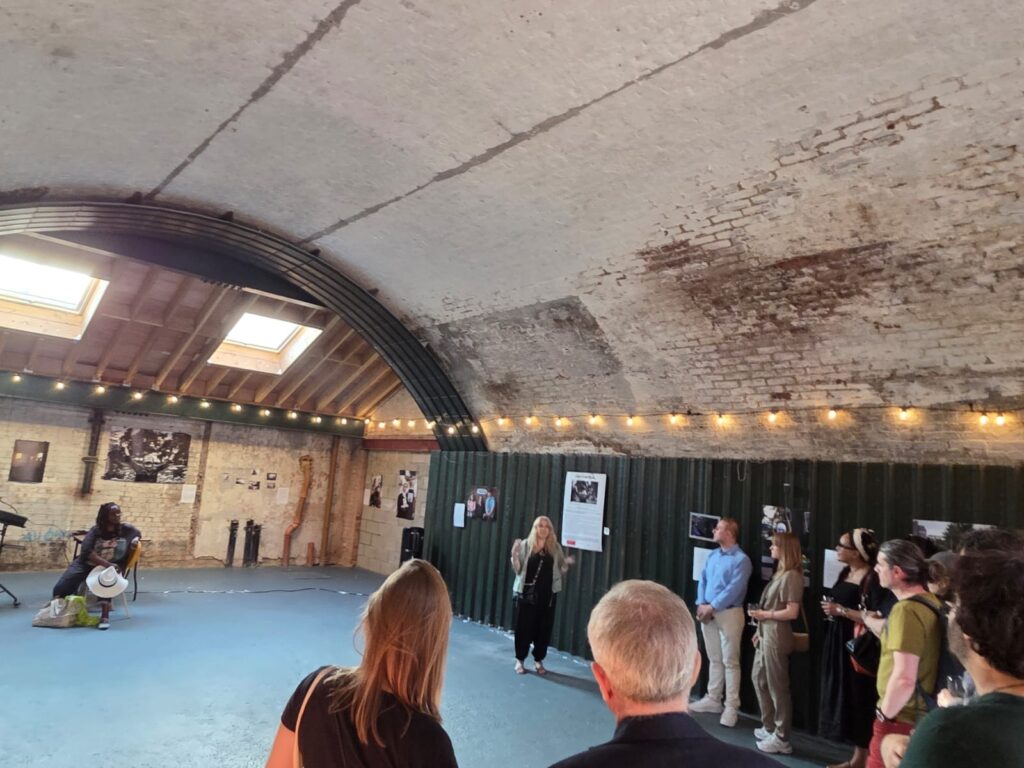
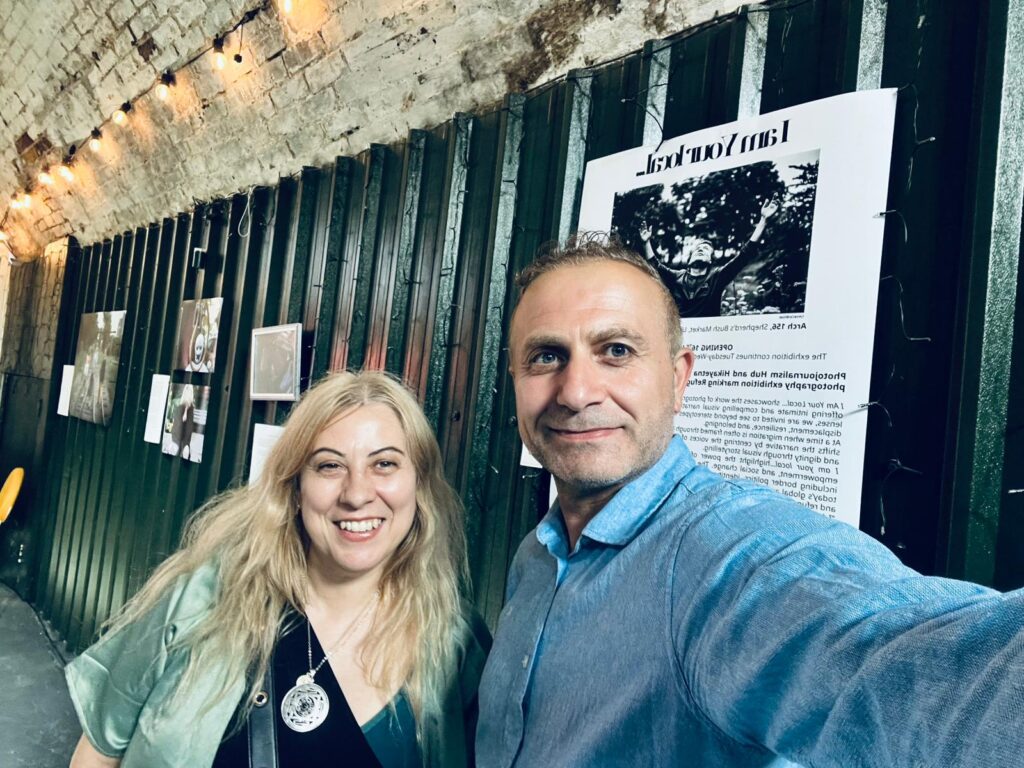
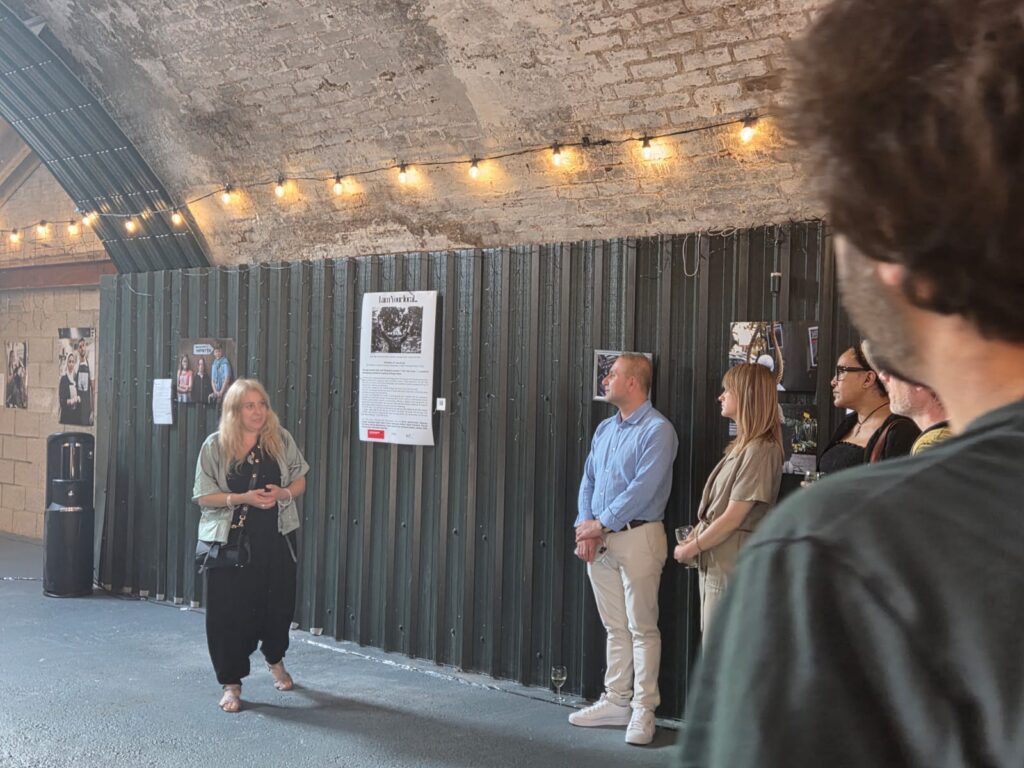
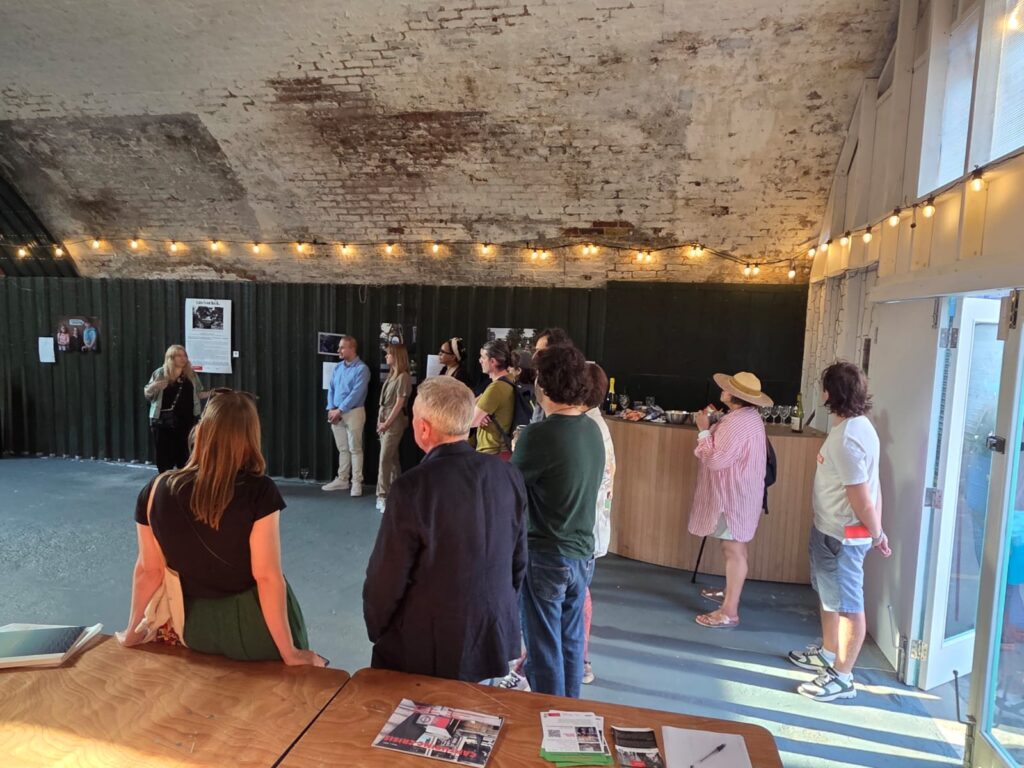
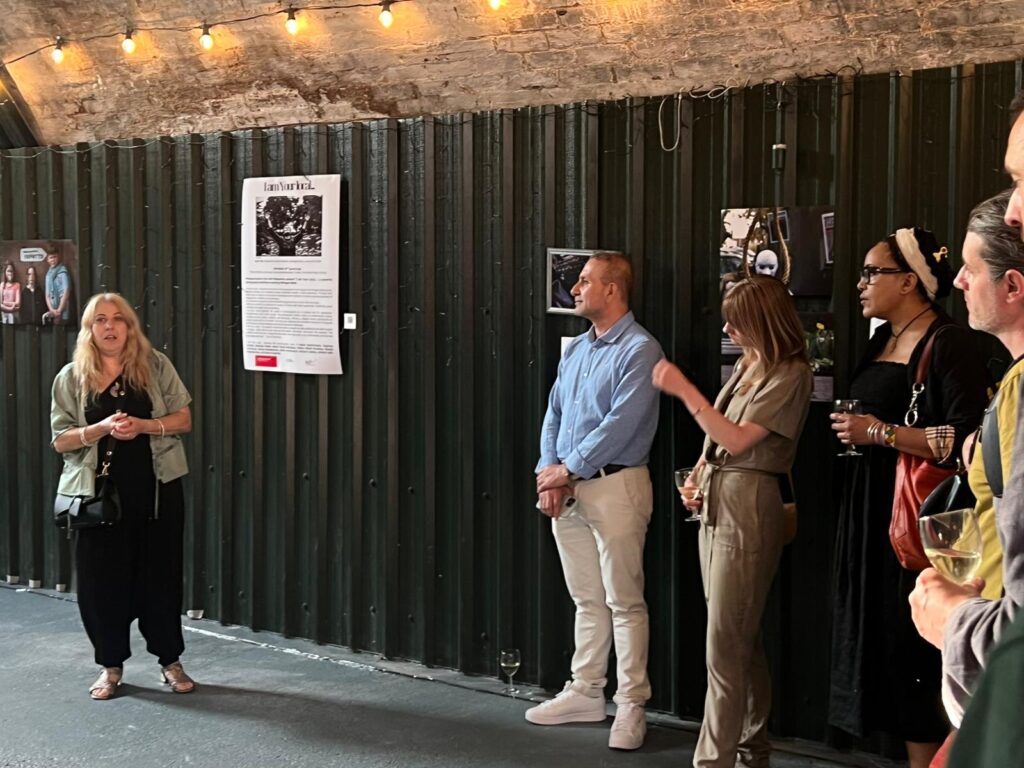
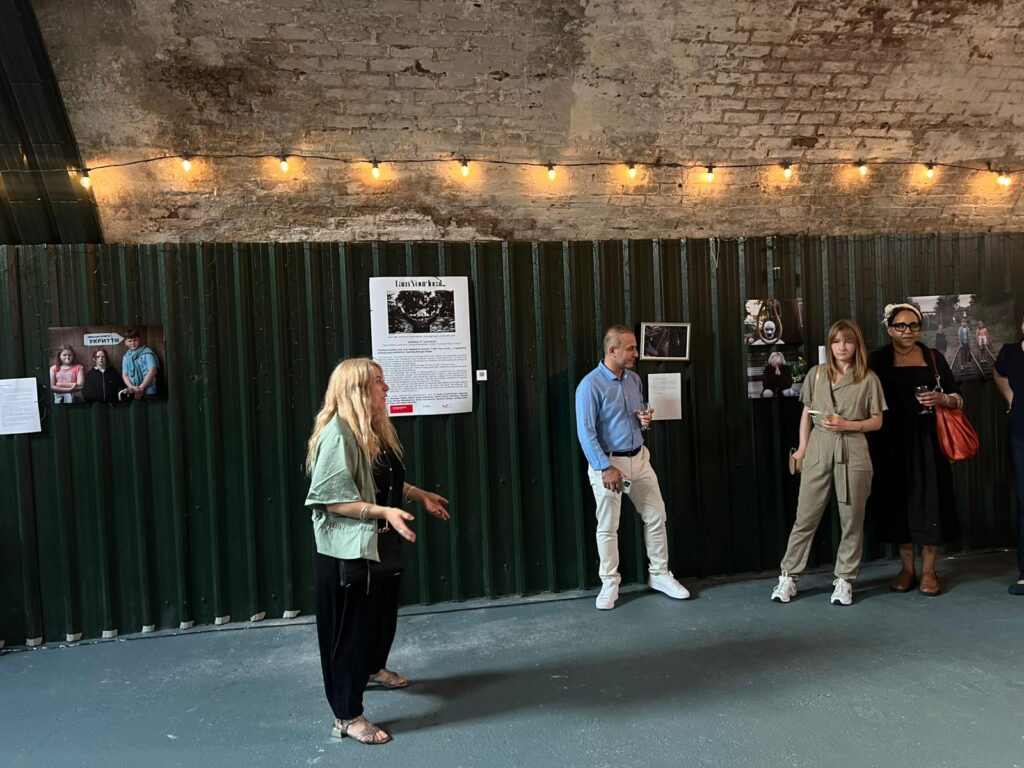
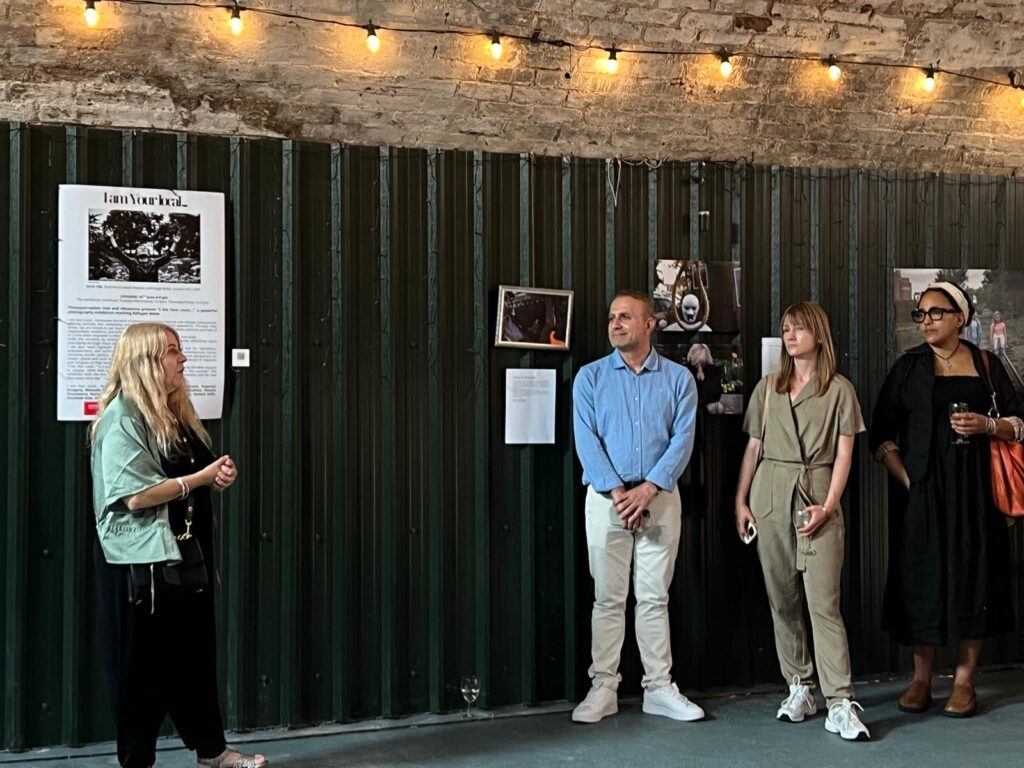
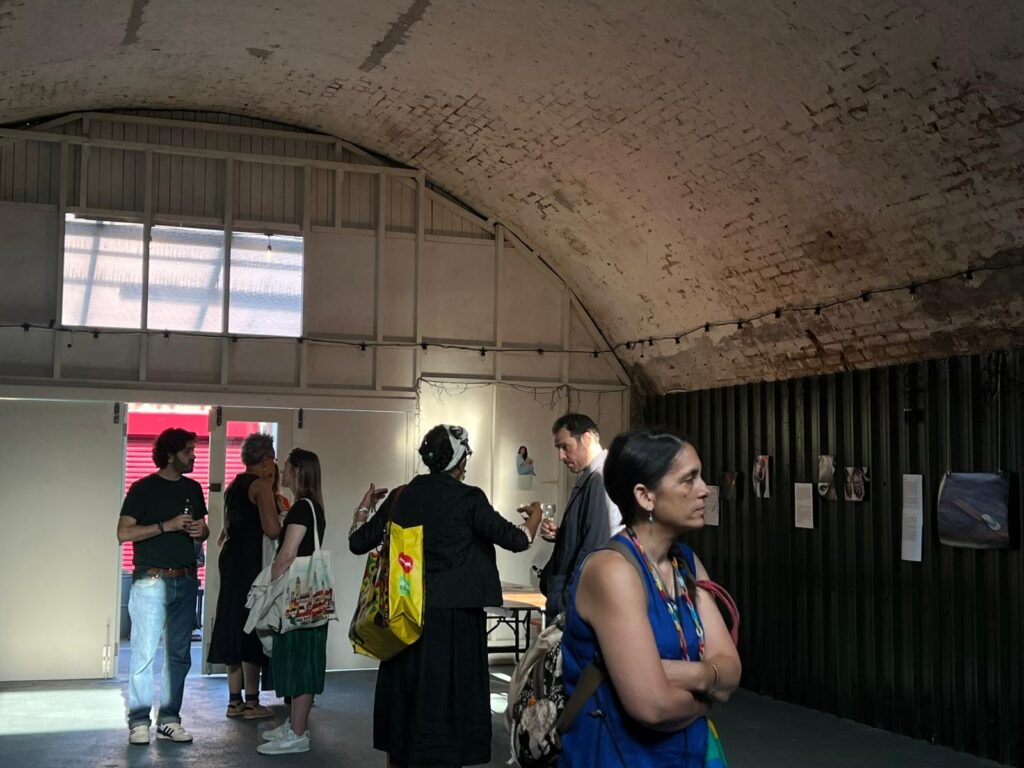
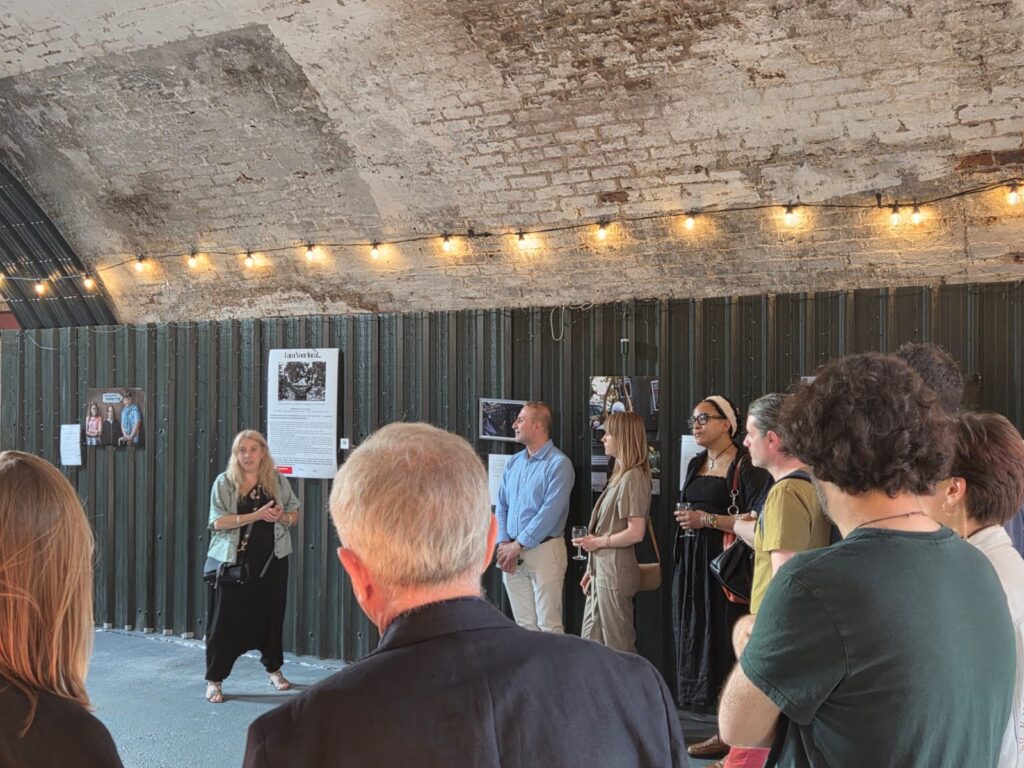
Photojournalism Hub in collaboration with Hikayetna, proudly celebrated the opening of I am Your Local… photography exhibition at Shepherd’s Bush Market to mark Refugee Week 2025.
The exhibition presented a beautiful fusion of photographs, video, and installation art, thoughtfully curated by Cinzia D’Ambrosi, founder and director of the Photojournalism Hub. Drawn by the reflection of how our community is inspired and supported by the many who are not originally from the UK.
Many who are part of our daily lives, yet are often left invisible; shopkeepers, teachers, drivers, entrepreneurs, doctors, nurses, and many others. presented the work of twelve talented photographers from migrant and refugee backgrounds. The selected twelve photographers, including those who fled the war in Ukraine, Syria, and photographers from a migrant background presented photography that addresses urgent contemporary issues including border politics, identity, and belonging, amplifying voices too often unheard.
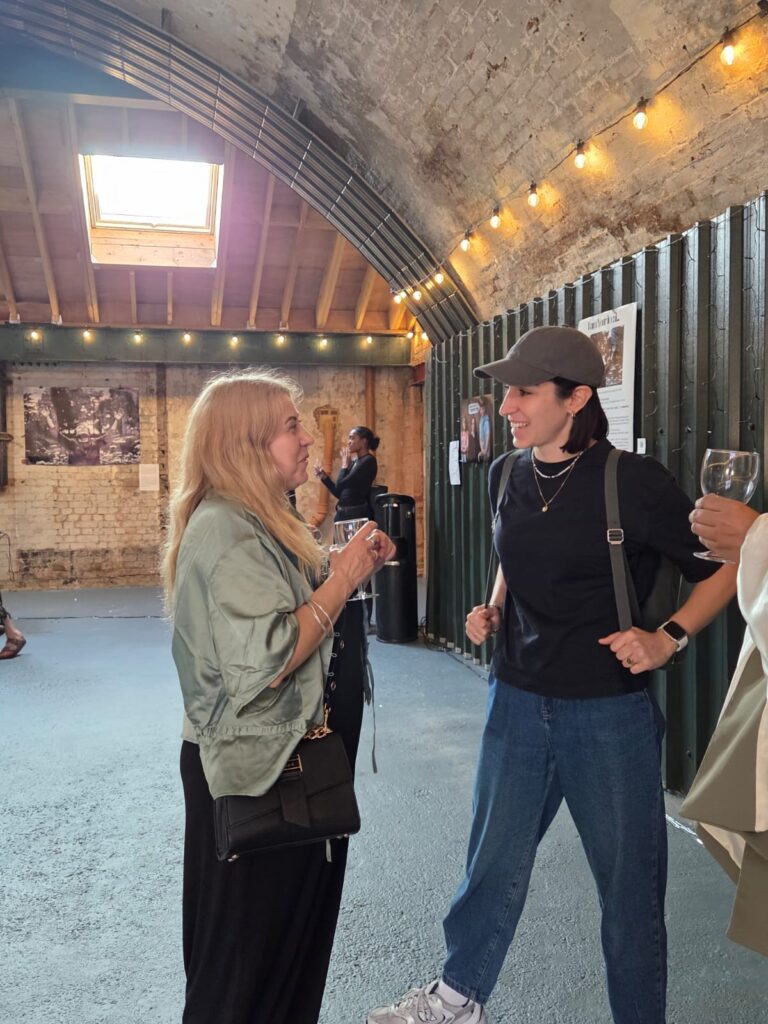
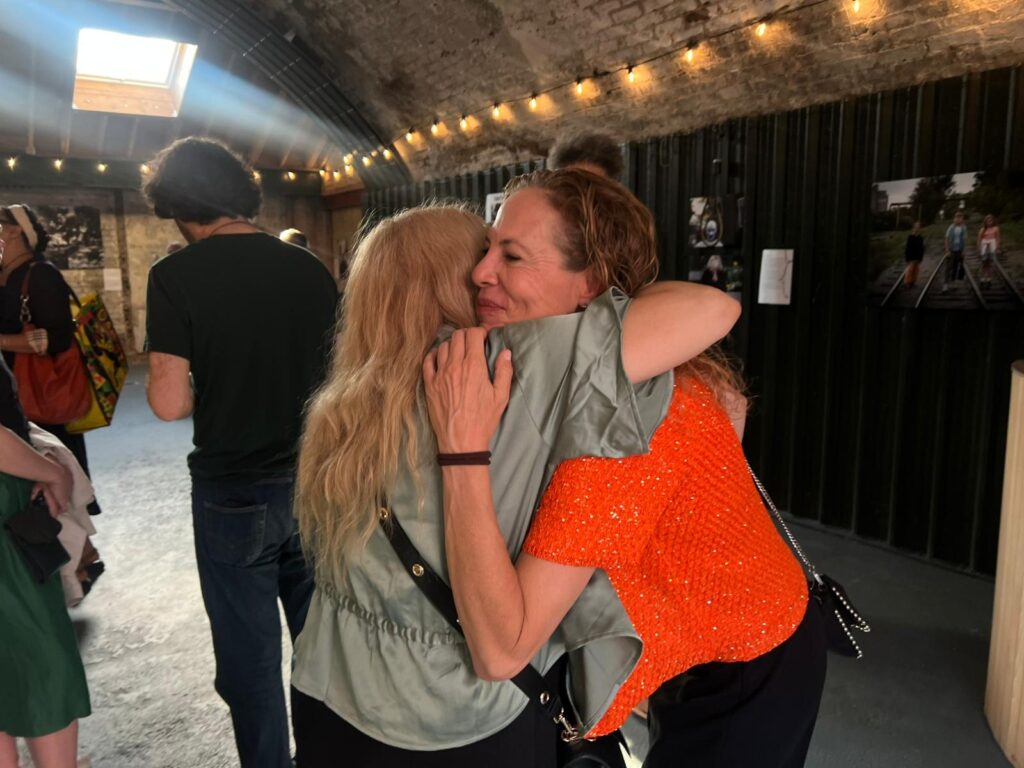
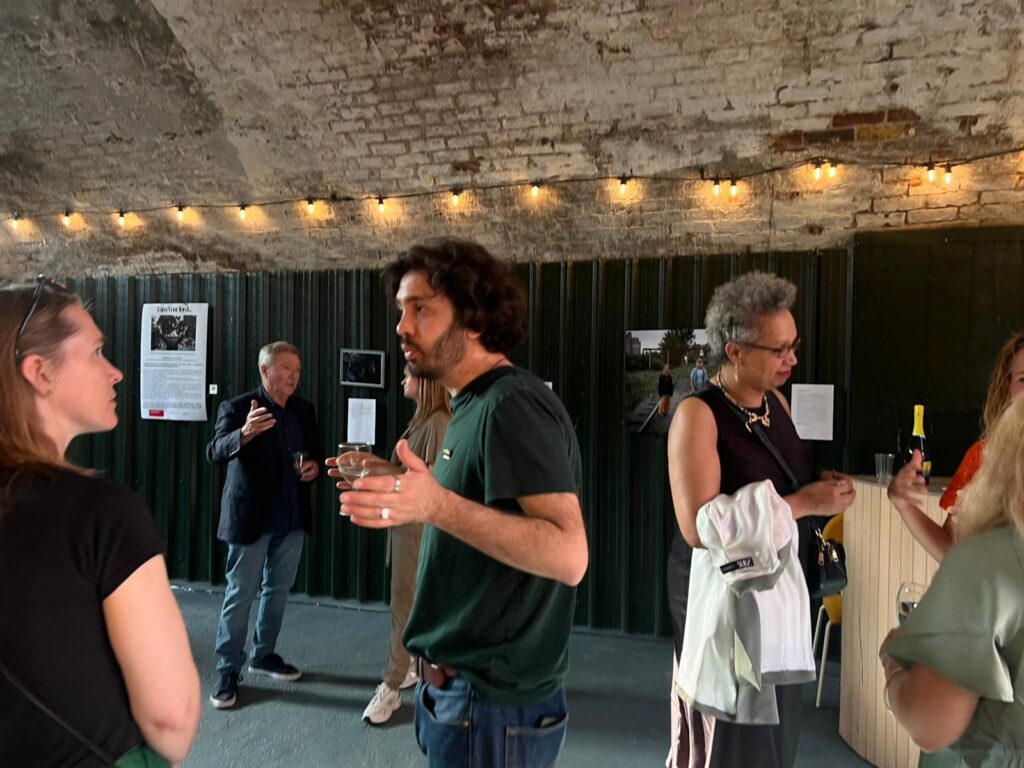
The Opening event was filled with inspiring conversations, shared experiences, and a strong sense of community as visitors engaged with the photographs, video film and installation, and connected with the stories behind them.
Photojournalism Huband Hikayetna are pleased to announce an OPEN CALL for photographers, amateur photographers, visual storytellers to contribute to our upcoming exhibition, “I Am Your Local…’ to mark a weeklong of celebrations run by H&F council for Refugee Week from 16-22 June 2025. We would like to celebrate the invaluable contributions of migrants and refugees to our communities with a photography exhibition. This Open Call invites photographers, amateurs and visual artists, especially from the local migrant and refugee community, to submit their work responding to the theme. We are looking for visual stories that highlight the roles refugees play in society. These stories should be about individuals who are integral to our daily lives, shopkeepers, entrepreneurs, doctors, nurses, and others who have built a home and contributed to the fabric of our society. We hope that the exhibition will serve as a platform for celebration and an opener of important conversations on the existing challenges that refugees and migrants face. Therefore, we are seeking compelling photo stories and images that educate, expose, and celebrate the experiences of migrants and refugees, from their struggles and resilience to triumphs. We hope that by opening this exhibitionI Am Your Local… will become Just like You by fostering deeper understanding, challenging stereotypes and highlighting the rich cultural and social impact of migration.
Who can submit: Submissions are open only to contributors with refugee and migrant backgrounds who are based in the UK.
How to submit: Singles or Series: Up to 6 images per submission, a short statement (max 300 words) about the work, and a short bio (max 150 words). Name, contact details, and relevant website and social media accounts. Images should be titled as follows: LastName_FirstName_Title.jpg
Deadline: 30th of April Submit your images to: admin@photojournalismhub.org
Why Participate? -Selected works will be showcased in a curated exhibition, gaining exposure to a wider audience. -Selected works will be published on Hikayetna and Photojournalism Hub website. -Opportunity to engage in important conversations around migration and identity. -A chance to connect with fellow photographers and documentary storytellers.
December 2023, Mediterranean sea. People onboard an overcrowded rubberboat drifting in the central Mediterranean sea have been found by the rescue crew of the Sea-Watch 5, at sunset on Christmas Eve.
The history of migration across the Mediterranean goes back thousands of years. In recent years, tens of thousands of people have crossed the Mediterranean by boat from North Africa and Turkey to seek asylum or to migrate to Europe. The central Mediterranean Sea is the Europe’s deadliest frontier. In 2014 and 2015, about 320,000 people crossed the sea from North Africa to Europe, mainly ending up in Italy and Malta. The next year, the vast majority of migrants crossing to Europe did so in the Eastern Mediterranean, landing on Greek islands close to the Turkish coast. Altogether, however, the most dangerous route is still in the central Mediterranean where distances are longer and the weather more unpredictable.
In 2023 alone, at least 3,129 men, women and children trying to cross into Europe were reported missing or dead at sea – an average of 8 people per day. This makes 2023 the deadliest since 2017. While Libya remains the main point of departure, during 2023 the number of boats leaving from Tunisia have increased dramatically. The majority of migrants are being smuggled by human traffickers who charge thousands of euros for a vague promise to take migrants to the closest EU territory. Most of these migrants are subject to serious abuse prior to their departure and there’s no guarantees of ever making it to Europe.
Fenruary 2021, Medieterranean sea. People onboard an overcrowded rubberboat drifting in the night through the central Mediterranean sea have been found by the rescue crew of the Sea-Watch 3. The rescue operation was carried out in the darkness.
Since 2014 around 30,000 migrants have been confirmed dead at sea but the reality is that many more attempt the crossing and lose their lives without ever being found. With legal pathways to gaining entry to the EU not an option for most refugees detained in or transiting through Libya or Tunisia, risking their lives at sea is the only way out the country.
The stories of those who make it to Europe mostly have a similar theme. In the places where they were waiting for passage to Europe they were often working for no money, being kidnapped for ransom and facing horrendous violence, murders, forced eviction, destruction of property, detention and arbitrary arrests, even if they were on their way back to their country of origin. Thousands of migrants find themselves in an impossible situation. Either they endure abuse in the transit countries or risk the journey to Europe.
December 2023, Mediterranean sea. RHIB crew of the Sea-Watch 5 during a training. The RHIB crew has the task to perform first approach and provide the first rescue to the peole in distress at sea, transferring them from their boats on the morhter ship. Trainings are frequent, intense, and cover almost all possible real scenarios that could occur during a critical rescue.
‘Libya is so hard for us. We are stuck. We can’t move on and we can’t travel back where we came from. That’s why we take the risk and cross the sea. This journey is the journey of life or death. A journey of no return’ says one of the lucky ones who was rescued by a boat chartered by Sea Watch, an NGO that patrols the Mediterranean and assists migrant boats in distress.
The accounts of the ‘journey of life or death’ told by so many survivors are equally harrowing. Overcrowded and unseaworthy boats, no food or water for days, struggling people driven to despair by exhaustion, dehydration and extreme temperatures combine with the gravest discomfort in cramped decks, sea sickness, storms and other adverse weather to test even the strongest-willed. Most journeys cover a distance of between 400 and 500 km to Italian and Maltese shores. SOS calls are systematically bounced between various European authorities and coast guards often resulting in them being ignored or actioned after an agonising wait. Many boats capsize or sink before rescue craft make their way to the scene.
Through the most recent deals with Libya and Tunisia, the EU has increasingly trained, financed and strengthen the unofficial coast-guards of the northern African countries to reach as many boats as possible. The unscrupulous so-called Libyan coast guard and Tunisian authorities unlawfully bring the migrants back to the place of abuse they had escaped from. Libya, a country that has been in a state of de facto civil war since the overthrow of Muammar Gaddafi in 2011, is officially deemed ‘unsafe’ by international law, and interceptions violate the fundamental human right of non refoulement. Only 5% of the migrants leaving the North African coasts reach Italian or Maltese territory independently. The vast majority are rescued by the Italian coast guard and non- profits operating their own rescue missions to try and prevent more deaths.
‘They use Black people [people] to make money there. So if you don’t have the money you will have to die there or live in pain’ recalls another person rescued by a patrol boat in the Mediterranean. ‘The life in Libya is very tough, it’s by God’s grace that I’m still alive today. Because sometimes you go to work, you work with them and maybe they don’t want to pay you: they can take your life there.’
Non-governmental organisations carrying out search and rescue (SAR) operations have been a constant presence in the Mediterranean since 2014, seeking to fill the void left by the lack of state-organised SAR operations. The European Union, and especially Italy, are increasingly implementing stricter migration policies, essentially criminalising NGOs carrying out SAR activities.
February 2021, Mediterranean sea. Migrant rubber boat after its passengers have been brought to safety onboard the Sea-Watch 3. Between 70 and 80 people were crossing the sea on the overcrowded rubber boat, with limited water, gasoline, no gps nor satellite connection, no food and at risk of sinking for deflation or capsize.
After systematic cases of arbitrary seizures of the rescue ships and prosecution of crews, the recent practice of assigning distant ports for disembarkation, for example, keeps rescue ships away for days from the search and rescue area in the central Mediterranean where most of the emergencies occur. Despite the challenges, a number of non-profit organisations, such as Sea-Watch portrayed in this work, continue their tireless search and rescue activities at sea, in solidarity with the most criminalised: the people fleeing in search of a safer future.
Selene Magnolia Gattiis an Italian award-winning IFJ, NUJ freelance photojournalist based in Northern Italy and Berlin. Her work spans multiple issues, including questions of environmental and social justice, food production, migration, as well as gender related and contemporary political issues. She works on assignment and independent projects. Since 2023 she is represented and distributed by Panos Pictures. Raised in the Italian Dolomites, where she developed a strong bond to the natural environment, she has a background as emergency nurse, volunteer medical personnel in humanitarian crises, and academically qualified linguist, before shifting to and studying photojournalism. She has worked for a number of publications such as Der Spiegel, The Guardian, de Volkskrant, Il Reportage, Il Manifesto, amongst others. She also works for some of the leading environmental media agencies and a number of international no profits. Some of her photographic work on intensive food production is featured in the book ‘Hidden – Animals in the Anthropocene’, awarded ‘Photography Book of the Year’ by POY (2021). Her long-term project Zor, which portrays life in the biggest so-called ghetto in Europe, was exhibited at Perpignan’s Visa Pour L’Image photojournalism festival 2022. Her work was recognised by British Journal of Photography (2023), Siena Photography Awards (2022), London Photography Awards (2022), Prix de la Photographie Paris (2022), TIFA, MIFA, BIFA (2022), Kolga Tbilisi (2022), Global Billboard Project (2021), among other winning entries. She was selected for the Hamburg Portfolio Review in 2023. In 2023, she is the yearly Senior Fellow of WeAnimals Media Agency and a recipient of the European Environmental Journalism Fund grant for an ongoing project about the impact of factory farming.
BECOME A PJH MEMBER Consider becoming a member of the Photojournalism Hub and receive the benefits of free access to events, members only events, Photojournalism Hub resources, premier editorial content, members photography exhibitions, discounts on our courses and training, whilst you will be supporting our work advocating, advancing social justice and human rights. Please consider supporting the Photojournalism Hub with a regular amount each month. Thank you. JOIN US HERE
The Photojournalism Hub is proud to present the latest edition of documentary photography and writings from our workshop participants. This issue focuses on the theme of ‘Communities’ in its broadest sense.
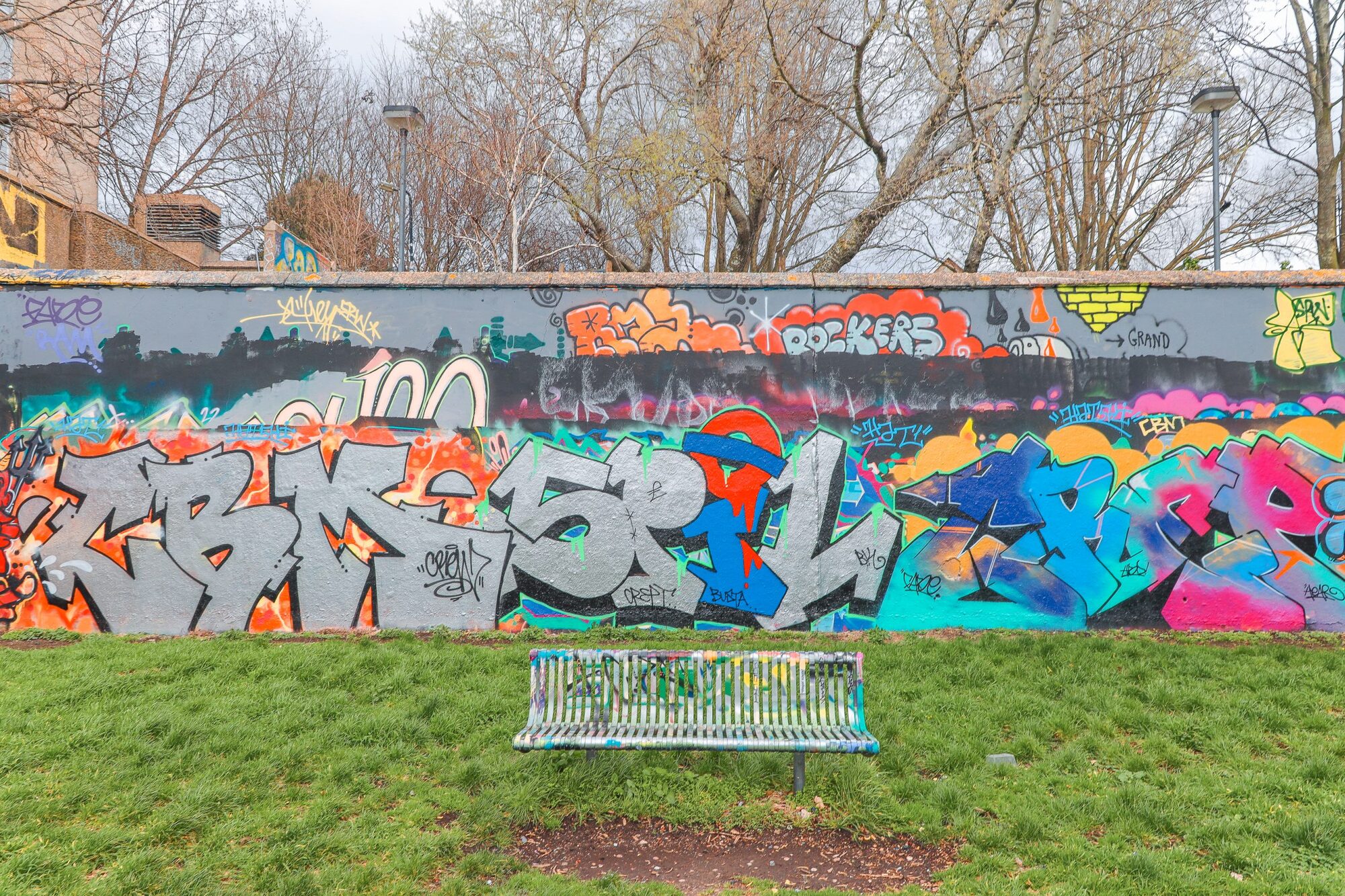
Our participants have captured stories using a social documentary approach, reported directly on community events, and explored the meaning of community from both personal and broader perspectives. We feature stories of communities of skaters, Meanwhile Gardens and the fight for its survival, exploring graffiti as a community voice, local venues that forms hubs of community attraction and support, and much more. Additionally, we present stories that have been taken abroad as some participants find that communities is what they feel they belong to.
The photo stories in this edition demonstrate a strong level of ownership of the medium of photography and visual narrative. I am delighted to share them with you.
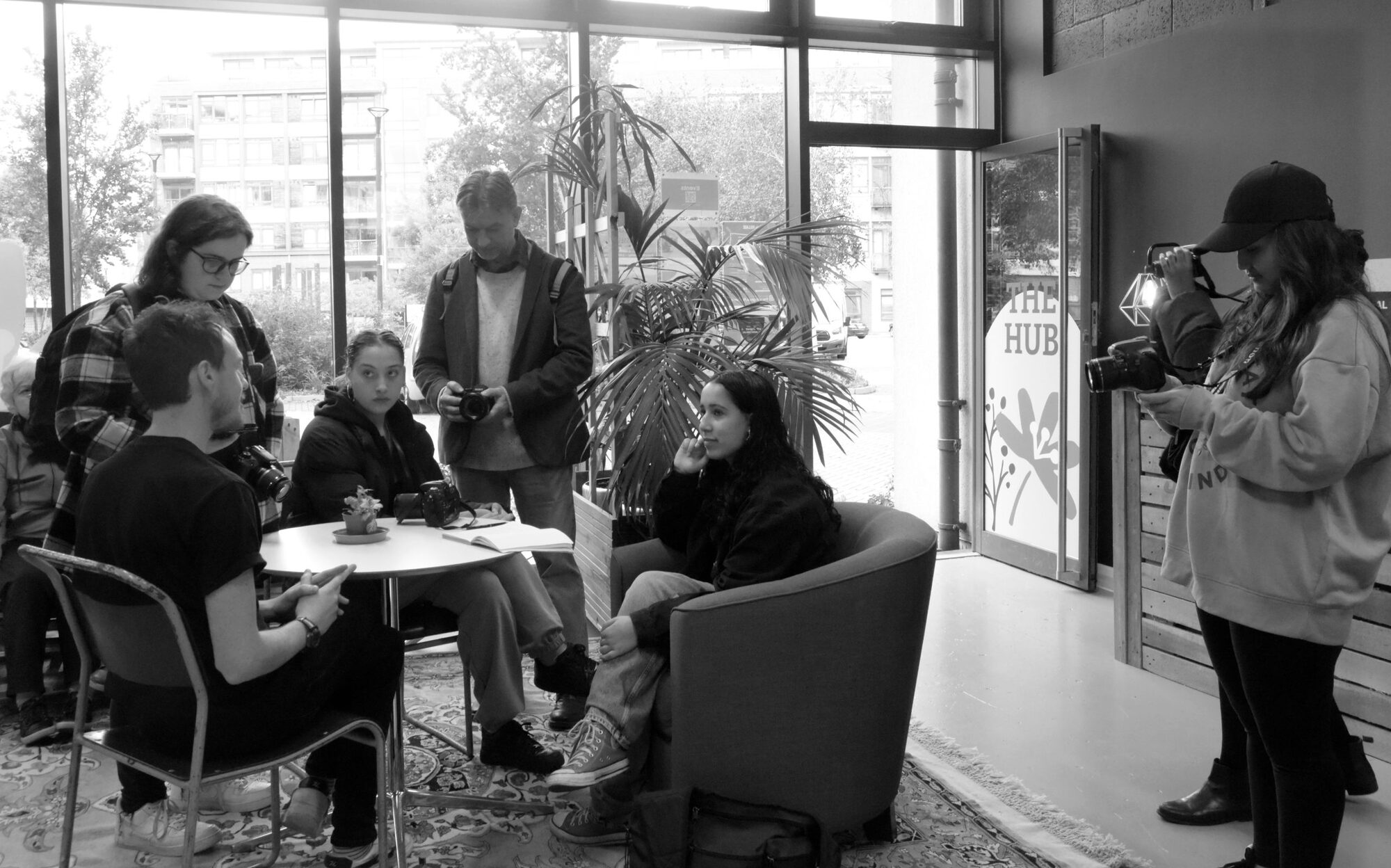
The Photojournalism Hub photography magazine is published by the Photojournalism Hub CIC and produced with participants of the documentary photography workshops. To learn more about the workshops please contact: admin@photojournalismhub.org
Support us Help us to sustain our mission of photojournalism for action- change. Your donations and membership will help us transform lives through photography projects and education.
This is the story of Mary, born on the 2nd of May 1994 in Mushalash, a small town in Lagos State in Nigeria. Her grandmother called her Tinuola, meaning “full of wealth” in the Yoruba language.
After a journey of more than 2.500 miles and endless time, which took her from Lagos to Benin City, then to Kano, Agadez in Niger and finally to the seaport city of Zuara in Libya, she arrived in Sicily in October 2014 and was transferred to Florence shortly afterwards. Following the end of one of the hospitality projects, she was transferred to Chivasso, a small town near Turin in 2017. Mary is a guest of the Mary Poppins association, a non-profit organisation that works with trafficked women.
The journey that carries me to Chivasso is much shorter, just a few minutes’ drive from Turin, where I live and work. I turn to Mary Poppins thanks to the advice of a friend who works for the cooperative as an operator. After a series of introductory interviews I met Mary in April 2018. Time carried me to become her friend. Her white brother. That is what she calls me now when she has to introduce me to her friends.
In 2019, Mary leaves the project and starts a new life. A life not easy and full of difficulties, made of mistakes, steps forward, passions, pain, humiliation. A long bureaucratic path to regularization on Italian ground and the search for a job.
This is a small story about the world around her and her incredible story.
It’s the story of our friendship.
Mary poses for a portrait I took of her at the Sacra di San Michele. A place I absolutely wanted her to see given its strong spirituality. Sant’Ambrogio di Susa, February 2020.
Mary and Kate are getting ready for another birthday party for a friend of theirs who is in the Mary Poppins shelter project. Chivasso, July 2018.
Mary and her roommates during a birthday party for their friend’s daughter. Chivasso, May 2018.
Mary shows signs of Libya on her body, of the exploitation she was subjected to and the voodoo ritual she underwent before leaving for Europe. She has a story no different from the thousands of other girls imprisoned in hot spots and forced into prostitution to pay off the debt contracted for the journey. A debt tha strangles them and forces them to be trafficked. San Sebastiano da Po, May 2018.
With the arrival of 2022, it has been more than two years since Mary has been undocumented, officially illegal. So, we decide it is time to begin to find a way out of this state of slumber and malaise. Through old contacts in the hospitality world and a lawyer friend, Mary is placed in a new project. Turin, March 2022.
Mary jealously preserves this photo. It’s the only photo of her mum with her and her brother. Her mother unfortunately died when she was still a child and Mary grew up with her grandmother in a house outside the city. Chivasso, May 2018.
The first trial period, the first activated internship is officially over. It lasted six months. The tailoring job currently is the only way she can afford money to help pay her rent and everything else. Turin, February 2023.
Mary poses for a portrait in the room of her host cohousing. Turin, March 2023.
Federico Tisa – BIO From architectural studies to photography the step is short
Federico Tisa Turin. April 1982. In 2013, following a trip to Perugia, Federico fell in love with documentary photography and totally dedicated himself to this new direction, which became totalizing and inspiring. In 2015 he obtained a master’s degree at the Italian Institute of Photography in Milan. He continued his studies in photojournalism in Rome, where he completed a master’s degree in photojournalism in 2017, focusing on the use of photography as a means of communication dedicated to an anthropological narrative and the development of medium- and long-term projects. His work explores the human condition from a broad perspective, with a focus on the social and cultural context. Since 2017, Federico has been working as an independent photographer and his work is published by national and international magazines.
It has been called the ‘transformed belt’ and consists of a set of territories in southern Sicily where greenhouse farming activities have replaced the original crops. This transformation has led to the partial destruction of dune environments with the consequent pollution of the coast, the loss of biodiversity and a strong marginalisation of migrant communities. In fact, migrants are the majority of the workforce.
Those who work in the greenhouses are also hidden from the rest of the community as they live, in most cases, in rural settings and in employer-provided housing that is often shacks or company sheds. Throughout the area, entry into the labour market is a profoundly precarious process, marked by daily relationships and articulated solely in terms of exploitative relationships.
In recent decades, the number of greenhouses on the island has practically tripled. An example is the case of Santa Croce di Camerina (RG) in which has the highest percentage ratio of migrant population employed in agriculture and the municipality hosts half of the foreign population registered in the province. A simple estimate of the area covered by the greenhouses, which changes every year, shows an area of about 61 square kilometres surrounding the town.
The NGO Emergency operates in the entire area of the transformed belt. In addition to having a psychological support programme for the labourers, it is vital for those who otherwise would not have access to basic health services.
Finally, there is the environmental factor. Greenhouse agriculture requires an intensive use of pesticides and fertilisers that lead to a progressive loss of fertility and a high rate of soil consumption. Residues seem to be a determining factor in the pollution of water analysed by ISPRA. The institute calculates that at least 66,176 tonnes of fertilisers are released annually into the island’s agricultural systems. To this is added atmospheric pollution from dioxins due to the numerous fires lit at the end of the day to burn greenhouse maintenance waste often made of plastic.
Bio Angelo Scelfo, Italian photojournalist based in Bologna (Italy). Born in October 1979 in Bologna and grown up in Sicily. I studied philosophy at Università degli studi di Palermo and photography at ISFCI in Rome. Since 2005 I have been involved in photography, today I dedicate myself full time to photojournalism as a freelancer. I also like to write: the world of self-productions and fanzines has always been the most congenial to me. I live between Bologna, Rome and Palermo.