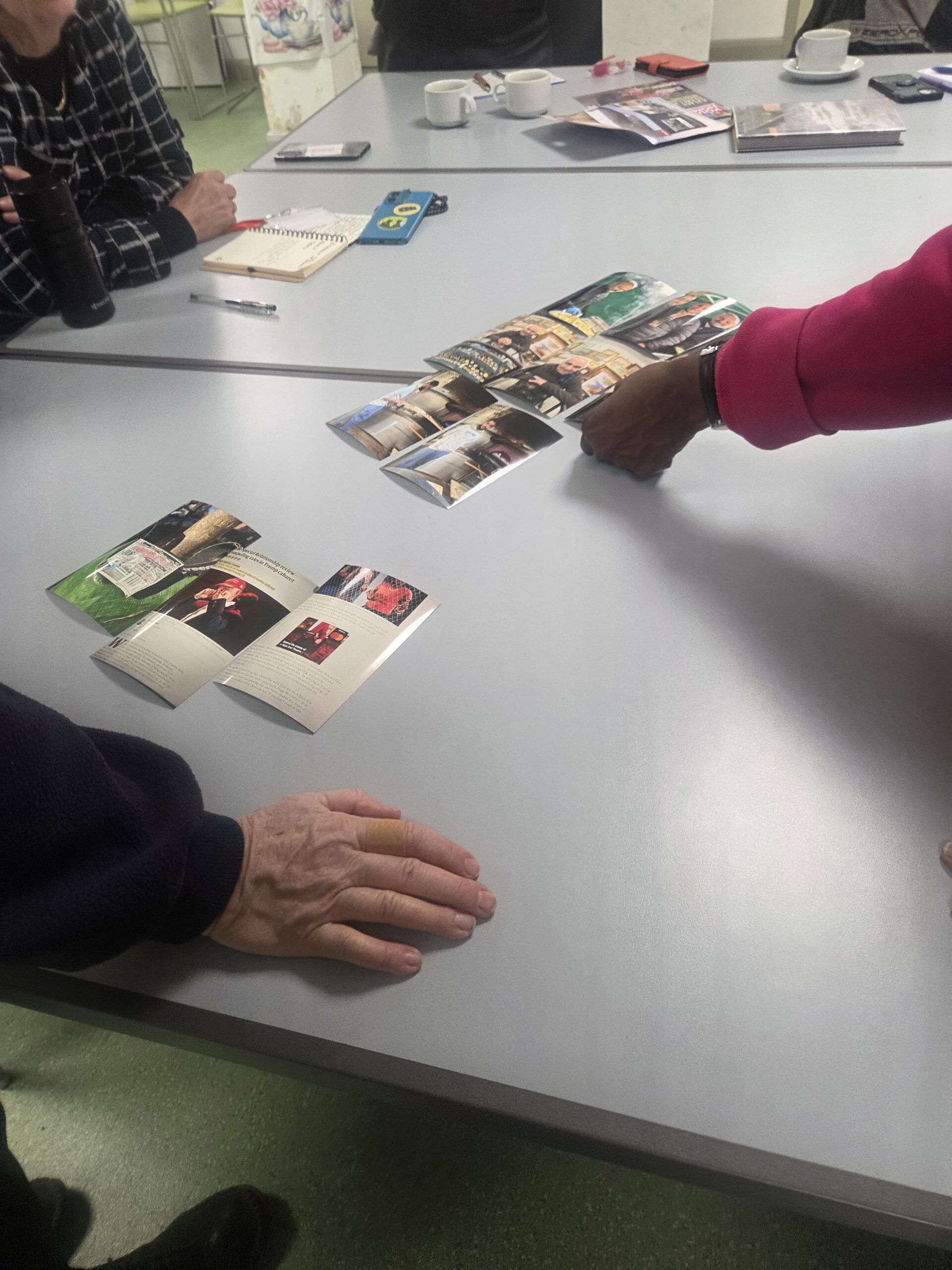
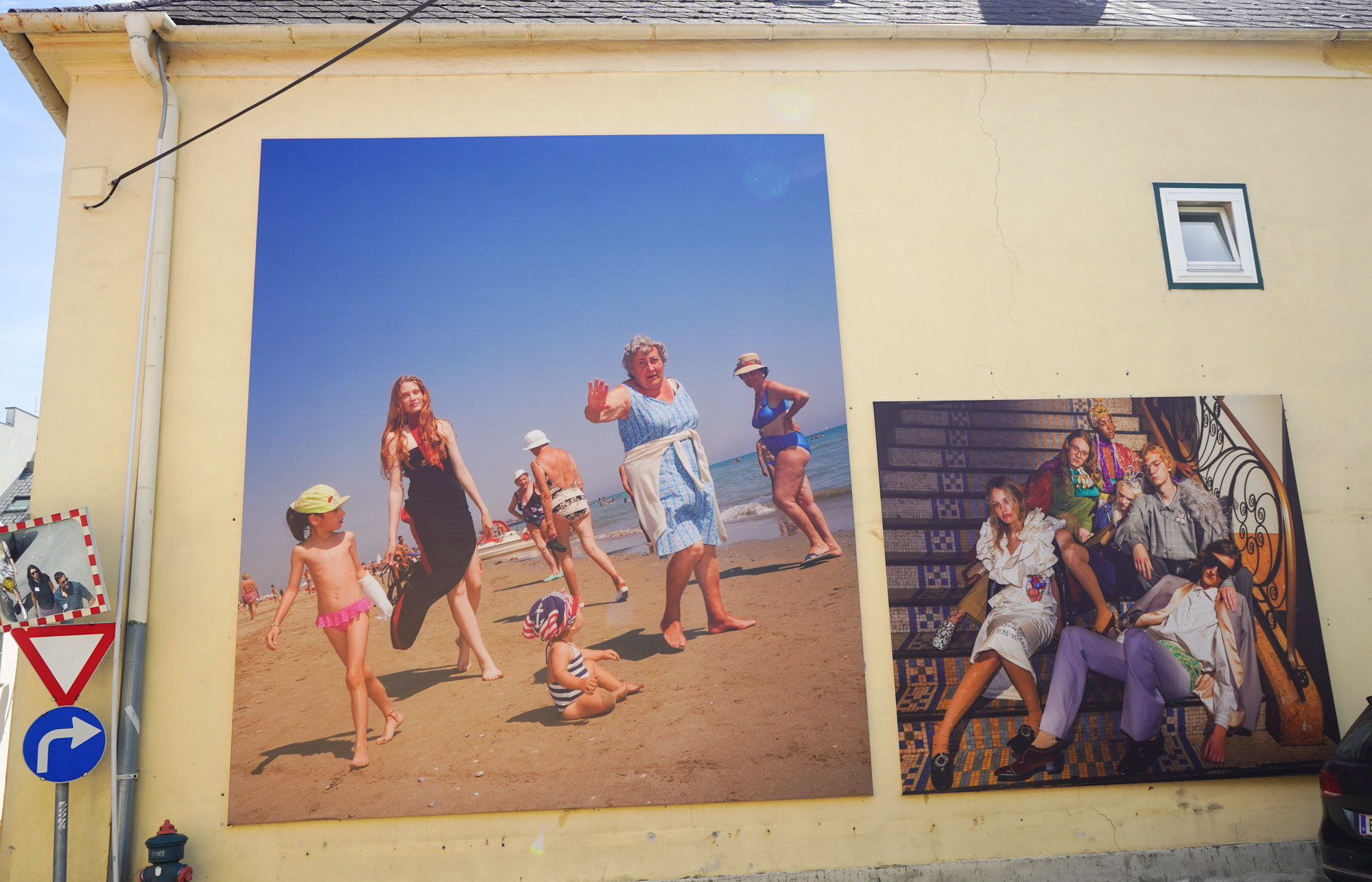
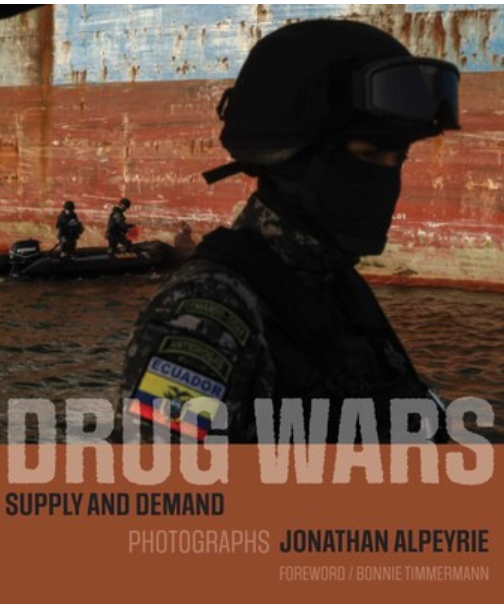
The Photojournalism Hub Calendar 2026 showcasing the incredible work of photojournalists and documentary photographers who have contributed to our mission.
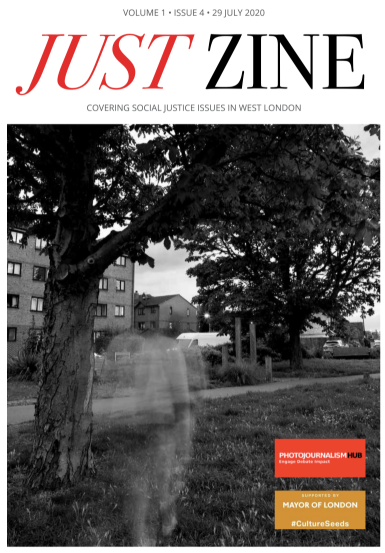
This issue of JUST ZINE magazine, we focus on domestic abuse, an issue that is affecting many lives. Covid-19 global outbreak and the subsequent lockdown measures have left many women and men in vulnerable conditions. To understand the scale of this problem may take months to assess for any government and charities. Furthermore, you can find articles and photo stories on honour-based killing, male and women survivors of abuse. We also have powerful interviews with Marco Groves, CEO of the National Centre for Domestic Abuse, and the poet Sir Troy Cabida. Photography on Trans Rights protests in London to the moving photo story ‘Missed Opportunities’, a chance encounter with a victim of abuse. We also have children’s experiences of the lockdown presented by two young additions of the team! I would like to express my gratitude to the funders of the Youth Zine West Photojournalism Hub project, Culture Seeds, Mayor of London and to the incredibly talented participants of the JustZine magazine.
We are witnessing disregard for basic human rights in every continent: restricted access to health care, lack of government transparency, deepened poverty, inadequate financial protection, racial discrimination and increased risk of domestic abuse.
Photographers and photojournalists have submitted material to the Photojournalism Hub’s Third Edition of the Injustices & Inequalities Covid:19 Open Call. The work in this dossier page gives us a powerful insight into human frailty at the hands of injustice and the inequalities being intensified in new and tragic ways during the pandemic. Contributors to this edition have highlighted economic inequalities in Italy, the critical lack of water in an area of the Republic of the Congo and how people in the UK are struggling with lockdown.
These are issues we need to see, reflect upon and action.
Daily Life: Coronavirus Water Woes
Moses Sawasawa
Every day, often in the pre-dawn darkness, countless women and children in the eastern Congolese city of Goma set out loaded down with scuffed yellow jerry cans to collect water for their families. The sprawling capital of North Kivu province sits on the rugged volcanic shores of Lake Kivu, a 90-kilometer long, 50-kilometer wide body of water, and one of Africa’s Great Lakes.
Goma is also is a major hub for the world’s second largest United Nations Peacekeeping operation and for hundreds of humanitarian aid organizations that spend millions of dollars monthly on local operations, and yet the city has virtually no running water. Many of the upscale hotels dotted along the city’s scenic waterfront have water delivered by pumps or by trucks.
The rest of the city’s two million inhabitants get their water for drinking, washing, and cooking either directly from the lake or from water sellers who charge up to ten times more than Regideso, the public utility responsible for supplying water in Congo’s urban areas. Charities also distribute water in tanker trucks, but there is never enough and water taken directly from the lake or from other contaminated sources causes frequent outbreaks of cholera and other diseases. Deadly reservoirs of methane and carbon dioxide gases also lurk beneath Lake Kivu’s surface, putting people collecting water at risk of asphyxiation and death. And as Congo contends with both coronavirus and an Ebola epidemic, the lack of access to water, sanitation and hygiene is putting millions of people at greater risk of contracting COVID-19.
Congo passed a law in 2015 making access to water and sanitation a fundamental right guaranteed by the Constitution. It also stipulated that such services ” are not free” and shifted the responsibility for maintaining infrastructure to the provincial level.
Goma’s water woes are a microcosm for the rest of the country. Congo is Africa’s most water-rich country, holding more than half of the continent’s fresh water reserves, but 75% of the country’s 80 million people have no access to safe drinking water and sanitation. This, coupled with poor hygiene, are among the top five risk factors associated with death and disability in the country. The long hours spent waiting for and transporting water also limits the time adults have to earn income or for children to attend school. Congolese women and girls are exposed to physical, sexual, moral and psychological violence during water collection, according to UNICEF.
“We wake up at 9pm, or midnight, or 2am, we don’t sleep,” said Maman Gentille, who was wrapped in a thick blanket for warmth while waiting in the dark at a water point. “There are people who can wait two days without getting any water. And for us women, it’s perilous because we can be raped by bandits and then be abandoned by our husbands.”
Goma’s water system was already dilapidated and leaking before it was further damaged in 2002 when the nearby Nyiragongo volcano erupted and a river of lava oozed through the city, burying entire neighborhoods. Various water projects have been launched since then, but the government’s poor infrastructure and lack of funds means that foreign donors provide nearly 99% of water sector financing in Congo.
“The solution would be for Regideso to supply water into people’s homes for those who can afford it,” said Aziza Bitnu, who operates one of the city’s communal water points. “And those who can’t can always still come to the water points.”
But with little capacity and poor governance, the country relies on outside support. The World Bank’s Urban Water Supply Project is a $190-million initiative to restructure and improve the performance of Regideso. Mercy Corps is also implementing a seven-year UK government-funded program that aims to provide improved access to water, sanitation, and hygiene up to a million people in Goma and Bukavu, a city located at the southern end of Lake Kivu. Such projects span years, however, and don’t meet the immediate needs of Goma residents struggling for clean water.
“They say that water is life, but we don’t have access to it,” said Maman Gentille, still waiting her turn in the darkness. “Yes, it is free but we don’t see how that matters when we don’t get any.”
Map of Buenos Aires, area of the country with the highest % of femicides during Covid-19.Until June 30, 82 women were murdered by men, where 78% of the femicides were committed in the victim’s home.
From January 1 to June 30, 2020, 162 femicides occurred in Argentina. To this scenario of violence was added the “preventive and obligatory social isolation” decreed by the government since March 20, which aggravated the situation. Women victims of gender violence are more exposed during quarantine, since in most cases they live with their aggressor. Until June 30, 82 women were murdered by men, where 78% of the femicides were committed in the victim’s home. In this particular moment, where femicides continue to increase (ONU calls it “the other pandemic”) and the characteristics of isolation aggravate it, many women are unable to isolate themselves from their aggressors.
Covid19 pandemic is a worldwide problem, as are the femicides, particularly in Latin America, which is one of the regions with the highest rates of gender violence. In this project we look at the uncomfortable, focus on the femicide and how isolation affects and increases gender violence and femicide. We are interested in digging into their stories, running the surface of each case and ask ourselves who is this man? where male violence nest when in its greatest degree goes so far as to kill a woman because of her condition as such?
Hands of Pablo G. Jofré. He is one of Karen Alvarez’s femicides. Karen was 14 years old when she was taken to the outskirts of town, near the racetrack. There she was raped by several men, beaten with a rock on her head and hanged with her own jean. Karen was last seen on October 24, 2014, her body was found two days later. Pablo G. Jofré is serving a life sentence in the Provincial Prison of the City of Viedma, Province of Rio Negro.
Lucas Azcona case file. Self-inflicted scarification (I love you dad) by Lucas Azcona the day before he was handed over to the police by his father and sister for the femicide of Nicoles Sessarego. They saw in the news the videos of the street security cameras that filmed the persecution of Lucas Azcona to Nicole Sessarego and Milagros, Lucas’s sister, recognized him for his way of walking.
Satellite view of the city of Buenos Aires. Surveillance cameras from shops in the area where Lucas Azcona’s pursuit of Nicole Sessarego was seen minutes before the femicide was committed. In this capture Nicole is seen walking towards her home. Lucas did not know Nicole. The morning of July 15, 2014 he saw her, followed and killed her with 11 stab wounds.Satellite view of the city of Buenos Aires. Surveillance cameras from shops in the area where Lucas Azcona’s pursuit of Nicole Sessarego was seen minutes before the femicide was committed. In this capture Lucas is seen a few seconds later passing by the same place as Nicole. Lucas didn’t know Nicole. The morning of July 15, 2014 he saw her, followed and killed her with 11 stab wounds.
Portrait of Carlos G. Mobilio in the Provincial Prison of General Roca, Province of Rio Negro, where he is serving a life sentence for the femicide of Karen Alvarez.
Room B of the Criminal Chamber of Viedma resolved: 1) To sentence Carlos G. Mobilio and Pablo G. Jofré to life imprisonment for being considered co-perpetrators criminally responsible for the crime of aggravated sexual abuse […] and for having killed a woman through gender violence.Mauro Bongiovanni case file. Diagram of injuries suffered in the body of María Eugenia Lanzetti as a consequence of the blows inflicted on her by her husband Mauro Bongiovanni. Maria Eugenia filed a complaint at the police station and was examined by a forensic doctor. A drawing of a male human body was used to represent the injuries sustained on her body, although the victim was a woman.Portrait of Lucas Azcona at Ezeiza National Prison No. 1, Buenos Aires Province, where he is serving a life sentence for the femicide of Nicole Sessarego.
The Federal Court N 15 of the Federal Capital resolved:1) To sentence Lucas Ariel Azcona to life imprisonment for being considered fully responsible for the crime of aggravated homicide for having been committed with malice aforethought and femicide.Left: Lucas Azcona case file. Photo of a tattoo on Lucas Azcona’s arm with the figure of a woman. Right: Poem written by Lucas Azcona and dedicated to his mother. The poem was written inside the prison while he was serving his life sentence for the femicide of Nicole Sessarego.Almost 40% of the femicides in Argentina are carried out with sharp weapons. In most cases, women had previously reported gender-based violence.
Left: Mauro Bongiovanni case file. Knife used by Mauro Bongiovanni in the femicide of María Eugenia Lanzetti.
Right: extracts from the denunciations made by María Eugenia Lanzetti against her husband Mauro Bongiovani (from whom she was separated). The accusations are for gender violence and because Mauro broke the restriction measures on several occasionsMauro Bongiovanni case file. Maria Eugenia Lanzetti’s apron at the time of the femicide. Marita (as she used to be called) was a kindergarten teacher and worked in a kindergarten. On 15 April 2015 her husband Mauro Bongiovanni (from whom she was separated) broke into the kindergarten and in front of the children and another teacher who was there in the classroom with Marita, killed her with a knife.City of Viedma, Province of Rio Negro. Satelital view of the outskirts of the city where the Hippodrome is located and where the lifeless body of Karen Alvarez, 14 years old, was found on October 26, 2014. Karen was raped by several men, beaten with a local stone on her head, and hanged with her own jean.Lucas Azcona case file. Sentenced to life imprisonment for the femicide of Nicole Sessarego, a 21 year old Chilean student who was murdered on July 15, 2014. In Argentina, life imprisonment means 35 years of confinement, since there is no such thing as life imprisonment.Lucas Azcona case file. Blood traces found at the site of Nicole Sessarego’s murder.Front of the family house of Maria Eugenia Lanzetti and Mauro Bongiovanni. Marita, as she was commonly called, had a restraining order against Mauro her husband. He violated this order on several occasions. Most of the violence that women suffer takes place in the family environment and inside the home.Photos from the family album of Lucas Azcona femicide by Nicole Sessarego.
Rueda photos are Daiana Valencia and Celeste Alonso. Both are freelance photojournalists and documentary photographers, based in Buenos Aires Argentina. As collective they deal with gender, social, cultural and current affairs issues. Their first work was in Haiti covering the presidential campaign of candidate Maryse Narcisse in the October 2015 elections. They have published in media such as El Pais de España, Cosecha Roja, Revista Crisis, El Grito del Sur, Bex Magazine and British Journal of Photography. They work “30000” was selected and exhibited at the Haroldo Conti Cultural Centre of Memory,2017. Argentina In October 2017 they were selected to participate in the Photographic Brigades of the FIFV (Valparaiso Photography Festival) where they developed the work “Diversidadxs” which was exhibited in the Plaza La Victoria in Valparaiso, Chile. Images of different works are part of the book “Ser mujer Latinoamericana”, Mexico 2018. They won the best portfolio in the Biennial of Documentary Photography in Tucumán, Argentina 2018. They participated in the collective exhibition organized by House of Girls, Berlin, Germany 2018. They won third place in the “Photographic Memory: Migration and Human Rights in South America” contest, December 2018. Part of their work ” Morenada porteña” was published by World Press Photo and AJ Español in 2019. As a collective they are part of the Foto-Feminas and WomenPhotography platform.
Since the beginning of the spread of the Corona virus and the imposition of curfews in Egypt, people have started to restore old habits, discover new ones, or change their old habits. Some people have become closer to their families by spending a lot of time together watching TV , cooking , conversing, laughing. This was not their usual way of life. This is happening because people are in lock down and have more time which they can use to spend with their families and getting away from feeling of depression .. It is a time like a truce.
People have started to discover themselves, what have they done , and what will they do next. They also invest their time indoor in learning new things, practising a new sport or content themselves in relaxing activities such as spending their time playing or chatting with friends through social media and video.
Daniele Napolitano (Photography) and Serena Chiodo (Article)
“Our effort should be an exception, instead we realize that it is and will be normal,” says Pietro Vicari, a member of the Quarticciolo neighbourhood committee. Thirty years old, he lives in a six-storey building, once the Casa del fascio, then the police headquarters. Now it’s a residential occupation, on the facade of which stands a huge mural of Blu. It stands out in the center of Quarticciolo, a neighborhood on the eastern outskirts of Rome. Blocks of council houses one in line with the other for about six thousand inhabitants, many of whom have been waiting for a council house for years: in the meantime they make do as they can, often in cellars and in overcrowded conditions. The unemployment rate is very high compared to central areas of the city, as is the school drop-out rate. Speaking of abandonment, the role of the institutions comes to mind: totally absent. A lack that manifested itself in all its seriousness during the health emergency linked to Covid-19.
The emergency within the emergency
“I used to do a lot of jobs before, all in black. Now, of course, I’m stuck”: so says Christian, 18 years old, who lives in an occupied house: “We didn’t receive the vouchers that were supposed to arrive from the city hall. There were days when my girlfriend and I looked at each other wondering, “What are we gonna eat tomorrow?”. Anna, a 60-year-old Ukrainian woman, echoes him. “I was working in a hotel, with a contract renewed month after month. Obviously, since March the hotel hasn’t worked, so neither have I. Since I don’t have a real contract, I have no support: I had to start using my savings”. These situations are common to many people in the neighbourhood, who have received little or nothing from the institutions: some have received the 600 euro bonus – which for rent, bills, expenses end very soon, even more if you have children – or the redundancy fund, with the delays that have united the whole country. Many saw nothing coming, to be workers without a contract or unemployed, and from one day to the next they were left without any source of income. Municipal spending vouchers were delivered partially and with very serious delays. The mantra repeated by commercials, institutional communications and social messages – “stay at home, everything will be fine” – shattered over the concrete experience of a country in difficulty and over problems that have lasted for years.
“Luckily there are volunteers who distribute the boxes,” says Anna, referring to those who immediately thought about how to move in the context of the pandemic so as not to leave anyone alone: the members of the neighbourhood Committee. Faced with the increasingly heavy institutional absence, in fact, here – as in other districts of the capital – the difference was made by the citizens, self-organized to put into practice forms of solidarity and self-determination important when not essential.
From the first week of lockdown, from the window on the sixth floor of the building in the centre of the square came music, words of support and appeals to the sense of community and the need to be active protagonists of one’s daily life. This was soon accompanied by material support, with the distribution of masks, disinfectant gel, gloves: “A lady brought us masks sewn by herself, a neighbor gave us a lot of amuchina and we distributed it. But we immediately realized that the need for food was predominant,” explains Vicari. So, every Tuesday and Saturday, in front of the Red Lab – the social centre on the ground floor of the former police headquarters – boxes of fruit, vegetables, pasta and bread were distributed for two months: products collected thanks to the support of private individuals, shopkeepers, farms and producers. 40 kg of oranges arrived from the farmers of Rosarno. “It is clear, however, that you don’t just live on this: there are people who don’t have the money to charge their mobile phones for distance learning for their children, or to repair the car to go to work.”
From the institutions nothing came, except requests for help: the volunteers were contacted to bring groceries to people in difficulty. “We went there, of course. But we have to think about a city with drones, police and military in all the streets, where there is no one to do the shopping for the elderly,” commented the members of the Committee, who alongside the necessary support for people – over a hundred families assisted – has always made a strong complaint about the institutional absence, even with targeted actions: “These needs cannot be discharged to the volunteers”, they said on 8 May, while symbolically unloading the empty boxes in front of the local Town Hall, and then participating, together with other groups of volunteers active in the capital, in the demonstration in Campidoglio square, which called for the distribution of shopping vouchers. “For months politicians have been announcing measures to support families: measures that simply do not exist,” they denounced, urging politicians to quickly find the means to act. Neither the local administration nor the city council gave concrete answers, and once again the neighbourhood had to organise itself.
“From the suburn to the suburn”. “Dalla borgata per la borgata”.
After all, self-organisation has for years been the basis for the management of the neighbourhood, which has never been the subject of institutional accountability. From this absence, a group of young people decided to take over the situation, initially with the recovery in full autonomy of the boiler room of a building of the Ater – Aziende Territoriali per l’Edilizia Residenziale – in a state of neglect for over twenty years: since 2016 it is open to the neighborhood as a popular gym. “In 2015 we occupied these spaces to denounce the absence of activity in the neighborhood,” explains Emanuele Agati, thirty years old, member of the Committee and boxing coach in the gym. “We pay particular attention to the needs of youth groups, even those who do not train spend the afternoon in the gym to see the others. There’s nothing else in the neighborhood”. In the meantime, two young people have become competitive boxers, finding their own value in sport. One of them is Amr Abdalla. Nineteen years old, he voluntarily participated in the distribution of the boxes: “I am very happy to help. I see a lot of people in trouble, and not only during quarantine. And I am proud of this activity”.
At the beginning of this year, the gym finally received the official assignment from the Ater, who recognized its value for the neighborhood. In the meantime, in recent years, actions have multiplied around sport: a self-managed after-school, attended by about forty children, workshops in schools focused on the recovery of the anti-fascist historical memory of the area, and the creation of the Committee to claim the rights of citizens, especially those, many, in housing emergency. Everything happens with a constant attention to the sense of community and aggregation: since 2016 every year the square is animated by a neighborhood party totally self-managed and accessible to all. Also this year it took place, despite the Covid-19: indeed, just this year it was felt even more necessary. And so, while after the acute phase of the health emergency, institutional policy insisted on economic recovery, the Quarticciolo found a way to be together. Because it is in a moment of crisis that a community aware, participated, sensitive to the needs of all responds: with masks and food, but also sociality and sharing. All sides of the same picture, made up of knowledge and care of the territory.
Serena: Serena Chiodo born in 1984 in Carate Brianza (MI). Cultural mediator, she got a master’s degree in Communication and Social Sciences focused on migration, than specialized in Communication and International Relations and Applied Social Sciences. She has been working for years in the field of migration and human rights protection, especially in advocacy, research and communication activities. She is a freelance journalist currently based in Rome, focussed on migration, human rights and social issues.
Rocío’s daughter preparing the menu to eat while watching the cartoons.
Piece of pizza from Telepizza de AbrantesA mother hands over the family book to check if her son is on the list.A father carrying four meals for his childrenEmployees have disinfectant gel for parents to sign and collect foodA Telepizza employee indicates that there is a waiting lineThe police supervise that the separation of people is respected when collecting mealsParents waiting their turn at the Telepizza in San FerminA father who has collected three meals for his childrenA mother shows us the meal, a pizza, three nuggets, and a drinkIn the Telepizza of San Fermin, they do include the saladYury’s son eating while watching television
“Have your family book in hand,” shouts a policeman in front of the Telepizza on Abrantes Street. A patrol is monitoring that parents who go for their children’s meals maintain the separation recommended by health authorities. Outside, about 15 parents queue with the family book or a document that accredits the name of their children.
In front of a personal Telepizza table, they do what they can in the face of the avalanche of names of different nationals that they are told. Many are not on the charts and have to wait for second confirmations. These lists are the ones that the schools send about 11,500 students who have a reduced price in the school canteens for belonging to families that receive the Minimum Insertion Income (RMI). It is an agreement that the Community of Madrid reached with the companies Telepizza and Rodilla to supply the meals.
Rocío, a neighbor of the Carabanchel neighborhood and with a daughter in her care, who lives in the San Isidro area, arrives on her scooter at the Telepizza on Abrantes street at 12:30 p.m., time and place that has been assigned to her, at about 4Km from her home. In front of her are other fathers and mothers who the police are trying to organize. Two mothers have had to turn around because they were not on the lists, one of them is shouting “Shame, shame”.
The Community of Madrid is paying 5 euros for each meal to these companies, about 60,000 euros a day in total, however, the cost is being lower because since it began to distribute this Wednesday, only about 2,000 meals were collected by parents and about 3,000 this Friday. The main issue is the organisation of the lists in which not much of the children and the distance appear. A family member can only go individually from Monday to Friday between 12 am and 3 pm to collect the food at the assigned establishment. Many parents fear being fined and others see insufficient food being offered.
“I’m going to show you what the menu is today,” a mother in Abrantes complained this Friday. A small pizza, three Nuggets, and a drink, which would correspond to the school meals 3 offered there, but without salad. Rocío’s turn comes, she signs on a list and takes the food after almost an hour of waiting. When arriving home, the girl without much enthusiasm eats the first slice of pizza.
These meals that are received by the minors in the most vulnerable situation are made up of pizzas, hamburgers, salads, and nuggets for the children who receive it from Telepizza, and for the students who get their food from Rodilla to eat, at their main meal of the day, sandwiches, salad and snacks, accompanied by two pieces of fruit.
At the Telepizza de San Fermín in Usera, there is a municipal police car on patrol. The relatives who are queuing begin to say that “yesterday was impossible to collect the food because nobody was on the lists,” says a father of three children. Today they are and the people who have to leave without the meals are fewer.
Jury, a mother of two children, arrives at 2:30 p.m. to collect only her young son’s meal. She has been luckier than Rocío, she is only two subway stops from Telepizza and she has been given School Meal 3 with salad. When her son arrives home, around 3.30 pm, who is watching television, he says “he already wants to go back to school.”
Two short films Turk made in the first week of the UK lockdown when everybody was ordered to stay inside. The first film is based in a rural location while the second part focuses on London. It is the responses of his own friends and neighbours when they were asked the question ‘When did Covid-19 get real for you?’ . He decided to title it ‘Unprecedented’ as it was a buzz word at the time. He comments, ‘it was everywhere and pretty annoying to be honest! So I thought it fit an annoying and sad situation’.
If you have work which highlights the social injustices that are being intensified by Covid-19 please submit your work to the Photojournalism Hub. We will be updating this dossier page on a monthly basis. Submit by August 31st to be included in September’s dossier pages.
JustZine is a magazine produced by local H&F residents trained in photojournalistm by the Photojournalism Hub. The magazine focuses on a social justice issue per […]
Photojournalism Hub trains residents, photographers and journalists to tell stories that matters to them. Using the Citizen Photojournalism model Photojournalism Hub produces magazines and zines […]
The fifth issue of JustZine magazine presents photo stories and articles that cover pressing and important social justice issues from Environmental and Climate justice, to […]
This issue of JUST ZINE magazine, we focus on domestic abuse, an issue that is affecting many lives. Covid-19 global outbreak and the subsequent lockdown […]
In this very first issue of JUSTZINE magazine we are presenting a Special Report on food banks in Hammersmith & Fulham with insightful interviews, photostory […]
JUST ZINE magazine issue 3 focuses on homelessness in a Covid-19 world as we understand that the pandemic has worsened an already widespread issue. It […]
Just Zine stands for justice magazine, produced by the photojournalism hub with emerging photographers and journalists of west London supported by the Mayor of London. […]
In this issue of 'Just Zine', we focus on domestic abuse, a deeply important and urgent issue affecting countless lives. The Covid-19 global outbreak and […]
In this very first issue of JUSTZINE magazine we are presenting a Special Report on food banks in Hammersmith & Fulham with insightful interviews, photostory and a letter from a user, poems on lockdown and articles. JUSTZINE is part of a Photojournalism Hub project called ‘Youth Zine West’ which sees a production of a digital magazine focusing on local news stories by young adults in and around White City. JUSTZINE is kindly supported by Mayor of London Culture Seeds.
JUST ZINE magazine issue 3 focuses on homelessness in a Covid-19 world as we understand that the pandemic has worsened an already widespread issue. It touches on the different forms homelessness can take from life on the streets, to insecure housing and now, to temporary residence in hotels thanks to the Government’s public health initiative to get people off the streets to reduce the spread of the virus. Contributors have also shared an extract from a children story on homelessness and a touching and powerful personal story on homelessness. Furthermore they shared a photo story on the reopening of non-essential shops and the merging of DfID and the UK Foreign Office and the potential implications on foreign aid as a result of this merger. Once again I would like to thank the hard-working and very talented group of participants in the Youth Zine West project, run by the Photojournalism Hub, who produced this issue and as always, I thank our founder the Mayor of London, Culture Seeds.
I am very pleased to present the second is-sue of JustZine magazine. This issue has a number of articles and photo stories following the Black Lives Matter demonstrations in London, helpful resources and compelling portraits of key workers that have not stopped working during the lockdown. This issue also has a special report on mental health. I would like to thank the talent and dedication of the participants in producing Just Zine magazine, part of the Youth Zine West project run by the Photojournalism Hub, and to our funder the Mayor of London, Culture Seeds.
The Photojournalism Hub Live Mini Talks: a series of conversations with photojournalists and practitioners on their work and on their experiences to share useful advices and insightful know-how on photography and current topics.
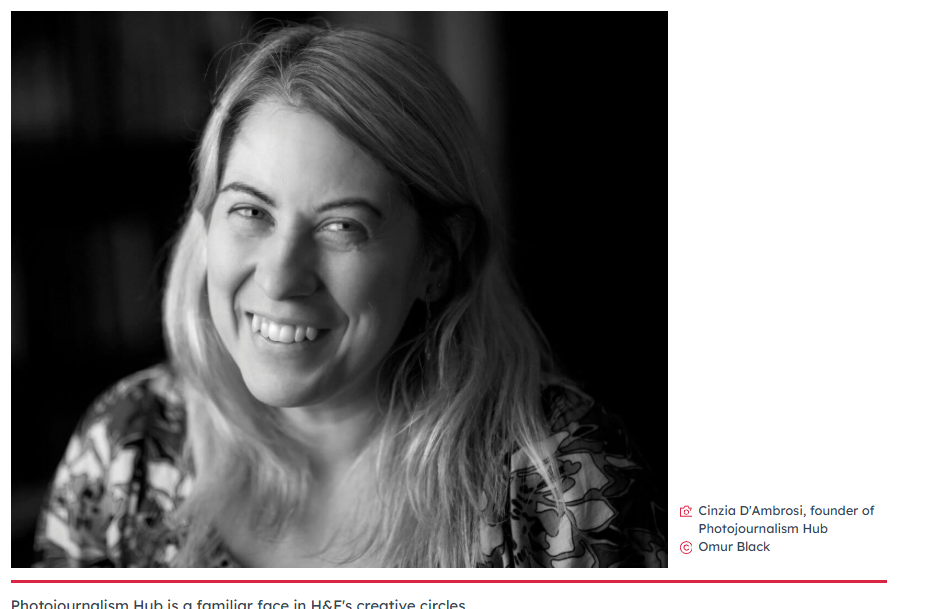
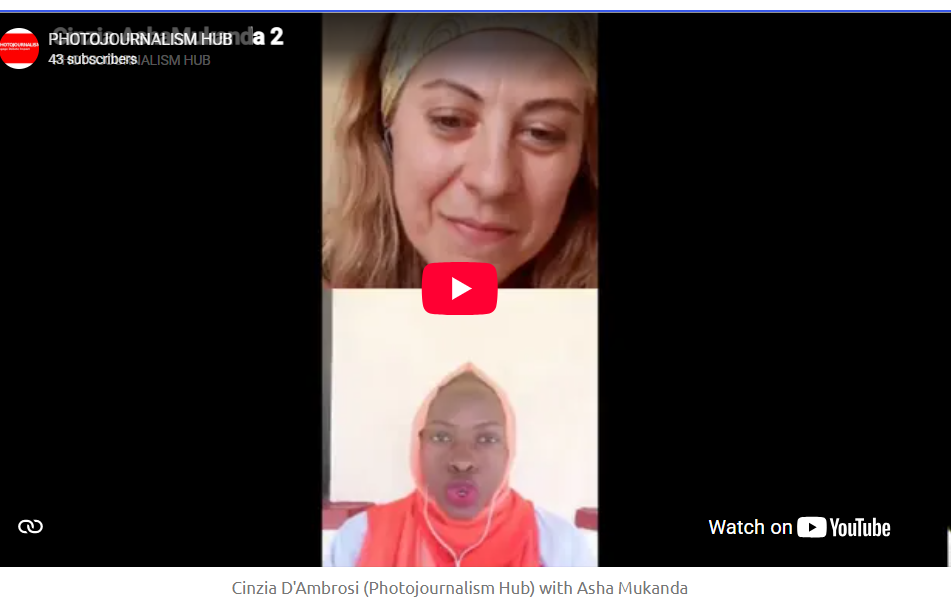
Cinzia D’Ambrosi, founder/director of the Photojournalism Hub is in conversation with Asha Mukanda, activist, writer and executive assistant of the Open Institute in Kenya. The conversation surrounds the impact that the current pandemic is having on the existing issue of health disparities and police brutality in Kenya.
Photographer and Photojournalism Hub collaborator Carli Adby in conversation with Cinzia D’Ambrosi, founder and director of the Photojournalism Hub discussing ongoing and future engagement programme of the PJH including an ongoing call for photographers and journalists on injustices and inequalities laid bare by Covid-19 and the Photojournalism Nights, an event dedicated solely to photojournalism.
Carli Adby from the Photojournalism Hub is in conversation with Suzanne Plunkett from Women Photograph discussing under representation in the photography industry and how we can lift the voices of ourselves and those around us, particularly those who otherwise are overlooked.
In Conversation with Suzanne Plunkett, Women Photograph – 12/06/20
‘Covering conflict in Iraq’ – in conversation with Claire Thomas – 29/05/20
‘Being a photojournalist on the frontlines‘ – in conversation with Felipe Paiva – 16/05/20
Cinzia D’Ambrosi, founder and director of the Photojournalism Hub introduces an ongoing series of mini Talks, live conversations on Insta with various practitioners to share useful and insightful topics.
We are witnessing disregard for basic human rights in every continent: restricted access to health care, lack of government transparency, deepened poverty, inadequate financial protection, racial discrimination and increased risk of domestic abuse.
In the UK, years of austerity measures, subsequent cuts to important social services and years of public spending over Brexit had already severely damaged public services, imperilled human rights and restricted collective and individual freedom. Covid-19 has exacerbated this pre-existing damage. What we are witnessing day after day is the culmination, or rather the unravel, of years of political, social and economic failure.
Photographers, photojournalists and journalists have submitted material to this dossier giving us a powerful insight into human frailty at the hands of injustice and the inequalities being intensified in new and tragic ways during the pandemic. They have highlighted the imbalances of power, poverty and desolation at this time of Covid-19.
These are issues we need to see, reflect upon and action.
PHOTOGRAPHY
Erica Dezonne
‘I have chosen the pictures here because they show very roughly the real scenario of how people are neglected by society in general but mainly now during this pandemic’.
Erica is a Brazilian photojournalist / photographer based in London since 2014. She comes from a background of staff photojournalism and has worked for some of the most important newspapers in Brazil such as Correio Popular, Diário do Povo, Notícias Já, Metropole and Panorama Magazines, O Diário de S. Paulo and O Estado de S. Paulo.
Stills from a documentary Georgio shot about the current situation with food delivery riders during the COVID emergency in Rome, Italy.
‘Riders continue to cross cities delivering takeout, and groceries too, in full lockdown. Their work never ends, but the emergency of the Coronavirus makes new precautions necessary, brings out fears and uncertainties, and reveals moments of unexpected humanity. One day, from sunrise to sunset, together with four riders on the streets of Rome: different ages, stories, and nationalities. “Now I always have hand sanitiser with me” says Nicolò, “and for every delivery, I wash my hands”. “Now during the day we don’t have a place to stop to eat or simply go to the bathroom” says Renzo. “But I feel proud,” confesses Pino, “when I bring food to disabled or blind people”. “A boy with a disability looked me straight in the eyes” Simona recalls, “and said, I would not have known how to do it without you.”
Instagram: Giorgioghiotto
Angela Christofilou
‘I shot the images during lockdown with the streets being empty, and the messages have been sprayed on a wall on Euston road. It’s so important to point out that behind closed doors domestic violence is on the rise’.
Angela is a half English, half Greek actor, voice over artist, photographer and singer/songwriter living in London.
‘Now, as the coronavirus pandemic has forced us all into lockdown and global emissions have dropped by 6% it seems that people are finally beginning to think about the air that they are breathing. But why has it taken so long and why were all those thousands of previous deaths not enough to merit this scale of action? This is something that I am hugely keen to explore and portray in a thoughtful and thought provoking way through a continuing of this project. I want to convey the pain and harsh understanding that I gained through my own fathers death and the upbringing that I had and combine that with my photography and experience in the climate justice movement in order to motivate and inspire people.
I grew up in a city that has one of the highest concentrations of air pollution in the UK. When I was four years old my dad died from a rare form of lung cancer, having never smoked and being only 38 years old. Because of this it led my family to believe that the air quality in our city had been a key part in causing his death. Fifteen years later I now live in South East London, an area with such awful levels of air pollution that children growing up here are found to have stunted lungs. So often when we talk about the climate crisis we think of Ice caps melting and forests burning and whilst these are catastrophic consequences they often distract from the very real and current impact that our behaviours and consumption has in our immediate lives. An average of 64,000 in the UK die every year due to air pollution and yet no one seems to be talking about it.
Having experienced such a loss as a result of this at a young age its has shaped my life and perception of the world hugely and has long been something I’ve been almost craving to communicate and explore. For a few months now I have been working on a project entitled ‘The Air That We Breath’, focusing on these issues through various mediums such as photography, film and writing’.
Instagram: Taltakingpics
Thabo Jaiyesimi
‘The pandemic has amplified the disparities of those at the lower end of income percentile whilst also shining a light to those that support conspiracy theories with the latter getting arrested as they voiced their anger at speakers corner on 16 may. Coronavirus has exposed the inequalities on a class and race basis. Those of a different hue in England are 54% more likely to be fined under coronavirus rules than white people, with some accusing the police of racial profiling. As people marvel at images of deserted London streets many small and medium-sized businesses are already feeling the effects of the Lockdown. I find it hypocritical that some people applaud hospital staff while attacks on NHS is on the increase according to the Parliamentary committee’.
Thabo is a freelance photojournalist based in London. His work has been widely exhibited and published in periodicals and newspapers such as The Guardian, The Times, The Observer and Time. His body of work ranges from documentary to editorial style and undertakes long-term projects examining socio-political activism and cultural trends.
‘The queue in my images was for food. It was organised by a charity organisation Nishkam Swat. I believe the people were homeless. The moment was iconic as no one was in streets, except those people who were queuing for food right front of The National gallery’.
Ömür is a healthcare specialist as well as a professional photographer and multimedia producer living in the United Kingdom and working worldwide. She provides editorial and editorial style photography to media industries including features, portraits, case studies and documentary style work for newspapers, magazines, corporates, PR and NGO clients.
‘The images visually bear the feeling of isolation, loneliness, craving for human contact as well as nature. Feelings, which have become more or less universal in the recent weeks. I hope that they can also contribute to a larger discussion on wellbeing and mental health, which are severely being affected by the current situation’.
Zula was born in Poland, grew up in the UK and worked in France, China, South Africa, India, Palestine and the Caribbean. She has obtained an MA in Photojournalism and Documentary Photography from London College of Communication. Zula also works as a freelance photographer and as a photojournalist for SOPA Images in Hong Kong.
‘These photos are part of the reportage “Covid-18ème”: an artistic reportage that would like to show how the daily life has changed in the 18th district of Paris with confinement measures. I have shot these photos in the only hour of the day in which we were free to go out, but no farther than a kilometer from home. It is a reflection about the wound inflicted by the confinement to the daily life of the district.
Image 1) Marx Dormoy street is one of the major arteries of Paris, it connects Saint-Denis district and Charles De Gaulle Airport to the city centre. A Sunday morning, looking out of my window, I have watched this man for long time, looking for the right point of view to shoot a photo that best represents the emptiness of the street. I find in this photo a good metaphor of the uncertainty that we are living in this period and the difficulty to find a direction for our path.
Image 3)The 18th district of Paris is a place where different social realities live together despite their cultural conflict. The health emergency due to the Coronavirus is affecting especially the poorest sections of population, also here in France where there is a solid welfare system. Many voluntary associations have intensified their activity, offering food, clothes and medications to homeless people. During the confinement measures, the associations recorded several case of abuse of authority in the streets by police officers’.
Instagram: Overview_videomaking Facebook: Overview videomaking Twitter: In the Mood for Napoli
Take it on the chin… ‘business as usual’… protect finance… herd immunity… what’s he saying? He [Boris Johnson] wants to ‘cull elderly dependants’ / reduce pension payouts / and continue trading while other countries are in lockdown. The UK government was clearly prioritising finance over health.
We do need the economy, it’s a fundamental reality of life. None of us are alone – a whole chain of people make life possible for each other and many of them have been seriously undervalued.We’re dependent on each other, inter-relatedly bound up in spending. So much collective energy worldwide is directed into activities supporting finance, the financial system itself ought to be secondary to that.Would this be an opportunity to restructure the way we live? An opportunity for a rethink… how much we’re giving – what we’re giving back… how much is being taken from us.
The paternalistic and measured approach of UK government as for two weeks it intravenously flushed public money (in future taxes) to private finance (at 5% interest) to ensure the health of property assets and capital – before any serious care was demonstrated for public wellbeing – reflect the attention of the electorate who voted them into power. The majority chose ‘economic security’ over healthcare, demonstrating where concern has been trained to focus... and how risk has been normalised. The suggestion herd immunity would protect the market and if the market was protected, so would we, suggests as long as money is all right, even when that money is not being invested into healthcare – we are immune to risks taken on our behalf. We’ve lost sight of what really matters. Our health is in our own bodies – our lives have been systematically devalued and made secondary to economic activity – we have allowed public money to be spent on weapons which undermine the wellbeing of others, and to be speculated into tax havens instead of actively pressing for social equality and healthcare.
Many people for the first time, experienced the precarity and panic, the vulnerability of insecurity which for many, is a reality of daily life.
The politics of the capitalist right, non-intervention by the state (especially in financial markets) exploitation, extraction, and lack of concern for those at economic disadvantage – are the deeply flawed thinking patterns of a privileged elite. Who intervene only begrudgingly if you’re able to demonstrate reliance and co-dependency on their system for survival – and offer support if you’ve demonstrated adequate compliance with and complacency towards the structures of their control. Many people with vast personal wealth who do not require assistance, are receiving it while millions are falling through the net. To compensate for the market’s inadequacy and deal with inequalities for which it has no answer – we’re busy making nets to catch each other now which is a beautiful thing.. but….
..this preoccupation with finance – massively contributed in determining peoples’ behaviours. With no clear message on public health because..politically there has been no real concern for public health – vague messaging, added as an afterthought open to interpretation, led many to ignore suggestions for social distancing, and others to fly into panic. ‘It’s coming, we need to protect (drastically underfunded) health facilities & the elderly’ – would have been a more honest place to start but they don’t think like that.. for them it’s all about the money.
Countries discredited in our consciousness as ‘authoritarian’, Taiwan, Singapore and South Korea, suppressed the health crisis more effectively because elements of collective responsibility are built into their structures. Countries who model themselves on our socio-economic patterns, Chile and India, now lack access to our financial markets and are unable to guarantee anything near similar assurance to their people – many of whom are already going without food.
The preoccupation with self and ‘I’ required to maintain capitalism is inadequate as a collective response. ‘We’ are everyone, not an individual decision, not a consumer choice – we are a community and society, we are families and friends. We are only as safe as the most vulnerable among us and we’re all on the planet together. This crisis is a reminder of that.
In the UK, the emergent capitalist bail-out – maintains the reality of a financial ‘status quo’ where nurses hadn’t had pay rises for 8 years, hospital cleaners’ work was outsourced to agencies on minimum wage without sick pay and hospitals are no longer public assets but since PFI initiatives of the late 1990s, are rented from the private sector.
The bail-out doesn’t change any of that. It’s like receiving a ridiculously large birthday present from someone who’s abused you for years, while other people are still locked in a basement. Money can’t do everything, its interest in social welfare has been only to the degree in which those sectors could be financialised.
Financial valuation has a set of priorities which are fundamentally distorted. The idea the market will take care of everything is an abstraction. The market cares for its own security and ability to influence outcomes and represents only those with the privilege to participate in it. It also exploits crises so while our lives are on hold – money is working for profit. And that lies at the heart of the problem.
A society where most people can’t afford to live on 94£ a week is failing!
When government wilfully refuse to see or act on this .. when they have us working for their money.. instead of making our money work for us! We have to realise!! We’re being exploited. Debt is slavery – wages have been slavery .. home ownership is debt and cycles of exploitation and wealth inequality continue. PEOPLE need the market to work for them…not the other way round.
Pay-outs in the UK being capped at £2,500 a month, suggest a maximum calculation for a ‘living wage’ – so why aren’t nurses, paramedics, ambulance drivers, bin men, cleaners, carers, postmen and teachers, essential workers – seeing anything like this kind of income while CEOs and asset managers, hedge fund traders take what they want?
Perhaps less money would be available if they weren’t trading it?
Personal fortunes are made by people who simply manipulate money and contribute nothing to society. If speculation in derivatives and stock buy-backs is truly essential? And it can be argued, it’s not – it’s time we learned how they harness the surplus and demand regulation of the finance sector – to redirect privatised ‘profits’ back towards people we have discovered are of much greater value to society than they’ve ever been given credit for – and who create that value for us all in the first place. Not as a tranquillising shot in the arm from a benevolent venture philanthropist – but on socially agreed terms – negotiated by us.
When essential workers are given the dignity and respect we know they deserve and are validated for their contribution with decent pay-checks , we could recruit from the unemployed and make work pay.
It’s time, past time, we lived in a world where necessities were provided for and excess was shared. Truth is looking us straight in the face. So here’s a pay-rise. We’re going to use the money system to value things we need and stop being harmed and manipulated by agendas we don’t.
If you have work which highlights the social injustices that are being intensified by Covid-19 please submit your work to the Photojournalism Hub. We will be adding a dossier page on a monthly basis. Submit by July 30th to be included in August’s selection.
In this podcast, freelance photojournalist Erica Dezonne is in conversation with Jamie Clark, our podcaster and photographer. Originally from Brazil and based in London, Erica is sharing her fascinating journey into capturing world events, news and stories through the camera lens. Erica’s career sees her working through the fast and challenging world of news for the RAC Group in Campinas, which is one of the biggest media company in the state of São Paulo in Brazil, all the way to reporting on the street of London. Her photography work has gained recognition in various awards finals, including the prestigious Esso final Award in 2011. Erica’s innate curiosity and passion that transpires in her reporting is splendidly summarized in her own words “with my Finnish heritage I had the bravery and courage to leave my comfort zone in Brazil and face what the world is saving for me.”
Podcast by photographer, videographer Jamie Clark, jamiephclark@yahoo.co.uk
HANNAH MORNEMENT
In this podcast, photojournalist and documentary photographer Hannah Mornement is interviewed by Jamie Clark about her photographic work The Road to Moteand her journey as a photographer. Through discussing her long form powerful project The Road to Mote and her personal journey into photojournalism and documentary photography , Hannah shares her working methods and she lets us into the intricacies of working as a photojournalist today. Her passion for humanitarian issues and her years’ long experience of working in challenging environments from Antarctica to Africa has led her to work alongside many international charities and NGO’s documenting complex humanitarian issues. In this podcast, Hannah talks about her photo stories of people relying on food banks in the UK, of children living in orphanages in Eastern Europe, of famine and food security in Africa, as well as discussing her role and the role of photojournalism in documenting social issues today.
Podcast by photographer, videographer Jamie Clark, jamiephclark@yahoo.co.uk
MINI TALKS
The Photojournalism Hub Live Mini Talks: a series of conversations with photojournalists and practitioners on their work and on their experiences to share useful advices and insightful know-how on photography and current topics.
Cinzia D’Ambrosi, founder/director of the Photojournalism Hub is in conversation with Asha Mukanda, activist, writer and executive assistant of the Open Institute in Kenya. The conversation surrounds the impact that the current pandemic is having on the existing issue of health disparities and police brutality in Kenya.
Cinzia D’Ambrosi (Photojournalism Hub) with Asha Mukanda
Photographer and Photojournalism Hub collaborator Carli Adby in conversation with Cinzia D’Ambrosi, founder and director of the Photojournalism Hub discussing ongoing and future engagement programme of the PJH including an ongoing call for photographers and journalists on injustices and inequalities laid bare by Covid-19 and the Photojournalism Nights, an event dedicated solely to photojournalism.
Cinzia D’Ambrosi (Photojournalism Hub) with Carli Adby
Carli Adby from the Photojournalism Hub is in conversation with Suzanne Plunkett from Women Photograph discussing under representation in the photography industry and how we can lift the voices of ourselves and those around us, particularly those who otherwise are overlooked.
In Conversation with Suzanne Plunkett, Women Photograph – 12/06/20
Carli Adby and Suzanne Plunkett
‘Covering conflict in Iraq’ – in conversation with Claire Thomas – 29/05/20
Cinzia D’Ambrosi (Photojournalism Hub) and Claire Thomas
‘Being a photojournalist on the frontlines’ – in conversation with Felipe Paiva – 16/05/20
Cinzia D’Ambrosi (Photojournalism Hub) with Felipe Paiva
Cinzia D’Ambrosi, founder and director of the Photojournalism Hub introduces an ongoing series of mini Talks, live conversations on Insta with various practitioners to share useful and insightful topics.
https://www.youtube.com/watch?v=uo23gaYrE5w Photojournalism Hub Jamie Clark is in conversation with social documentary photographer David Hadland. David […]