IN FOCUS: Adaeze Ihebom & Charlotte Woolford and Mal Woolford
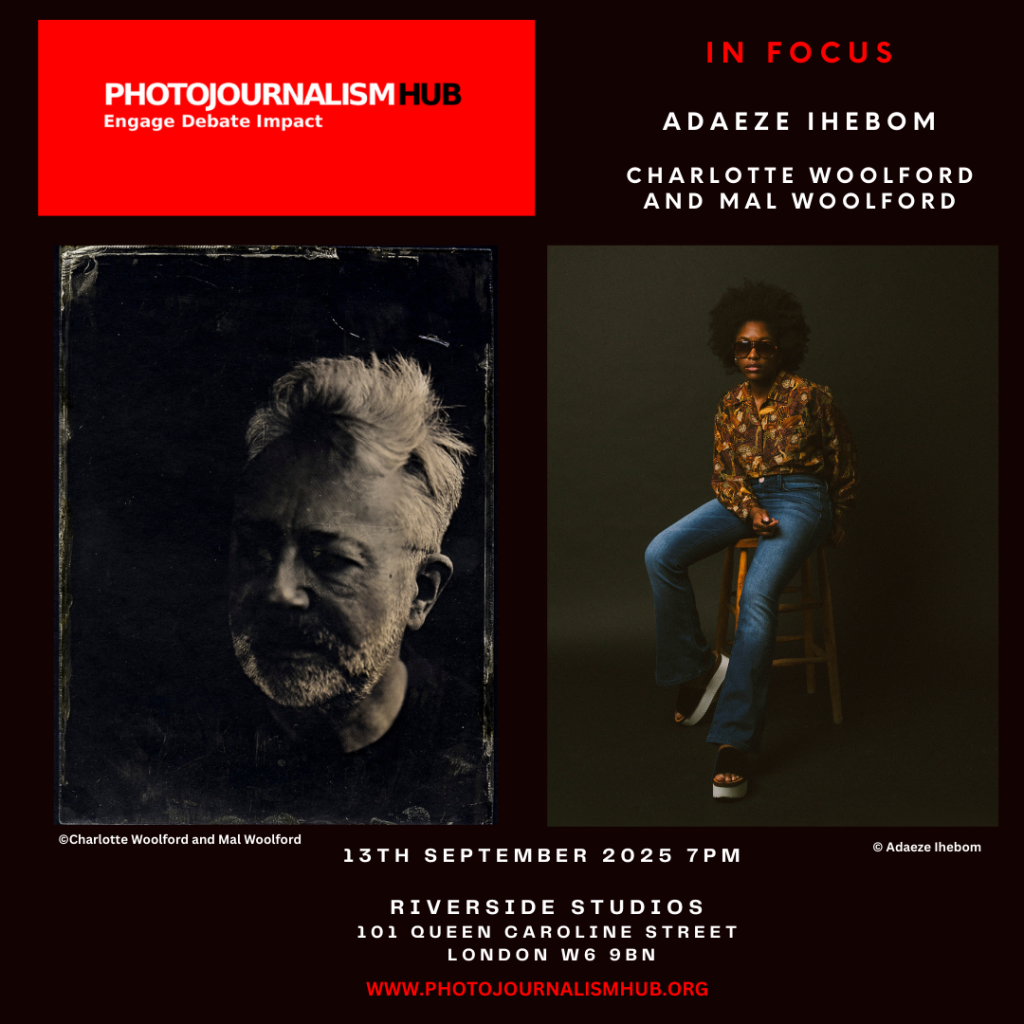

13th January 2025, 7 pm
Riverside Studios
101 Queen Caroline Street
London W6 9BN
To join: HERE
From self-portraiture that reclaims Igbo women’s identities to a collaborative exploration of historic ties to transatlantic slavery, photographers Adaeze Ihebom, Charlotte Woolford, and Mal Woolford confront history’s erasures. Ihebom’s Igbo Woman series challenges colonial narratives and reimagines the strength of pre-colonial Igbo femininity, while the Woolfords’ wet-plate collodion portraits uncover shared ancestry and redefine representation through co-creation. Together, they navigate themes of identity, isolation, and transformation across time and culture.
Adaeze Ihebom is an Italian-Nigerian artist who explores themes of identity and isolation. She has a degree in Digital photography from Ravensbourne University and has a Masters degree in Photography arts from the University of Westminster.
Adaeze will present her Igbo Woman series – This series was inspired by Things Fall Apart by Chinua Achebe which traces the evolution of family identity from pre-colonial, through colonial and post-colonial times. In a series of self-portraits, in which I performativity explore women from various periods of history. As
fictional characters, I construct their identities through costume, performance and the act of naming and dating the images.
The decision to highlight Igbo women is rooted in my belief that she has been grossly misrepresented. To be more precise, I personally feel that history has not portrayed the Igbo woman in her rightful perspective. She is usually shown in images that correspond to a supposed African man’s world and the idea of feminine submissiveness to the man. The series is a way to challenge this mistaken notion and to show how colonialism has further removed feminine freedom from the Igbo woman.
The portraits depict the colonial experience and the effect and impact of Christianity on Igbo women. It shows the female transformation from a virile, half-clad, war-like Igbo damsel to a mundane, all covering and meek-looking woman. This transformation shows both a radical departure and complete alienation from traditional dressing modes. Their lives changed irrevocably when the British invaded the Igboland. Colonization changed not only the religious, social and political institutions. It also enforces policies that diminished the roles and statues of Igbo women making them look like second class citizens.
Charlotte Woolford and Malcolm Woolford Having known each other from the school pickup, Charlotte and Mal discovered by chance that they share the surname: Woolford.
Archival research revealed that they are connected through historic transatlantic chattel slavery and a household of enslavers and enslaved in Georgetown, Guyana. Two hundred years later, they are neighbours.
Charlotte and Mal use the early photographic technique wet-plate collodion to make closely observed portraits not as photographer and model but as co-photographers. They trouble the historic use of photography to explore equal control and representation.
BECOME A PJH MEMBER
Consider becoming a member of the Photojournalism Hub. Your support will enable us to continue our work promoting photographic work that expose, raise awareness of social justice issues. To learn more how to become a member and the benefits of joining, follow the link HERE