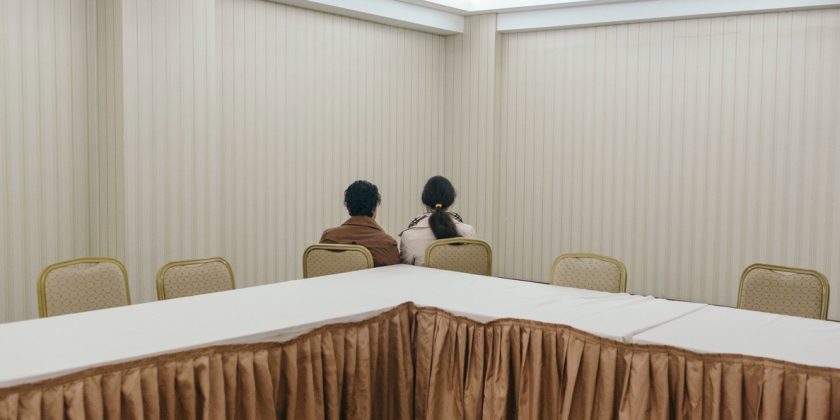
The Photojournalism Hub Calendar 2026 showcasing the incredible work of photojournalists and documentary photographers who have contributed to our mission.
‘About Me, and my Community’ is a photography digital journal showcasing the work of older residents of Hammersmith and Fulham, participants of the community photography project ‘About Me, and my Community’. This first edition showcase photos, poetry and writings reflecting on communities and the environment. We present photographs that highlight the importance of green spaces for our community living and personal introspection. In addition, we also share a beautiful poem by one of our participants dedicated to trees and photographs that highlights moments of collectiveness, visual resonance and reflections.
Photojournalism Hub presents Encarni Pindado , Jakob Dall and James Hopkirk whose work bring to the attention underreported stories of our times.
Encarni Pindado is an award-winning photojournalist and documentary photographer from Spain. Educated in Spain and London. Her work focuses on social and Human rights issues, particularly on violence, migration, and gender. She publishes in some of the most prestigious media outlets in the English and Spanish-speaking world. Such as The Guardian, BBC, The Sunday Times, Al Jazeera, NPR, Reuters, AP, El País, Univision, EFE, among many others. She also collaborates with international institutions such as the UN, ICRC, Amnesty International, UNHCR, OXFAM among many others.Encarni has a long-term project about Mesoamerican women’s migration, focusing on violence (structural, explicit, and symbolic) as a migratory experience from Central America, in transit through Mexico, to the US. She is currently finishing an MSc in Migration, Mobility and Development at SOAS University. Encarni has won several journalism scholarships and awards including, COVID19 Emergency Found from National Geographic, IWMF “underreported story grant”, Pulitzer (producer team); Peabody Award, Finalist W. Eugene Smith Humanitarian Photography Award with her work “The other side of migration: Central American women”. Her work has been exhibited in different galleries and universities across Mexico, US, and the United Kingdom, and she gives conferences and seminars on migration and photojournalism.
Jakob Dallis a freelance photojournalist with a degree from the Danish School of Journalism. He is based in Copenhagen and works as a photojournalist for several daily newspapers like New York Times, magazines, companies and organizations like Copenhagen University, The Danish Parliamentary Ombudsman’s office and with HRH Crown Prince of the Denmark, he has traveled to Mozambique, Nepal and Bangladesh to document the international work of Red Cross. He has also worked as photo editor and photographer at newspaper Berlingske Tidende and Dagbladet Information in Denmark. Jakob Dall ́s photo stories mainly focus on how individuals are affected by events which often receive little media coverage. Through his photos of people from areas of conflict, disaster and crisis he wishes to show the faces and the realities of life in areas that need attention and help from the international community. In parallel with his frequent assignments for different NGO ́s, Red Cross, Danish Church Aid, CARE, Action Aid …, Jakob is working on a personal long-term project called “Climate Change Documentary”, which illustrates the impact climate change has on living conditions and daily life for people around the world. Jakob Dall has won awards from World Press Photo, Picture of the Year International (POYi), Picture of the year Denmark and an international EISA award for his photo essay about climate change impacts in Ethiopia. He has also received the photographers “Fogtdals Grant” for his specific work with climate change impacts.
James Hopkirk has been working as a writer and photographer for over 20 years. In 2015 he launched the South London Stories project, documenting underreported aspects of life in his community. Working collaboratively with Lambeth residents, often over many months or years, he uses photography, text, film, exhibitions and workshops to explore complex social issues, including immigration, homelessness, food poverty, addiction, mental health and the benefits system. www.southlondonstories.com
BECOME A PJH MEMBER Consider becoming a member of the Photojournalism Hub and receive the benefits of free access to events, Photojournalism Hub resources, premier editorial content, portfolio reviews, photography exhibitions, discounts on our courses and training, whilst you will be supporting our work advocating, advancing social justice and human rights. If there were ever a time to join us, it is now. Support the Photojournalism Hub from as little as £1 every month. If you can, please consider supporting us with a regular amount each month. Thank you. JOIN US HERE
On Sunday the 7th of August, Safeena Chaudhry from the Photojournalism Hub was in conversation with multi awarded photographer and journalist Danny Burrows.
Danny was the editor in chief of the pan-European magazine Onboard until 2013, when he left to dedicate himself to his freelance photography and writing work. In 2015, Danny began a long-term project documenting the refugee crisis in Northern France, entitled ‘Indeterminate State’. The project received wide recognition with photographs published in The Guardian, The Express, Huck Magazine, Mpora.com and prints were exhibited at Wells Arts Contemporary Exhibition.
Since August 2018 Danny has been shooting a long-term project entitled TOGETHER (A)PART, which documents the pacifist Anabaptist Christian community of The Bruderhof that practices a unique community of goods and wealth and devotion to god in 23 cloistered communities around the world. TOGETHER (A)PART has been well received both inside and beyond the photographic community, with a long form photo essay published in the Sunday Times Magazine in August 2019; an image was selected for the 2018 YICCA Contemporary Arts Exhibition, in Palermo, where it won a silver medal; A photograph was selected for the KLP International Portrait Prize and exhibited world wide; The project received a Coups de Coeur de L’ANI at the 2019 Visa Pour L’Image and was a finalist at the 2019 Prix Regnier Award in Paris.
Danny is currently seeking support to realise a book of the project TOGETHER (A)PART, which with unprecedented access, he is sharing touching photographs that documents the lives of the Bruderhof communities. Having the book published would offer inspiration for alternative ways of living in our world of perpetual war, hyper-consumerism and mass consumption as well as finding a more valued connection with each other as well as very valued historical testimony of this very reserved religious community.
If you would like to support this extraordinary unique document that describes the realms of ‘another life’ – their rejection of personal property, wealth and technologies, a commitment to god and non-violence – then please share this extraordinary story, and help to make this book a reality HERE
BECOME A PJH MEMBER Consider becoming a member of the Photojournalism Hub and receive the benefits of free access to events, Photojournalism Hub resources, editorial content, portfolio reviews and photography exhibitions, and lots more! whilst supporting our work advocating, advancing social justice and human rights through promoting, engaging the public and stakeholders to committed, courageous independent photojournalism, and journalism. If there were ever a time to join us, it is now.Support the Photojournalism Hub from as little as £1 every month. If you can, please consider supporting us with a regular amount each month. Thank you. JOIN US HERE
Finbarr O’Reilly is a multi award winning photojournalist and the 11th Laureate of the Carmignac Photojournalism Award. He has covered conflicts and combat situations in Congo, Chad, Sudan, Afghanistan, Libya and Gaza. His awards include the 2019 Nobel Peace Prize exhibition photographer and the World Press Photo of The Year in 2020.
‘Congo, A Sublime Struggle’ is evocatively titled after a quote from Patrice Lumumba’s Independence Speech. It is a sequel of ‘Congo in Conversation’ by Congolese photographers and journalists, and produced by the Carmignac Photojournalism Award team and Finbarr.
The monograph explores the Eastern DRC and how it connects with the environmental and climate crisis, the country’s colonial history, and on-going extractive practices. in collaboration with the International Criminal Court.
This monograph is a striking and meaningful endeavour that documents and presents the many facets that are part of Congo today, including struggles and efforts in bringing the country as a whole. It includes work on the reparation programme with victims of violence in collaboration with the International Criminal Court.
On Friday 1st July, Finbarr O’Reilly joined Cinzia D’Ambrosi and Safeena Chaudhry in a conversation about The Congo, Photography, reparation and trauma.
During the interview, Finbarr answers questions on his latest work and monograph ‘Congo, A Sublime Struggle’, which contains powerful photographs and writings on Congo of the last two years.
MONOGRAPH – FINBARR O’REILLY CONGO, A SUBLIME STRUGGLE Carmignac Photojournalism Award – 11th Edition Democratic Republic of Congo
Co-published by: Reliefs / Fondation Carmignac Release date: June 17, 2022 Bilingual: French/English Size: 24 × 28 cm, 128 pages Texts : Finbarr O’Reilly, Comfort Ero and Judge Antoine Kesia-Mbe Mindua Photographs : Finbarr O’Reilly Price: 35 euros, 45 USD, 58 CAD, 35 GBP Distributed by: Harmonia Mundi
BECOME A PJH MEMBER Consider becoming a member of the Photojournalism Hub and receive the benefits of free access to events, Photojournalism Hub resources, editorial content, portfolio reviews and photography exhibitions, and lots more! whilst supporting our work advocating, advancing social justice and human rights through promoting, engaging the public and stakeholders to committed, courageous independent photojournalism, and journalism. If there were ever a time to join us, it is now.Support the Photojournalism Hub from as little as £1 every month. If you can, please consider supporting us with a regular amount each month. Thank you.JOIN US HERE
Hundreds protest outside Home Office against Rwanda deportation plan and they shout ‘Refugees are welcome here’. This is the message voiced by demonstrators opposing the government policies which sees deportation of some refugees to Rwanda.
The government claims the policy, belonging to the Nationality and Borders Act, of removing migrants who arrive in the UK illegally will deter people from making dangerous channel crossings, however many including bishops of England have condemned the move as being uncompassionate and intricately divisive and racist.
Among the huge numbers of protesters, many MPs voiced their anger at the policy, including former Labour leader Jeremy Corbyn who spoke out: “It is an utter disgrace that the British government and other European governments are proposing to outsource refugee processing as Australia. We have to say, ‘Absolutely no!”
Campaign groups such as Care4Calais , activists from various campaign groups gave speeches and chanted: “say it loud, say it clear, refugees are welcome here”.
The effort of these groups, PCS Union and Stand Up to Racism organisations, and all those that have opposed the policy, have mounted a forceful legal challenge to stop the first scheduled flight to Rwanda as part of the offshore detention plan. Solidarity is uniting people as more protests are organised to challenge the government plans.
BECOME A PJH MEMBER Consider becoming a member of the Photojournalism Hub and receive the benefits of free access to events, PJHub resources, editorial content, annual portfolio reviews and photography exhibitions, and lots more! whilst supporting our work advocating, advancing social justice and human rights through engaging the public to independent photojournalism and documentary photography. How to join HERE
Covid-19 pandemic has disproportionately affected communities and individuals who are poor, marginalised, discriminated; has brought to light the existing inequalities and injustices and in some cases how the impact has generated wider repercussions.
Through an Open Call, began at the heights of the global pandemic in 2020, Photojournalism Hub has been collecting photo stories, articles and multimedia pieces on the impact of Covid-19 on the most vulnerable, including the poor, BAME communities, refugees, the elderly, women, the stateless, and asylum seekers.
The submitted stories have been published on the Photojournalism Hub website providing an independent visual investigation on governments missed opportunities and on the scale of systemic failings which have caused sufferings and losses.
We would like to present this independent visual investigation in a series of public events, including a photography exhibition to present a body of evidential work that would leverage and provide a platform for a public discourse to enable recommendations and key actions, for improved, cohesive and inclusive protection of the most marginalised, discriminated and disadvantaged and would provide accountable points in order to advance to social justice for all.
NUESTROS +ESENCIALES (OUR +ESSENTIALS)
Photography by Sebastian Ambrossio
This Photographic-Documentary Report came from a personal concern to show, narrate and visually document through photographs the work of health professionals, of the essential workers who work in the hospital in Mercedes, and those connected to the hospital who work to combat the pandemic. The project explores how health workers dealt with this virus, leaving everything to give the best to patients. Blas L. Dubarry Acute General Zone Hospital, Sanitary Region X – Mercedes, Province of Buenos Aires, Argentina.
Photographer Krzysztof Maniocha has documented anti-lockdown protests in Dublin, Ireland. Ireland had one of the longest lockdowns and some of the most controversial restrictions in Europe. His photographs are presenting moments of clashes between police and protesters, as well as uncovering the existing issues externalised by the imposed restrictions: religion, identity and people’s resistance.
What is it like to be a young person today is a photography project with young people living in Hammersmith & Fulham. The young participants learned about photography and visual narrative whilst engaging with documenting the local area. The project also allowed the development of photo stories bringing about their own personal reflections about living in the area, including the impact of the Covid-19 pandemic in their lives.
Young people photography exhibition
We worked with a group of youths living in White City and Wormholt to talk about their experiences of growing up in the area. We met once a week from January to March and we used photography as a means to represent their lives. Initially the group learned the basics of photography and once they had confidence in using the medium they slowly moved onto working in pairs. They directed their photography, finding their ideal environmental settings, to take photos of each other. As time went on, they started to incorporate in the sessions, their personal experiences. These were coupled with intermittent sessions where all the group engaged in discussions. We did not input the subject matter, we just facilitated the conversations. We took audio recordings and photos of what they shared as being relevant to their lives.
One of the emerging worry for young people was fear of the future, anxiety which was greatly impacted by Covid-19 pandemic and the drastic changes that it brought to their lives. Loneliness and confusion were also established somewhat by fear of catching covid and the transition from lockdowns to moving back to ‘normal’. One of the participants, expressed very beautifully:
Photographically the group worked on expressing what was like to be a young person today, producing great set of photo stories, which they document, their lives through friends, their state of mind, self portraits and photo story on one of the participant.
Following a visual narrative, one of the participants took photos to describe the subject inner life.
Self expression was the method used by this participant, producing a stunning set of landscape photograph that would show their inner mind.
The experience of being a young refugee is shown in a beautiful set of photographs. The participants expresses her fears, longing to see their family and hopes for the future.
The teenage world is brought to life by this great set of images captured with a mobile phone. The images document her life through her friends, social life and being together. These photos are wonderfully candid.
The project culminated in a Youth Arts Showcase on the 2nd of April at Our Lady of Fatima Hall in White City . The event was a great opportunity for the participants to show their work in a public context. Photojournalism Hub has worked with young people living in White City and Wormholt in west London to help them to tell their story through photography of what it is like to grow up today in west London. The poignant and inspiring photography produced reflect the state of being of young people following the experiences of upheaval, loss, and insecurity poised by Covid-19 pandemic and the extended lockdowns to contain the spread of the virus. Finding metaphors in water, leaves and reflective materials in nature, the young photographers have taken to landscape photography, to their peers, and to the documentation of their friends’ lives as a means of presenting their own lives. The event was attended by many people and was punctuated by presentations and arts workshops. Beneficiaries received a Certificate to award them for their work and participation. They are also officially part of youth arts development team. Beneficiaries were asked to feedback on the project, at the start of the project, mid way and at the end. We measured:
Improved confidence Improved wellbeing Learned new skills Improved further education, cv, prospects
We share the digital version of the booklet that accompanied the photography exhibition.
We are continuing to work with the participants by inviting them to have their say and be part of future arts developments in White City and Wormholt. The project was kindly supported by W12together, who where also the organisers of the Arts Showcase.
The project was supported by the charity W12Together
Powerful photography, insights and experiences of documenting wars and displacement.
The consequences and legacy of wartime persecution and displacement are reflected in the work of photojournalists and documentary photographers, who have played a pivotal role in exposing, be of a testimony and witness of these ordeals. Displacement has always been hand in hand with war and conflict, as people flee for safety and security. Photographers have recorded not only the physical displacement but also have conferred through their stories and photographs the extent of emotional, psychological trauma that these experiences cause. An extent that goes over time and sometimes will never heal. In recent years up to today, as we are witnessing one of the largest exodus of people forced to leave their homes in Ukraine, the scale of population displacement by war has been an incredibly stark reality. The reverberations are immense with thousands whose lives are in limbo, experiencing the impact of trauma and loss.
We have invited a group of photographers, whose work and courage have closely documented these realities. Their accounts and photos have contributed to important documentation as well as vital historical and accountability documentation.
We are incredibly honoured to present to you all our guests photographers George Nickels, Quintina Valero, Ed Ram and Ines Gil, who will share their powerful photography, insights and experiences on war displacement.
Ed Ram is a photojournalist and reporter with an interest in conflict, security, and climate change. He has been based in East Africa for for nearly three years, reporting from countries including Kenya, Mozambique, DRC, Sudan, Somaliland and Uganda. Ed works on personal photography projects and for European and US news organisations including newspapers, photo agencies and broadcasters. Most recently, he has been covering the conflict in Ukraine for the Guardian and PBS Newshour. Before working freelance, Ed spent 8 years working as a filmmaker, journalist and senior producer for BBC News.
George Nickels is a freelance photojournalist and has been working in South East Asia and Europe since 2011. The primary focus of his work is covering social conflict and humanitarian issues. Currently based in the United Kingdom, he is a member of The Frontline Freelance Register. Born in Oxfordshire, England in 1982, he is a self-taught photographer, with work published in leading newspapers, magazines and media outlets worldwide.
Ines Gil is a French freelance journalist currently based in Lebanon, after having worked in Israel and the Palestinian territories for two years (Feb. 2018 to Apr. 2020). In August 2017, she travelled to Mosul to cover the developments in Iraq in the aftermath of the war against the so-called Islamic State. More recently, she covered the Beirut port explosion (August 2020) and the war over Nagorno-Karabakh (October 2020). She covered the situation in Afghanistan after the Taliban took power (November-December 2021). She has covered the war in Ukraine since the start of the Russian invasion. Writer and passionate about photography, she works on several media supports.
Quintina Valero is a Spanish freelance press and documentary photographer. Quintina moved to London in 2001 where she studied photojournalism at the University of the Arts and has since worked for London newspapers as The Archant Group, South London Press, Ham & High, Hackney Gazette, and as a stringer at Getty Images, and lately for the night digital editions of the Telegraph Media Group. Her long-term projects focus on documenting the lives of people affected by conflict, violence and poverty pursuing stories about human rights and social issues. Her work about migration, sex trafficking and the impact of Chernobyl’s nuclear accident have received international awards and featured in The Guardian, Sunday Times, Thomson Reuter Foundation, Stern Magazine, Internationale, BBC, and El País among others. She has exhibited in the UK, Spain, Ukraine, Germany, Italy, Peru, Colombia and Brazil. She is passionate about cultural exchange collaborating often with international artists to produce art and educational projects. In June 2021, The History Press published her book “London’s Record Shops” in collaboration with writer Garth Cartwright.
Valentina Sinis is a documentary photographer and the moderator of the event. She is based in China and the Middle East. Valentina’s projects gravitate toward the quirky and unusual, and portray offbeat realities and people on the margins, they show a deep bond with he subjects. Her photos are a thorough but delicate insight into idiosyncrasies, hidden meanings, and all those little gestures that are either taken for granted or sensationalized — but rarely investigated. Fluent in Chinese , she started by working for European Pressphoto Agency, EPA, in China. Her pictures have been published in major newspapers and magazines worldwide; TIME, The Guardian, La Repubblica, among others. Her works have been exhibited in Europe and China. Among the recognitions and awards, Valentina was selected as one of the 6X6 Europe Talents, by World Press Photo, 2019. The following year, Valentina was the winner of Female in Focus 2020 by British Journal of Photography and she was recognised with the Award of Excellence for Issue Reporting Picture Story in POY 2021. https://www.valentinasinis.com
This event is co-organised with Frontline Club and hosted at Frontline Club in Paddington.
“Human rights in Frame (Turkey)” is an event focusing on the role of photography in the representation of Human Rights in Turkey. 12th April 2022 18:30 – 20:30 (UK time) Online to join Here
Human rights in Frame (Turkey) is an event focusing on the role of the image on the representation of Human Rights in Turkey through the work of photographers and NGOs.
In a time when civil rights are being challenged every day, photojournalism and documentary photography is continuing to be of vital importance in exposing these realities. Human rights crisis predominantly affects marginalised groups who experience continuous devaluation and stigmatisation while others are pushed into invisibility. Photography is a method to provide visibility and a voice to those people and to issues; through the work presented in this event, Photojournalism Hub will explore how the visual media has provided valuable tools to raise awareness of human right violations in Turkey. The presentations will be followed by Q&A and conversations on the topics raised, alongside exploring ways on how to get involved. Panel will include a list of great photographers whose works and projects offer an insight on the current situation of human rights in Turkey: Özge Sebzeci, Bradley Secker, Carola Cappellari, Noemi Zaltron.
Özge Sebzeci is a photographer and a journalist based in Istanbul, Turkey. She studied international relations at Galatasaray University where she decided to approach major stories from a human rights perspective. She aims to explore underreported stories, focusing on gender and migration with an intimate approach.Her photography caught the eye of the Magnum Foundation, which awarded her a fellowship. She is a 2021-2022 National Geographic Explorer.
Bradley Secker is a British freelance photojournalist, based in Istanbul, Turkey. His personal work often focuses on themes of identity, migration, social and political actions, and the ramifications of those for individuals. He regularly covers stories about how identity shapes lives in challenging and unexpected ways, particularly within sexual and ethnic minority groups.
Carola Cappellari is an editorial and documentary photographer currently based in Gaziantep, Turkey. Her work alternates autobiographical and documentary approaches to explore themes of womanhood, mental health, family dynamics and migration. With a background in education, Carola believes in the use of participatory creative practices as tools to engage communities and promote intercultural dialogue and, in the past year, she has organised photography and storytelling workshops in collaboration with NGOs based in Southeastern Turkey, involving women and children from refugee communities. She is currently studying for a Master in Human Rights, Migration and Intercultural Inclusion at the University of Bologna
Noemi Zaltron is a documentary photographer who works with images and videos to explore emotional experiences, with the aim to make internal feelings visual. She is particularly interested in the study of issues related to belonging, love and self-consciousness in the context of political and cultural geography and subcultures. She often combine photography with social projects that help to raise awareness and give a voice to unknown stories; in 2021 she collaborated with the NGO Sitoded in Erzurum (North East Turkey) in running a photography course that involved young local adults to learn photography and documentary practice, and to develop a personal photography project about human rights in Turkey.
The event is organised by Noemi Zaltron, who will also be leading the moderation of the event.
Living with one or more chronic conditions is the daily routine of so many people in the world. Nonetheless, the way visible and invisible illnesses are portrayed by media, films, and schoolbooks can be highly frustrating. “The disabled” tend to be portrayed as dependent persons who constantly need help. When they are not, they tend to suddenly become heroes, simply for facing their daily lives. Both views point out that the invisible barrier of unconscious stereotypes and bias on the others’ daily truth is the biggest hurdle for a disabled person. For this reasons, Photojournalism Hub welcomes three photographers whose work addresses disabilities and stigmas – of their own or of the others – in differently unique ways: Patricia Lay-Dorsey, Jameisha Prescod and Sophie Harris Taylor.
This event will be hosted by Sabrina Merolla. She is a documentary and press photographer, multimedia storyteller and participatory photography facilitator, who has shown her daily routine of “diverse ability” in more than one personal project. www.sabrinamerolla.co.uk