Vudi Xhymshiti: Empowering Ukrainian Scholars Through Photojournalism Education

Inspiring Voices Amidst Ukraine’s Struggle for Justice

Date: June 10, 2023

Renowned photojournalist Vudi Xhymshiti empowers Ukrainian scholars through his groundbreaking education program, emphasising metadata mastery and ethical principles. Inspiring voices amidst Ukraine’s struggle for justice.

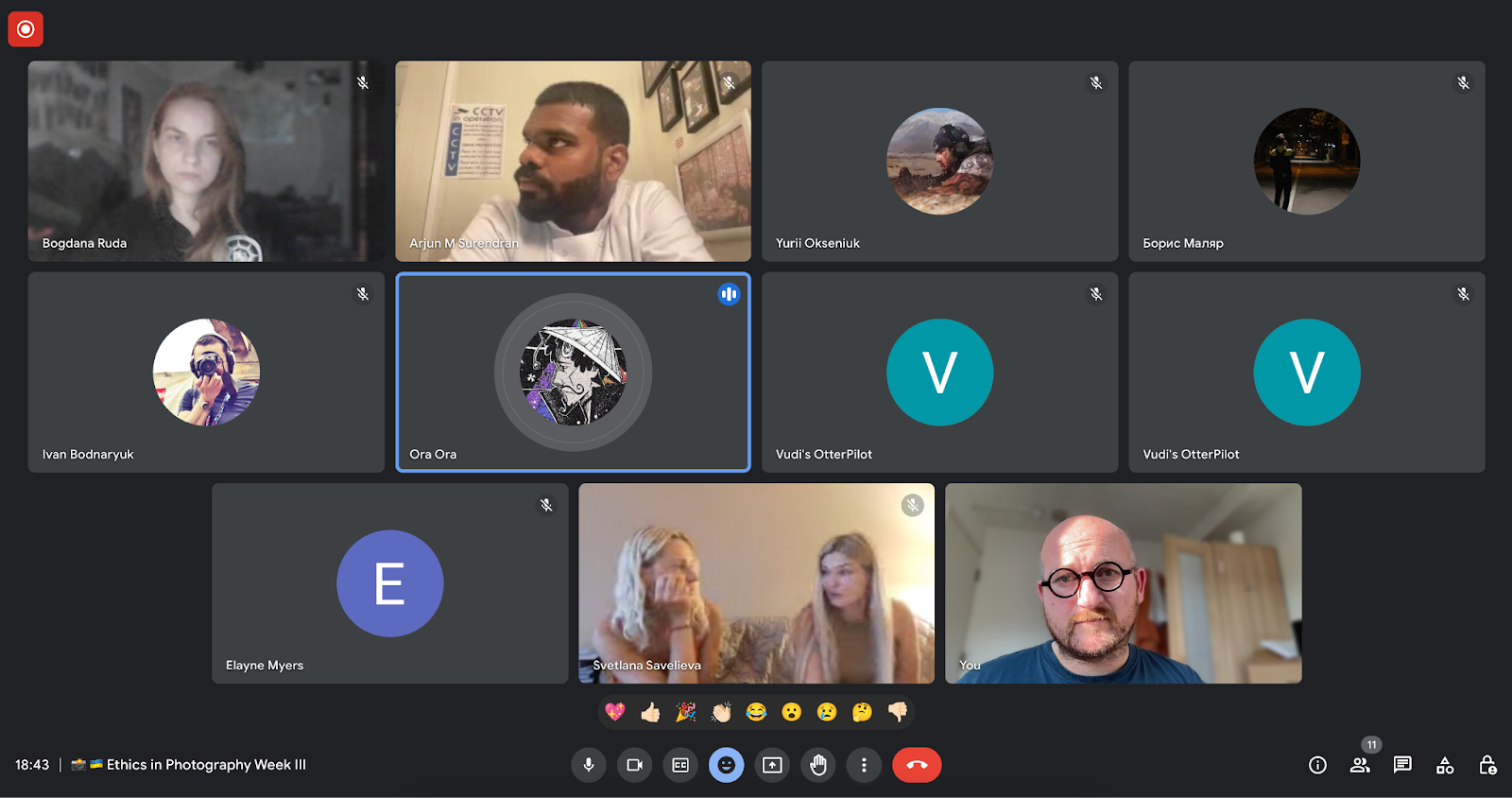
Renowned Kosovar-British photojournalist and educator, Vudi Xhymshiti, embarks on the third week of his journey, dedicated to educating fifteen Ukrainian scholars who have been awarded scholarships in his groundbreaking photojournalism educational program. Over the course of this Thursday and Friday, the scholars engaged in enlightening discussions on the paramount importance of mastering metadata and adhering to the ethical principles of photojournalism.

Following an extensive year of reporting in Ukraine throughout 2022, Xhymshiti recognized the dire need to extend support to the Ukrainian people. Moved by the plight of voiceless men, women, and children, who have suffered the harrowing atrocities inflicted by the Russian military aggression since the full-scale invasion launched by Russian President Putin on February 24, 2022, Xhymshiti made it his mission to share his wealth of knowledge in photojournalism. By doing so, he aimed to equip the scholars with the necessary skills to become the unwavering voice of Ukraine.
In today’s digital age, photojournalists face a myriad of challenges when it comes to showcasing and monetizing their work. One aspect often overlooked, yet crucial, is the meticulous handling of metadata and captioning. This vital information not only assists photographers in organising their collections but also plays a pivotal role in capturing the attention of editors and potential clients. 

During an exclusive conversation with Photojournalism HUB in London, Vudi Xhymshiti expressed his unwavering dedication to promoting high-quality journalism worldwide. He shared insights into his education programs, which are specifically designed to elevate the skills of emerging professionals and students from diverse backgrounds. Through the provision of scholarships and access to valuable resources, Xhymshiti aims to empower individuals, enabling them to become leaders in their respective fields and share their unique perspectives with the global audience.

In discussing his educational initiatives, Xhymshiti emphasised his role in guiding fellow professionals away from ignorance. Recognizing that traditional forms of education can often perpetuate narrow viewpoints, he is committed to offering programs that foster critical thinking, creativity, and diverse thought. His ultimate vision is to contribute to the advancement of journalism and the democratisation of public narrative, inspiring the next generation of journalists to strive for excellence and create a better world through their impactful work.
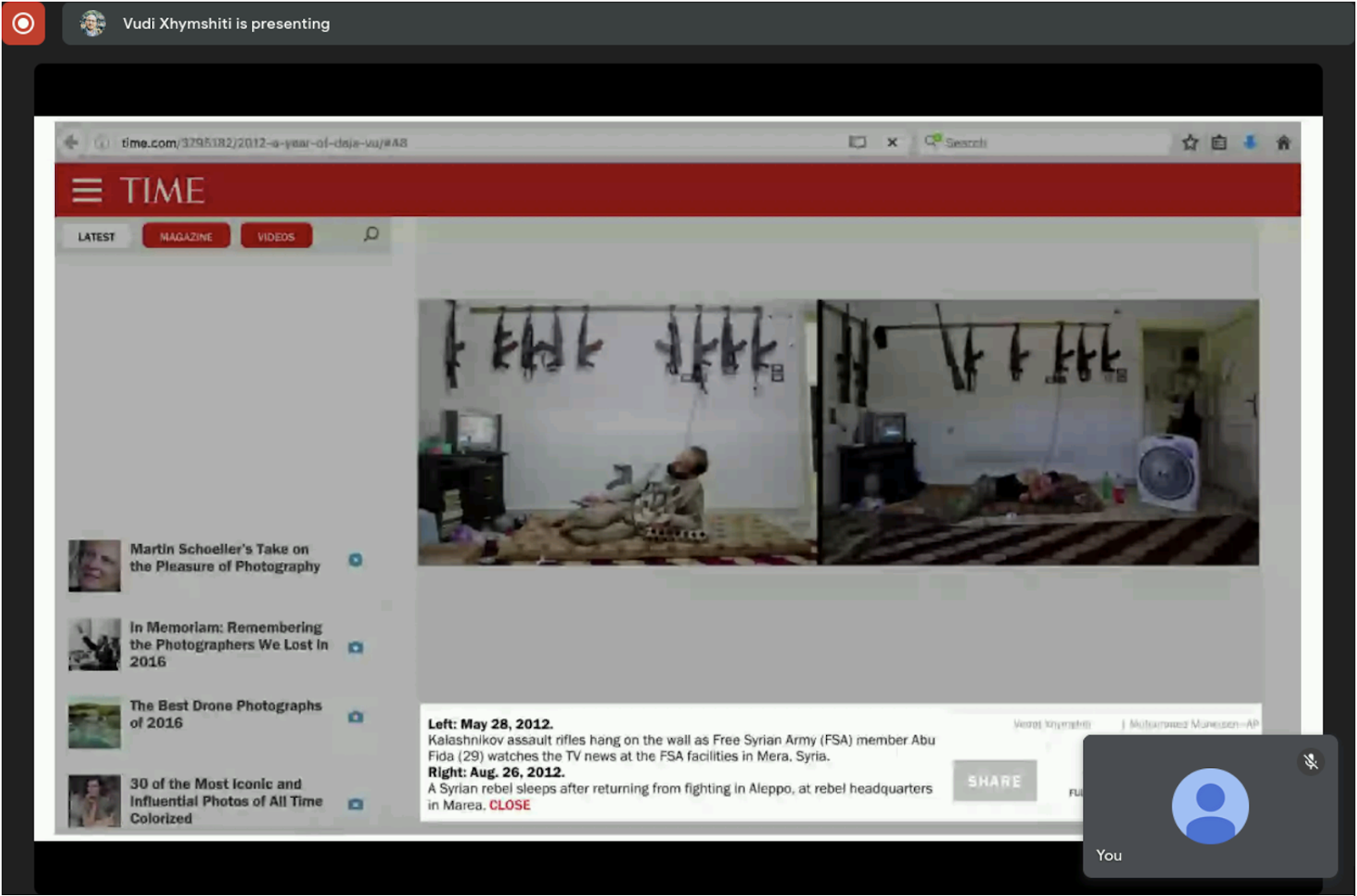
Furthermore, Xhymshiti’s conversation highlighted the paramount importance of mastering metadata in the field of photojournalism. With his expertise and experience as an esteemed instructor, he shed light on the profound influence that metadata mastery can have on the career prospects of aspiring photojournalists. By stressing the significance of this aspect, Xhymshiti aims to equip his students with the necessary skills to thrive in their professional journeys.

Xhymshiti, with his unrivalled expertise, highlights the indispensable connection between accurate metadata and professional success. He asserts, “Without proper metadata, no news editor, whether in London, New York, Paris, or elsewhere, will consider your photographs. The absence of this crucial information hampers editors’ ability to comprehend the contextual significance of an image.“

According to Xhymshiti, countless talented photographers miss out on lucrative assignments simply because they neglect to master the art of metadata and captioning. He explains, “Editors are unwilling to take the risk of hiring someone who lacks these essential skills. The absence of metadata and captions can lead to confusion and disrupt the seamless progress of a project. Editors would rather replace you with someone who understands the significance of these vital details.“

Furthermore, Xhymshiti unveils a startling truth about the scarcity of formal education concerning metadata in photography programs. He notes, “Unfortunately, universities rarely impart these critical skills to aspiring photographers. Furthermore, some professional photographers who offer courses intentionally withhold this information due to their own self-doubts and fears of competition.“

Xhymshiti’s comprehensive course aims to bridge this knowledge gap and equip students with the indispensable skills required to excel in the industry. He emphasises the importance of regularly practising metadata mastery and captioning, asserting that these tasks should become as routine as brushing one’s teeth in the morning. By instilling these practices early on, students can confidently collaborate with editors and significantly increase their chances of securing coveted assignments.

One of the intriguing topics raised during the course revolves around the use of watermarks on photographs. Xhymshiti clarifies that watermarks play a vital role in protecting copyrighted work when selling images on certain platforms. However, he advises against using watermarks on websites or portfolios intended to attract potential clients. By allowing clients to view high-quality, unmarked images, photographers heighten their chances of securing paid work.

To illustrate his points effectively, Xhymshiti showcases his own websites, featuring both watermarked and unmarked images. He emphasises the importance of presenting pristine, high-quality images to potential clients, enabling them to accurately assess a photographer’s skills and capabilities.

Throughout the course, students actively engage in discussions, sharing their personal experiences and challenges. Xhymshiti fosters an environment of open dialogue, encouraging the exchange of ideas and the cultivation of growth.

By shedding light on the profound significance of metadata mastery and ethical considerations in photojournalism, this exclusive course offers aspiring photojournalists invaluable knowledge. It equips them with the skills necessary to navigate the fiercely competitive industry, ensuring they are prepared to meet the demands of professional assignments. Xhymshiti’s unwavering dedication to empowering his students and safeguarding them from exploitation shines through, making this course an extraordinary and priceless opportunity within the realm of photography education.
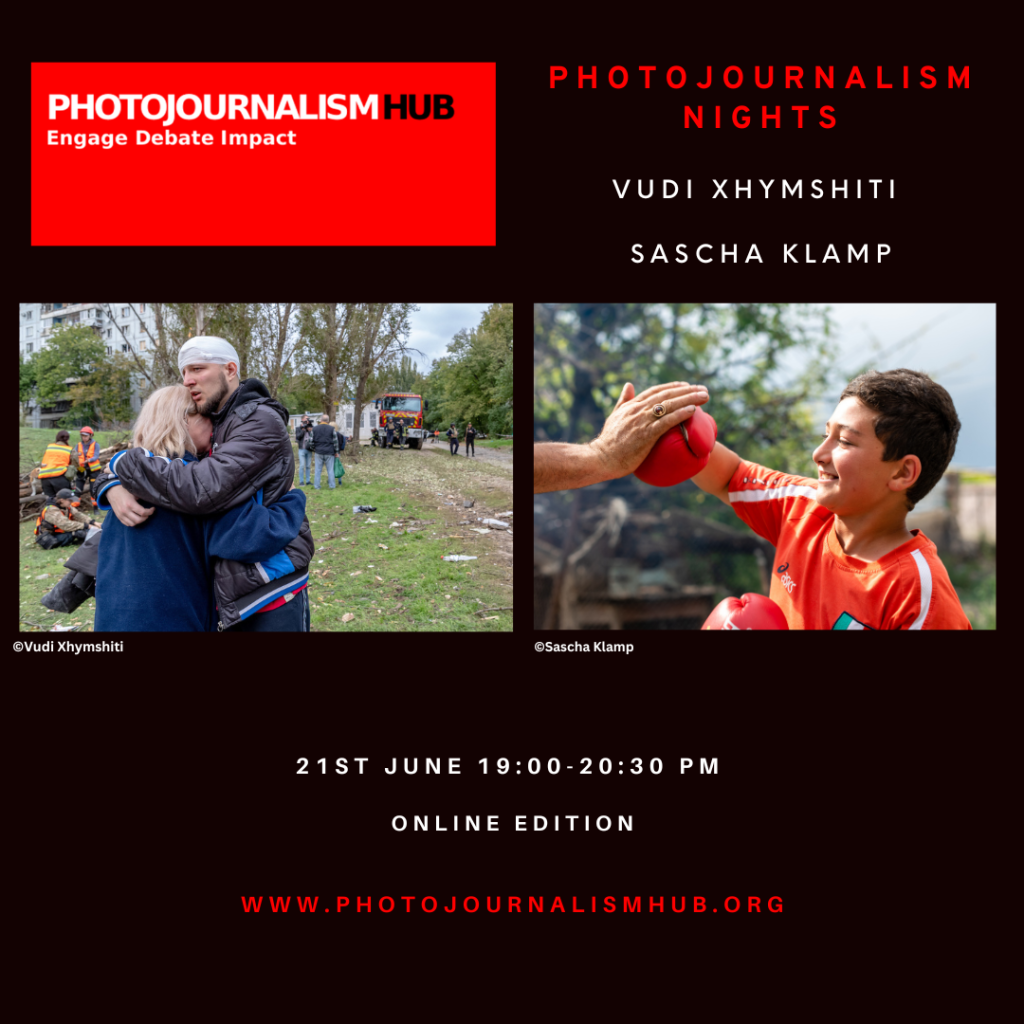
Join us on June 21, 2023, for an upcoming online edition of Photojournalism Nights, where we are thrilled to have Vudi Xhymishiti as our guest speaker. Discover the incredible work of this renowned photojournalist and educator by joining us via our ticketing system. HERE.

PHOTOJOURNALISM NIGHTS: Vudi Xhymshiti and Sascha Klamp

Join us for an exciting night of PHOTOJOURNALISM! Our online event starts on Wed Jun 21 2023 at 7:00 PM BST. To book: HERE

This event will showcase the works of talented photojournalists Vudi Xhymshiti and Sascha Klamp. Get ready to be inspired by their captivating images and stories. Vudi a renowned photojournalist will share stories from war torn Ukraine where he has been reporting from over 7 months and Sascha who is a multi awarded filmmaker will be speaking about his latest work in Armenia.

During the event, you’ll have the opportunity to interact with the photographers and learn about their experiences in the field. You’ll also get a chance to ask questions and share your own thoughts on the power of photojournalism.

Don’t miss out on this incredible opportunity to connect with two great photojournalists, documentary photographers and filmmakers with and connect with a peer community. Register now and get ready for a night that will inspire.

Vudi Xhymshiti is a photographer and journalist based in London, who has covered major world events since 2007, with his work appearing in prestigious news outlets such as The New York Times, TIME Magazine, The New Yorker, The Guardian, The Times and the Sunday Times of London, CNN, BBC, DW etc. His assignments have taken him to the frontlines of the Arab Spring, the Syrian and Libyan Civil Wars, and the aftermath of the Armenian-Azerbaijani armed conflict in Nagorno Karabakh. Throughout 2022, he reported on the Russian military aggression in Ukraine and travelled to Moldova to observe and report on the impact of Russian territorial expansionist foreign policy on neighbouring countries. He also spent four months familiarising himself with rising tensions in Kosovo, Bosnia and Herzegovina, and Montenegro, following Serbia’s alignment of its Foreign Policy with the Russian Federation. Xhymshiti is not only a talented journalist, but also the founder of VX Pictures and an educator in the visual journalism industry. Don’t miss out on his insights and coverage – visit his website https://vudixhymshiti.uk/ to learn more about him, read his blog https://vudixhymshiti.uk/blog/, and view his latest work on https://vximages.com/.

©Vudi Xhymishiti

Sascha Klamp is a British/German multi-award winning Documentary Filmmaker, Photo-documentary Journalist and Producer based in London, UK. He spent the majority of his career as an investor and entrepreneur which enabled him to travel across frontier and emerging markets. His photography practice centres on highlighting social impact and social justice affairs which is deeply rooted in his curiosity to learn more of the world around him. He tells frontline human and community stories based on empathy for the situation and the people involved. His thinking is informed by his interest in ethnology and anthropology. Sascha exhibited a small selection of his The Art of Seeing, The Art of Remembering project in London in November 2022. His work was highly commended by the TPF Social Documentary Awards (Professional Category, Series) for his The Art of Seeing, The Art of Remembering work. Sascha completed his MA Photojournalism & Documentary Photography studies at the University of the Arts (Distinction), London. He also holds an MBA (Bayes Business School, London) and a Masters in Law, LLM (King’s College, London), and a BSc International Securities, Investment & Banking from Henley Business School (ICMA Centre). He is married with three daughters. Filmography: “The Art of Seeing, The Art of Remembering” (2022), “The Blockade” (2023)

BECOME A PJH MEMBER

Consider becoming a member of the Photojournalism Hub and receive the benefits of free access to events, Photojournalism Hub resources, premier editorial content, portfolio reviews, photography exhibitions, discounts on our courses and training, whilst you will be supporting our work advocating, advancing social justice and human rights. If there were ever a time to join us, it is now. Support the Photojournalism Hub from as little as £1 every month. If you can, please consider supporting us with a regular amount each month. Thank you. JOIN US HERE

Prints

A collection of social justice and human rights issue driven photographic prints supporting photojournalists and documentary photographers who courageously and truthfully work to effect change.

Maria Tomas Rodriguez


Paper size: 16 x 12 inches
Unframed

£150 + p&p
Photojournalism Hub Members £ 120 + p&p

Young girl after school.
Photo taken in Kenya, 2019. In many places, when Christmas holidays are over, girls are back to their homework routines, classes, and perhaps midterm exams.  In some Kenyan villages, girls aged between 9-17 years old returning to school after the Christmas break means that they will be subjected to pregnancy tests and examined for female genital mutilation – FGM – by trained medical professionals in local schools and clinics. The tests have been put in place as many girls are forced to undergo FGM during the Christmas vacation, and pregnancies following it are not uncommon.


Paper size: 16 x 12 inches
Unframed

£150 + p&p

Photojournalism Hub Members £ 120 + p&p

Celebration day.
Photo taken in Senegal, 2016. This woman lives in the Ossouye, a small village in the Casamance, Senegal’s south. On this day, new young men circumcisions were taking place and women were out dressed up in their best outfits.


Paper size: 16 x 12 inches
Unframed

£150 + p&p

Photojournalism Hub Members £ 120 + p&p

Bedik woman.
Photo taken in Senegal 2016. The Bedik tribe lives in the south-eastern corner of Senegal, near the Guinean border and close to the headwaters of the Gambia River. They arrived at different times between the 11th and 19th centuries. The area remains remote and many of the cultural adaptations of the people, including their agro-pastoral, social, ritual and spiritual practices persist to this day.


Paper size: 16 x 12 inches
Unframed

£150 + p&p
Photojournalism Hub Members £120 + p&p

Traditional celebration.
Photo taken in Senegal 2017. Male circumcision is one of the oldest and most widespread surgical procedures in the world performed in pre-pubertal boys, adolescents or adults. In Senegal, male circumcision is considered essential for becoming a full member of society and it is a major festivity across the community with big celebrations for which men wear their traditional outfits.


£150+ p&p
Photojournalism Hub Members £ 120 + p&p

Boats of shame. Photo taken in Canary islands, Spain, in 2021. In 2020/21, around 45,000 illegal immigrants from West Africa arrived by boat to the Canary Islands (Spain, EU). This route is the deadliest migratory path: 1 out of 20 migrants dies on the attempt to reach European soil. Poorly equipped boats travel distances of up to 1,500 kms. The engines break often, leaving the passengers adrift for days or weeks in which food and water run out. Frequently the occupants die during the crossing. Those who remain alive throw the corpses into the ocean to save on fuel. Ports on the Canary Islands are these days plagued with hundreds of these abandoned boats.

Maria Tomas Rodriguez
Maria Tomas-Rodriguez is a Spanish born photographer living in UK for the last 22 years. Her photography work has always been black and white social – documentary photography, although recently, with the pandemic and domestic lockdown, she started exploring colour photography. Maria combines her current university academic job with her interest in photography and travelling for documenting social matters and people’s cultures & traditions. She collaborates on regular basis with Baolar, a charity based in Senegal as an active member and photographer. Her major photography work concerns the modern-slavery conditions of children and the harsh working conditions of fishermen, both works in Senegal. She also has documented the Afar salt miners work in Ethiopia just a few months before the war started in the Eritrean border.
Her main interest is to contribute to raise awareness on injustices and social inequalities. Some of her work has been published in UK online magazines and Spanish local newspapers. In parallel to her interest in documentary photography, she is very keen on water sports and has
developed a still ongoing portfolio on wind and water sports, attending major championships and documenting the training of professionals of these sports. Her work has been recognized at several international photography awards and exhibited in the last
years, both individual and group exhibitions.
Instagram @photomtr

Images will be printed by Genesis Imaging.

Mohammed Salim Khan


Paper size: 16 x 12 inches
Unframed

£150 + p&p
Photojournalism Hub Members £120 + p&p


Children in the camp don’t have toys to play like most other children outside the refugee camp


Paper size: 16 x 12 inches
Unframed

£150 + p&p
Photojournalism Hub Members £120 + p&p

We don’t have any ambulances and during an emergency we need to walk to the nearest primary level hospital, which is very far from the camp.


Paper size: 16 x 12 inches
Unframed

£150+ p&p
Photojournalism Hub Members £120 + p&p

Conflagrations are common in the camp. In one of these events a mother was separated from her son in the ensuing chaos. They were reunited a day later.

on the reverse
Paper size: 16 x 12 inches
Unframed

£150+ p&p
Photojournalism Hub Members £120 + p&p

Genocide remembrance day.


Mohammed Salim Khan
Mohammed Salim Khan, I am a 28 years old photographer. My family became refugees and fled from Myanmar in 1991. I grew up in Kutupalong refugee Camp in Bangladesh. I am a person, who has never ever seen his own country and home village. I have been capturing lives and emotions of my community who has been fleeing violence and persecution in Myanmar for decades and now are dispersed in refugee camps.
My photos have been published in several Bangladeshi and international media, including The Guardian, The Independent, ABC news, Reuters, Al Jazeera, NPR, The Washington Post, AFP, South China Morning Post to name a few, as well as been presented in many international exhibitions in Italy, Japan, and the UK, including featured in the Oxford Human Rights Festival, UK

Ségolène Ragu


Paper size: 16 x 12 inches
Unframed

£150 + p&p
Photojournalism Hub Members £120 + p&p

Semiramis
Like Beirut itself, the Semiramis building is falling into ruin. Built in the 1960s, it was a luxury building decorated with rich mosaics and statues of lions at the entrance. It used to host rich tourists from the Gulf in furnished flats. Today, the owners no longer want to maintain it. With the soaring devaluation of the Lebanese pound (which has lost 98% of its value in three years), they are now only receiving symbolic rents. They are therefore trying to evict the current tenants in order to resell the building or destroy it.


Paper size: 16 x 12 inches
Unframed

£150 + p&p
Photojournalism Hub Members £120 + p&p

Like Beirut itself, the Semiramis building is falling into ruin. Built in the 1960s, it was a luxury building decorated with rich mosaics and statues of lions at the entrance. It used to host rich tourists from the Gulf in furnished flats. Today, the owners no longer want to maintain it. With the soaring devaluation of the Lebanese pound (which has lost 98% of its value in three years), they are now only receiving symbolic rents. They are therefore trying to evict the current tenants in order to resell the building or destroy it.

Ségolène Ragu is a French-Lebanese photojournalist based between Paris and Beirut. After a professional experience in cultural desk research and audiovisual, she completed a training course in documentary photojournalism at EMI-CFD in Paris. Since then, she has been documenting the consequences of the economic, political, and social crisis in Lebanon through personal projects and assignments.

To purchase a print, please contact Photojournalism Hub, admin@photojournalismhub.org

Capturing Crisis

We are incredibly pleased to present the fourth edition of Capturing Crisis photography and reporting magazine produced by the group of youths of the ‘Stories, Reporting Mag, Photography Course’ project.

Responding to the cost of living crisis, the young photographers have covered with photo stories and photographs themes and topics that expose social justice issues as well as current social and environmental changes.

Some of the stories cover the impact of living crisis on restaurants owned by minority groups, the relationship of the UK to the past through the relationship of people to monuments, the emergency and emergence of food banks. Some have taken up street photography as a means to document the reality of London.

We are very proud for the commitment, talent and drive demonstrated by the young participants.

ABOUT ME, AND MY COMMUNITY – ISSUE 3

We are pleased to present the 3rd issue of ‘About Me, and my Community’, a photography magazine produced by a group of senior residents of Hammersmith & Fulham.

In this issue, the group has continued to explore their individual ideas and projects on communities and their lives within.

We have photographs that document groups activities taking place within Hammersmith and Fulham, the regeneration taking place and the impact on the local community.

We hope you enjoy this issue.

We are thankful for the support:

Photojournalism Nights 30th edition

©Samira Oulaillah
©Natisha Mallick

25th January 2023, 18:30 – 21:30 
The Invention Rooms
Imperial College Door C
68 Wood Lane
London W12 7T

More info, and to book HERE

Photojournalism Hub presents Natisha Mallick and Samira Oulaillah to the 30th edition of the Photojournalism Nights event at The Invention Rooms, Imperial College London.

Both award winning photographers work on under-reported topics that need incredible courage and access to be able to tell, including Natisha’ stories on Muslim men being falsely implicated in terror cases and the challenges of child birth in India, and Samira’s project ‘Breaking the Silence’, exploring the testimonies of former Israeli soldiers who quit the army to join an organization called “Breaking the Silence” – founded in 1995 by former soldiers- who decided to testify against their own actions in the occupied territories.

Natisha Mallick is a computer engineer by education and a documentary photographer who focused her work on under-reported stories in India. She hopes that her images contribute to the public enhancement of unbalanced situations. Her work has been published in Spiegel Online, The Wire, The Quint, Fountain Ink Magazine, The Irish Times, Scroll, Catch News, Private Photo Review and L’ oeil de la photographie. Shortlisted twice for the Marilyn Stafford Foto Reportage Award in 2018 & 2017 for her work on Muslim Men falsely implicated in terror cases. Natisha’s work on Child Births in Rural India was awarded the Child Survival Media Award by National Foundation for India and Save the children and was also shortlisted for the Photocrati Fund. She was the recipient of the Neel Dongre Grant by India Photo Archive Foundation and the Oslo University College Grant. Interested in Data Stories, Natisha is transitioning into the tech/data space and presently working towards her Masters in Big Data Science from Queen Mary University of London. http://natishamallick.com/

Samira Oulaillah, a French filmmaker and documentary photographer, has extensively worked in the last ten years on global issues related to war, refugees, gender issues, child poverty and racial discrimination, producing numerous documentaries for international cable television and presenting documentary photography for various media outlets and NGOs. She has widely travelled across the world to shoot hard-hitting documentaries and immersive photographic reportages that give a voice to the voiceless and a face to the forgotten. Samira holds an MA in Documentary Photography & Photojournalism (UAL London College of Communication) and an MA in Social History (Winchester University). She is currently preparing a PhD with the Sorbonne University in Paris and working on the impact of white colonial photography in West Africa on the representation of native people and the revival of African identity and collective memory through the work of contemporary Malian photographer Malick Sidibé and Senegalese photographer Oumar Ly. https://samira.photoshelter.com/

BECOME A PJH MEMBER
Consider becoming a member of the Photojournalism Hub and receive the benefits of free access to events, Photojournalism Hub resources, premier editorial content, portfolio reviews, photography exhibitions, discounts on our courses and training, whilst you will be supporting our work advocating, advancing social justice and human rights. If there were ever a time to join us, it is now. Support the Photojournalism Hub from as little as £1 every month. If you can, please consider supporting us with a regular amount each month. Thank you. JOIN US HERE

Photojournalism Nights x Christmas Social

13th December 2022 18:00-21:30
The Invention Rooms, Imperial College
Door C, 68 Wood Lane
London
W12 7TA

To Book: HERE

We are delighted to announce the last Photojournalism Nights event of the year with a special festive edition! Come along and join our guest speakers of the night, take part in the conversations and cheers!
All are welcome to bring  (alcoholic) beverages if you wish, whilst tea and coffee is on offer at the venue. We look forward to seeing many of you!

Francesco Marchetti is an Italian born photographer living in London. Francesco combines his daily job with his passion for photography. He has completed a course in reportage photography at the Central Saint Martins, University of the Arts, and he is an associate member of the Royal Photographic Society (ARPS). His work span from documentary to street photography, has been recognised at several international photography awards, and exhibited in both individual and collective exhibitions in the UK and abroad. He has cooperated with various NGOs and worked on the community support projects in the UK, Serbia, Uganda and Ethiopia.

Jonny Pickup is an internationally published, multi-award-winning photojournalist and documentary filmmaker from Cornwall, England. His work focuses on the often unseen or forgotten areas of society, using still and motion imagery to help us question contemporary global issues. In 2021 he was awarded the Rory Peck Training Fund and is part of the Front Line Freelance Register. In 2015—despite not having an undergraduate degree—Jonny was invited to start a Masters at Leeds University at the School of Media and Communication focussing on documentary film and photography. An unconventional invitation based on the exceptional portfolio he had developed independently. He graduated in 2016 with a high distinction winning the prestigious University award for outstanding work. In 2018 he won the Platinum Remi Award at the 51st Huston International Film festival for his first documentary ‘The Bare Knuckle Carer’, past winners include directors such as George Lucas and the Coen Brothers. His second short ‘Ambazoina’—which required him to be smuggled into Cameroon—won Best Documentary Short at Bafta Cymru qualifying Carmarthen Bay Film Festival in 2020, and is being distributed by Journeyman Shorts. As a photojournalist, Jonny has covered world events and current affairs for publications such as National Geographic, The Telegraph, and Foreign Policy Magazine, and freelances for Getty Photo Agency. In 2019 he won Gold at Tokyo International Photography Awards. In 2020, he has become one of the 30-photographers selected to exhibit as part of the Paris Photo Prize ‘State of the World’ exhibition, and in 2021 he was exhibited at FotoNostrum Mediterranean House of Photography as part of the 17th Pollux Awards.

BECOME A PJH MEMBER
Consider becoming a member of the Photojournalism Hub and receive the benefits of free access to events, Photojournalism Hub resources, premier editorial content, portfolio reviews, photography exhibitions, discounts on our courses and training, whilst you will be supporting our work advocating, advancing social justice and human rights. If there were ever a time to join us, it is now. Support the Photojournalism Hub from as little as £1 every month. If you can, please consider supporting us with a regular amount each month. Thank you. Join us: HERE

PHOTOJOURNALISM NIGHTS 28TH EDITION

Yemen: UN has declared the situation in Yemen as the greatest humanitarian disaster in 2018. ©RasmusFlindtPedersen

23rd November 2022 18:00-20:30
The Invention Rooms, Imperial College
Door C, 68 Wood Lane
London
W12 7TA

To join us HERE (in person) and HERE (online)

Photojournalism Hub presents Carly Clarke, Francesca Gabbiadini and Rasmus Flindt Pedersen.
Carly Clarke is a British documentary and portrait photographer working primarily with medium format film. After completing her BA in photography at Middlesex University, London she was awarded the Luck-Hille Postgraduate Photography scholarship for her Master’s degree in Photography, also at Middlesex. Her work mainly focuses on social and political issues that may otherwise go unnoticed. Storytelling through the voices of the people she photographs is key to her work. She has personally researched, organised and sought funding for all of her overseas projects, which include – Remember Me: Vancouver’s DTES, Godhūlikāla: India’s Forgotten Elders and Jamadagni’s Temple: The Real Full Moon Festival. When she was diagnosed with Hodgkin Lymphoma in 2012, she created a self-portrait project, Reality Trauma, documenting her journey through treatment and recovery. She subsequently created a second project, In the Blood, seven years later when her younger brother Joe was diagnosed with the same type of cancer. Reality Trauma has been widely commended and has been featured worldwide on BBC News Online, BBC TV local news, photography podcasts, and a radio show. She has won several honourable mentions for her projects through the International Photography Awards (IPA) and has been shortlisted for the Portrait of Britain. Her work has been published by the BBC, in the British Journal of Photography, Portrait of Britain, the charity Lymphoma Action, International Photography Awards (IPA), Suitcase Magazine, Jornal Contacto, POV Magazine (Canada), Lensculture, Portrait Salon and has been shown at the National Portrait Gallery in London. www.carlyclarkephotography.co.uk

Francesca Gabbiadini is a photojournalist from Italy. She reports on socio cultural taboos related to femininity and female identities into current society. Her two major ongoing projects are “The Call of Eve”, focused on female rage and the places where it can be expressed, and “Because”, a participatory archive on female identities. After the Master’s in Documentary Photography and Photojournalism at the University of Westminster (2018), she has been working as a freelance photojournalist in London. She collaborates with international and national media outlets, such as La Repubblica and Elle magazine. Francesca’s projects have been shown in various exhibitions between Italy and London, such as the group exhibition at the International Centre of Photography in Palermo (2021) led by Letizia Battaglia. In March 2022 she co-founded Femminsista, an international and intersectional feminist community on Instagram, where she works as an Editor-in-Chief. In May 2019, Francesca led the first workshop on documentary photography in Bergamo, Italy, with the editorial goal to ethically report the community of one of the city’s most multicultural neighbourhoods. www.francescagabbiadini.com

Rasmus Flindt Pedersen (40) is a Danish photojournalist, documentary filmmaker and father of two with 10+ years of experience documenting the world around him. He has won several awards for his work and has had his images exhibited in places like London, New York, Tokyo, Paris and Copenhagen. His work in the world’s hotspots has focused more on depicting the everyday struggle of civilians trapped in the war zones than on the actual fighting. It’s not that the dramatic photos of combat aren’t important to him, it’s just that he finds the struggles of regular people much more impactful. Rasmus’ latest war assignment brought him to Ukraine to document the initial phases of the Russian invasion at the beginning of the year. During the summer Rasmus has spent more time home to focus on his own family and the birth of his second son before he’ll start work on a documentary film project early next year. www.flindtpedersen.com

Photo Above ©Rasmus Flindt Pedersen

BECOME A PJH MEMBER
Consider becoming a member of the Photojournalism Hub and receive the benefits of free access to events, Photojournalism Hub resources, premier editorial content, portfolio reviews, photography exhibitions, discounts on our courses and training, whilst you will be supporting our work advocating, advancing social justice and human rights. If there were ever a time to join us, it is now. Support the Photojournalism Hub from as little as £1 every month. If you can, please consider supporting us with a regular amount each month. Thank you. JOIN US HERE

About Me, and my Community – issue 2

In the second edition of ‘About Me, and my Community’, we present stories and photography on ‘The impact of regeneration on local communities’. The published stories look at the positive and negative aspects of regeneration, the changes of local spaces such as local markets and shops as well as explore what community means in a personal level.