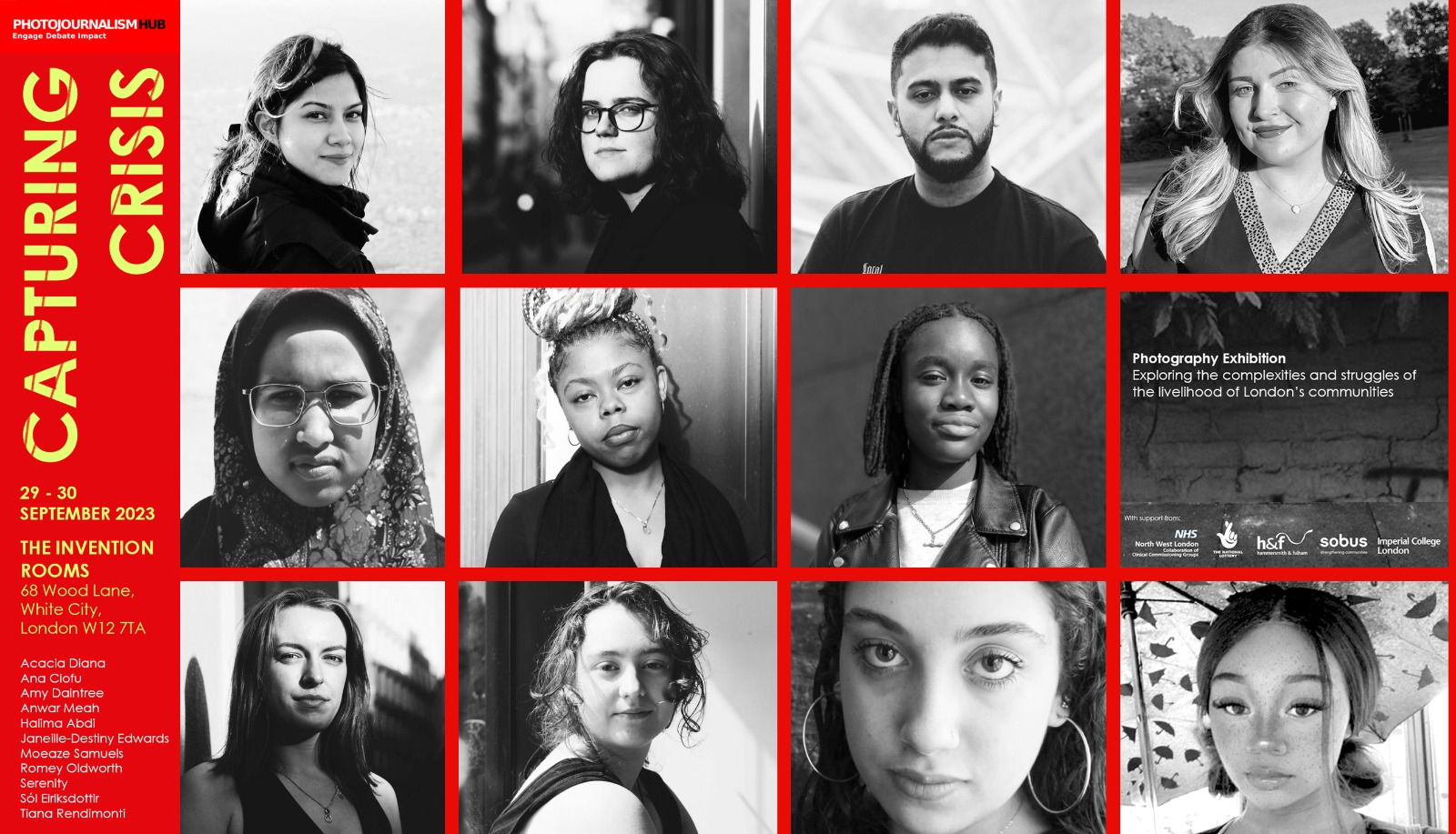
The Photojournalism Hub Calendar 2026 showcasing the incredible work of photojournalists and documentary photographers who have contributed to our mission.
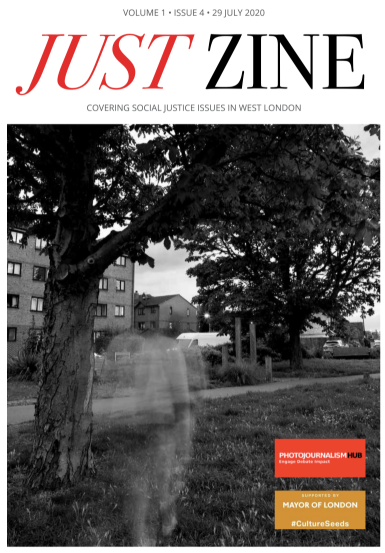
It is with great pleasure to present the 6th issue of JustZine magazine and with great sadness to announce that this is the final issue under the Photojournalism Hub ‘s Mayor of London Culture Seeds support. In JustZine Issue 6 we focus on protests. It is an open interpretation on this topic, because protests which have become more and more embedded in our societies, can take many forms, from personal change, activism, to protest for our ideals or personal goals. Acknowledging protests summarises the diversity of the challenges that we face in today’s world. Contributors have shared articles and photo stories responding to the theme and shared coverage of protests, activism, the people behind them and shared their personal protests. In this issue, we also present the wonderful contributors to the project and let you discover a little of their lives through their profiles. The young reporters, photographers, poets and artists behind the courageous, committed and honest journalism have a showcased profile produced by young photojournalist Fatima Sanchez who put forward initially the idea, and passion in producing these. As the chief editor of the JustZine, I am very proud for the commitment, talent and drive demonstrated by the participants of the ‘Youth Zine West’ project run by the Photojournalism Hub, who produced this issue. I would like to renew my thanks to our founder the Mayor of London and the Culture Seeds team. This has been an amazing and enriching experience for all of us, and we sincerely hope to find means to continue sharing local stories. – Cinzia D’Ambrosi, Editor in Chief
As Coronavirus continues to spread throughout the world, it is increasing social injustices and bringing inequalities to the forefront.
In this fourth edition we show you two strong photography contributions. Firstly, Erhan Us shares a powerful insight into women’s lives and the harm that is inflicted upon them by patriarchal family structures in Iran which is being exacerbated during the pandemic. Secondly, Jo Fountain shares interviews and photographs that focus on the pandemic’s impact upon communities in Manchester.
These are issues we need to see, reflect upon and action.
Mummy
By Erhan Us
‘The Mummy Project is created to criticise the ‘ornamentation’ and disidentification of women in Iranian society that have their freedoms and preferences exploited. Since lockdown, I wanted to raise awareness on the harm patriarchal family structures incur onto women’s identity and equal rights.‘
About Erhan
Us is a conceptual artist and author. After studying at Bilkent University in TH Management; he was granted to 25+ local and international / honorary awards. He has participated in 70+ exhibitions in 20+ countries. He continues his studies in Sociology & Philosophy at Istanbul and Anadolu Universities. Us is a member of Photographic & Visual Arts Federations, whose book ‘Digital Prestige’ was published in 2018.
“It is true that this world where we have difficulty breathing Now inspires in us only evident disgust A desire to flee without further ado And we no longer read the headlines” A Disappearance by Houellebecq
‘This photo project aims to break down social barriers to reflect how people have stood together as a community during this time despite extreme isolation. It allows us to see the common threads of human experience and within this highlight inequalities and injustices amongst us. There is a power of support and acknowledgement that this is a shared responsibility. We stand together to create our own narratives. The portraits have been collected from around Manchester in the UK and with an open brief people were asked to write messages and signs to summarise their experiences or give words of support out to the world. The response has been varied, highlighting familiar phrases, funny, invites protest, politically charged, esoteric, others personal. Accompanying the portraits are interviews collecting oral histories of personal experiences and issues that have been highlighted such as effects of isolation on mental health, issues with state support responses, social care, lack of funding, and prejudices that have been brought to the foreground to be questioned.
Overwhelmingly people have struggled with the constant and crushing weight of relentless news stories covering daily atrocities and global crisis. There is a network of support around you if you look for it and take part. The window acts as both a lens and a reflection on the messages that have been created. It highlights the power of the word, graffiti, and protest banners. Even in simplified language, and sometimes especially, there is a re-narration of our view of the world.‘
Meave’s Interview
Meave Cohen
It’s been awful. Just fucking awful. I’ve had many conversations with people and they’re like “I don’t think the pandemic’s been that bad. I’ve been able to think about me and do my yoga and do my music and do my cooking and I’m like fuck you. Tens of thousands of people have died. Fuck you. I’ve absolutely hated it. I genuinely thought I would never see my mum again and that was awful. I’ve not been able to see my niece, like, see’s only a week and a half old but … my brother wasn’t even in the same fucking hospital when his baby went blue. It’s been fucking awful.
It’s been really tough with my mum but even that’s loads better now. Since we’ve been able to see her she’s been loads better. We can’t ‘see’ her, see her, we can just see her through the glass but now that she knows we’re alive I think she’s … I rang her yesterday. So when you ring her you sing songs and sometimes she would join in and sometimes she doesn’t. But yesterday she was singing all the songs and then she made up a little song. She made up this little melody, so I finished singing a song and she just kept singing this little melody she had made up. Adorable. We’re four of us, she’s got four children and we’re all really engaged with her care and really engaged with all of it…. old people with Alzheimer’s I can’t imagine, like millions of people would have died of loneliness.
My friend has got a chronic lung condition and he’s gonna get a letter through the door soon saying it’s OK, you don’t have to shield anymore. He isn’t going to go out the house. If he gets it he will die. So he’s going to loose his job now because the government said he can work now, but he can’t work. They are just not able to test or trace where anything is so you are having these local flare ups like Leister is in lockdown again. Apparently Bradford is really bad and fucking nobody knows what’s going on because they never managed to get rid of the virus anyway and they can’t test for it, or trace for it in the way that would be useful because they’re fucking useless. So people like him will just never be able to leave the house. Or, when am I ever able to give my mum a hug? Children died, children died on their own, it’s awful. Then you’ve got fucking Dominic Cummings driving up to Durham. It’s just awful. People died alone, people couldn’t hold their dying children. I’m working on this local economic… it’s called Local Economic Development but it’s basically how local authorities shape their economies. It’s called Community Wealth
Building, and the whole idea is retaining and creating wealth within the communities. So right now we have a model, for example, if a hospital got it’s laundry done by a local supplier instead of say, Serco. That wealth goes back into the local area, so that local people get employed to do that work and they then spend their money in the local shops and cafes.
In my opinion they should have had lockdown much earlier than they did. Not like you can go out one exercise a day or… like all of that shit that was completely un-policeable so everyone is just doing the fuck they wanted. Obviously we don’t have a fucking police force because they cut that to shit so they had no-one to police it anyway but .. got rid of the virus then we could have had a gradual easing of the Lockdown.. But because we didn’t really lockdown hard enough and we definitely didn’t lockdown early enough we’re in this kind of semi-lockdown, until when?
This is a crisis of globalisation. This crisis basically means the end of Globalisation because it was able to travel so fast and because when trade ceased and when the borders closed, Britain in particular was in a real problem because we don’t have places that produce PPE or places that produce hand sanitiser and we had to mobilise our industries to try and create these things and we had mass shortages. This is why the supermarkets ran out of food. Instead of having spare stuff to sell it’s as and when you need it, and we’re gonna have to move away from that model. Basically we have to make our supply chains much smaller to be able to cope with things like this. People are making tonnes of money out of this it’s perverse. So people that already have money can make more money but people that have no money are just fucked.
The entire world is in transition and transitions are very unnerving and we have no idea what the other side is gonna look like and it’s incredibly anxiety inducing then on top of that hundreds of thousands of people had died. And you read things like today the US has bought up all of this specific drug. It’s not a vaccine but it’s basically like right well so… Africa can just die. India can just die. Europe can just die. So the way that patents work is that you make money out of curing diseases, which also applies to pandemics. It’s just fucked. So you have to disengage a bit, I think.
Pete’s Interview
Pete Keeley
“I was freaking out because I couldn’t get any food, and it was like what the fuck, how am I going to do this!?
I stick my foot out of the window with a bucket on a string and wait for attractive ladies to come and give me food. But I’m still waiting for them man! I’m starving!
I joke. Dad dropped some stuff off and my mate Mark came with 4 big bags of stuff and I ate chicken boob for about 25 days. The government food package took about 3/4 weeks. I could have dropped dead in that time if people hadn’t have been there. It was pretty nuts. For a lot of understandable reasons people have been very critical of the governments response, but once this food thing was started it was incredible the way that they were getting through to people like us. I got a letter from the the doctors saying that I needed to shield. The way it effects Cerebral Palsy is that even when I get a cold, if I start coughing, my whole body shakes and I have to hold on to something to stop myself falling forward. My body kind of goes all over the place. I think they said that I was okay to calm me down because I was freaking out.
The next thing was, you need to stop yourself going mad, and work, like I say I’ve not worked since 1997. I would have gone super loopy without writing for theatre. That, and I have been making Grandmaster Pea videos. A character I had developed before, who claims he is the Tsar of the disabled, although he is self-appointed.
I kind of felt that there was something coming and I needed to be more safe than other people. I got this feeling and I just shut the door and that was it. That was 3 and something
months ago. I would say that lockdown has been difficult. Just trying to keep yourself going. Once you’ve found a way of doing that, it’s okay. It was worse for me because I lost my Mum as well. She got ill last September and died just before Christmas and dealing with that has been tough. It wouldn’t really go away. I was really close to her and you know, she doesn’t leave me, but that doesn’t stop you missing somebody. It’s a weird acceptance but also hell.
My twin brother is in a residential home which has had people with Covid in so that’s been a concern, but I’ve been phoning and face timing him and he’s fine with being shut in because he is on a bed a lot of the time. It’s kind of normal for him. He has the staff and he has some connection. It is terrible, I’m not saying it’s great, but what I am saying is that in terms of my brother, he doesn’t come out of his room much, he watches TV so it’s been a different experience for him because we cannot visit.
They had the problem like a lot of people, where they couldn’t get PPE, and so thats the other thing about Grandmaster Pea as well, I gave some of the videos to a comedy night to help raise money for actors who needed food. That was good, I felt like I was doing things for other people, at a time when I felt like I couldn’t do anything or help. As a
disabled person, you don’t actually get the opportunity to give back to people. This was a time when I could do that.
I also gave money to the NHS in Mums memory, because she was a midwife, and quite complicatedly she was a midwife, and we were born on the ward she ran. She had brought many babies into the world and saved them from the fate that me and Christopher were not saved from. She always blamed herself I think. We had conversations about it, I think she wanted to be working and giving birth at the same time. I think she felt guilty, which she shouldn’t have done, but I think that she did, bless her. Unfortunately the NHS let her down a number of times. So, that was difficult because everyone was clapping and I was angry and annoyed, but I still gave money to them.
When she died she wasn’t treated well, they made what was a very difficult situation worse. They said under no circumstances can you move this woman as she won’t be able to walk, and that’s what they did. It’s really difficult to process that kind of brutality. I mean this is a woman who gave years of her life caring for people. She learnt Arabic in the early 70s and felt that people should be understood. That was the incredible thing about her. What killed me, was she was that compassionate and helped people and that’s how the
NHS sort of thanked her for it. So I have a really weird relationship with them. I mean when the thing with PPE happened I gave money to that immediately. A big chunk of money, not that I’m a millionaire but I felt it was important. The idea that people were risking their lives to save other people, it’s an amazing thing that people wanted to do that, and that they were brave enough to do it. The idea that they were not being given the support was just disgusting”
Pete
Jag
Claire Mooney
To keep up with the story, or take part please visit lockedinlight.com or re-post your own using the signedtimes hashtag. Extend perceptions, deepen resonances, reinforce connections. Jo’s has a background in Visual Anthropology, oral history and photojournalism.
If you have work which highlights the social injustices that are being intensified or laid bare by Covid-19 please submit your work to the Photojournalism Hub. We will be adding a dossier page on a monthly basis. Submit by October 30th to be included in the next dossier.
Cinzia D’Ambrosi, founder/director of the Photojournalism Hub is in conversation with Asha Mukanda, activist, writer and executive assistant of the Open Institute in Kenya. The conversation surrounds the impact that the current pandemic is having on the existing issue of health disparities and police brutality in Kenya. https://studio.youtube.com/video/Q8zt–YMiUc/edit
INJUSTICES AND INEQUALITIES TALK WITH SABRINA MEROLLA
Carli and Sabrina
An inspiring and insightful conversation with Sabrina who is a photojournalist creating work about her own invisible health conditions. Not only to cope with them herself but in order to help others, and highlight the way CV-19 has effected many like her. https://www.youtube.com/watch?v=F-_ua9Yi57E
INJUSTICES AND INEQUALITIES TALK WITH ERICA DEZONNE
The fifth issue of JustZine magazine presents photo stories and articles that cover pressing and important social justice issues from Environmental and Climate justice, to […]
JUST ZINE magazine issue 3 focuses on homelessness in a Covid-19 world as we understand that the pandemic has worsened an already widespread issue. It […]
In this very first issue of JUSTZINE magazine we are presenting a Special Report on food banks in Hammersmith & Fulham with insightful interviews, photostory […]
This issue of JUST ZINE magazine, we focus on domestic abuse, an issue that is affecting many lives. Covid-19 global outbreak and the subsequent lockdown […]
JustZine is a magazine produced by local H&F residents trained in photojournalistm by the Photojournalism Hub. The magazine focuses on a social justice issue per […]
Photojournalism Hub trains residents, photographers and journalists to tell stories that matters to them. Using the Citizen Photojournalism model Photojournalism Hub produces magazines and zines […]
We are witnessing disregard for basic human rights in every continent: restricted access to health care, lack of government transparency, deepened poverty, inadequate financial protection, racial discrimination and increased risk of domestic abuse.
In the UK, years of austerity measures, subsequent cuts to important social services and years of public spending over Brexit had already severely damaged public services, imperilled human rights and restricted collective and individual freedoms. Covid-19 has exacerbated this pre-existing damage. What we are witnessing day after day is the culmination, or rather the unravel, of years of political, social and economic failure.
Photographers and photojournalists have submitted material to this dossier giving us a powerful insight into human frailty at the hands of injustice and the inequalities being intensified in new and tragic ways during the pandemic. Contributors have highlighted the plight of key workers, documented the Black Lives Matter protests during the pandemic and the conditions for those living on Skid Row in L.A.
These are issues we need to see, reflect upon and action.
Mexico City: Informal Workers During the Pandemic
Valeria Luongo
In March 2020 I found myself in Mexico as the pandemic spread throughout the country. Being on site during the beginning of the formal quarantine announced by the government, I became aware of the large amount of workers who were filling the streets. I wanted to understand exactly why they continued to take these risks. I carried out interviews with various street workers and took portraits all from a safe distance. I thought it was important to bring attention to those who have been left aside without government support and are vulnerable because they lack any protection.
In Mexico City 49.7% of the population work in the so-called “informal economy”. This means that 5 out of 10 workers are neither monitored nor protected by the Government. This category of people include vendors, street performers, artisans, artists, sex workers, among others. The very nature of their work puts them in contact with a high number of people so that they potentially have more chances to contract and pass on the virus. Despite that, for many to abandon the streets means being completely unable to provide subsistence for them and their relatives.
The need to bring home a daily income has lead many street vendors to find a smart solution to overcome the crisis. Women and men sells disinfectant gels, cartoon themed face masks and even natural medications to prevent the virus.“I am not scared about this, I survived so many difficulties in my life: earthquakes, diseases, poverty… I am not going to be stopped by this virus”said Martha, a natural remedies seller. The general attitude is a mix of mistrust towards the authorities, fatalism and a pragmatism to creatively overcome the issue.
Two teenagers kiss in the city center next to a sign that recommends citizens to stay home if they have any symptoms. Initially, although many were concerned, others believed that the virus was a problem who would only affect Europeans or rich Mexicans who could afford to travel abroad, thinking that there wouldn’t be a massive spread in the country.
Arturo is a 18 years old street seller. “I used to sell pens outside the Court but I had to stop when the Coronavirus emergency began. I decided to start selling these handmade flowers, even if there are not so many tourists around. If we don’t die of coronavirus we will die of hunger.”
Juan started working as a shoe cleaner in the 80s. The shoeshine business has seen a reduction in the recent years due to the increase in people wearing trainers. The majority of Juans clients are office workers and tourists, both impossible to find during the quarantine.
Pedro is a 86 year old puppet maker and seller. Even if his age put him among the most at risk for contracting the virus he still goes out everyday to the City center trying to sell his handcrafts. Statistics show that approximately 4 million senior citizens around the country work in the informal economy.
Carlos is an organillero, a street musician who plays a pipe organ says: “The virus is already affecting my economy. A street concert organised for the end of the month has already been cancelled. I will keep on going out to play until they force me not to. I need to find my own solutions since the government is not going to help me”.
Martha is a natural remedy plants seller. “I heard that dandelion is good to prevent Coronavirus. In some markets they are now selling it for 400 pesos a kilo (14 GBP) so I thought it was a good idea to sell it in the streets, since where I live there’s a lot growing”
Maria Teresa walks around the city center with her trolley selling disinfectant gels. “I am not scared at all. Whoever is under the protection of Jesus doesn’t need to feel fear”.
In Mexico City 49.7% of the population work in the so-called “informal economy”. This means that 5 out of 10 workers are neither monitored nor protected by the Government leaving them with greater chances to contract and pass on the virus. Unfortunately, they are forced to take these risks as informal work is the only means of subsistence for themselves and their loved ones.
Mexico City, 24.03.2020. View of the street from inside an empty taqueria restaurant in Mexico City Center.
I didn’t think much when I started this project. It was May and we had been in “lockdown” for something like a month already. I was really bored and desperately needed to have some sort of connection with the outside world, even if it was through a car window, so I took my camera out for a drive.
My photographs gave me a freeze frame of my own environment ponder over, so I started writing some daily thoughts on instagram. It was the first time I really paid attention to Skid Row and the first time I really stopped to think about the people on the streets. Homelessness exposes you to so much yet make you invisible at the same time, it’s not something that can be fixed with a few hot meals and the occasional room hand out. These remedies slow the descent but doesn’t help to lift people out of poverty. These are humanitarian aids, a phrase we seldom use in the United States for domestic issues. It almost feels like a taboo topic, that the streets of one of the richest places in one of the most powerful if not the most powerful is desperate for humanitarian aid, a phrase we usually reserve for 3rd world countries. If you stand in the streets here, you’d think you were in one. We desperate need change. Whether you are left or right, this is our reality, a nation so fixated on being number one that we are willing to trample the victims of social injustice, even if they were our own. Ironic, since we are quick to scream human rights everywhere else. I guess that’s who we are, a nation fixated on pointing out what everyone else is doing wrong instead of working together to do the right thing. Covid-19 has exposed us raw, so here we are, ignorant and proud, hurling towards herd immunity, every class for themselves.
During lockdown the Hammersmith & Fulham Foodbank had to close the doors of their locations in the neighbourhood and adapt to an upcoming new reality without knowing when it will all end. All the food banks of the council, the workers and the volunteers, united together and found a base in the event venue Olympia London. There, they put together a highly organised system, dividing all the food donations, toiletries and other basic necessities ready to be delivered with volunteer cycles and taxi drivers. Talking to the volunteers I understand that people who use food banks can be anyone of us: people in unfortunate situations, people on 0 hour contracts, people who most of their salary goes on rent and don’t have much left for basic necessities, families; Covid-19 just enhanced the already existing problems we had and an even more need for food banks.
Little did we know that a catastrophic worldwide health crisis would bring us all to our knees and makes us realise how intrinsic are we all to each other: from the frontline worker to the staying-at-home individual. The individuals who for some time have played a crucial and critical role to the Covid-19 response: our very frontline key workers, happen to play Russian Roulette with their health and their families’. Day in and day out. Many of the workers on the frontline have often worked without PPE, which has meant a significant risk factor for picking up the virus and unknowingly carrying it home to their families or vulnerable family members who they share toilets or communal facilities with.
When people have finally started to build the community spirit we once lost, and ultimately start to care for each other – either going out to work or staying at home – it seems like only the government has successfully failed to provide tailored and essential support to frontline workers and their communities.
Injustices during the Covid-19 pandemic have pursued and have endured; laid bare amongst breadwinners who were simply battling to secure their family’s basic necessities, at the cost of facing the very enemy, which remained invisible and unprecedented at all times, on a daily basis. Will we ever bridge citizens and the system? Who will intervene for us? For them?
The lockdown in the UK started more than three months ago, disrupting everyone life, exactly like in the rest of the world. The number of deaths quickly increased, the streets suddenly were empty and people in vulnerable situation grown up out of all proportion.
In a residential area of London commonly called Brownswood Road in Finsbury Park, people organised themselves thanks to the Mutual Aid group. That is not an isolated case or a good example of a neighbourhood, Mutual Aid a reality that happened in every area of London and Great Britain. Here, during the pandemic weeks more than 250 people joined the local Mutual Aid group to become volunteers. The activities they carry out are several: from the delivery of shopping to quarantined or elderly people, to the donation of clothes to the homeless community (hosted at the expense of the municipality in a neighbourhood hotel), to telephone support for anyone in need. A group of people without any political, religious or other belonging who have decided to help their community in a totally voluntary way.
In addition to the Mutual Aid community, another group has expanded its support activities: the volunteer group from the local Church of Saint John the Evangelist. The Anglican church located in Queens Drive has been providing twice a week hot meals ready for the needy and three times a week a food bank distributing basic necessities such as canned food, personal hygiene and personal care products.”Everything has been given to us by supermarkets, local shops and citizens” explains Elizabeth, a volunteer for three years.
The charming habit of this historical moment has created a synergistic collaboration between the two groups. “it’s not only about sharing spaces” as explained by Rosie, head of the Mutual Aid group, “we needed a physical place where we could store donations, where to store clothes before distributing them to the people in need and pastor Alice offered us to use the premises of the church “but it is also” a mutual aid that the two groups to achieve the common goal.”
Two-thirds of the food banks in London have closed during these weeks increasing the difficult situations among the people in need. “We have increased the social distancing measures, providing hand sanitizer for everyone, placing chairs spaced so that people keep a safe distance while waiting for the food and delivering bags with ready food, because we don’t have the chance, as before, to invite people to eat inside our premises ”explains Anne who has been volunteering for more than four years with her son.
On the 5thJune 2020 with just over 1 days’ notice, via a private Facebook group set up by a local campaigner and through word of mouth around 150 Whitstable people turned out for a social distanced event on the beach. It was in solidarity and to Support the BLACK LIVES MATTER Campaign against the murders, violence, and systematic racism towards black people and an end white privilege. JUSTICE AND EQUALITY FOR ALL was the theme and local people and residents spoke to the supportive crowd.
The Covid-19 pandemic caught everyone unprepared, showing the limits of decades of widespread predatory policies on the NHS. As a person affected by chronic neurological conditions, I was deeply affected by London lockdown. I had respiratory reactions to medications but was never able to talk to my GP, and ended up calling 111 and going to the Emergency more than twice. Misdiagnosed with Covid-19 and worried about my family in Southern Italy, I video-called my parents every evening for two months, hiding my health issues to them. The contrast between my sleepless nights and my evening play for the family created two parallel narratives. They did not only protect my parents from useless worries, but also helped me to keep a distance from the black hole many persons with neurological conditions dashed in. This is my very personal pandemic visual diary, a mix of dreamy atmospheres shot with makeshift kaleidoscopic mobile lens and hints into the daily life of my corner of London.
Woodlands Park Road, London, UK. April 12-28, 2020: A big sign out of my neighbours’ window says “Give them PPE”. It refers to the poor safety work conditions of frontline NHS staff. The public opinion thinks that the pandemic safety measures were taken too late in England, and growingly complains about it on social media. Small photos: Paradoxically, scattered PPEs are left everywhere in Woodlands Park Road.
Chestnuts Park, London, UK. April 10-11, 2020: the first markers of lockdown were the locked playgrounds and new road signs. The English lockdown started on March 23, 2020. Based on social distancing, it never led to forbid people from going out to exercise once a day, and shopping for essential goods. The new signals suddenly appeared everywhere, while the main places of social interaction shut down. In the UK the minimum social distance was 2 mt.
If you have work which highlights the social injustices that are being intensified by Covid-19 please submit your work to the Photojournalism Hub. We will be updating this dossier page on a monthly basis. Submit by July 30th to be included in August’s selection.
Knowing You is a Photography and Storytelling project working with women of different faiths and backgrounds living in White City to inspire self expression, bonding and community cohesion.
Knowing You is a Photography and Storytelling programme developed by the Photojournalism Hub. It works on the principle that by getting to know each other, the process contributes to community cohesion and abating barriers of prejudice.
‘Knowing You’ is a Photography and Storytelling project with a community focus that uses the teaching of visual narrative as a means to educate, instil empowerment, erase barriers and foster community cohesion. The first ‘Knowing You’ project took place with women of White City supported by the charity Near Neighbours. The project allows a therapeutic and safe space in which participants go on a journey of self- expression, bonding and empowerment whilst learning new skills. It created a safe space for women of different faiths to meet, get to know each other and contributing to community cohesion. Women learned photography and photo storytelling by developing a visual narrative about a participant of the project with the photography showcased in a photobook.
The Knowing You project has been Awarded Recognised project (2020) and it is among the 40 selected projects ‘deemed exceptional’ by the judges of the Faith & Belief Forum and Her Majesty’s Lord Lieutenant of Greater London’s Council on Faith for having provided support, respite and are working to make London a city that is inclusive to everyone and continuing to do so despite the challenges posed by the current pandemic.
Knowing You project has been kindly supported by the charity Near Neighbours
In this podcast, freelance photojournalist Erica Dezonne is in conversation with Jamie Clark, our podcaster and photographer. Originally from Brazil and based in London, Erica is sharing her fascinating journey into capturing world events, news and stories through the camera lens. Erica’s career sees her working through the fast and challenging world of news for the RAC Group in Campinas, which is one of the biggest media company in the state of São Paulo in Brazil, all the way to reporting on the street of London. Her photography work has gained recognition in various awards finals, including the prestigious Esso final Award in 2011. Erica’s innate curiosity and passion that transpires in her reporting is splendidly summarized in her own words “with my Finnish heritage I had the bravery and courage to leave my comfort zone in Brazil and face what the world is saving for me.”
Podcast by photographer, videographer Jamie Clark, jamiephclark@yahoo.co.uk
HANNAH MORNEMENT
In this podcast, photojournalist and documentary photographer Hannah Mornement is interviewed by Jamie Clark about her photographic work The Road to Moteand her journey as a photographer. Through discussing her long form powerful project The Road to Mote and her personal journey into photojournalism and documentary photography , Hannah shares her working methods and she lets us into the intricacies of working as a photojournalist today. Her passion for humanitarian issues and her years’ long experience of working in challenging environments from Antarctica to Africa has led her to work alongside many international charities and NGO’s documenting complex humanitarian issues. In this podcast, Hannah talks about her photo stories of people relying on food banks in the UK, of children living in orphanages in Eastern Europe, of famine and food security in Africa, as well as discussing her role and the role of photojournalism in documenting social issues today.
Podcast by photographer, videographer Jamie Clark, jamiephclark@yahoo.co.uk
MINI TALKS
The Photojournalism Hub Live Mini Talks: a series of conversations with photojournalists and practitioners on their work and on their experiences to share useful advices and insightful know-how on photography and current topics.
Cinzia D’Ambrosi, founder/director of the Photojournalism Hub is in conversation with Asha Mukanda, activist, writer and executive assistant of the Open Institute in Kenya. The conversation surrounds the impact that the current pandemic is having on the existing issue of health disparities and police brutality in Kenya.
Cinzia D’Ambrosi (Photojournalism Hub) with Asha Mukanda
Photographer and Photojournalism Hub collaborator Carli Adby in conversation with Cinzia D’Ambrosi, founder and director of the Photojournalism Hub discussing ongoing and future engagement programme of the PJH including an ongoing call for photographers and journalists on injustices and inequalities laid bare by Covid-19 and the Photojournalism Nights, an event dedicated solely to photojournalism.
Cinzia D’Ambrosi (Photojournalism Hub) with Carli Adby
Carli Adby from the Photojournalism Hub is in conversation with Suzanne Plunkett from Women Photograph discussing under representation in the photography industry and how we can lift the voices of ourselves and those around us, particularly those who otherwise are overlooked.
In Conversation with Suzanne Plunkett, Women Photograph – 12/06/20
Carli Adby and Suzanne Plunkett
‘Covering conflict in Iraq’ – in conversation with Claire Thomas – 29/05/20
Cinzia D’Ambrosi (Photojournalism Hub) and Claire Thomas
‘Being a photojournalist on the frontlines’ – in conversation with Felipe Paiva – 16/05/20
Cinzia D’Ambrosi (Photojournalism Hub) with Felipe Paiva
Cinzia D’Ambrosi, founder and director of the Photojournalism Hub introduces an ongoing series of mini Talks, live conversations on Insta with various practitioners to share useful and insightful topics.
https://www.youtube.com/watch?v=uo23gaYrE5w Photojournalism Hub Jamie Clark is in conversation with social documentary photographer David Hadland. David […]