The Photojournalism Hub Calendar 2026 showcasing the incredible work of photojournalists and documentary photographers who have contributed to our mission.
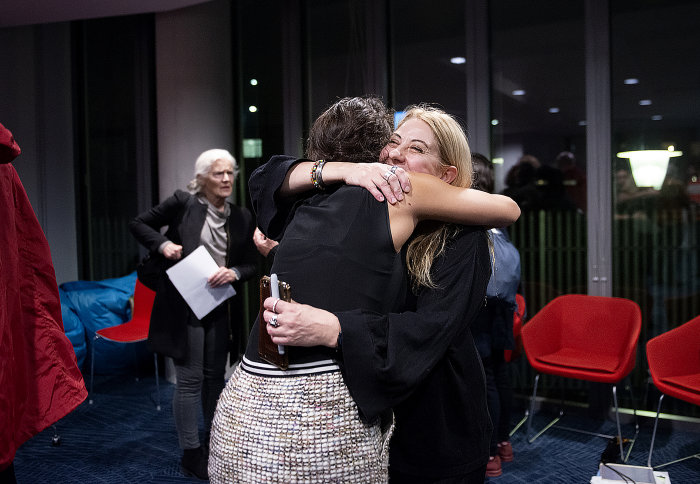
The second edition of the Photojournalism Nights at Elephant West gallery was met with an engaged audience, inspirational and talented guest photographers presentations, keynotes by Emma Perfect, global head of diversity and inclusion at Soho House, media partner Photo Archive News, networking and conversations till late at night at the bar/lounge of eclectic Elephant West gallery and the opportunity to bring home one of the donated photographs from the photographers printed with the support of Genesis Imaging UK.
I could not ask for a better night to present and showcase powerful long form photojournalistic projects exposing, reflecting and questioning the current political climate through the notion of European identity and Belonging. Presentations began with Claudia Leisinger with her project Europe Revisited documenting the lives of Roma families living in stark poverty in Serbia which questions the distribution of welfare and resources in Europe. Followed by Pete Boyd, whose work looks at where and how young people think they belong: what it facilitates; how they define who is a member and who not; how they signal their belonging; who they are allowed to be and what they can express; what they consciously adopt and what others foist upon them; and what they have to do to survive it, then to Sukhy Hullait who for 100 days documented in various cities in the UK, the opinions and feelings of people towards Brexit. Finally, we had the presentation of Quetzal Maucci, whose work looks at the lives of children of immigrants in the States and in the UK demonstrating the universality of those people caught in-between belonging. Four people won a photograph each from the raffle tickets and went home with on original print. This was made possible by the donation of the guest photographers and by Genesis Imaging which have supported this event. There were a lot of questions at the Q&A and I am guessing much more later as people stayed behind till late conversing and getting to know each other.
The Photojournalism Nights are organised by the Photojournalism Hub to bring together photojournalists and share their work, discuss important social justice issues in order to engage in a meaningful way to important topics whilst support the photojournalists which often put their lives at risk in doing this. The Photojournalism Nights are run bi-monthly at the Elephant West gallery and the next date will be announced shortly. If you wish to follow our work click here.
Sharing below some photographs from the talk event on youth and crime we held on the 17th September 2019 at the Invention Rooms in White City.
We presented a very diverse group of panellist who shared their experiences and insights on this very important issue: Raheel Butt, who is an ex gang member, Dr.Roger Grimshaw, Research Director of the Centre for Crime and Justice, Rebecca Omonira-Oyekanmi, investigative journalist and photographer Robin Friend.
The conversations showed different perspectives that included the raw experiences of Raheel Butt, the research of Dr. Grimshaw that points to emotional deprivation and poverty in early years’ link to aggregation to gangs, and Robin’s visual research looking at austerity measures, Brexit and lack of youth provisions as precursors of youth crime.
Once the presentations ended, we asked the public why they came to the event and that was the start of a very powerful sharing of the public’s own experiences, including their own children’ being caught in the fabric of crime, gang membership and radicalisation.
This was a very powerful talk event, matched by a strong feel of wanting to change things in the White City community, a strong fear for the future of children, and a need to connect with each other to look for solutions. The public asked to have their email shared with each other.
The current Covid-19 pandemic has disproportionately affected communities and people who were already marginalised, discriminated, and at the throng of continuous injustices and inequalities. We are bringing together stories, investigations from around the world to highlight and advocate and create the important exposure to leverage and bring about positive changes. In the 9th edition of the Journal on “Injustice & Inequalities: Covid-19”, we present the work of two great photographers Richard Juilliart and Tomás Cajueiro.
Richard Juilliart shares his in-depth and poignant documentary on the conditions of the Rohingya displaced population in Bangladesh. For over twenty years, the Rohingya people have suffered the atrocities of racism, violence and displacement. Their plight has only intensified with the current Covid-19 pandemic rendering them extremely vulnerable to infections due to poor, inadequate, and terrifying living conditions in the refugee camps of Cox Bazar in Bangladesh.
Tomas Cajueiro’s work maps the emptiness of our known world filled by the incessant work of volunteers. Interposing the empty streets with the portrays of those filling them, Tomas is presenting a touching documentation of collective and personal experiences of the Covid-19 pandemic.
The pandemic has widened social inequalities and injustices and this journal is sharing realities, issues and disparities that we need to see, reflect upon and action.
The Rohingya people are a stateless Muslim minority in the western Myanmar state of Rakhine. They have been forced out of Myanmar (also known as Burma) by violence and racism for more than 20 years. Myanmar’s government refuses to recognize the Rohingya people as one of the 135 official minority groups in the country, denying them citizenship as long as they identify as Rohingya. The most recent crisis began in August 2017 when hundreds of thousands of Rohingya people — more than half of whom were children —fled violence against them by seeking refuge in neighboring Bangladesh.
Currently estimated to include a million people, most of these refugees have settled in the Cox’s Bazar region of Bangladesh, living in sprawling refugee camps. The largest camp houses as many people as the City of Baltimore but in a space occupying only five square miles (13 square kilometers). These temporary settlements were put up very quickly, leading to concerns about WASH (Water, Sanitation and Hygiene), shelter and safety for women and girls.
The arrival of COVID-19 in the Cox’s Bazar area has raised concerns about the health of the Rohingya refugees occupying the settlements. The tight spaces, accompanied by the lack of access to basic services, especially healthcare, leave those residing in Cox’s Bazar especially vulnerable to the virus. As a result of these concerns, Bangladesh imposed a complete lockdown on Cox’s Bazar with only critical aid and healthcare staff being allowed to enter and exit the area. Aid agencies working in Cox’s Bazar have mobilized Rohingya volunteers to support hygiene and prevention messaging in order to avoid the spread of COVID-19. As they work to limit the spread within the camps, relief and response workers have started transitioning away from collective points of distribution into delivering supplies directly to the households of people at high-risk of COVID-19.
Despite the best efforts of healthcare organizations, aid agencies and Rohingya volunteers, the first case of COVID-19 in Cox’s Bazar was confirmed on May 15, 2020, with the first death confirmed on May 30, 2020. As of Dec. 31, 2020, more than 360 cases of COVID-19 have been confirmed among the Rohingya refugee community in Cox’s Bazar with another 5,200 in the surrounding region. Of those cases, 10 members of the refugee community have died from COVID-19 along with another 72 from the surrounding region. In addition to the toll COVID-19 is taking on the physical health of Rohingya refugees, the increased restrictions on aid and aid workers have also reduced the amount of mental health support available to these displaced people.
Newly arrived Rohingya refugees waiting for food aid at Kutupalong camp on April 16, 2018 in Cox’s Bazar, Bangladesh.
Over 650,000 Rohingya have crossed the border to Bangladesh since August last year, fleeing the violence.
Rohingya people walk around as shelters are seen behind them at Kutupalong refugee camp in Maynar Guna, near Cox’s Bazar, Bangladesh on April 16, 2018. Rohingya people, who fled from oppression in Myanmar, try to live in hard conditions at makeshift settlements made from bamboo, adobe or nylon at Kutupalong refugee camp. Over 650,000 Rohingya have crossed the border to Bangladesh since August last year, fleeing the violence
Newly arrived Rohingya refugees waiting for food aid at Kutupalong camp on April 16, 2018 in Cox’s Bazar, Bangladesh.
Over 650,000 Rohingya have crossed the border to Bangladesh since August last year, fleeing the violence.
Newly arrived Rohingya refugees waiting for food aid at Kutupalong camp on April 16, 2018 in Cox’s Bazar, Bangladesh. Over 650,000 Rohingya have crossed the border to Bangladesh since August last year, fleeing the violence.
Rohingya refugee at the Kutupalong transit center . Over 650,000 Rohingya have crossed the border to Bangladesh since August last year, fleeing the violence.
A Rohingya refugee woman holds her young child .
Over 650,000 Rohingya have crossed the border to Bangladesh since August last year, fleeing the violence.
Rohingya refugee is seen at hospital at Kutupalong camp on January 17, 2018 in Cox’s Bazar, Bangladesh.
In November 2017 there were 7 named camps in Kutupalong, now there are 20 and there are now approximately 600,000 Rohingya refugees in the Kutupalong refugee camp of Southern Bangladesh. While preparations are now being made for the Monsoon season which is fast approaching.
Rohingya refugee is seen at hospital at Kutupalong camp on January 17, 2018 in Cox’s Bazar, Bangladesh.
In November 2017 there were 7 named camps in Kutupalong, now there are 20 and there are now approximately 600,000 Rohingya refugees in the Kutupalong refugee camp of Southern Bangladesh. While preparations are now being made for the Monsoon season which is fast approaching.
A 90-year-old Rohingya refugee talks with his granddaughter. They walked more than 7 days before crossing the border at the Kutupalong transit center. Over 650,000 Rohingya have crossed the border to Bangladesh since August last year, fleeing the violence.
Rohingya refugee at the Kutupalong transit center . Over 650,000 Rohingya have crossed the border to Bangladesh since August last year, fleeing the violence.
It was March 2020 when suddenly everything stopped. Gone in an instant cars horns and noises, the shouting in the bars, the curious glances in the museums, the screams of the kids in the park. Maybe we’ve never really given the proper attention to the importance of all those small details as they have always been there available. Why worry about losing something that we’ve never lost? Then COVID came, and suddenly everything was not there anymore. In just a few weeks, all changed, and we were deprived of these simple but essential things. Nothing has been the same as before. Suddenly the world became empty. However, that void was immediately filled by the volunteers who, wearing a mask, placed themselves at the service of all those who held out a hand in search of help. Volunteers were the human face emerging out of the emergency.
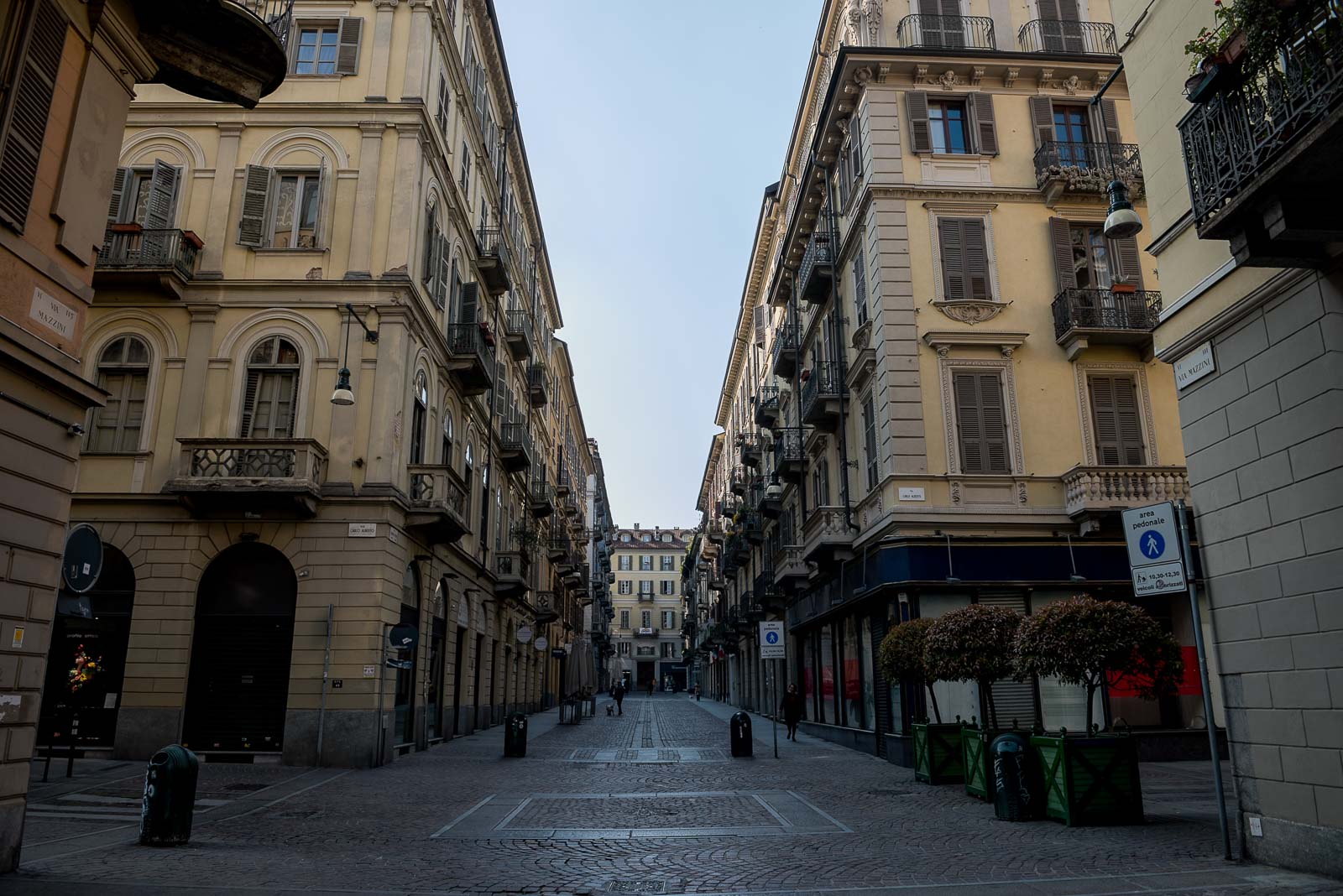
It was in such a situation that ‘Dal vuoto, al volto’ was born. ‘Dal vuoto, al volto’ (‘From the void to the face’) is a photo reportage produced by Tomás Cajueiro that register Turin in the pandemic period through the eyes of a photographer who was recently arrived in the city. A photographic journey under the banner of the strength of a community that, while facing an epochal challenge, sees an important part of its citizens unite to fight the immediate social effects of the inevitable economic crisis.
A project that combines the emptiness of the streets with the faces of the volunteers. Taken partly in the streets of different neighbourhoods and partly within non-profit associations that continue to work, the reportage ‘From the void to the face’ creates a historical testimony of a particular moment characterized by isolation and social distancing but which brings many citizens closer to the values left out in everyday affairs.
Under the silence of the main streets and the solitude of the parks, Turin society has moved and has shown enormous strength and resilience, which is highlighted in the second part of the series: portraits with and without masks, in the foreground, of the volunteers who fight the pandemic in its various aspects. Pictures that show the faces behind the masks, which give a human look to the emergency.
The images were taken in various Turin associations, in partnership with Torino Solidade, Volontariato Torino, Circo li Arci and Case del Quartiere. Remember who the volunteers are facing the health risk, have been at the forefront in the fight against the social impacts caused by Coronavirus emergency.
Tomás Cajueiro is a photographer with a long experience in producing reportages capable of proposing with feeling a reflection on people’s lives and how differences, starting with cultural ones, can ennoble and enrich the world around us.
The Turin Volunteer Service Center promotes and supports Volunteers’ presence and role in Third Sector Entities, with particular reference to Volunteer Organizations, providing free technical, logistical, training, and information support services.
The Turin Volunteer Service Center enthusiastically shared Tomás Cajueiro’s project. It offered a privileged position to tell the world of Turin volunteering and how it mobilized to provide immediate responses to the new needs arising from the health emergency.
A compelling article ‘Supporting communities throughout the lockdown’ by Near Neighbours on the work that the charity supported throughout the ongoing Covid-19 emergency and how the various groups and organisations have found ways of being relationally close to communities and individuals even when they were physically distant. The article recounts heart-rending examples here of projects supported by the charity that carried on supporting their communities during lockdown overcoming communication, technical and logistical challenges. I am very humbled that the project ‘Knowing You’ is among the project described in the article. To read about it: https://www.near-neighbours.org.uk/response-covid
Photojournalist Hub eleventh edition of the Photojournalism Nights presents an amazing line-up of photographers: Barbara Traver, Brian Ongoro, Hannah Kozak.
Barbara Traver, is a photographer based in Spain. She studied at the Espai d’art fotogràfic school (Valencia, Spain) and completed a master’s degree in production and photographic projects at the same centre together with the University of Valencia. That same year, Barbara won a scholarship to study in Madrid (Spain) at the EFTI school, where she took a course in contemporary photography and another in photojournalism and documentary photography. She has self-published two photo-books, exhibited in various national and international venues, and given several lectures where she delves into visual education and bringing photography to all audiences. Barbara is also the founder of @iphotograp.her , a collective of women photographers around the world.
Brian Ongoro, is a photojournalist based in Kisumu, Kenya majoring on documentary, editorial and commercial photography. He has carried out assignments for media houses, news agencies and non-governmental organisations. Brian’s work is known for covering East Africa and has been published nationally and internationally, including BBC, Al Jazeera, Guardian, CNN, Bloomberg, Le Monde. Brian is a contributor of AFP photo.
Hannah Kozak, is a photographer based in Los Angeles, California, who was born to a Polish father and a Guatemalan mother. At the age of ten, she was given a Kodak Brownie camera by her father, Sol, a survivor of eight Nazi forced labour camps and began instinctively capturing images that felt honest and real. While working in a camera store at the age of twenty, Hannah’s life changed when she met a successful stunt woman who became her mentor and helped her start a career in stunts. For over twenty-five years, Hannah followed a career in the film industry capturing images of far away lands, however after decades of standing in for someone else, Hannah has turned the camera on herself documenting subjects that touches her emotionally, including her painful and deeply touching relationship with her mother, powerfully captured in ‘He Threw the Last Punch Too Hard’ photo book and photo story.
The Photojournalism Nights is an event that promotes committed and courageous photojournalism and engages the public to social justice and human rights.
The current Covid-19 pandemic has disproportionately affected communities and people who were already marginalised, discriminated, and at the throng of continuous injustices and inequalities. We are bringing together stories, investigations from around the world to highlight and advocate and create the important exposure to leverage and bring about positive changes. In the 8th edition of the Journal on “Injustice & Inequalities: Covid-19”, we present the work of four great photographers Nic Madge, Victoria Herranz, Zula Rabikowska and Valeria Luongo, who present and share realities being effected by the ever changing society during the pandemic from the tremendous challenges of the refugees and impoverished populations in Sicily, the documentation of the social impact of the pandemic on the people of St Albans in the UK , the vulnerabilities of the elders in Italy, and the enormous human rights strike on the right of abortion for women in Poland. The pandemic has widened social inequalities and injustices and this journal is sharing realities, issues and disparities that we need to see, reflect upon and action.
Living through the Covid pandemic is the biggest challenge faced by the people of St Albans for over seventy years. It is also history in the making. December, when St Albans was only in Tier 2, feels like history. The impact of the virus has changed so rapidly that December 2020 is indeed history. Future generations will study the pandemic and analyse how it changed the social, economic and political fabric of this country.
As a photographer living in St Albans, I am working with St Albans Museums, The Herts Advertiser, St Albans BID, local community groups and businesses to record the way in which we are surviving the pandemic. I am doing that by making portraits of people, mainly in the Market Place, but also elsewhere in town, as they go about their daily lives; shopping; working; exercising etc. I am taking photographs of people both wearing and not wearing their Covid-safety masks. I am asking everyone photographed to write a few words about the pandemic and how it has affected them. I am producing the portraits as digital diptychs – portraits of each person with and without a mask, side by side, with a short caption beneath. The portraits reflect the vitality and diversity of St Albans.
In return for participation in the project, I am emailing a free portrait to everyone photographed.
As well as photographing in the Market Place, when able to do so, I have collaborated with local community groups and charities to photograph their members, including Open Door (housing for homeless people), Passport to Leisure, The Daylight Club (both giving support to young adults with disabilities) and the Sopwell Community Trust (which inter alia delivers food boxes to vulnerable people).
The captions enable the people of St Albans to express themselves; to reveal their experiences, both bad and good; and to mention their hopes and fears. The project has shown that, although St Albans is a relatively affluent city, there are huge disparities in the way in which the pandemic has affected people. The lives of some have been devastated. Others have hardly been touched. The comments included in the captions are very varied and provide a real insight into the effect of the pandemic. They show great public strength and resilience, but private pain and angst.
I hope the project will run for a year, with images and comments divided into monthly chapters so that we can see how experiences and attitudes change over time. Clothing will reflect the changing seasons and perhaps even evolving moods. The portraits with captions will enter the archives of St Albans Museums so that future generations of Albanians will be able to see what we look like and read our short comments about the pandemic. They will also be exhibited in the Museum + Gallery when it re-opens, hopefully on May 17th (after lockdown) until September 30th. They will also be preserved in the British Library digital archives and be exhibited on the Photojournalism Hub website. And, after completion of the project, the diptychs will be available to be exhibited elsewhere either (i) as one multi-media presentation; (ii) a series of monthly multi-media presentations; or (iii) as traditional photographic prints.
But I don’t want this just to be a dry historical record. I want this to be an immediate, ongoing, inter-active project involving all the communities of St Albans. I am uploading a monthly collection of diptychs with a soundtrack onto YouTube. Here are hyperlinks to the monthly editions for October, November, December 2020, January and February 2021. I am also making the images immediately available via Instagram and Facebook (including the All Things St Albans; St Albans Past and Present; St Albans People and Isolation Arts Café Facebook groups), web-sites, digital screens in local businesses and the local press. For example, Ashtons, estate agents in London Road, are displaying some of the images on their street facing digital wall and including them in their newsletter. Some have been reproduced in the Herts Advertiser, My Local News and on the BBC website.
Weather permitting, I will be standing outside the old Town Hall which houses the St Albans Museum + Gallery a couple of days a week. If you wish to be photographed, please email me at nicmadge@ntlworld.com to agree a mutually convenient time and date.
I am very conscious of Covid-safety issues and ensure that social distancing is maintained at all times. I provide hand-sanitiser. All photographs are taken in the open air.
Nic Madge I am a photographer who lives in St Albans. I have recently completed an M.A. in Documentary Photography and Photo-journalism at the University of the Arts, London. Previously, I have published photo-books and had solo exhibitions of my portraits/street photography at the British Museum and the Swiss Cottage Gallery, as well as several joint exhibitions.
Protesters take to the streets to show their rejection of the government’s ban of abortion in October 2020.A protester in Cracow, Poland October 2020 responding to government’s decision to ban abortion.Protesters in Cracow, Poland October 2020 responding to government’s decision to ban abortion.Heavily armed police getting ready to respond to the abortion ban protesters in Cracow, Poland October 2020.
Palermo, the capital of Sicily, and the collateral consequences of the pandemic. In a broken land, punished economic and socially, without jobs, with a high rate of exodus and migration, the situation has been aggravated because COVID-19 lockdown. Now, Palermo is face to face with a known enemy: the hunger, the fear, the death. Different organizations and social movement have joined forces to improve quality of life for all citizens. It doesn’t matter where you were born, the color of your skin, your faith. You are sicilian now. And we’re in the same boat… Frontiers begin to open three mouths after lockdown. But the pain of hit, in this wounded land, will last a long time. Beyond the crisis, the Mafia and the pandemic Palermo resists.
Victoria Herranz http://www.victoriaherranz.com/ Instagram: victoria_herranz
LATER LIFE
Valeria Luongo
Rome, December 2020 – January 2021
What does it mean to give up a year of your life when you are elderly and considered among the most vulnerable group in society?
Since the beginning of the Covid 19 epidemic in Italy, the country in Europe with the oldest population, people over 65 at a higher risk of infection have been asked to take a very different sacrifice to the young in society; to potentially spend the final years of their life in quarantine. Old people have been constantly fearful of becoming new victims. Even those who would still otherwise be mentally, socially and physically active found themselves completely isolated from their youngest relatives or friends.
I photographed and asked old people, all over 65 and under 100, to talk about their first covid year, to imagine their future and that of society and to reflect about later life in times of pandemic. They shared an insight about the passing of time, the challenges and hope for the future. As the members of society with the most life experience it was interesting to hear what they had to say about the current crisis that sees them at the center of it.
Agostino e Bernardo, 68 and 72, retired butchers.
“I still prefer the poverty of my childhood to what we have now. It was a more honest, healthy environment. Today we can count on big industries but inequalities are stronger than ever”.
Isa, 81, retired tailorMarisa, 88, retired housekeeperFlavio, 93, retired engineer
“The world is changing in a radical way. I was part of it: I was born within the change, I saw its development and I can still see it going further. The world will become more homogenous and I am really positive about this process”.
Antonietta, 77, retired administrative assistant
“If there weren’t books, cinema, radio I would have got ill. How could we live without the arts? Knowledge is so necessary to survive hard times. In these past months this has been my window to the world”.
“The crisis started as soon as we abandoned the land. We are not walking on the right path: we need to take a step back and start again from there. The land is the base of life”.
Paola, 84, retired editorial managerRosalba, 77, retired tour guide
The Desert Locust is considered the most destructive migratory pest in the world and a single swarm covering one square kilometre can contain up to 80 million locusts. (FAO)
One mega-swarm of locusts detected in 2020 in Kenya covered 240,000 hectares of land, an area the size of Luxembourg. (FAO)
At their peak earlier in early 2020, swarms were eating 1.8m tonnes of vegetation a day across 350 sq km the FAO says. (BBC)
It was predicted more than 25 million people in east Africa would experience food insecurity in 2020 with the locust infestations compounding the situation. (International Observatory Human Rights)
Georgina Smith is a photojournalist based in Nairobi, Kenya and recently appeared as a guest speaker at one of the Photojournalism Nights online events. At the event she spoke of the impact climate change induced locust plagues are having on pastoralist communities in the County of Isiolo, Kenya. Having grown up in a rural area of Zambia, Georgina has lived in close proximity to the natural environment herself, which is one of the reasons for her investigating this story. Below Georgina answers my questions regarding the locust plagues and highlights how the local pastoralist communities living on the ‘front lines’ of climate change are suffering human rights abuses.
How is climate change linked to the locust plagues in Kenya?
‘With the story that I was working on for the locust invasion most people are saying there was a climate (change) link. This is because the increased heavy rainfall meant that there was more breading going on in the locus populations, so that combined with some other things meant that there was this huge influx of locusts coming into Kenya from other parts of Africa such as Yemen and Somalia. When they arrived in Kenya last year (2019) it was the worst outbreak for 70 years. Most people had never seen them in that many numbers before, so it was quite a shock for people.’
What was your motivation for investigating this story?
‘I think it was the fact that at the beginning of 2020 and the end of 2019 there were all these news reports coming in about this invasion and that it was the worst one in 70 years. So that was the broad news story, but I really wanted to dig into it and find out who specifically was being affected as I knew in those areas there are pastoralist communities and they are very vulnerable communities anyways. They really are hit by so many different things; the impact of climate change in a normal year, by so many other elements and the weather. They are very close to the environment and so anything that happens they feel the impacts first.
The plagues also have impacts with regards to security and conflict, because once the food runs out for the animals, those herders have to take their animals to different pastures and perhaps trespass on other lands. So I was interested to show how these communities are struggling with those multiple impacts, and this was the time Covid had just hit so that was another thing. There was all these layers of challenges that they were facing.’
Is the locust plague causing food insecurity there?
‘Yes, so the issue was that the locusts were eating the food for the animals and in this area the community is very dependent on the animals. So if the animals die, which they did, they don’t have meat, milk and they don’t have income as they often rely on the animals for income as well. This created a triple effect in the sense that they basically lost everything. Also, some of the people we spoke to said some of the pesticides that were being sprayed (to kill the locusts) also killed some of the animals, but that hasn’t been verified. In any case the animals were being wiped out so the communities were being put in a very difficult situation.’
What type of practices were they putting in place to try and resolve the issue?
‘So they (the communities) were working with FAO the government to try and spray the locust swarms to stop them from spreading. That was the main effort that was happening. Yet, at the beginning of the pandemic there were some issues around the logistics of getting all of the equipment in place. But then as the pandemic went on that was less of an issue. So that was basically how they were trying to control it, and this was in July 2020. So that was the situation at that time.’
You mentioned earlier that the communities were having to trespass on land, did this cause conflict?
‘Well we didn’t see anything, but one of the people we spoke with who was a peace-broker as it were, said that she had worked with the communities to try and resolve conflict so it was definitely tense. But I haven’t seen anything as a result of that yet, but I could be wrong as I wasn’t there to see it.’
Will you be following up with the communities in the future?
‘Yes I think so, I haven’t done anything yet but I hope that it is something I can go back to and revisit as the locust plague is still a big problem at the moment and they didn’t manage to get rid of all of them. They come back once the seasons change so it is this constant cycle. Right now other people are following up with it.’
Is there anything you’d like to add about the communities and the impact this is having on their human rights?
‘I think something to add is that in general the poorest communities are the ones who are dependent on the land and are the ones who face the biggest impacts with regards to climate change. We all see the impact of climate change around the world but it’s the people who are living with the environment, on the front lines, who see these first. I’m sure there are things we can learn from these communities about how we can manage our natural resources and land better so that we don’t make these challenges worse.’
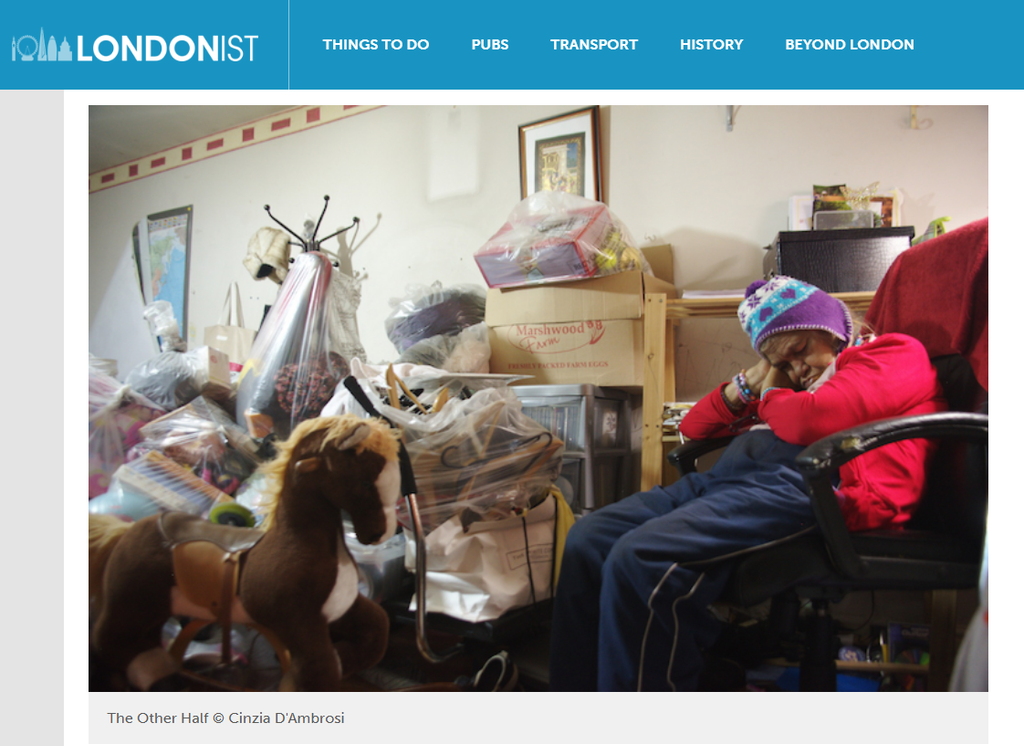
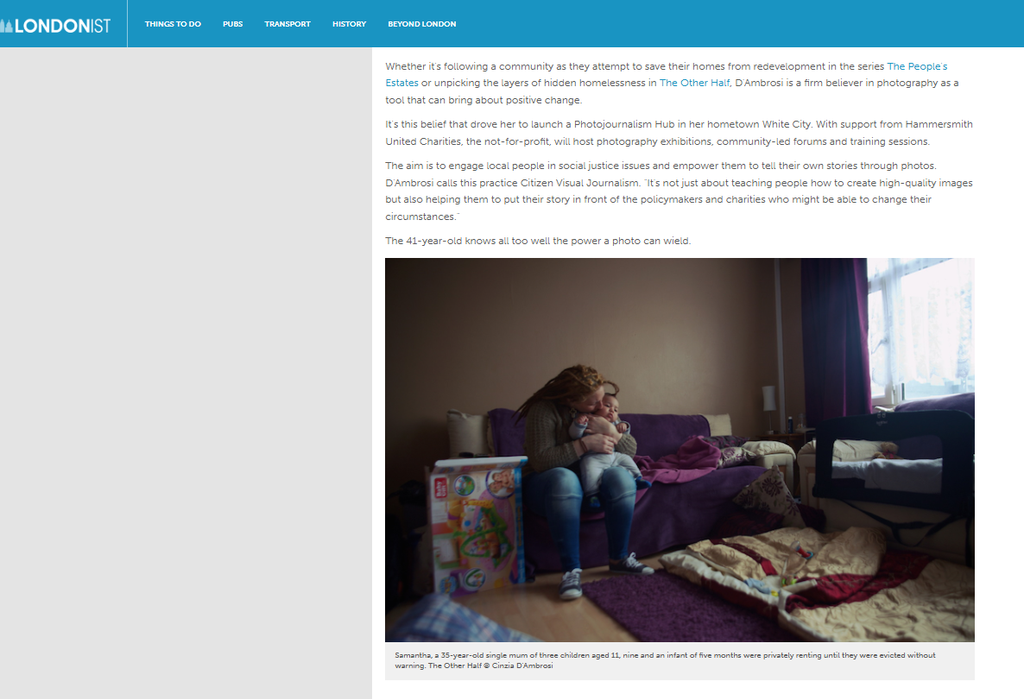
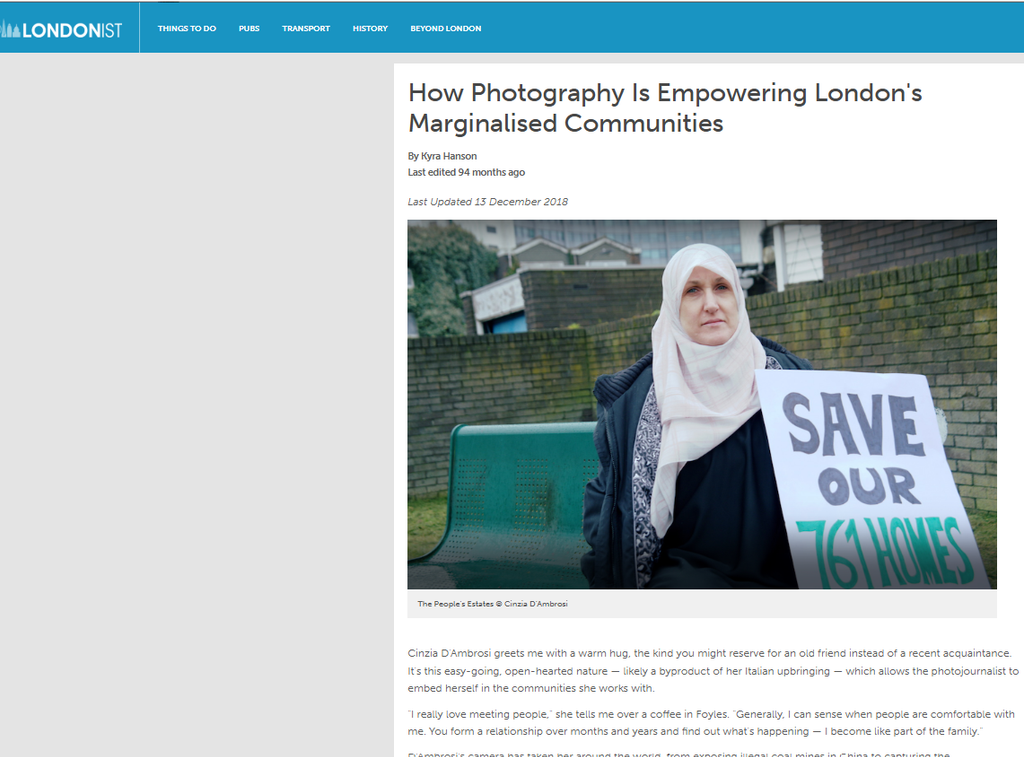
In December 2018, Londonist featured the work of photographer and Photojournalism Hub founder Cinzia D’Ambrosi in an article exploring how photography can give visibility to communities affected by poverty, housing insecurity, discrimination and social exclusion.
The article focuses on D’Ambrosi’s long-term work with communities in west London, including The People’s Estates, which documented residents facing redevelopment and the threat of losing their homes, and The Other Half, which explored the experiences of people living with hidden homelessness.
It also introduced the Photojournalism Hub, then newly established in White City with support from Hammersmith United Charities. The Hub was founded on the belief that photography can be more than a way of documenting social issues: it can be a way for people to tell their own stories, create dialogue and bring their experiences to those with the power to influence change.
At the time, D’Ambrosi described this approach as Citizen Visual Journalism — using photography to help communities document their experiences and bring their stories to policymakers, charities and wider audiences.
The article also featured Prejudice and Us, a project developed with Protection Approaches in which young people explored their experiences of racism and prejudice through photography and peer interviews. Their work created a platform for young people to share their experiences with police and councillors.
Alongside stories of poverty, displacement and insecurity, the article recognised the resilience, family connections and strength within the communities D’Ambrosi photographed. It reflected an approach that remains central to Photojournalism Hub today: using photography to understand people’s experiences, question injustice and make stories that are too often overlooked visible.
The article was published at an important moment in the development of Photojournalism Hub, documenting the ideas and values that shaped the organisation from its earliest days.
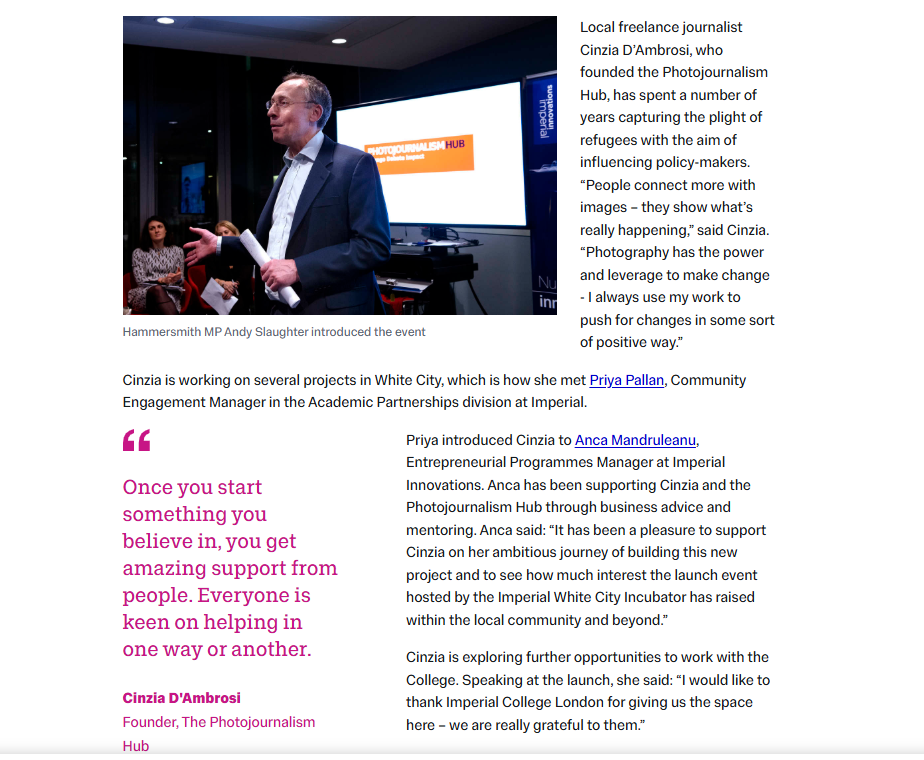
A new community-led Photojournalism Hub launched at Imperial’s White City Incubator this week.
In November 2018, Imperial College London reported on the launch of Photojournalism Hub at its White City Incubator, marking the beginning of a new community-led initiative founded by photographer and journalist Cinzia D’Ambrosi.
Supported by Hammersmith United Charities, the Photojournalism Hub was established with a clear purpose: to use photojournalism to generate positive outcomes for vulnerable communities and individuals, while supporting the development and dissemination of photojournalistic work.
From the outset, the Hub brought together photography, journalism, social justice and community engagement. Its programme was intended to include exhibitions, investigative visual and written content, debates, community-led forums, training and research, creating opportunities for people to engage with important contemporary social justice issues through photography.
The launch was introduced by Andy Slaughter MP, then MP for Hammersmith, alongside local activists, journalists and photographers. Among the speakers was Daniel Renwick, who presented Failed by the State, his film made following the Grenfell Tower fire. Other contributors included Katie Webb of the Writers’ Union of Italy and veteran photojournalist David Hoffman.
The article also introduced Citizen Visual Journalism, a concept developed by D’Ambrosi through Photojournalism Hub. The idea was to enable community groups and individuals to learn how to tell their own stories through high-quality images and to identify and raise social justice issues that matter to them.
Rather than simply documenting communities, the approach aimed to give people the tools to communicate their experiences and reach those with the power to influence policy and create change.
The launch at White City established the foundations for what Photojournalism Hub continues to develop today: using photography and visual journalism to question injustice, amplify overlooked voices and create opportunities for communities to tell their own stories.
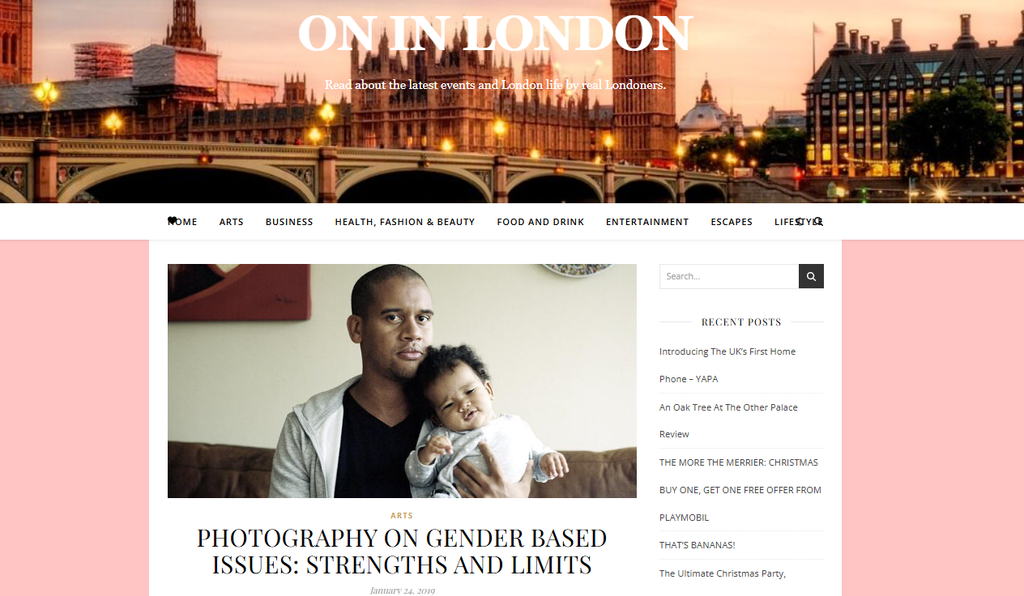
PHOTOGRAPHY ON GENDER BASED ISSUES: STRENGTHS AND LIMITS
ON IN LONDON | 24 January 2019
In January 2019, ON IN LONDON featured Photojournalism Hub ahead of a special event exploring how photography can address gender-based issues and give visibility to experiences that are often difficult to discuss or overlooked.
The event, held at the Imperial White City Incubator on 4 February 2019, brought together photographers working on different aspects of gender, identity and violence.
Photojournalist Giovanna del Sarto and artist Antonia Porter presented their multimedia project Still Figuring Out What It Means to Be a Man, exploring masculinity in the context of South Africa.
Photojournalist Wamaitha Ng’ang’a presented Speak Out, an ongoing project centred on women sharing the stories of survivors of domestic violence.
The presentations were followed by a discussion and Q&A, creating a space to consider not only what photography can reveal about gender-based issues, but also the responsibilities and limitations involved in representing deeply personal experiences.
The article also describes Photojournalism Hub’s early mission: to promote photojournalism focused on social justice and to connect, organise and develop projects and events using photography as a tool for engagement and dialogue.
The event is part of the early history of Photojournalism Hub and reflects an approach that remains central to the organisation today — using photography to question social injustice, create space for difficult conversations and bring underrepresented experiences into public view.