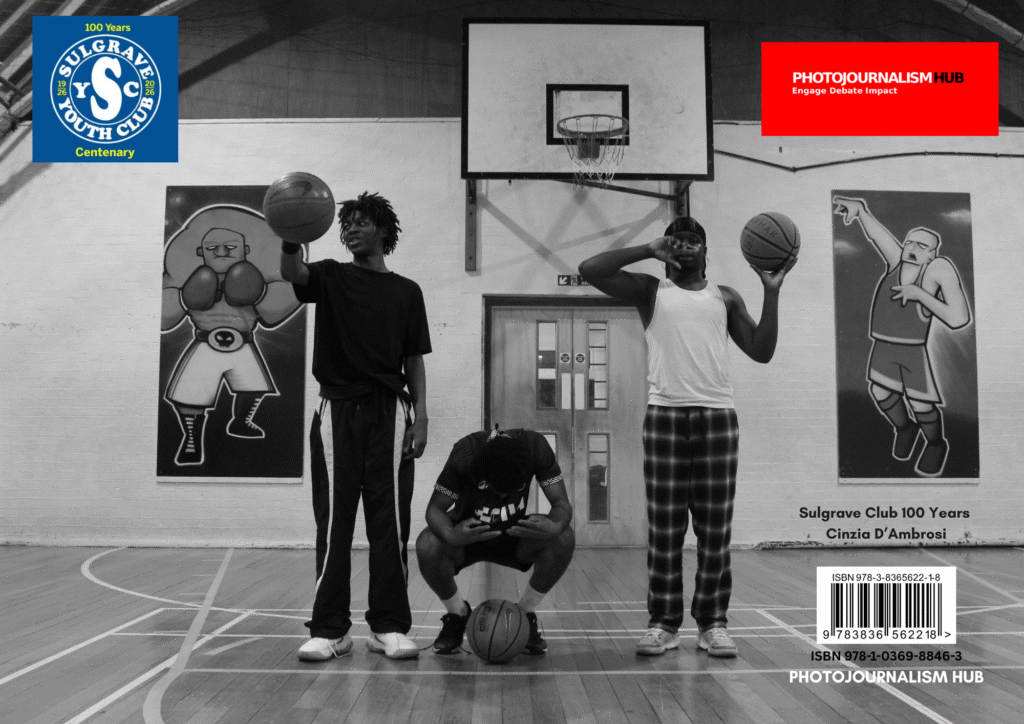
Curating 100 Years of Memory: Sulgrave Club’s Centenary Exhibition
This article was first published on What the Record Shows, the Substack of Cinzia D’Ambrosi.
When I began researching the Sulgrave Club’s centenary, I expected to document a century of community history. What I discovered instead was a story that had become fragmented over time, hidden in photographs, personal memories, newspaper cuttings and the recollections of people who had not spoken about their experiences for decades.
It was in January 2025 that I officially began work on the Sulgrave Club Centenary as Centenary Manager, leading what would become one of the most ambitious commissions of my career as a photojournalist. I accepted the role with a profound sense of responsibility. To document a century of a community’s history is both a privilege and a challenge. It is an opportunity not only to record the past but to honour the people, relationships and memories that have shaped a place over one hundred years. From the outset, I quickly realised that this would not be a straightforward historical project. While the Sulgrave Club has played an important role in the lives of generations of local residents, surprisingly little was documented about its origins. The commonly known story is that the Club was founded on Sulgrave Road in Shepherd’s Bush, from which it takes its name. Yet beyond this, very little is widely known about its founder, Sir Edward de Stein, or the circumstances that led to the Club’s creation.
Into the Archives
My first task was to immerse myself in the archives. I spent weeks searching through documents, photographs and newspaper cuttings, piecing together fragments of the Club’s history. Much of what had survived focused on visits from distinguished guests, including Her Royal Highness Princess Anne and His Royal Highness Prince Philip. There were also photographs documenting the early lives of the founding members of the internationally acclaimed rock band The Who, whose connections to the Club form an important part of its more recent history.
Yet, these official moments, while significant, represented only a small part of the story. They revealed little about the everyday lives of the thousands of children, young people and families for whom the Sulgrave Club had become a second home over the past century. As a documentary photographer, I have always believed that archives are not simply collections of historical records. They are living evidence of people’s lives. They preserve memories that might otherwise disappear and provide the foundations from which forgotten stories can be rediscovered. The challenge, therefore, was not simply to create a centenary exhibition. It was to reconstruct a history that had become fragmented over time, connecting archival evidence with contemporary testimonies, photographs and lived experience. It became an investigation into memory, identity and the enduring role of a community institution that has quietly shaped generations of lives.
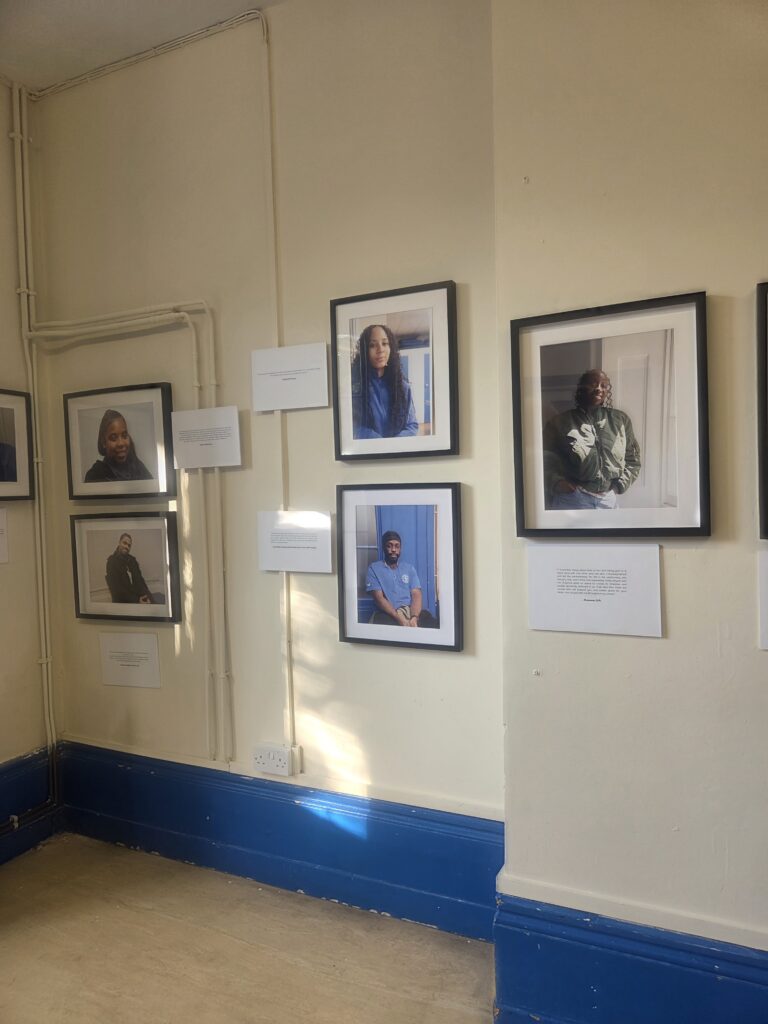
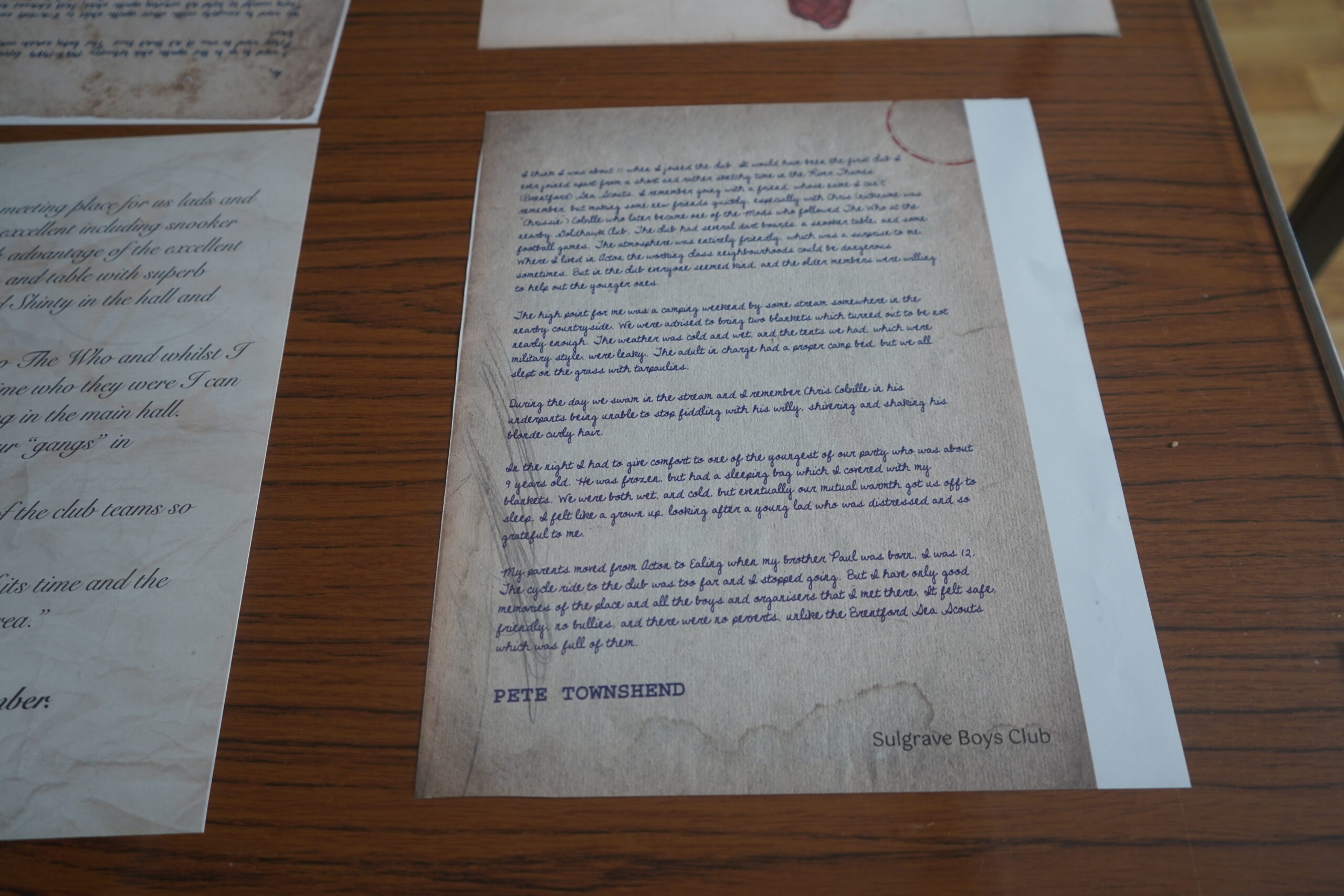
quotes on display at the Sulgrave Club 100 exhibition in June 2026. © Cinzia D’Ambrosi
Building the Oral History Archive
One of the project’s earliest ambitions was to create an oral history archive that could preserve the memories of former members and help piece together the story of the Sulgrave Club’s development over its first century. Before describing that process, it is worth mentioning an intriguing discovery I made during my research. I noticed several sets of old keys hanging in the building, each attached to a keyring bearing the same emblem: a cross-like symbol that I later researched. Although it proved difficult to establish a definitive connection, my research suggested that the emblem was associated with the Torchbearers movement, a Christian organisation founded in Belgium that sought to uphold Christian values. This, together with other archival evidence, pointed towards the Sulgrave Club’s early foundations having close links with Christian organisations. The Club originally began on Sulgrave Road, most likely in a hut associated with St Matthew’s Church, before moving to its current premises in 1936. While some details remain difficult to verify with complete certainty, these discoveries helped to provide valuable context for understanding the Club’s origins.
Assembling the oral history archive became one of the most demanding aspects of the project. We placed posters throughout the borough, promoted the initiative on social media, circulated newsletters and, most importantly, relied on word of mouth to encourage former members to come forward and share their memories. Building trust and reconnecting with people after many decades proved to be a gradual process. Although, we conducted a number of interviews throughout the year, it was only towards the end of the project, close to the centenary celebrations and exhibition, that we began to see a real breakthrough, with many more former members making contact.
Former members reunion
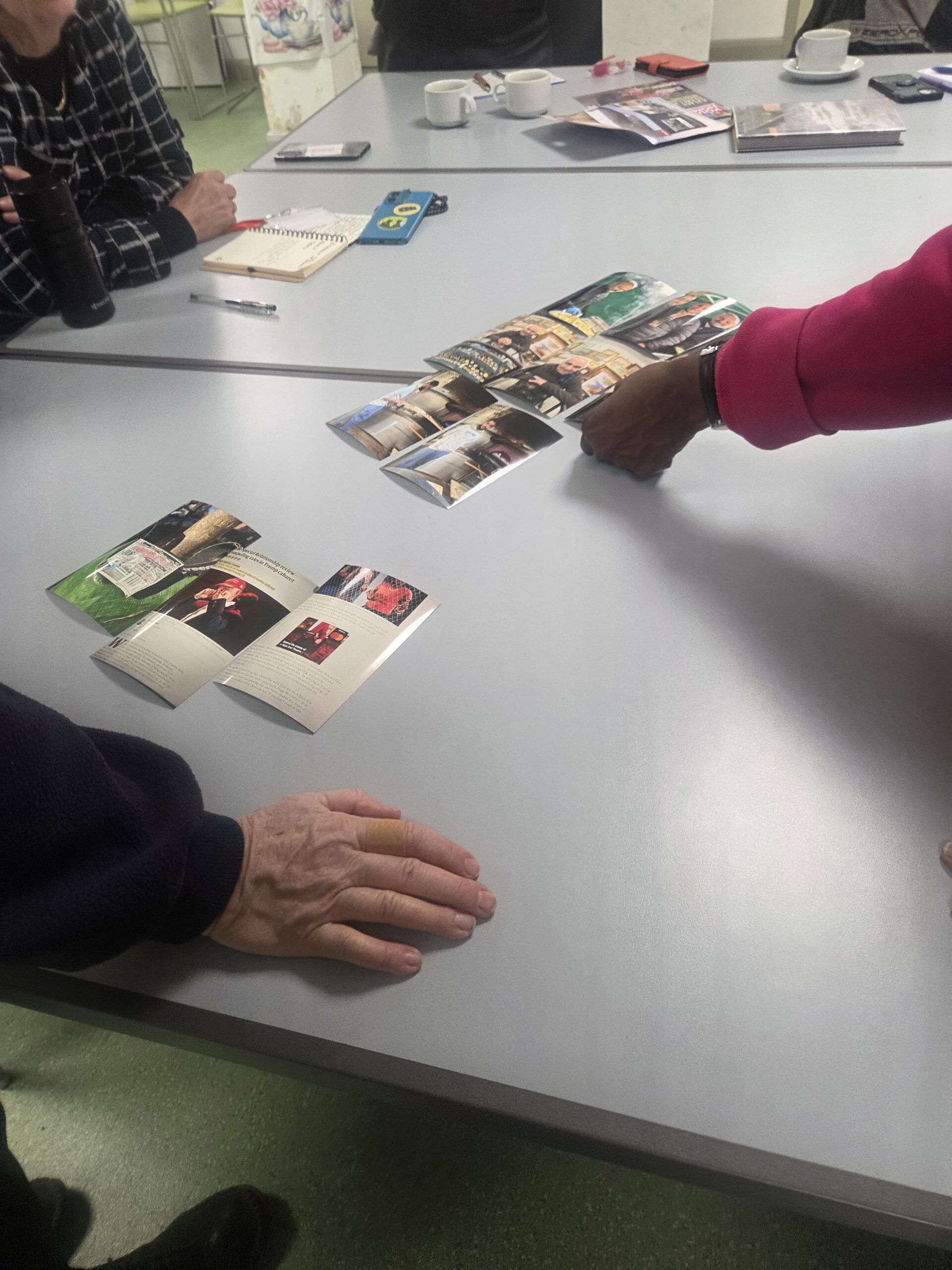
In October 2025, I organised a Sulgrave Club Reunion for former members, which became one of the highlights of the project. The event was exceptionally well attended and created an atmosphere in which memories flowed naturally between old friends. Each table was provided with a series of prompts designed to encourage conversation, inviting participants to reflect on questions such as their strongest memories of the Club, the friendships they had formed, and the role Sulgrave had played in their lives. After these group discussions, participants were invited to record their memories individually, allowing us to preserve many valuable personal testimonies for the archive.

Voices from Across the Decades
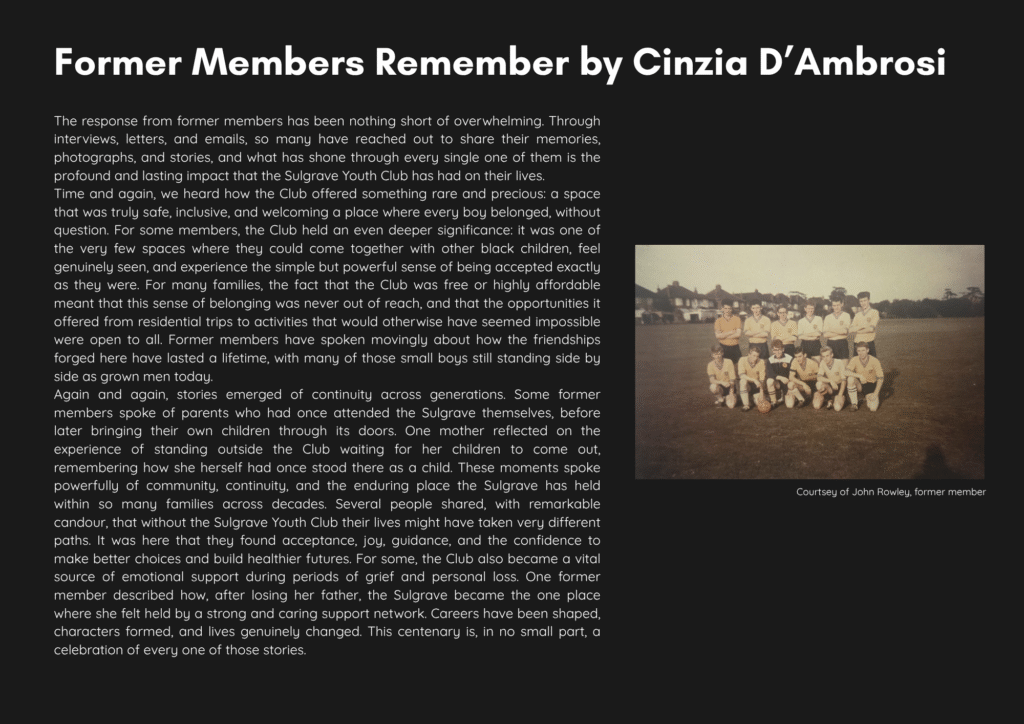
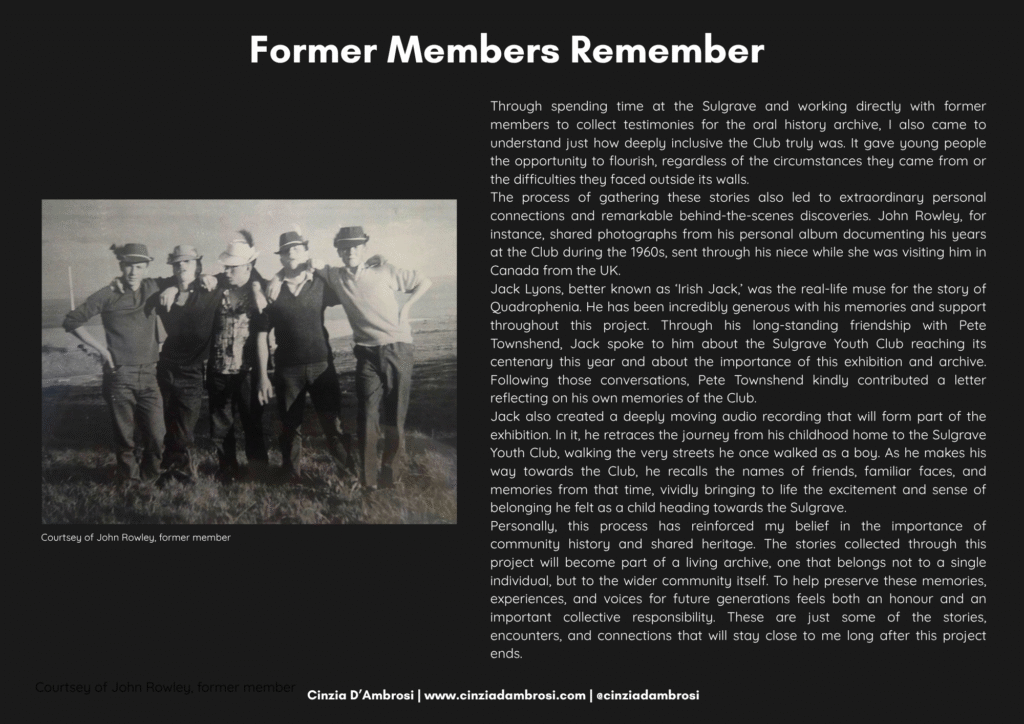
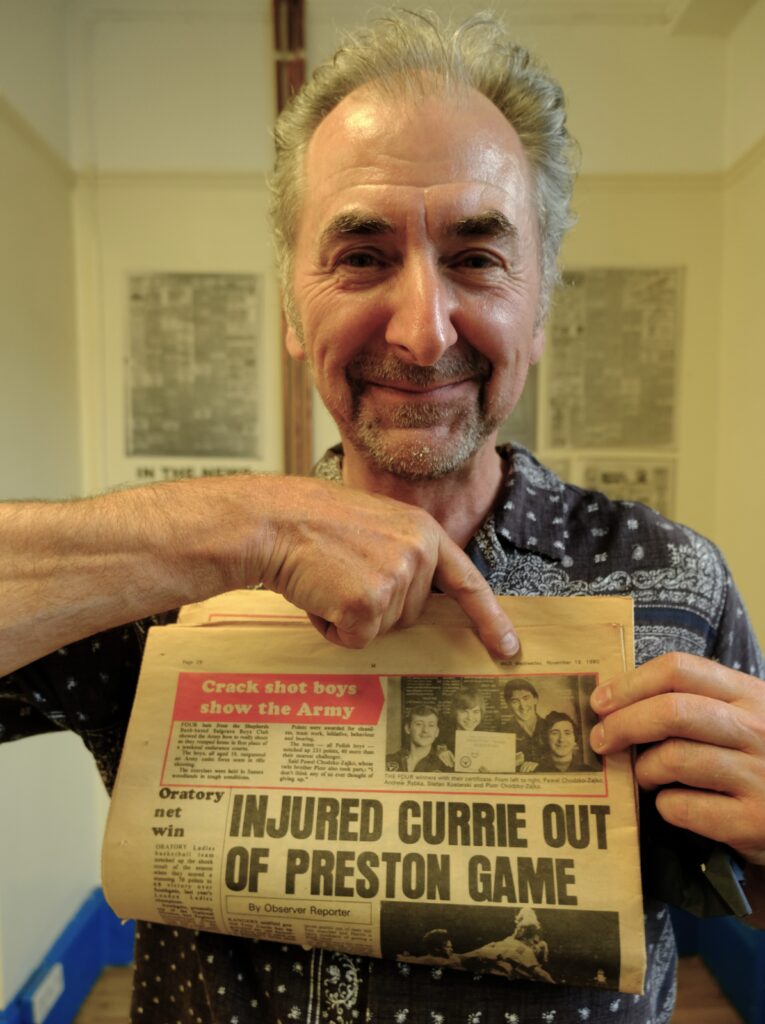
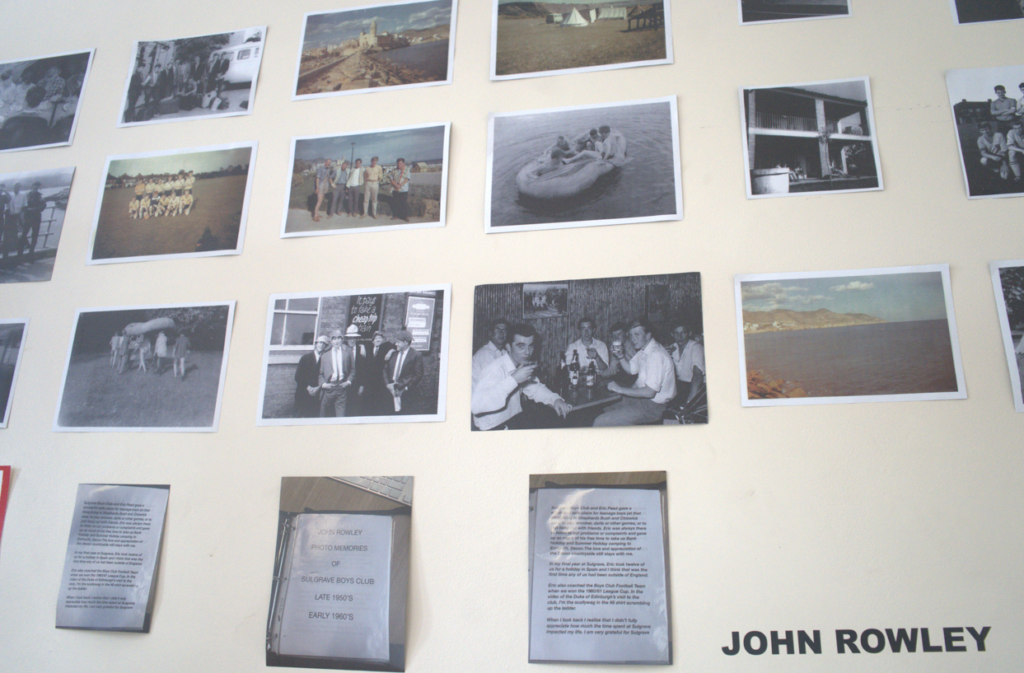
Perhaps the most rewarding aspect of the oral history project was the relationships that developed with former members. Beyond collecting historical material, the project created genuine human connections and, in several cases, lasting friendships. Among those who made particularly significant contributions was Marek Kruk, a former member of the Club and captain of the Sulgrave volleyball team. The team comprised young people of Polish heritage. Throughout the year we remained in regular contact, and he travelled from the Netherlands with his family to attend the Sulgrave Club’s centenary celebrations in person. His enthusiasm and willingness to share memories, including newspaper cuttings and memorabilia from his playing days, greatly enriched the project and highlighted the important role played by members of the local Polish community within the Club’s sporting life. An equally remarkable contribution came from John Rowley, who now lives in Canada. Through a fortunate coincidence, his niece, who lives locally, was able to deliver one of John’s childhood photograph albums to us. The album contains an extraordinary collection of images documenting life at Sulgrave Club, accompanied by John’s handwritten annotations and personal reflections. These photographs became a central part of the centenary exhibition and now form an invaluable component of the Sulgrave archive.
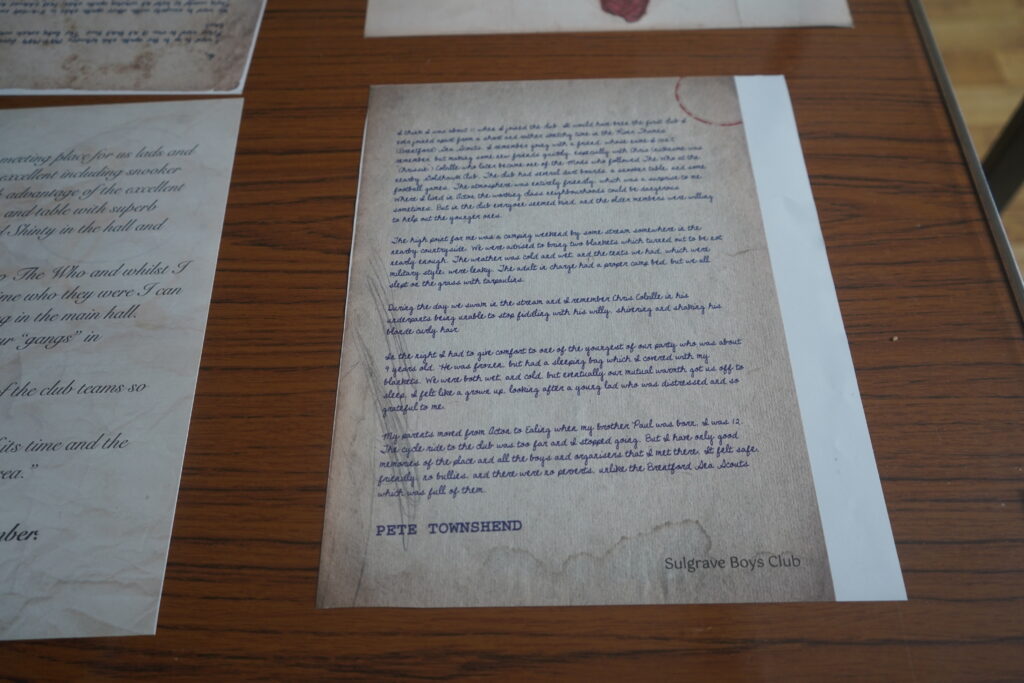
The Who, Before They Were Famous
Both Pete Townshend and Roger Daltrey, founding members of the internationally renowned rock band The Who, were former members of the Sulgrave Club, adding an unexpected and fascinating dimension to the Club’s history. Among the archive photographs that came to light was an image of Pete Townshend during one of Sulgrave’s residential camps. Pete also kindly wrote about his memories of the Club, offering a rare first-hand account from someone who would later become one of Britain’s most influential musicians.
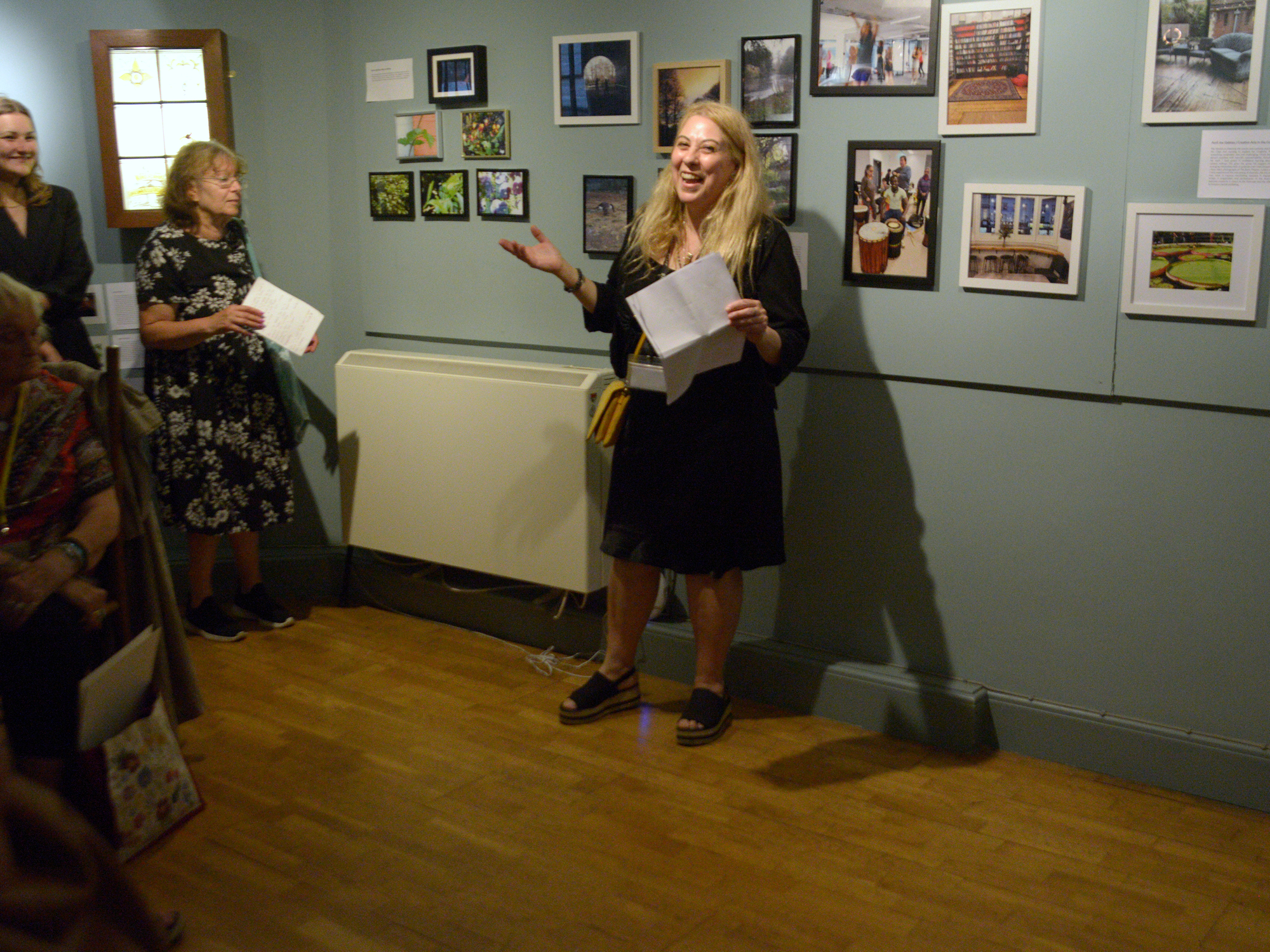
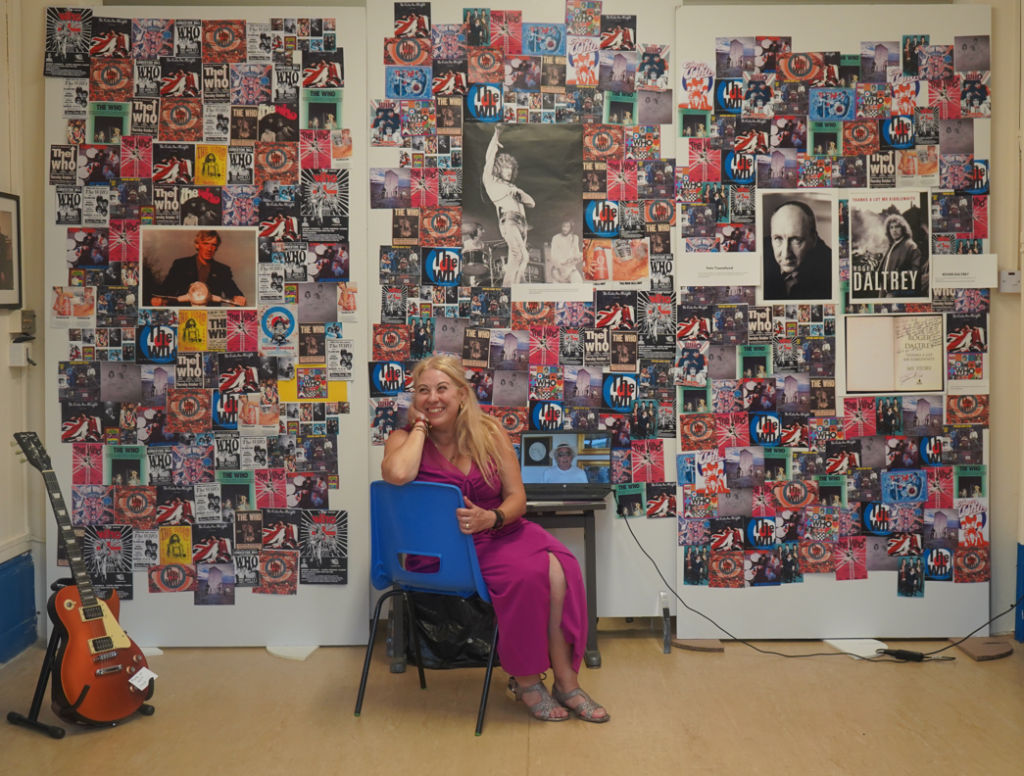
The walls of the room displayed enlarged scans from John Rowley’s remarkable photograph album, together with other photographs and memorabilia contributed by former members. These included images of sporting events, trophies, social activities and everyday moments that collectively illustrated the richness of life at the Club across several decades. Shortly before the exhibition opened, I received another unexpected contribution. The granddaughter of Derick Silver contacted me with additional photographs and memories. Derick, now in his nineties, was the oldest former member I had the privilege of meeting and, as far as I could establish, the only surviving member who had personally known the Club’s founder, Edward Stein. His recollections and photographs became one of the exhibition’s greatest treasures, providing a unique bridge between the Club’s earliest years and the present day. Altogether, this room was conceived as a place of reflection, where visitors could encounter Sulgrave’s history through deeply personal memories rather than historical interpretation alone.
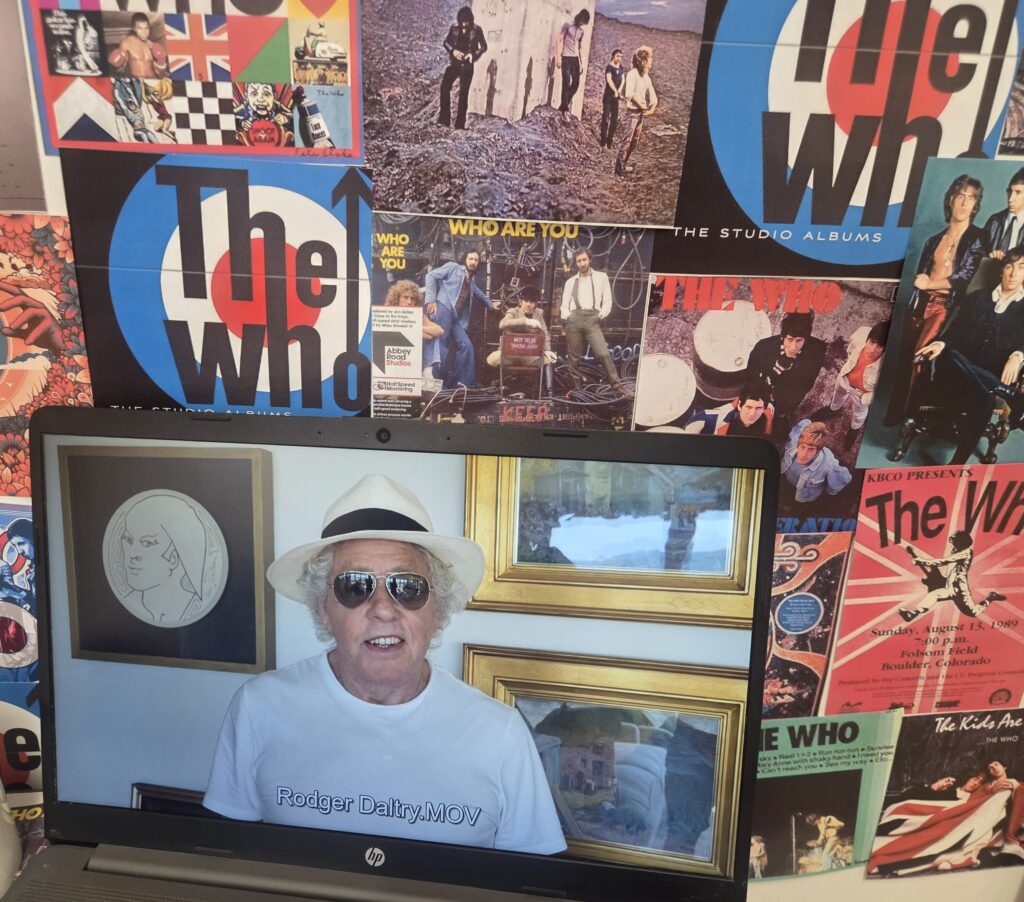
Adjacent to this space, I created a second room dedicated to former members. Here the focus shifted from archival material to portraiture. I exhibited a series of formal photographic portraits that I had made while interviewing former members throughout the project. Each portrait was accompanied by carefully selected quotations drawn from the oral history transcripts, allowing visitors to connect each face with an individual memory or reflection. One section of this gallery was devoted to The Who, undoubtedly the Club’s most internationally recognised former members. Through Jack Lyons, I was able to establish contact with Roger Daltrey, who generously recorded a video message for the exhibition. In his recording, Roger reflected on the importance of Sulgrave Club during the band’s formative years, explaining that without Sulgrave there might never have been The Who, as it was there that he, Pete Townshend and the others first met and formed their earliest group, The Detours, before eventually becoming The Who.
Jack Lyons also contributed a remarkable video in which he retraced the walk from his childhood home, located just across the road from Sulgrave Club, back to the building itself. Rather than simply projecting the film, I chose to present both Jack’s recording and other oral histories as audio experiences through headphones, encouraging visitors to engage with them individually and creating a more intimate encounter. Although, I had permission to display formal portraits of Roger Daltrey and Pete Townshend, I felt that the space still lacked the visual energy associated with their musical legacy. To address this, I created a feature wall by reproducing a large number of The Who album covers and arranging them as a continuous wallpaper installation. The effect was visually striking and immediately recognisable. To complete the installation, I borrowed a guitar and positioned it within the space, evoking the atmosphere of a rehearsal room or music studio. The result was not simply a tribute to famous musicians, but a reminder that before they became global icons, they too had been young members of Sulgrave Club.
Finding Edward Stein
The exhibition extended across two floors. Upstairs, the atmosphere became more historical and interpretative. This section focused on the Club’s founder, Edward Stein, whose story gradually emerged through extensive archival research and conversations with former members. An especially meaningful connection came through one of Sulgrave’s current trustees. Her father had been among the Club’s earliest trustees and a close friend of Edward Stein, while she now continues that legacy as a trustee herself. She generously shared photographs from her family’s private collection, allowing us to display rare images of Edward Stein, his sister and other members of his circle. Additional material came from the current custodians of the Scottish castle where Edward Stein had once lived. Their historical research and records added further depth to our understanding of his life and character. By bringing together these different sources, including Derick Silver’s memories, family collections and archival material—I gradually formed a picture of Edward Stein as far more than simply the Club’s founder. He emerged as a creative and compassionate individual: a pianist, poet and philanthropist who believed deeply in creating opportunities for children and young people. This richer understanding of his personality became central to the historical narrative presented upstairs and helped visitors appreciate not only how Sulgrave Club was founded, but also the values upon which it was built.
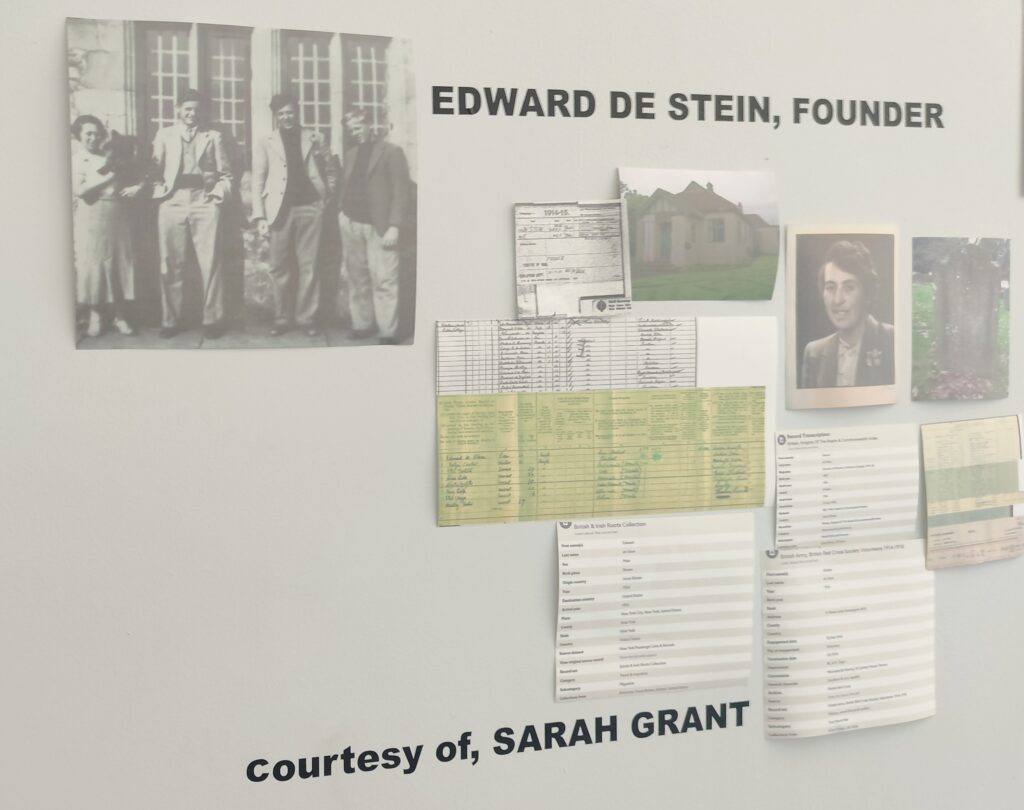
The Man Behind the Club
As a documentary photographer with a humanist approach, I found myself developing a strong personal connection with Edward Stein through the research process. Although the exhibition itself remained grounded in historical evidence, I was struck by the portrait that gradually emerged of a thoughtful, gentle and deeply compassionate individual. Through the various accounts I uncovered, he appeared to be someone who genuinely believed in creating opportunities for young people. I was also intrigued by the more personal details that surfaced during my research—his love of music and poetry, his commitment to the arts, and even the anecdote that he was not particularly confident with mathematics. These small details made him feel less like a distant historical figure and more like a person whose values resonated with many of my own. The most important source for understanding Edward Stein’s character was Derick Silver, who, as far as I was able to establish, is the only surviving former member who personally knew the founder. Derek recalled that Edward Stein regularly visited the Club, arriving with his chauffeur and taking a genuine interest in the welfare of the children. Rather than making ceremonial appearances, he would ask how they were progressing, enquire about their futures and actively seek financial support from other philanthropists to ensure that the Club could continue its work. Derek also described the practical support Stein gave him personally, offering advice that ultimately helped him secure employment in a local factory. These recollections painted a compelling picture of a philanthropist whose generosity extended well beyond financial contributions. To connect the Club’s past with its present, I also included portraits of the current manager and Chair of the Trustees, together with photographs documenting distinguished visitors over the years, including Princess Anne and Prince Philip. This helped demonstrate both the continuity of the organisation and the recognition it has received throughout its history.
The Main Hall — Lens on a Century
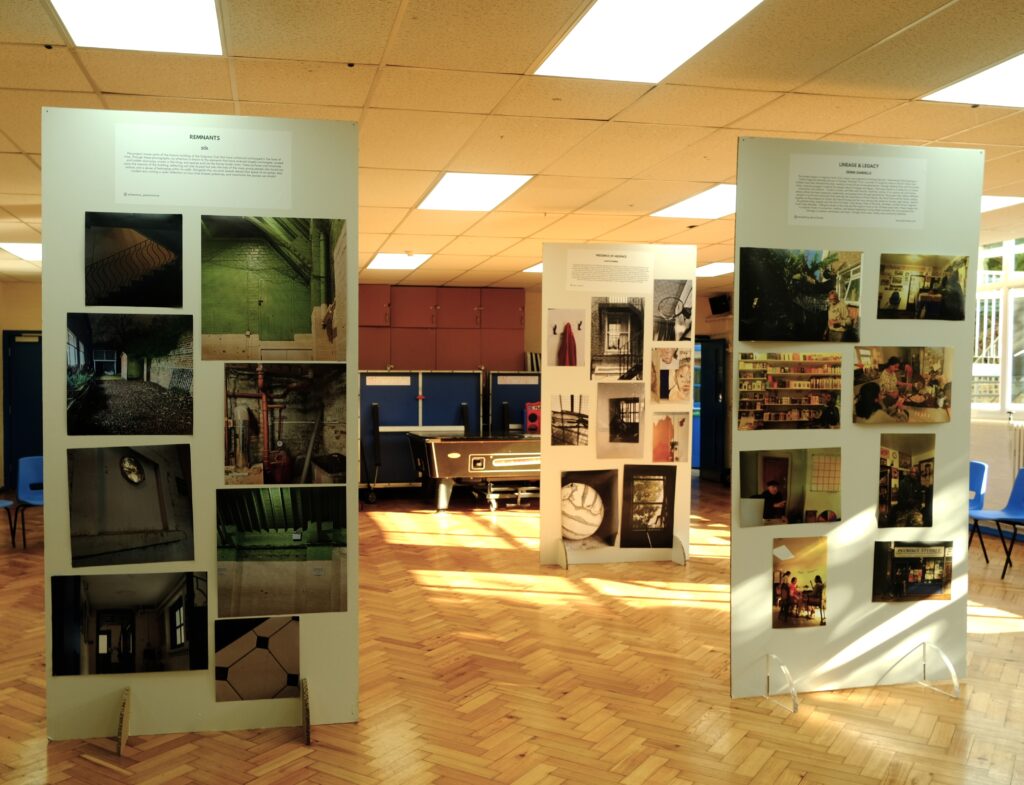
From this historical section, visitors entered the Main Hall, the largest exhibition space within the building. This presented the greatest curatorial challenge. The scale of the room meant that simply hanging photographs around the walls would have left the exhibition feeling fragmented and visually disconnected. Instead, I needed to design an exhibition that would actively shape how visitors moved through and experienced the space. The Hall was dedicated to Lens on a Century, an exhibition within the exhibition that showcased the work produced by the young people who had participated in the Photojournalism Hub’s documentary photography programme throughout the centenary year. Under my direction, participants developed their own documentary projects responding to different aspects of Sulgrave Club’s hundred-year history, producing photographic stories that reflected both the organisation’s heritage and its continuing relevance today.
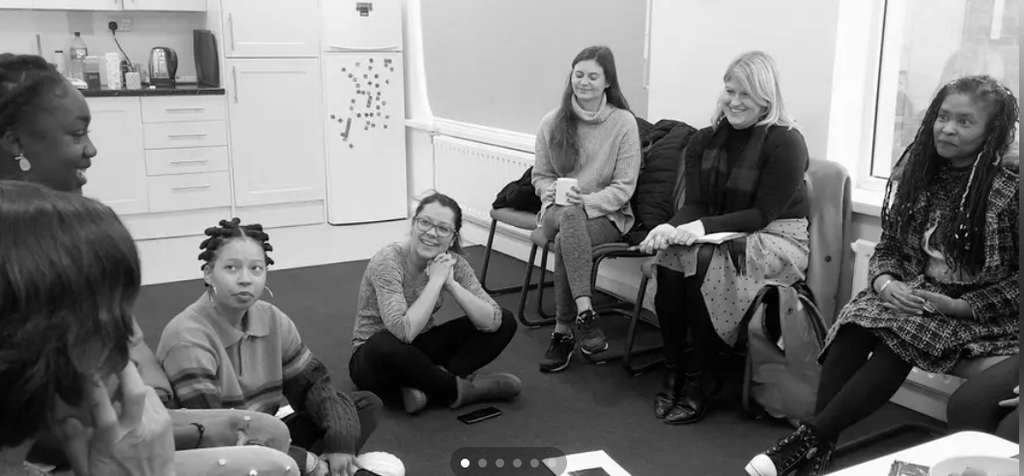
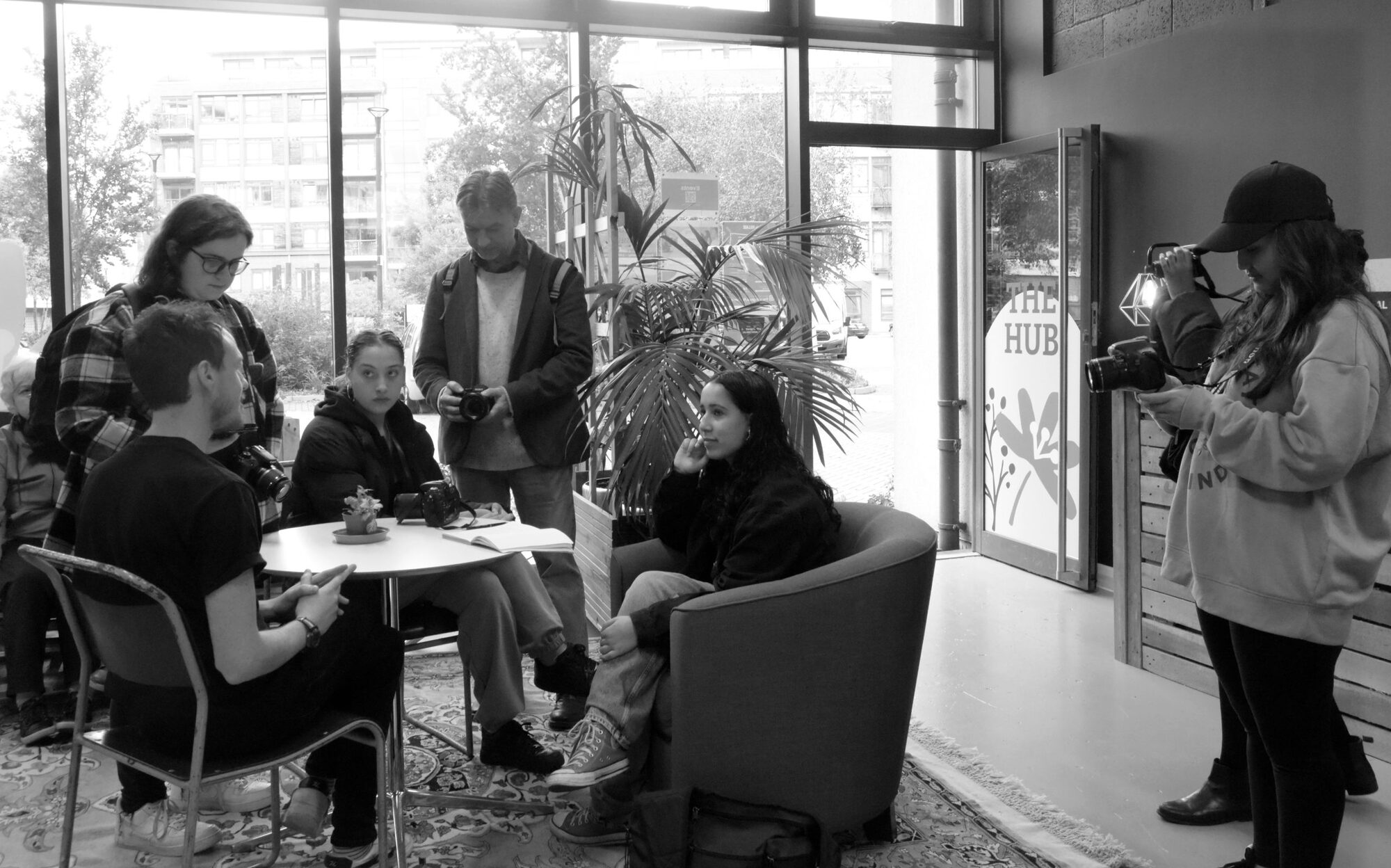
One entire wall became a large behind-the-scenes installation, designed as a mosaic of photographs documenting the journey of the participants throughout the project. It included images from workshops, newsroom sessions, visits to Reuters, practical photography exercises and collaborative activities, illustrating not only the final outcomes but also the learning process behind them.
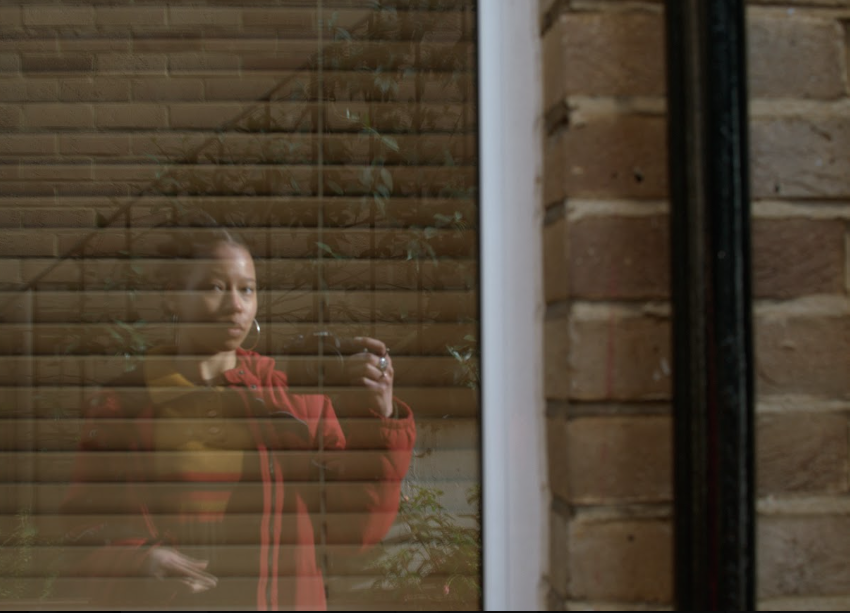
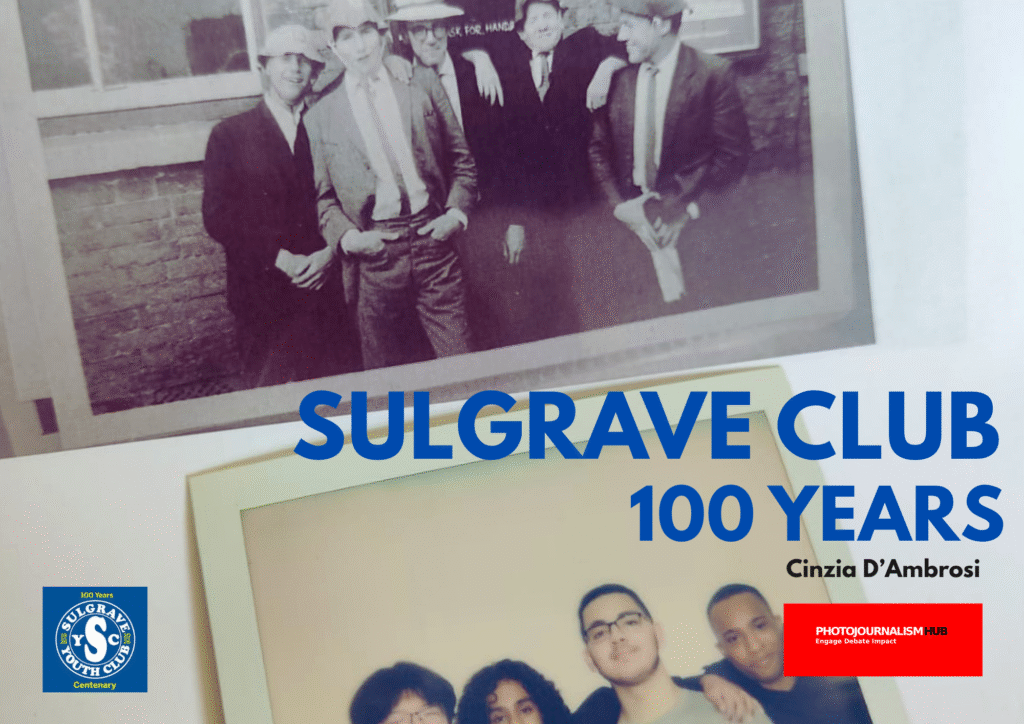
Alongside this, participants created Polaroid-style self-portraits and responses reflecting what excited or inspired them in the present day. These small works provided an intimate contrast to the larger documentary projects and offered visitors another way of understanding the young people’s perspectives. One particularly rewarding activity involved recreating historical photographs discovered in John Rowley’s personal album. The younger participants carefully restaged several of these images, interpreting them through a contemporary lens while echoing the original compositions. Displayed in cork frames with pinned prints, these pairings created a visual dialogue between generations, showing both continuity and change across a century of Sulgrave Club’s history.
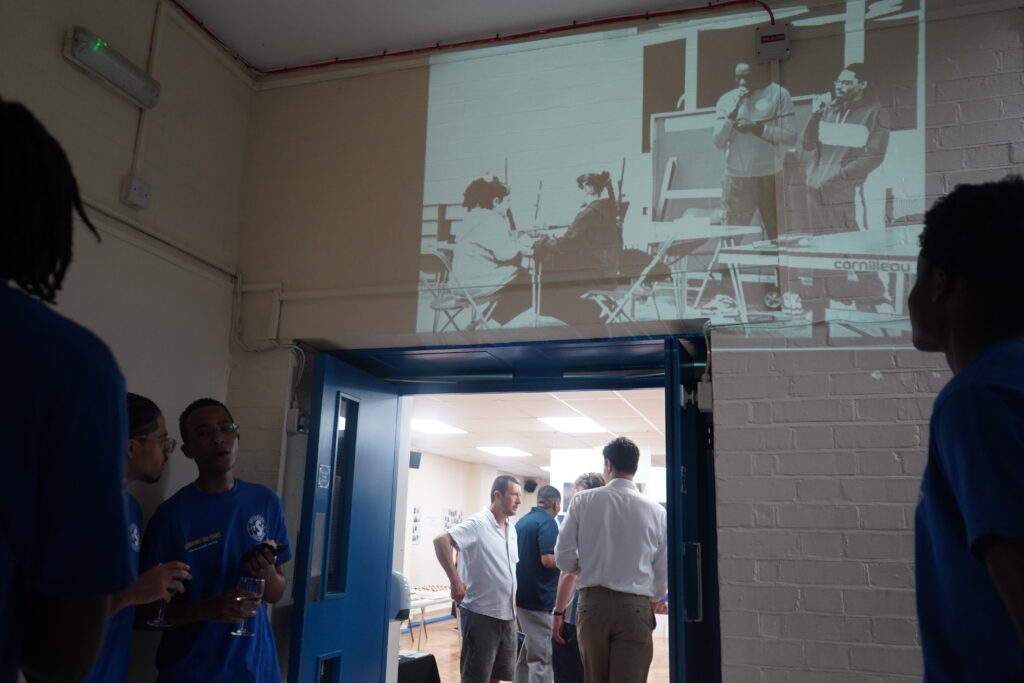
To organise the vast space, I designed a series of freestanding exhibition walls measuring approximately two metres high by two metres wide. Rather than simply acting as display surfaces, these structures divided the hall into a sequence of spaces through which visitors naturally moved. Each participant was allocated their own exhibition panel, featuring large-scale photographic prints alongside texts explaining their documentary projects. This transformed the hall into a series of individual exhibitions while maintaining a coherent overall narrative. Visually, the effect was both dynamic and immersive, allowing visitors to experience each project individually while remaining aware of the collective body of work. Another important element was a soundscape installation projected in one of the connecting corridors. Rather than presenting spoken interpretation, I wanted visitors to experience the atmosphere of childhood itself. The soundtrack consisted entirely of recordings of young people laughing, talking, playing games, cooking together, participating in sports and simply spending time with one another. Accompanying these sounds was a slow-moving sequence of almost abstract imagery—close-ups of feet running across sports courts, hands preparing food, fragments of games and everyday activities. Together, the sounds and images encouraged visitors to reflect on the essence of childhood and on the role community spaces such as Sulgrave Club have played across generations.
Looking back, this was undoubtedly the most ambitious curatorial project I have undertaken. While I have curated numerous exhibitions previously, this was the first time I had to think of a single exhibition as a collection of interconnected exhibitions, each with its own atmosphere, narrative and emotional tone, while ensuring that together they formed one coherent visitor experience. One of the greatest challenges was balancing historical interpretation with emotional engagement. Visitors needed enough contextual information to understand the Club’s history, yet I wanted them to discover that history through people rather than chronology alone. Throughout the building I therefore introduced quotations from oral history interviews, together with subtle wayfinding elements that guided visitors naturally from one section to the next while maintaining their curiosity and engagement. This project has significantly expanded my confidence as a curator. It demonstrated that I am comfortable working not only with photography, but also with archives, oral histories, sound, moving image, personal objects and immersive exhibition design. Most importantly, it confirmed that I enjoy creating exhibitions that bring together multiple forms of storytelling to create meaningful public experiences. The experience has given me confidence that I can successfully curate projects on an even larger scale in the future. Ultimately, the Sulgrave Club archive is not only a record of the past. It is a living collection of voices, images and memories that continue to connect generations. The exhibition may have closed, but the stories it uncovered continue.
What I Learned as a Curator
This project fundamentally changed the way I think about curating. More than any exhibition I have previously produced, it required me to consider not only what visitors would see, but also how they would move through the building, how each space would prepare them for the next, and how different narratives could coexist while remaining part of one coherent story. Every curatorial decision was therefore guided by the visitor’s journey. I deliberately separated the exhibition into distinct spaces, each with its own atmosphere and purpose. The rooms dedicated to former members, for example, were designed to feel personal and reflective, whereas the historical displays adopted a more formal museum-like approach. The contemporary work produced by young people introduced another perspective altogether, demonstrating that Sulgrave Club’s story is not simply about its past but also about its present and future. Working with oral histories also taught me valuable lessons. During the portrait exhibition, I chose not to display complete interview transcripts. Instead, I selected the most powerful and representative quotations to accompany each portrait. I believe this decision strengthened the exhibition, allowing visitors to engage emotionally with each individual without becoming overwhelmed by lengthy texts. The complete interviews belonged within the archive, while the exhibition itself required careful editing and interpretation. If there is one aspect I would develop further, it would be the relationship between the exhibition and the oral history archive. From the outset, the ambition was not simply to collect memories but to establish a lasting archive for future generations. Although the exhibition successfully introduced visitors to many of these stories, I now feel that the connection to the archive itself could have been communicated more clearly, enabling people to understand how they might continue exploring these histories beyond the exhibition. The archive has now been entrusted to Sulgrave Club, and I hope it will continue to grow as former members contribute additional memories and materials over time. One of the most significant insights I gained concerned the relationship between individual stories and collective memory. Every interview represented one person’s experience, yet together these voices created something much larger: a shared history that belonged to an entire community. As both a curator and a documentary photographer, I found this especially meaningful. Documentary practice often focuses on individual lives, but this project reminded me that individual experiences become even more powerful when they are brought together to reveal broader social histories. In future projects, I would like to explore this relationship even further.
The project also reinforced my belief in photography as a powerful tool for connection and memory. Throughout the exhibition I witnessed visitors recognising themselves, their families, their friends and their shared experiences through photographs. Images became catalysts for conversation, remembrance and reconnection. They encouraged people to tell stories, to share emotions and, in many cases, to contribute further material to the archive. Photography was not simply documenting history—it was actively creating new relationships between people and their heritage.
One of the strongest conclusions I have drawn is that the work produced during this project no longer belongs solely to those who created it. The photographs, oral histories and archival material have become part of Sulgrave Club’s collective heritage. More broadly, they contribute to the history of the local community and, through connections with figures such as Pete Townshend and Roger Daltrey, also touch upon aspects of Britain’s wider cultural history. In that sense, the archive extends beyond the boundaries of the Club itself.
Looking ahead, I hope this archive continues to develop. I see the exhibition not as the end of the research but as the beginning of a living archive that can continue to grow through future contributions from former members, local residents and researchers. Ultimately, I hope it becomes a resource not only for Sulgrave Club but also for the wider community, local authorities, historians and anyone interested in understanding the social history of the area. For me, this has been one of the most rewarding projects of my career. It has strengthened my confidence as a curator, expanded my understanding of participatory exhibition-making and reaffirmed my belief that photography, oral history and community engagement can work together to preserve heritage in ways that are both meaningful and enduring.
Publication and Legacy
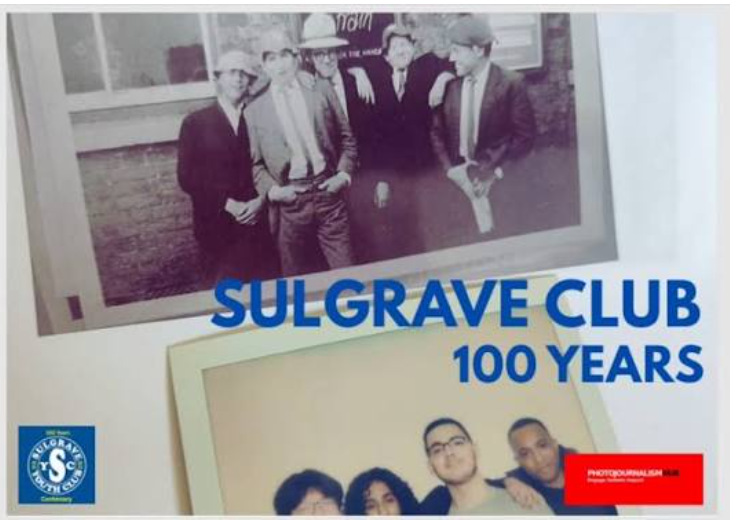
One of the most significant outcomes of this project has been the publication of a commemorative photo-book documenting the Sulgrave Club Centenary project. Producing the book required a considerable amount of work, but I believe it has become an important part of the project’s legacy.
The publication brings together the many strands of the research and exhibition into a single volume. It includes the history of the Club, interviews with the Chair of the Trustees, the Club Manager and other key contributors, my own reflections on the project, portraits of former members, selected quotations from the oral history archive, and the documentary work created by the young photographers who participated throughout the year. It also features contributions relating to The Who and explores the remarkable connection between the band and Sulgrave Club.
The book has been written, edited and designed by me, using my own photography alongside the work created by the young participants. It is published by the Photojournalism Hub and is available to purchase through the organisation. For me, the publication represents much more than an exhibition catalogue. It provides a permanent record of the project—a tangible object that allows people to revisit the stories, photographs and memories long after the exhibition has closed. In this sense, it extends the life of the project and complements the oral history archive, ensuring that the research remains accessible for future generations. Income generated through sales of the book will also help support the ongoing work of the Photojournalism Hub, enabling us to continue producing socially engaged documentary photography projects, publications and exhibitions. It will contribute towards the development of our future programmes, including the Photojournalism Festival planned for 2027, where we hope to continue creating opportunities for emerging photographers and communities to tell their own stories. Alongside the publication, I have also produced a series of short films documenting each room of the exhibition. These videos provide a virtual walk through of the exhibition, allowing those who were unable to attend in person to experience the exhibition and understand the curatorial decisions behind each space.
Thank you for taking the time to explore this project. I hope it demonstrates not only the rich history of Sulgrave Club but also the potential of documentary photography, oral history and participatory curation to preserve community heritage in meaningful and lasting ways. If you would like to learn more about the project, explore the exhibition films, purchase the photo-book or discuss future collaborations, I would be delighted to hear from you.
The Sulgrave Club100 Years photobook is available to purchase through the Photojournalism Hub. Sales support our future programmes including the London Photojournalism Festival 2027. Published by the Photojournalism Hub, to purchase a copy: HERE