Photography in Public Space

By Cinzia D’Ambrosi

Editor’s note: This article was first published in What the Records Show, Cinzia D’Ambrosi’s independent publication dedicated to investigative reporting, documentary photography, interviews and cultural analysis. It is republished here for the Photojournalism Hub community.

Festival La Gacilly Baden Photo transforms the city into an open-air gallery. Through a conversation with festival co-founder Lois Lammerhuber, Cinzia D’Ambrosi reflects on the power of photography to shape public space, provoke dialogue and deepen our understanding of the world.
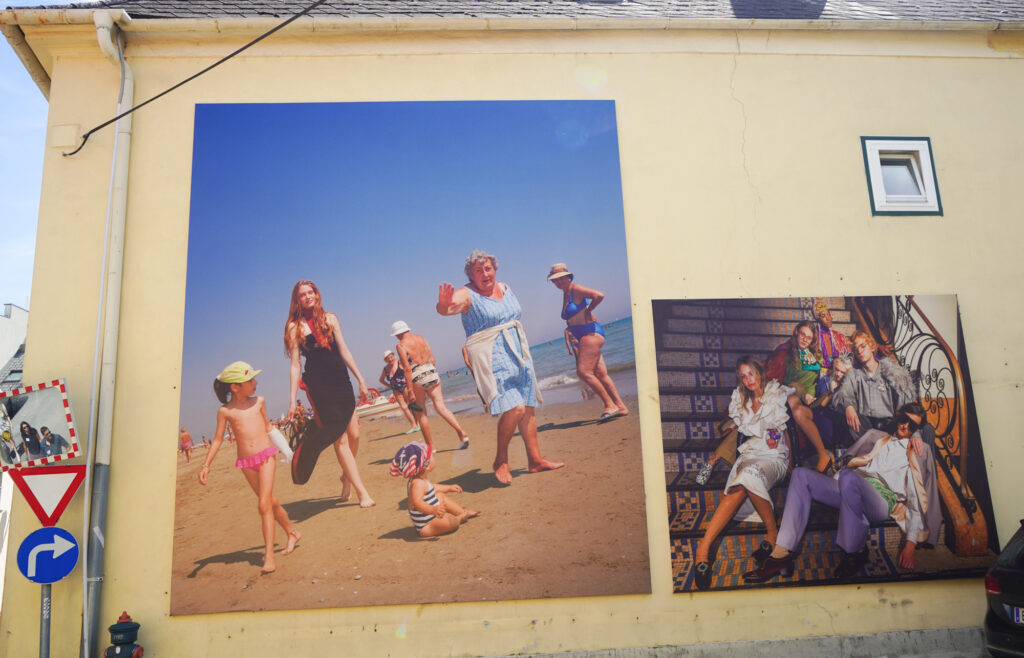
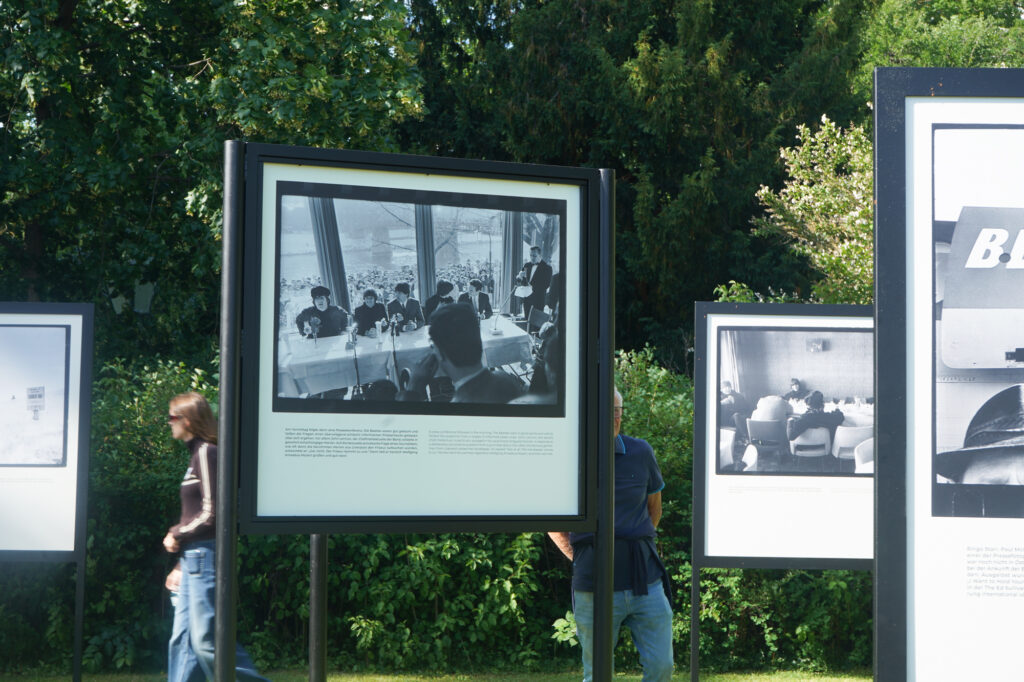
Martin Parr’s photographs on display at Festival La Gacilly Baden Photo, Baden, Austria. Photo: © Cinzia D’Ambrosi

There is something quietly radical about encountering serious photography outdoors. Not in a gallery, not behind a ticket desk, but embedded in the life of a city in its gardens, along its streets, in spaces where people are simply getting on with their day. That is the founding proposition of Festival La Gacilly-Baden Photo in Baden, Austria, and walking through it for the first time, I understood why it matters. You do not have to seek the work out. You do not have to know who Don McCullin is, or what Martin Parr has spent his life looking at. You can be passing through, your eye caught by something large and arresting on a wall, and suddenly you are inside a conversation you did not know you were joining. Whether you are conscious of it or not, you are living it. And that, in a time when photography is everywhere and yet somehow increasingly invisible, feels like something very meaningful.
This year’s edition, So British!, takes its title from its celebration of British photography, but the festival’s ambition reaches well beyond national identity. Rather than presenting a fixed definition of what British photography is, the programme reveals a shared sensibility that has shaped generations of photographers. It is a tradition rooted in close observation rather than spectacle, attentive to the lives of ordinary people and often characterised by irony, humour and an acute awareness of class and social difference. British documentary photography has long balanced empathy with restraint, allowing images to ask difficult questions without prescribing easy answers.
That sensibility runs through the work on display. Martin Parr’s satirical observations expose the absurdities of consumer culture with wit and precision. Mike Taylor’s photographs of football supporters capture not only collective passion but also rituals of belonging and identity. Mary Turner has spent decades documenting communities too often overlooked, while Sir Don McCullin’s uncompromising images remain among the defining works of humanitarian photojournalism. Their practices differ profoundly, yet together they demonstrate a tradition less concerned with isolated moments than with a sustained engagement with society and the people who inhabit it
I asked Lammerhuber when and how a theme gets decided. “The themes for each edition are collectively decided,” he told me. “Our team of three people may champion different topics, and while everyone has their own opinions, there is general agreement on the importance of each subject. Rarely much argument, as all subjects ultimately are important.”
Sitting with Lois, it became clear that the theme functions as a framework rather than a constraint. Each photographer retains a distinct voice within it. The programme moves in a deliberate, linear way through what Lois describes as the human condition: beginning with people, suffering and endurance, before expanding outward into environment, science and technology. It is a journey that asks something of the viewer at every stage.
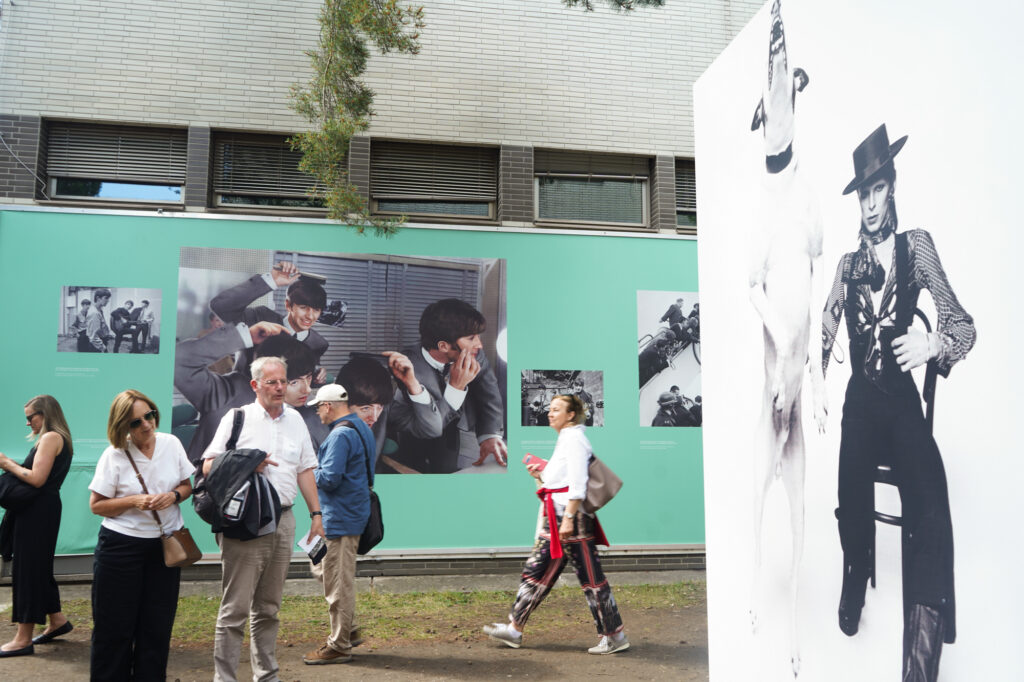
Visitors pause before Terry O’Neill’s “Swinging London” exhibition at Festival La Gacilly Baden Photo, Baden, Austria, featuring his images of the Beatles and David Bowie. © Cinzia D’Ambrosi

As I thought back to my walk through the festival the previous day, I realised how carefully the exhibitions had been sequenced. One seemed to lead naturally into the next, creating a sense of progression rather than interruption.
That sense of connection extended beyond the exhibition route itself. During the opening week, Lammerhuber brings together 152 photographers, curators and journalists in the same hotel, many of whom have never met before. Conversations continue over breakfast, during walks through the exhibitions and long into the evening. Photography becomes not only something displayed but something shared. As one of this year’s guests, I found those exchanges almost as memorable as the exhibitions themselves.
As our conversation continued, I asked Lois how he would know the festival had achieved its purpose. He answered that it was important to him that visitors leave with an open question, something unresolved, provoked by the work they had seen. Not conclusions, but thought.
The festival embraces an impressive breadth of practice, from classic photojournalism and documentary photography to street photography, portraiture and long-term visual storytelling. Yet despite the diversity of approaches, the exhibitions remain connected by a shared concern with the urgent issues shaping contemporary society.
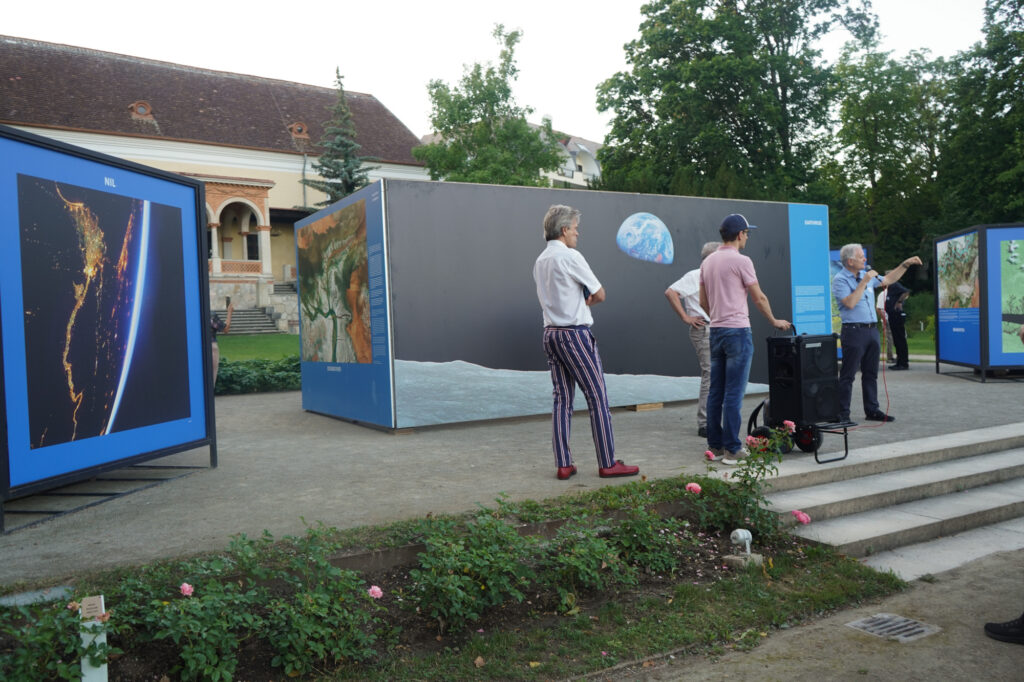
Helmut Habersack and Lois Lammerhuber present Water is Life, bringing scientific knowledge and documentary photography together to highlight the future of the planet’s freshwater. © Cinzia D’Ambrosi

In the Science and Technology section, the festival’s invitation to reflect becomes something closer to humility. Curated by river scientist Helmut Habersack and photographer-publisher Lois Lammerhuber, Water is Life brings together scientific knowledge and documentary photography to confront one of the defining challenges of our time: the future of the planet’s freshwater. Among the works, a NASA photograph of Earth seen from space arrests the viewer. The image is iconic, yet encountered here outdoors, woven into the rhythm of everyday life, it acquires a renewed power. Our planet appears as a small, fragile sphere suspended in the vastness of space, reminding us of both its beauty and its vulnerability.
From this perspective, statistics become profoundly human. More than eight billion people depend on a finite supply of freshwater, while climate change, pollution and unsustainable consumption place increasing pressure on rivers, lakes and aquifers across the world. The exhibition succeeds because it transforms these abstract realities into something deeply felt. Rather than overwhelming visitors with data, it invites them to pause, to reconsider their place within the natural world, and to recognise that water is not merely a resource but the foundation of all life. By combining scientific insight with the emotional power of photography, Habersack’s contribution demonstrates how visual storytelling can bridge the gap between knowledge and understanding. It reminds us that protecting water is not simply an environmental imperative, it is a profoundly human one.
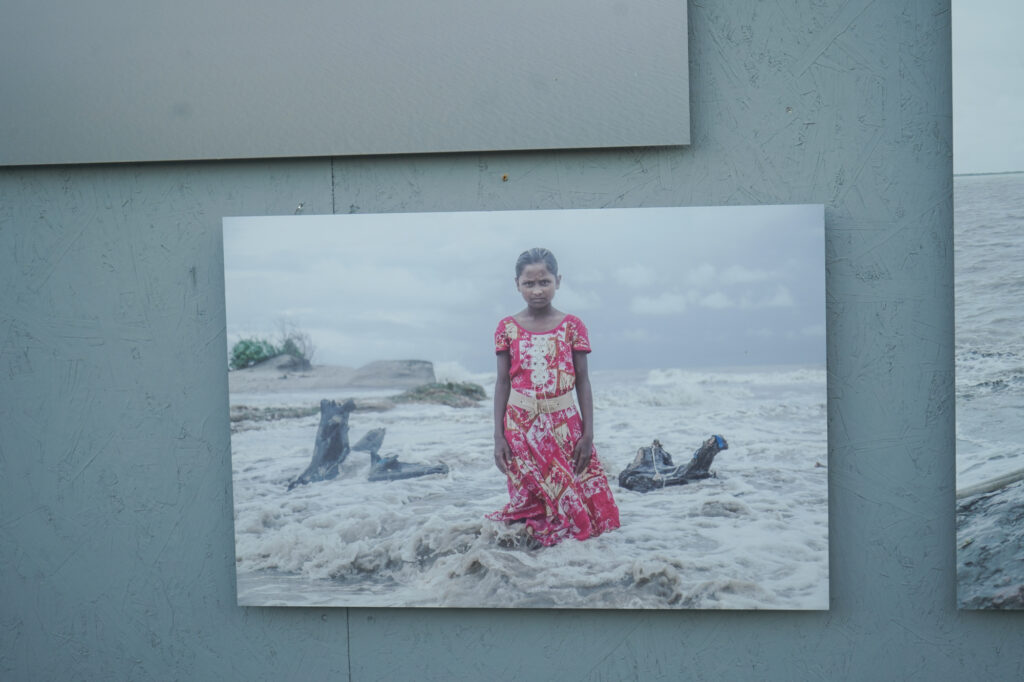
Supratim Bhattacharjee’s work brings attention to the impact of extreme weather and rising sea in parts of India. © Cinzia D’Ambrosi

Among the photographers Lammerhuber spoke about with particular feeling was Supratim Bhattacharjee a photographer based in India whose work documents the devastating impact of climate change on his country and its people. What makes his practice distinct is not only the quality of the documentation, but the position from which it is made. He is not an outside witness.
He is living the reality he photographs. As rising seas and extreme weather reshape parts of India, the burden falls hardest on those with the least. His photographs are not made from outside the story but from within it.
A photographer who is both witness and subject does not resolve those questions. But they shift something fundamental.
The image carries a different kind of authority, not the authority of distance, but of proximity. Of skin in the game.
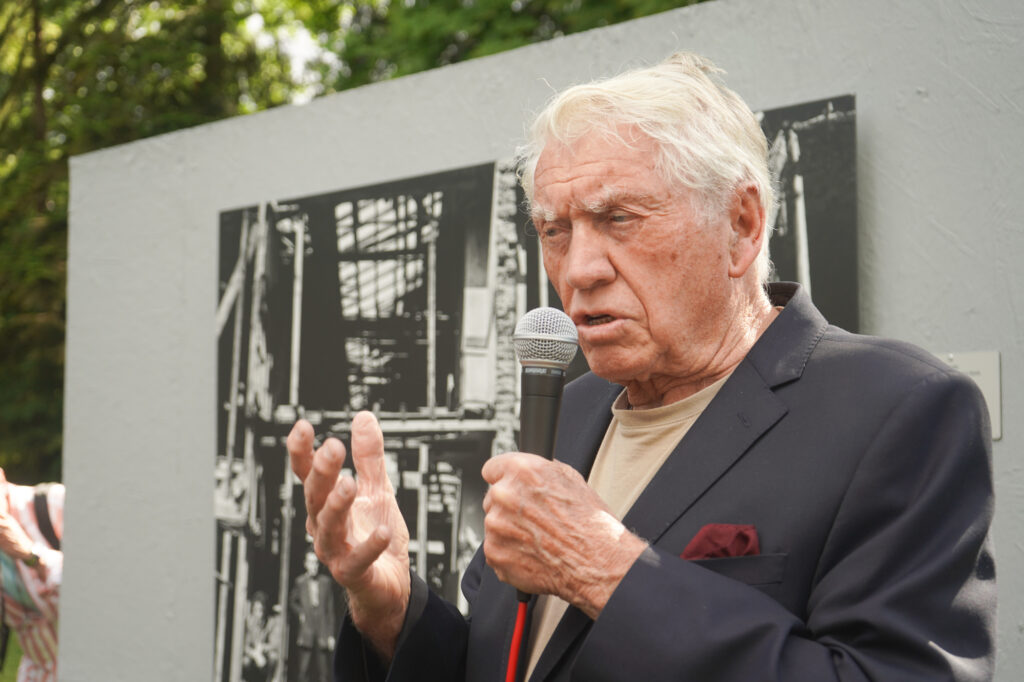
Sir Don McCullin, the legendary British photojournalist, was a guest of honour at the Festival. © Cinzia D’Ambrosi

Those same questions about witnessing, responsibility and representation echoed throughout the festival. They returned with particular force when Sir Don McCullin spoke about his own work. Much of documentary photography’s history has been built on the figure of the outsider, the photographer travelling to witness suffering that is not their own. That tradition has produced extraordinary work, but it has also raised difficult questions about representation, power and authorship. Hearing him speak at the festival’s Opening was one of those rare moments that lingers long after the event has ended. Sir McCullin spoke with remarkable candour about the photographs on display, revisiting the circumstances in which they were made and the difficult decisions that shaped them. He reflected on the lengths he went to in order to bear witness, placing himself amid war, famine and unimaginable suffering and questioned whether those choices had always been right.
Was it right to photograph people at the very limits of human suffering? Was it ethical to go as far as he did in pursuit of an image? Did the act of witnessing justify the personal and moral cost?
These are not questions Sir McCullin has answered and left behind. They remain unresolved, continuing to accompany him decades after the photographs were made. That ethical restlessness, the willingness to question his own actions rather than defend them, is what distinguishes him not only as one of the world’s greatest photojournalists, but as one of its deepest moral voices. Standing before those photographs while listening to the man who made them was a powerful reminder of what photography, at its most committed, can carry. Each image is more than a document of history. It is also a record of the choices, risks and responsibilities behind its making. Sir McCullin’s reflections revealed that the greatest burden is not simply witnessing suffering, but living with the knowledge of what it took to bear witness.
Lammerhuber sees no contradiction in presenting McCullin’s moral questioning alongside contemporary photographers confronting climate change, migration and environmental collapse. For him, the festival is not organised around aesthetics alone, but around photography’s capacity to deepen public understanding of the human condition. The conversations that begin in front of a photograph continue long after visitors have walked away. In an age saturated with images, that ability to make us stop, look and think may be photography’s greatest achievement.
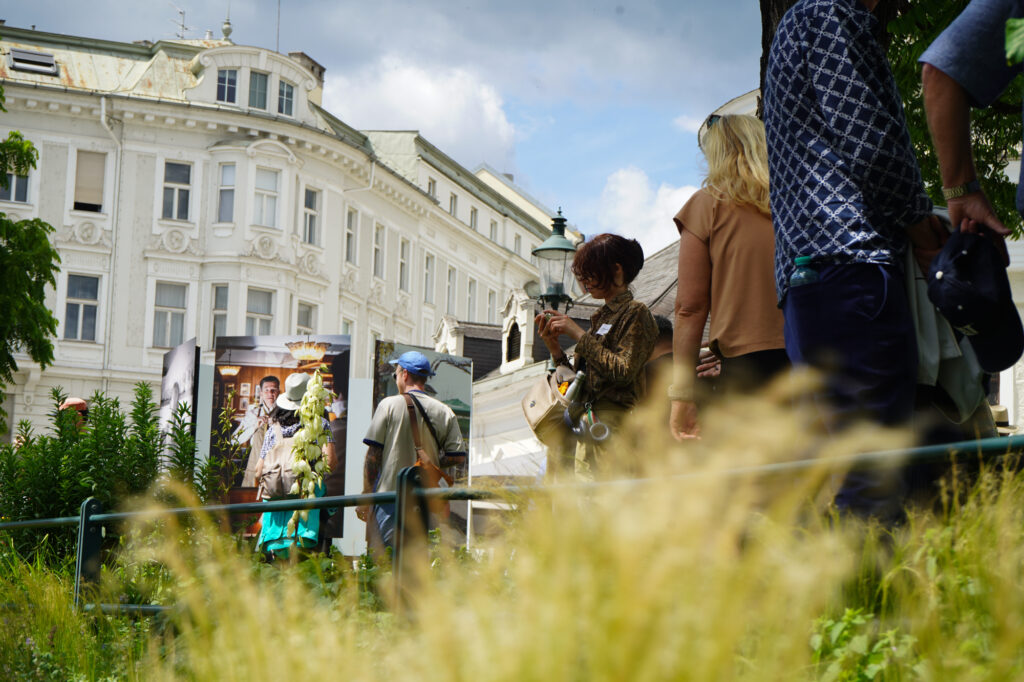
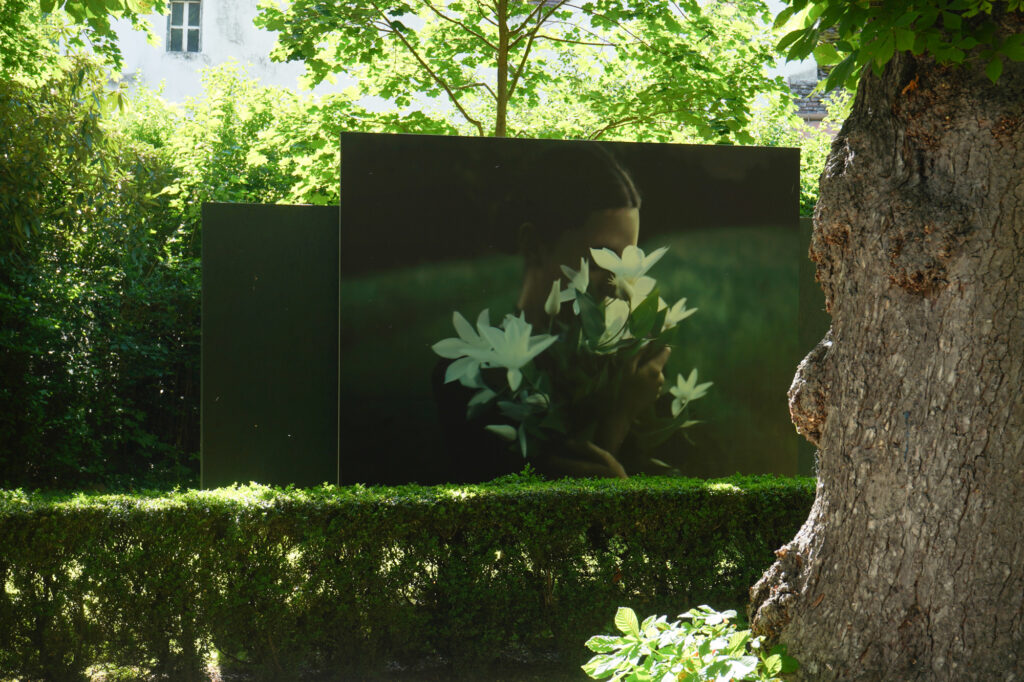
La Gacilly-Baden Photo is Europe’s largest open-air photography festival, extending across 7km of the city. © Cinzia D’Ambrosi

That may ultimately be what Festival La Gacilly Baden Photo does so well. It does not ask us simply to admire photographs. It asks us to live with them, to carry them beyond the exhibition walls and into our own lives. By placing photography in public space, the festival dissolves the boundaries between art and everyday experience, between observer and participant. Images of war, climate change, migration and human resilience are encountered not in isolation, but as part of the ordinary rhythm of the city, inviting everyone into the conversation.
As I left Baden, I realised I was carrying more than memories of remarkable exhibitions. I was carrying the questions they had left behind. Questions about who tells stories and who has the right to tell them. About what it means to bear witness. About our responsibility, not only as photographers but also as viewers.
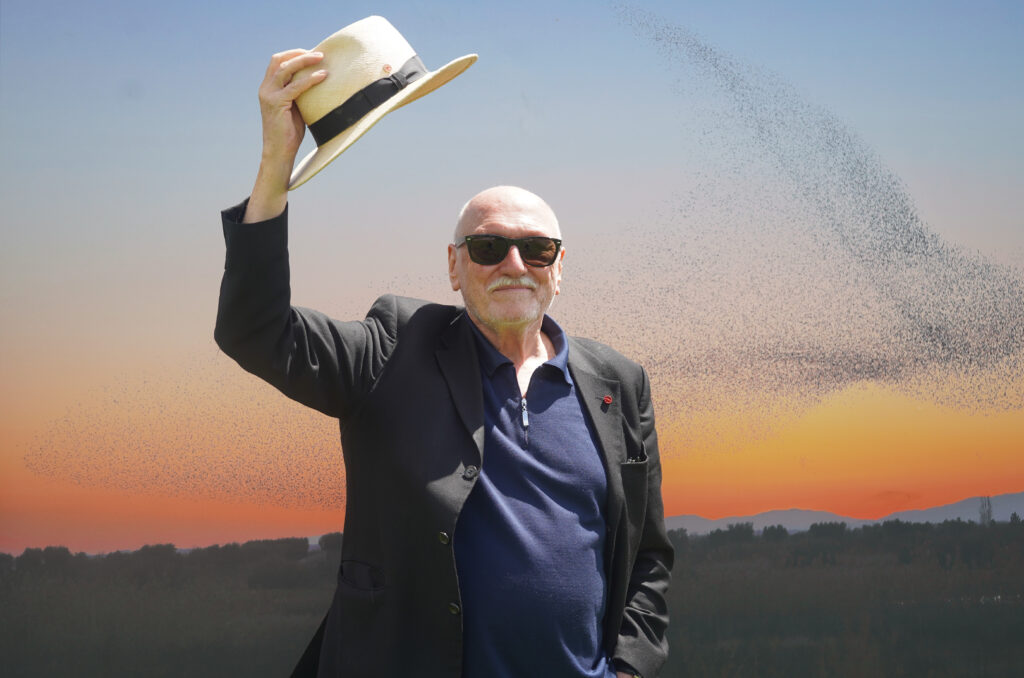
Lois Lammerhuber photographed by Cinzia D’Ambrosi in front of one of his photographs at the festival. © Cinzia D’Ambrosi

When I asked Lois Lammerhuber what success looks like for the festival, his answer felt inevitable. He was not interested in visitors leaving with certainty. What mattered, he said, was that they left carrying a question, something unresolved that would continue to accompany them long after they had gone home.

Not conclusions. Thought.


Words by Cinzia D’Ambrosi
Photographs © Cinzia D’Ambrosi

cinziadambrosi.com
@cinziadambrosi

This article was first published in What the Records Show, Cinzia D’Ambrosi’s independent publication on investigative reporting and documentary photography.

Sulgrave Club 100 years

EXHIBITION OPENING: Friday 26 June 2026 | 6–9 PM (By Invitation Only)
Press Preview: Friday 26 June 2026 | 3–4 PM

PUBLIC OPEN DAYS: Saturday 27 June 2026 | 2–8 PM
Sunday 28 June 2026 | 12–4 PM

Venue: Sulgrave Club, 287 Goldhawk Road, London W12 8EU


On 26 June 2026, one of London’s last surviving historic youth clubs, the Sulgrave Club in Shepherd’s Bush, marks a remarkable milestone: 100 years of youth engagement, community, and heritage. Founded a century ago in the shadow of the First World War, the club was born from a need to support a generation of young people whose lives had been upended by global conflict. Over the decades that followed, it became a sanctuary for Shepherd’s Bush youth and a quiet witness to British cultural history — its halls witnessing everything from visits by Prince Philip and Princess Anne to the early days of two members of The Who, who were club members long before they became rock icons.

To celebrate this centenary, the building is being transformed into a multi-floor art gallery, taking visitors on a journey through time. We are proud to be at the heart of this celebration.

Lens on a Century: Youth Photographers Exhibition

As part of the exhibition Sulgrave Club 100 Years, we partnered with the Sulgrave Club to run a documentary photojournalism project with local young people. Mentored by the Photojournalism Hub, these young photographers have spent months capturing the intersection of modern life and the club’s historic legacy — and their work forms a major showcase at the heart of the exhibition. This project reflects everything we believe in: giving young people a professional platform, a journalistic lens, and the tools to document their own world with confidence and purpose.

The exhibition is curated by Cinzia D’Ambrosi — award-winning photojournalist, founder and director of the Photojournalism Hub, and a Shepherd’s Bush local. Alongside the youth photography, Cinzia will present a curated selection of her own work, capturing the contemporary soul and social fabric of the community. Together, these elements weave social history with high-impact documentary photography into a cohesive and powerful whole.

“Transforming this historic space into a living gallery is about more than just looking back. It is an immersive experience where the walls of the Sulgrave Club tell a story of resilience and community. By integrating the raw, honest work of the Photojournalism Hub, we are connecting a century of local history with the contemporary perspectives of the youth who will shape the next hundred years.” — Cinzia D’Ambrosi, Curator

Exhibition Highlights

  • A multi-floor transformation where the architecture of the Sulgrave Club becomes the canvas for the exhibition
  • Archival displays and heritage narratives charting the club’s 100-year impact on the Shepherd’s Bush community
  • Lens on a Century: a photography showcase by local youth photographers, mentored by the Photojournalism Hub
  • A curated selection of photography by Cinzia D’Ambrosi, featuring portraits of former and current club members

The exhibition is free and open to the public on Saturday 27 and Sunday 28 June. We hope to see you there.
For media enquiries, interview requests, or high-resolution images, please contact Cinzia at centenary@thesulgraveclub.org.uk or cinzia@photojournalismhub.org.


Notes to editors

About the Sulgrave Club Located in the heart of Shepherd’s Bush, the Sulgrave Club has provided a vital space for youth support, community engagement and social connection for a century.www.thesulgraveclub.org.uk
www.thesulgraveclub.org.uk

About the Photojournalism Hub Photojournalism Hub is a Community Interest Company (CIC) dedicated to using documentary photography as a tool for social change. It provides training, community photojournalism projects and publishing, and a platform for sharing independent, courageous and powerful photojournalism and documentary photography. www.photojournalismhub.org

About Cinzia D’Ambrosi Cinzia D’Ambrosi is a multi-award-winning curator and photojournalist known for her work on social issues and human rights. Her vision for the Sulgrave Centenary focuses on the intersection of heritage and modern documentary practice. www.cinziadambrosi.com

High-Resolution Images A selection of high-resolution images from the exhibition is available for media use upon request. To request images or an interview with the curator or featured photographers, please contact Cinzia cinzia@photojournalismhub.org

Press Contact

Cinzia D’Ambrosi
Centenary Project Manager
Founder and Director, Photojournalism Hub
Email: centenary@thesulgraveclub.org.uk
Website: www.photojournalismhub.org | www.thesulgraveclub.org.uk

The Photojournalism Hub’s participation in this project has been supported by the London Borough of Hammersmith & Fulham through the King Charles III Coronation Youth Fund

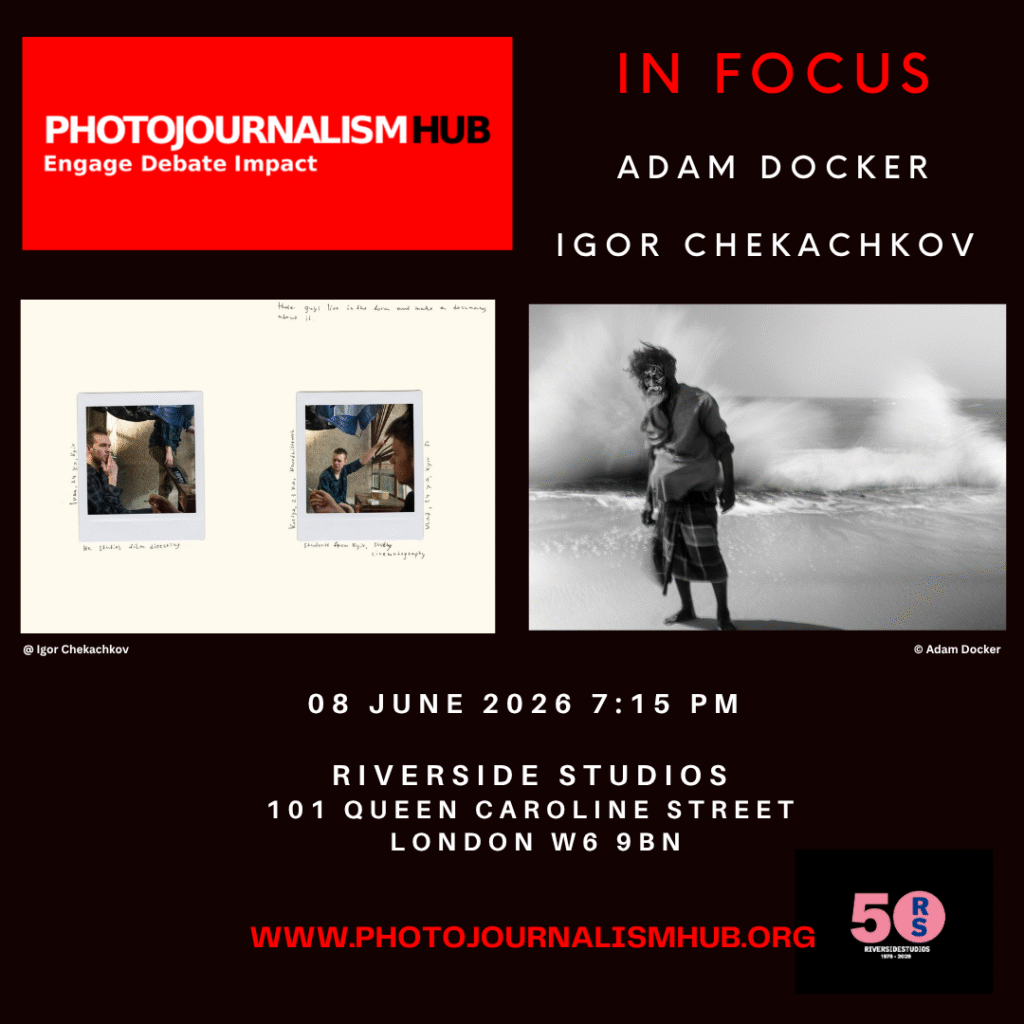
IN FOCUS: Adam Docker and Igor Chekachkov

To book a place: HERE

This June, as part of Refugee Week, IN FOCUS brings together two photographers whose work explores what it means to endure displacement, uncertainty, and survival and the human stories that exist beyond the headlines.
Join us at In FOCUS with Igor Chekachkov and Adam Docker, two photographers documenting lives shaped by conflict, movement, and resilience from deeply personal and unexpected perspectives. Through his powerful project 100 Days of War, Igor documents the emotional reality of war in Ukraine, capturing fragments of daily life, fear, tenderness, and survival during moments of upheaval. His images move beyond reportage, revealing the psychological weight of living through conflict and the fragile humanity that persists within it. Alongside this work, Adam Docker will present photographs made while travelling through refugee camps in Kenya with veterinary teams working on the frontlines of humanitarian aid. His work uncovers a rarely seen aspect of displacement: the vital relationship between people and animals in refugee communities, and how protecting livestock and pets can mean protecting livelihoods, health, dignity, and hope.
Though working in different environments, both photographers ask urgent questions about care, survival, and connection in times of crisis. Together, their work reminds us that stories of displacement are never abstract, they are intimate, layered, and deeply human.

Adam Docker – is a photographer and cinematographer working across fine art, documentary, and portrait. His work is shaped by a cinematic eye, grounded in instinct, light, and human connection. Based in london but shaped by journeys through more than 90 countries, his photography captures striking human stories, intimate moments, and evocative landscapes from around the world.
For Adam Docker, photography is not merely a visual medium; it is a profound exploration of humanity and culture. his images are a testament to his understanding of composition, storytelling and emotion. Adam grew up between London and Rome, deeply influenced by his italian roots and a large extended family. His father was tragically shot dead when Adam was just ten years old. although they never met, his father’s legacy left a deep imprint and instilled in adam a deep sense of resilience, justice, and identity. these themes form the foundation of his creative work. Fuelled by a childlike curiosity and an insatiable desire for knowledge, Adam has always been fascinated by other cultures, histories, and the ever-changing landscapes that unfold beyond a window. this constant sense of wonder drives him to seek out the unfamiliar, to observe, to listen, and to translate what he discovers into imagery that feels both intimate and universal. “I want to catch something in the act and see how it becomes something else.”
Adam is a two-time winner of the British Journal of Photography’s Portrait of Britain award (2021 and 2025), and recipient of the Portrait of Humanity award (2021 and 2023). His work has also been recognised by LensCulture and The Independent Photographer.

Igor Chekachkov – When Russia invaded Ukraine in February 2022, I was forced to leave my hometown, Kharkiv and go to the West of the country. From the very first day, I began to put together photographs and notes in a small notebook, creating a personal record of war and displacement from the inside. What originally stemmed from an intuitive desire to document my experience of war and uncertainty, developed into something broader: a reflection on the notions of home, identity, and displacement. Whilst the work literally describes the sudden evacuation of my family and the consequences of a brutal Russian attack, it also seeks to question the language of photography itself, and its limitations in documenting, representing and affecting conflict.
This deeply personal visual chronicle became 100 Days of War, a project that explores the tension between memory and documentation, the limits of photographic truth, and the search for meaning in the face of destruction

IN FOCUS is presented by the Photojournalism Hub in collaboration with  Riverside Studios, bringing to the public compelling and thought-provoking contemporary documentary photography and photojournalism.

COVID-19 & Beyond

People pass by banners and street arts related to the recent protests from Black Lives Matter in Brick Lane and Shoreditch, London Photo Copyright: Erica Dezonne

Photojournalism Hub presents COVID-19 & Beyond, a powerful photographic collection reflecting on one of the most pivotal moments in recent history and the profound, lasting consequences that continue to shape our world today.

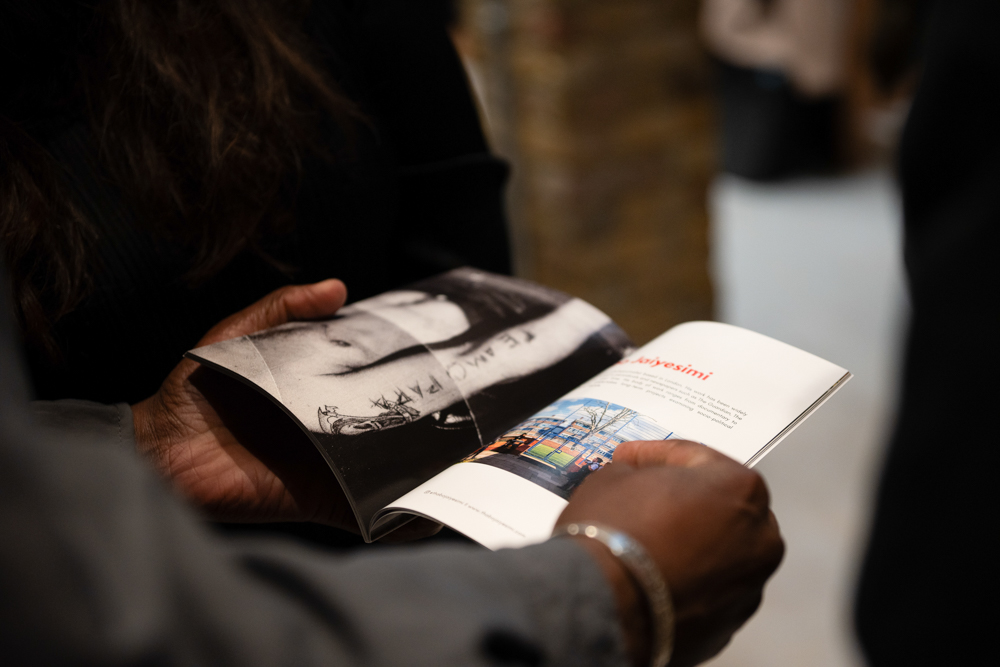
Emerging from an international open call launched by Photojournalism Hub director Cinzia D’Ambrosi at the height of the pandemic, COVID-19 & Beyond brings together, for the first time, this vital body of work in a single publication following its debut as a physical exhibition. Both long-awaited and deeply necessary, this collection offers an urgent and collective reflection on the pandemic and its aftermath.

Featuring compelling work by photographers from London and across the globe, the book documents lived realities and bears witness to a crisis that did not affect everyone equally. While COVID-19 was a shared global event, its impact exposed and intensified existing injustices and structural inequalities. Marginalised communities faced disproportionate risks, losses, and restrictions, as longstanding issues around housing, migration, race, women’s rights, access to healthcare, mental health, and freedom of expression became further entrenched.

Through photography, personal testimonies, and reflections, COVID-19 & Beyond amplifies voices too often excluded from dominant narratives. It is both a record of an extraordinary and traumatic period and a critical lens on its enduring consequences, physical, emotional, economic, and political.

More than a retrospective, this book asks urgent questions about the present and the future: Where are we now? What has changed? What has been normalised? And where are we heading?

As Cinzia D’Ambrosi reflects:
“The pandemic acted as a catalyst, accelerating social change, widening inequality, and reshaping our relationship with power, rights, and accountability. In many ways, it forced humanity to confront its own fragility—marking a moment when collective survival, dignity, and justice were fundamentally challenged. Yet many questions remain unanswered. The struggle did not end when lockdowns were lifted.”


To order a copy: HERE

Covid-19 & Beyond

Photo Copyright Antonio Silvestri

The exhibition ‘COVID-19 & Beyond’ originated from an international open call launched by Cinzia D’Ambrosi, founder and director of the Photojournalism Hub, during the peak of the pandemic. Curated by D’Ambrosi alongside assistant curator Ella Khalek, the project was designed with a specific focus on advocacy through the lens. It features the work of photographers from across the globe, including Iran, Argentina, the Republic of Congo, and the UK documenting how the crisis intensified structural inequalities and social injustices. To provide a structured narrative for these global stories, the works were categorized into three primary themes:

The Front Line:
Focusing on care homes and the experiences of essential workers.
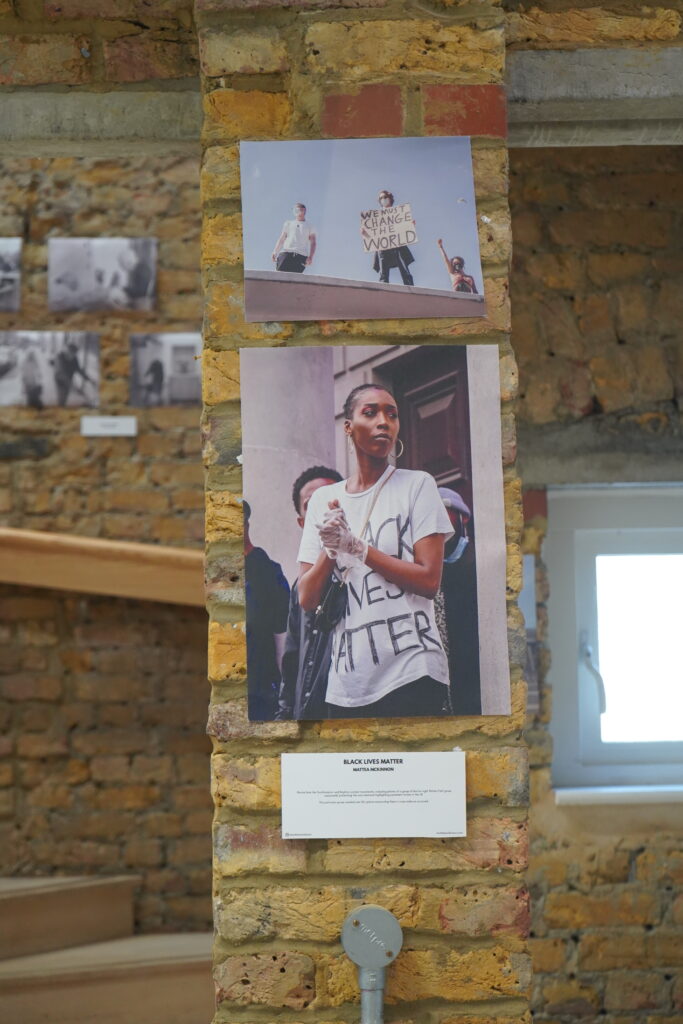
The Street: Documenting public movements, including Black Lives Matter protests and anti-vaccination demonstrations.
The Home: Exploring domestic themes, including the impact of lockdown on gender, domestic abuse, and specific demographics such as youth and the elderly.


The COVID-19 exhibition project was a significant success, effectively merging professional photojournalism with citizen-led responses. By utilising a multi-platform approach comprising of public workshops, a live event at Riverside Studios, a physical exhibition, and a publication the project created a vital space for public reflection. The project successfully addressed the pandemic’s role as a precursor to ongoing social justice issues, including health disparities, loss of freedom of speech, and systemic inequalities. The heart of the project lay in its mission to empower those impacted by injustice whether through grief, long COVID, or social marginalisation by providing a space where their lived experiences could be heard. By merging professional photojournalism with citizen-led responses, the project moved beyond traditional observation into active participation and reflection. This was achieved through a multi-platform approach; preparatory work included collaborative public workshops at the Sulgrave Club in Shepherd’s Bush and a live ‘In Focus’ event at Riverside Studios, featuring photographers Chiara Fabbro and Ruth Toda-Nation.
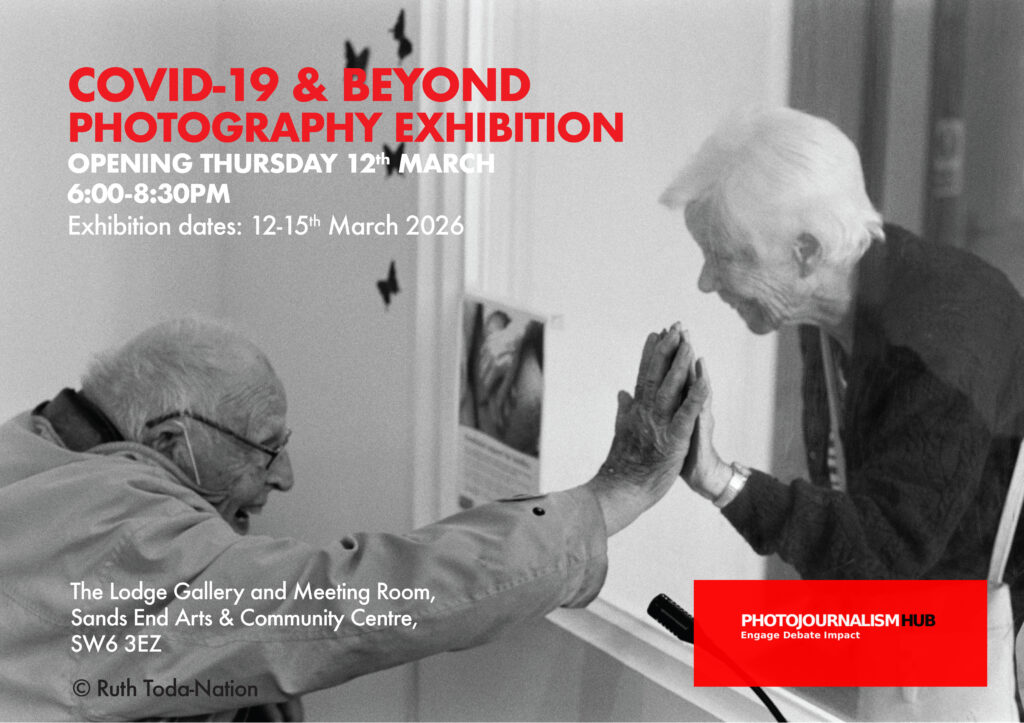
The exhibition was hosted at The Lodge Gallery and the Sands End Arts & Community Centre (SEACC) in Fulham from March 12–15, 2026. With over 130 attendees on the opening night alone, the event showcased the work of photographers from across the world, including Iran, Argentina, The Republic of Congo, the UK and the wider European continent and featured notable photographers, including Chiara Fabbro, Cinzia D’Ambrosi, David Gilber Wright, Angela Christofilou and Ruth Toda-Nations. To capture the community’s response, interactive feedback boards were installed with dl-sized cards to capture spontaneous public thoughts and responses to specific prompts regarding emotional impact and key takeaways.

Photo Copyright Antonio Silvestri


The exhibition contributed to community well-being and active engagement by transforming the pandemic narrative from one of isolation into a collective, creative experience. The workshops and feedback cards revealed deep-seated emotional impacts that continue to affect the public, including how social relationships have not yet returned to pre-pandemic levels of “human touch” and connection. Significant feedback was gathered regarding the trauma of loss. One notable respondent detailed her mother’s illness and death, highlighting concerns that her mother’s treatment in care was negatively impacted by racial profiling. The project established a strong crossover with the Covid-19 Bereaved Families for Justice group (part of the official COVID Inquiry), identifying a shared need for storytelling to drive political and social advocacy.
The initiative successfully addressed the pandemic’s role as a precursor to ongoing social justice issues, including health disparities, loss of freedom of speech, and systemic inequalities. It comprehended various events and activities, including Collaborative Public Workshops integrating public voices with professional photographers hosted at the Sulgrave Club in Shepherds Bush during the month of February. In Focus photography event at Riverside Studios in Hammersmith featuring photographers Chiara Fabbro and Ruth Toda-Nation presenting their poignant photography work followed by Q&As.

The project’s legacy is preserved in the ‘COVID-19 & Beyond’ photobook, available in both print and digital formats.

Photo Copyright Antonio Silvestri

Selected media & press coverage:

The Londonist: Featured as a ‘top place to go’ in London.
PAN (Photo Archive News): National agency writes an article featuring the exhibition.
Art Rabbit: Prominent listing on this specialist photography and arts platform.
Local Government: The Hammersmith & Fulham Council published articles and interview with Cinzia D’Ambrosi supporting the project during its development.
Photojournalism Hub Journal: Injustices & Inequalities: Covid-19 
Photojournalism Hub: Exhibition ‘Covid-19 & Beyond’
No26.com Article The Truth behind the masks Covid-19 & Beyond exhibition opens in London

Outlook and future steps

The COVID-19 & Beyond exhibition stands as a primary visual and research study for our core mission: bridging the gap between professional photojournalism and the lived experiences of the community. It has made a significant impact on arts, culture, and heritage by transforming a global health crisis into a documented cultural legacy. It moved beyond the traditional “news cycle” to create a permanent, artistic record of the pandemic’s social consequences. We believe that reporting should not be something done to a community, but with them. By integrating our ‘Citizen Photojournalism’ program alongside professional work, we move beyond mere observation into active participation.
By documenting health disparities, widening inequalities, and the increasing threats to freedom of speech, this exhibition functions as both a visual archive and a movement for social justice. We provide a platform for those the system has historically overlooked from the elderly in care homes to refugees on the Balkan route capturing the human stories that data-driven reporting often misses.
We do not view this exhibition as a closed event, but as an ongoing conversation. We will continue to speak to and with the public through images.
We will use the momentum from our photobook and digital reach to keep these social justice themes in the public eye. This is not a closed event, but an ongoing conversation. We are committed to using the momentum from our photobook and digital reach to keep these themes in the public eye. We remain dedicated to providing local and global photographers with the visibility needed to challenge the status quo and inspire tangible change.
“This exhibition serves to highlight and advocate for a deeper understanding of the widening inequalities impacting communities globally. By uniting people through the power of visual storytelling, we have created a vital channel for voices that often go unheard. Advocacy is the catalyst for both understanding and systemic change; to that end, we remain committed to documenting the ongoing stories of COVID-19 and its lasting impact on social justice. Our mission is to foster the growth of “Citizen Photojournalism, a movement dedicated to making media more democratic, accessible, and authentically rooted in news from the ground up.” – Cinzia, Photojournalism Hub director and founder.


Photojournalism Hub presents ‘COVID-19 and Beyond’, a landmark photography exhibition exploring the lasting legacy of the pandemic.

DATES: 12–15 March 2026
The Lodge Gallery and the Meeting Room
Sands End Arts & Community Centre
London SW8

OPENING NIGHT: 12 March, 6:00 PM – 8:30 PM
FREE ENTRY, RSVP


Photojournalism Hub is delighted to present COVID-19 & Beyond, a powerful photography exhibition that reflects on one of the most pivotal moments in recent history and the profound, lasting consequences that continue to shape our world today. Emerging from an international Open Call launched by the Photojournalism Hub’s director Cinzia D’Ambrosi, during the height of the COVID–19 pandemic, this exhibition marks the first time this body of work is brought together in a public, physical space. It is both a long-awaited and necessary moment.
COVID–19 & Beyond brings together a compelling body of work by photographers who documented lived realities and bore witness to how the pandemic did not affect everyone equally, but instead exposed and intensified existing injustices and structural inequalities locally in London and globally.
COVID–19 marked a shared global crisis, however, its impact was deeply unequal. Marginalised communities faced disproportionate risks, losses, and restrictions, whilst long standing issues around housing, immigration, race, women’s rights, access to healthcare, mental health, and freedom of expression were further entrenched. For many, the repercussions are still felt today physically, emotionally, economically, and politically.
Through photography, personal testimonies and reflections, COVID–19 & Beyond amplifies voices that were too often excluded from dominant pandemic narratives. The exhibition not only looks back at an extraordinary and traumatic period, but also asks urgent questions about the present and the future: Where are we now? What has changed? What has been normalised? And where are we heading?

“The pandemic acted as a catalyst accelerating social change, widening inequality, and reshaping our relationship with power, rights, and accountability,” says Director and Curator Cinzia D’Ambrosi. “In many ways, it forced humanity to confront its own fragility, marking a moment when collective survival, dignity, and justice were fundamentally challenged. Yet many questions remain unanswered. The struggle did not end when lockdowns were lifted.”

COVID-19 & Beyond is more than an exhibition. Curated by Cinzia D’Ambrosi in collaboration with Ella Khalek, the exhibition combines visual responses from community workshops and a research-led online journal to foster deeper understanding, collective reflection, and long-term impact. The exhibition also strongly demonstrates the Photojournalism Hub’s ongoing work in using documentary photography as a means to sustain dialogue, research, and creative engagement around social injustice and inequality.

Exhibiting photographers: Aidan Brooks, Angela Christofilou, Barbara Traver, Chiara Fabbro, Cinzia D’Ambrosi, David Gilbert Wright, Erhan Us, Erica Dezonne, Flaviana Frascogna, Gemma Mancinelli, Joanna Olivia Fountain, Kasangati Godelive, Krzysztof Maniocha, Mattea McKinnon, Nic Madge, Omur Ozkoyuncu, Rueda Photos (Daiana Valencia and Celeste Alonso), Ruth Toda-Nation, Sabrina Merolla, Sebastian Ambrossio, Thabo Jaiyesimi, Valeria Luongo.

Curators
Curator: Cinzia D’Ambrosi
Curatorial Assistant: Ella Khalek

Press Contact
Cinzia D’Ambrosi Director, Photojournalism Hub
Email: cinzia@photojournalismhub.org
Website: www.photojournalismhub.org
Instagram: @photojournalism_hub

Our Supporters
This exhibition was made possible through the generous contributions of our crowdfunding community and the support of:

Hammersmith & Fulham Council
Sands End Arts & Community Centre
Studio Twenty7


Notes to Editors

About the Photojournalism Hub The Photojournalism Hub is a west London-based Community Interest Company (CIC) dedicated to using documentary photography as a tool for social change. By providing training, research, and a platform for sharing independent, courageous and powerful photojournalism and documentary photography, the Hub advocates for human rights and social justice.

About the Curator Cinzia D’Ambrosi is a multi award-winning documentary photographer and the founder of the Photojournalism Hub. Her work focuses on state violence, migration, and structural inequality. She has been widely published and exhibited internationally, focusing on photography’s power to drive social change.

High-Resolution Images A selection of high-resolution images from the exhibition is available for media use upon request. To request images or an interview with the curator or featured photographers, please contact cinzia@photojournalismhub.org.

IN FOCUS: Citlali Fabian and Jai Toor

To book a place: HERE

IN FOCUS is an event series by the Photojournalism Hub in collaboration with Riverside Studios that presents committed, independent contemporary documentary photography. This edition brings together two visual storytellers whose practices engage deeply with questions of identity, migration, memory, and place. Through distinct yet complementary approaches, Citlali Fabián and Jai Toor use photography to navigate personal and collective histories, examining how images can hold lived experience, cultural inheritance, and emotional truth. Their work moves between documentation and imagination, reflecting on displacement, diaspora, and the meaning of home across generations and geographies.

Citlali Fabian A Yalalteca (indigenous from Mexico) visual storyteller. She uses photography to explore ways of addressing identity and its connections with territory, migration, and community bonds.
Fabián is a  2024 BERTHA FOUNDATION Grantee,  2021 Photography and Social Justice Magnum fellow, a National Geographic Society explorer, with the project “I’m from Yalalag, a photo essay to explore the development of our Zapotec identity.” In 2021, she was awarded by the Art Council of England with a Develop Creative Practice Grant. In 2023 World Press Photo Contest Regional Jury. A 2020 Visura mentee. She was also named one of the Discoveries of the Meeting Place of FotoFest 2018 Biennale.
Her work has been shown in solo and collective exhibitions in Mexico, USA, Spain, and Argentina. Her work has been covered at The New York Times. And also has been appeared in different media like The LA Times, The Guardian, Buzzfeed, Remezcla, Revista Cuartoscuro, and IM Magazine among others. Her Mestiza series was selected as one of the New York Times Lens blog’s “13 Stories That Captured Photography in 2018” and as part of “10 Years of Photography, and Lens”.
She is also a member of Women Photograph and Indigenous Photograph collectives. Her work is part of the INBA/Toledo Collection, the Museum of Contemporary Photography of Chicago, and the Wittliff Collections at Texas State University.  

Jai Toor (b. 1998) is a British-Indian photographer and artist based in the UK. His practice explores the interplay of diaspora and fantasy within the fabric of everyday surroundings. Working across documentary, fashion, and
music, Toor employs a multifaceted approach that integrates research, analogue processes, text, and archival photographs to construct layered visual narratives. Jai Toor’s practice centres around long-form photographic projects that often begin close to home — both literally and emotionally, before expanding outward. As someone who has lived across India and the UK, in many different homes, I’ve never felt a singular sense of place. This transient experience of “home” underpins much of my work, where themes of diaspora, migration, family, loss, and identity recur. He is particularly drawn to overlooked stories, fragments of personal or collective memory that might otherwise go undocumented. Photography, for me, is a way of capturing both presence and absence; a medium that can preserve histories, confront traumas, and evoke longing. He works across documentary, fashion, and music, but his approach remains consistent: research-led and open to intuition.
His projects often begin with reading, writing, and conversations, forming a kind of text-based map that guides me visually. I draw from national archives, interviews, and everyday encounters, weaving together photographs, text, and found materials. He uses analogue and digital photography interchangeably, but shooting on film allows him to slow down and connect more intentionally with the people and places he documents. He sees his work as semi-fictional, a space where documentation, re-imagination, and emotional truth coexist. He leans into ambiguity, allowing the viewer to enter the work without a fixed outcome, but with enough guidance to feel immersed. Collaboration is essential to this process: He often enters personal or communal spaces where trust, exchange, and shared authorship become part of the narrative. Ultimately, he is interested in how photography can hold contradictions, between fact and feeling, history and fantasy, familiarity and displacement, and in how storytelling can honour both the known and the unknowable.

IN FOCUS is presented by the Photojournalism Hub in collaboration with  Riverside Studios, bringing to the public compelling and thought-provoking contemporary documentary photography and photojournalism.

INTERVIEW: Cinzia D’Ambrosi of the Photojournalism Hub

New exhibition set to explore the hidden inequalities exposed by the Covid pandemic. You can help make it happen!

The borough’s local Photojournalism Hub is inviting you to support its new exhibition and workshops, entitled: Covid-19 and Beyond. It is due to open in Fulham once the hub has raised enough funding – details below on how you can support.

The new exhibition and workshop series aims to give a voice to those most affected by Covid, said Cinzia D’Ambrosi, the hub’s founder and a multi-award-winning photojournalist.

Raised in Italy, Cinzia has dedicated her career to using photography for social change. Her work has earned international recognition, including the Spiga d’Argento from FIDAPA (Italy), awarded for promoting peace through photojournalism and documentary photography.

The hub is one of many community-led groups that receive financial support from Hammersmith & Fulham Council as part of our commitment to building a stronger, safer and kinder borough.

Inequalities

“The pandemic exposed deep inequalities that many people still live with every day,” said Cinzia. “Through this exhibition, we want to give those affected a platform – and start a conversation that leads to real change.”

It features striking images and personal testimonies gathered during the pandemic, shining a light on issues such as housing, race, immigration status, women’s rights and mental health.
It also hopes to address the deepened and long-standing divides, widening inequalities, and the curbing of freedoms such as freedom of speech that have arisen from the pandemic.
The free community workshops will invite residents to share their own stories, said Cinzia, while schools will take part in guided tours. Meanwhile, panel discussions will bring together experts and local voices to keep the conversation alive.
She said: “This project is about helping people in ways that count. And empowering under-represented voices in our communities and encouraging a shared understanding. By creating a platform for dialogue, we hope to strengthen community ties and inspire change.”

Founder of Photojournalism Hub, Cinzia D’Ambrosi

Founder of Photojournalism Hub, Cinzia D’Ambrosi

Impact

The Photojournalism Hub has a proven track record of telling powerful stories in H&F. It’s done this through two free documentary photography courses for residents. These were initially funded by the NHS and delivered in partnership with H&F Council which saw more than 60 young people learn photography, how to build portfolios, and publish their work in print and online.
Some of these young people have gone on to study photography at university, while others have secured paid roles, including photographing major events like The Great Exhibition Road Festival.
Cinzia says the hub empowers people to tell their own stories: “Through workshops, mentoring, and our community photography magazines, we give space to local voices. It’s about democratic storytelling – where residents shape the narrative.”
Beyond its local work, the Photojournalism Hub also collaborates globally, sharing powerful stories through events like the In Focus series at Riverside Studios.
She added that the hub also acts as historical archive, with many photographs and testimonies submitted during the pandemic – forming a unique record of lived experience.
“Above all, I want the Hub to be a space where stories take shape and inspire positive action. Photojournalism can build real bridges between communities, perspectives, and lived experiences,” says Cinzia. “It gives people the tools to document real stories, challenge mainstream narratives, and spark meaningful dialogue.”

Students taking their photography course

Students taking their photography course

The journey begins with selecting the final photographs and stories from an open call.
This campaign is part of H&F Council’s wider support for community-led projects that make our borough a better place for everyone. Please support the campaign on Spacehive.
Support ‘Covid-19 and beyond’

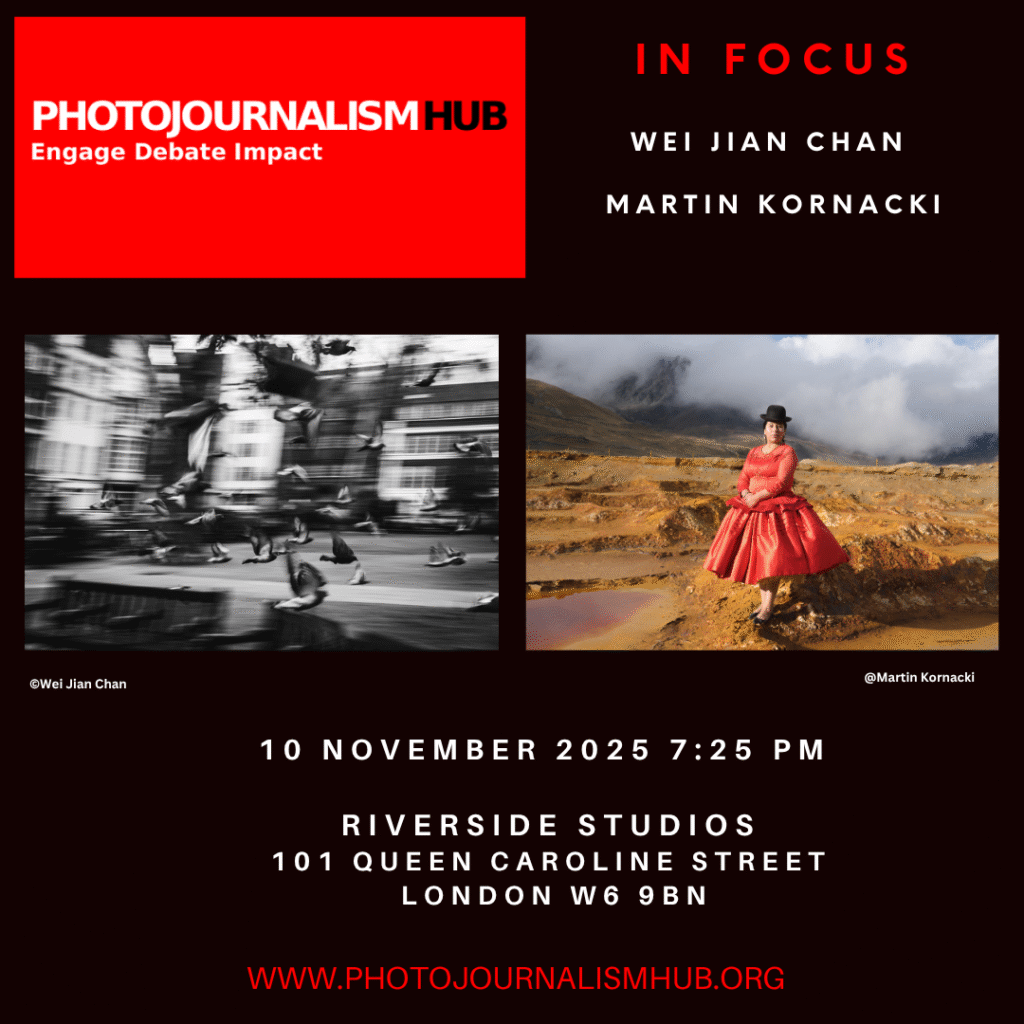
IN FOCUS: Marcin Kornacki and Wei Jian Chan


To Book a place: HERE

This edition of IN FOCUS brings together two photographers whose practices, while distinct in subject and style, both explore how history, memory, and identity shape lived experience. Marcin Kornacki’s long-term documentary projects in Haiti and Bolivia investigate the legacies of political violence and the endurance of communities in unstable landscapes. In contrast, Wei Jian Chan’s Journey to the West reflects on the personal journey of migration, using the formal language of street photography to evoke dislocation and belonging. Together, their presentations offer powerful insights into working independently in challenging environments, and into photography’s ability to bridge the political and the personal.

Marcin Kornacki
is a London-based documentary photographer and UAL Photojournalism and Documentary Photography MA graduate whose work explores memory, landscape, and the marks of collective history. His practice draws stories to the surface through close attention to place and the unpredictability of encounter. His current projects focus on sites where political violence and colonial legacies remain alive in land and memory.
His ongoing work in Haiti documents its capital Port-au-Prince as it descended into gang control, tracing the layered aftermath of revolution, foreign intervention, and daily survival, documenting both the gangs terrorising the city as well as the people enduring the conflict.
In Bolivia, he photographs the mining communities around La Paz, focusing on Milluni, site of a government-led miners’ massacre in 1965, examining how resistance and political narratives endure and develop across generations.  Grounded in sustained fieldwork and research, Martin’s photography connects personal testimony with broader historical forces. His images invite reflection on how memory is shaped, how trauma is carried, and how communities protect identity in the face of erasure.
His talk aims to focus on the practical aspects of working independently with little training and no official support in conflict zones and politically unstable regions, reflecting in particular on the mistakes he has made, and the lessons he has learnt during his most recent work in Haiti and Bolivia. 

Wei Jian Chan (b.1991) is a Singaporean-born photographer based in London, whose work seeks to find beauty in the chaos of modern life.  Wei Jian first picked up a camera at the age of 14 while growing up in Singapore. Over the years, as he moved to Oxford to attend university and to London for work, the camera has been his constant companion. In his time behind the camera, photography has grown from a pastime into a source of inspiration and a passport to new experiences.  Working primarily in black-and-white, Wei Jian utilises both traditional wet darkroom processes and modern digital techniques in his work. His work frequently incorporates elements of geometry, architecture, and motion.
Wei Jian’s photography has been exhibited in various locations in the UK and Europe, and has been acquired to form part of the permanent collection of the Kiyosato Museum of Photographic Art. His work has also been featured by numerous outlets, including The Guardian, Deutsche Welle and National Geographic.
Wei Jian will be showcasing images from his debut photobook ‘Journey to the West’, published by Setanta Books. This book features his black and white street photography, and seeks to evoke the sense of dislocation and uncertainty that Wei Jian experienced in the early years of moving from Singapore to the UK, during which he set about to integrate into a foreign culture and find his place in the world. The title ‘Journey to the West’ comes from a Ming dynasty Chinese myth about the journey of the Buddhist monk Xuanzang who travelled to the ‘Western Regions’ to obtain Buddhist sacred texts (sutras). 

The event IN FOCUS is presented by the Photojournalism Hub in collaboration with  Riverside Studios, bringing to the public compelling and thought-provoking contemporary documentary photography and photojournalism.

Masoud Amin Naji: Children of Iran

Documentary photos & text by Masoud Amin Naji
copyright Masoud Amin Naji, 2025

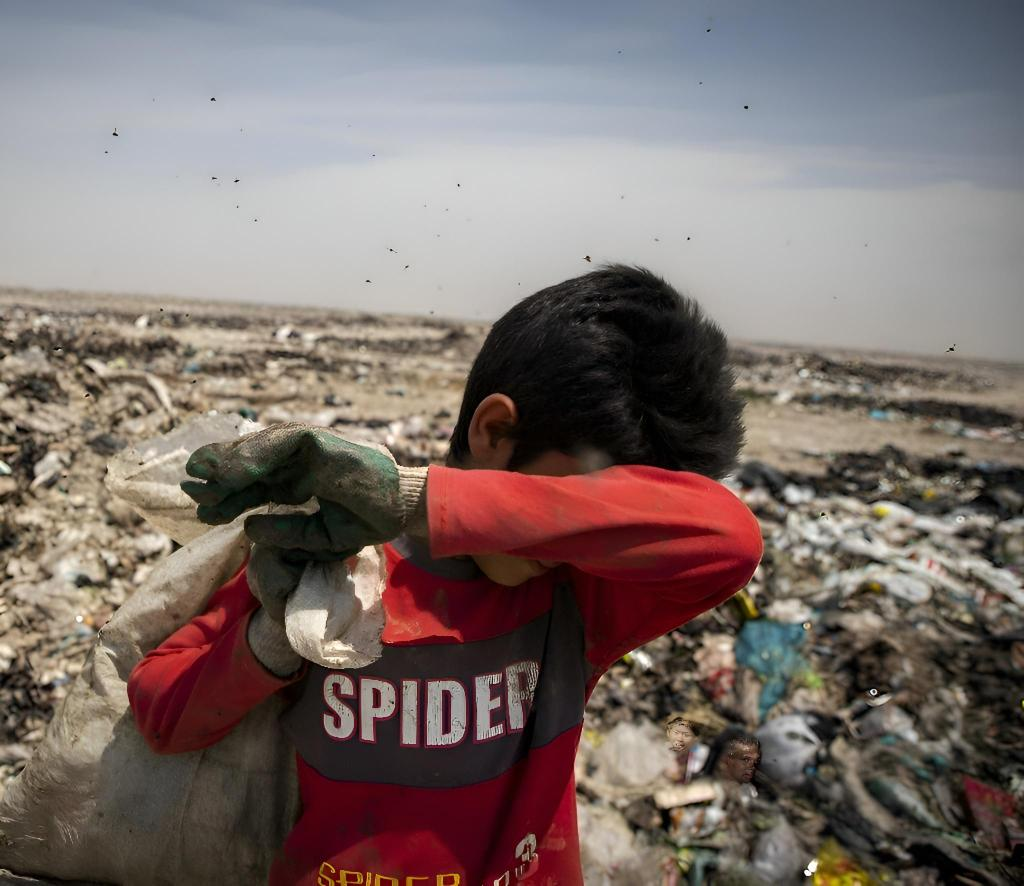
We are delighted to present Masoud Amin Naji as our featured photographer. His work documents the plight of street children in Iran, who are forced into labour due to economic hardship. Through his lens, Masoud offers a rare and powerful glimpse into a reality that is often hidden from view, as access to such stories from Iran remains extremely difficult.

“This is the Middle East. It consists of Afghanistan, Pakistan and Iran. The people here are kind and knowledgeable, but for various reasons such as tribal wars, poor economy, cultural and religious differences, they are forced to either abandon their children or use them for a living. They force children who are deprived of education, love, happiness, fun and play to do hard and tiring work. Even if they do not want to work, they are forced to work and, without wanting to, they lose a good life full of happiness, health and respect.

Maybe they can be helped to return to the normal cycle of life. There is no doubt that they are brilliant talents.
You may have heard these sentences in newspaper headlines or in films such as Bicycle Thief (Ladri di Bicicletta), but here with these documentary photos we want to talk about children whose entire childhood or perhaps their entire life is spent longing for a normal life.


After all, for what crime and mistake should the entire life and happiness of a child be ruined, this is the Middle East and such things happens a lot, let’s be together for once and work for women and children so that they can have a normal life” – Masoud Amin Naji

Photos: Masoud Amin Naji

Masoud Amin Naji
Instagram: masoudnaji682