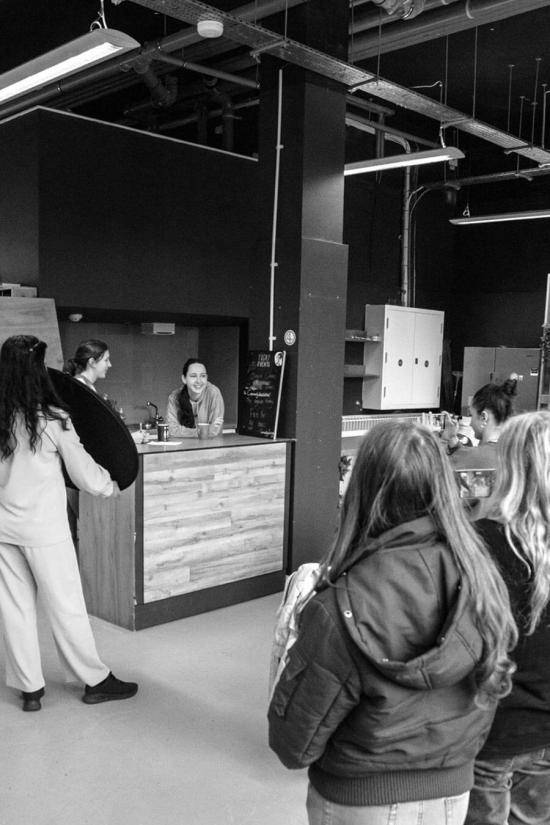
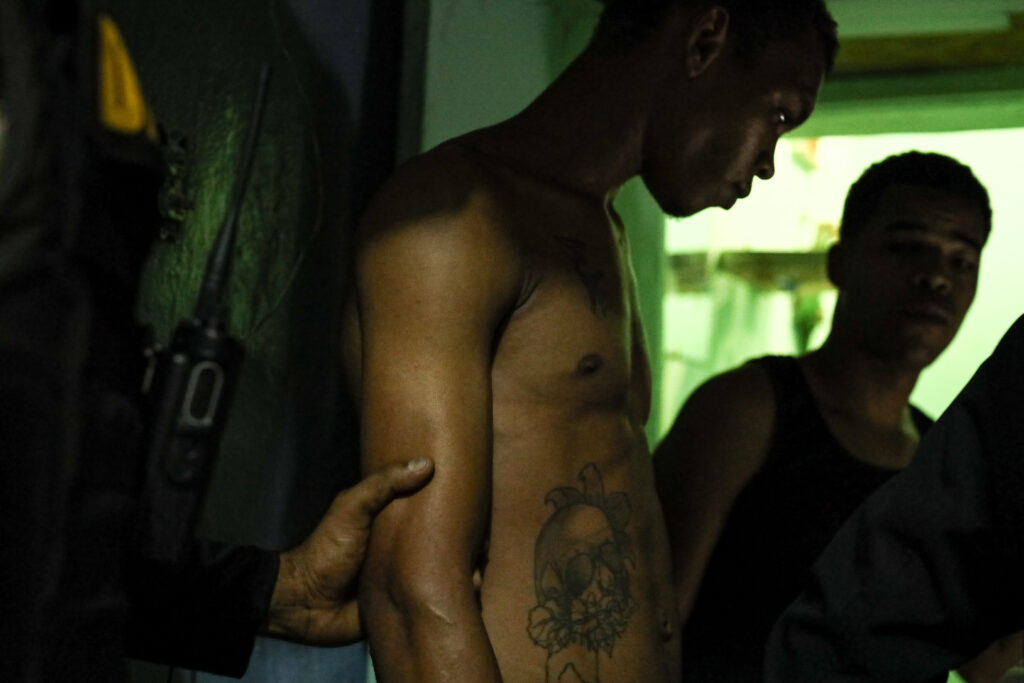
The Photojournalism Hub Calendar 2026 showcasing the incredible work of photojournalists and documentary photographers who have contributed to our mission.
Join us for a special edition of the IN FOCUS: a Photography Evening event at Riverside Studios, as part of the exhibition ‘Covid-19 & Beyond‘. The IN FOCUS features two acclaimed documentary photographers Chiara Fabbro and Ruth Toda-Nation, whose work in the exhibition explores the profound impact of the pandemic on society’s most marginalized and overlooked groups.
Chiara Fabbro is an Italian documentary photographer based in London, whose work focuses on social issues. She has worked in a variety of places, from the suburbs of Kuala Lumpur, in Malaysia, where those who have fled conflict and persecution cannot be granted refugee status and are forced into a life in limbo; to the squats in the Balkans where migrant men, women and children get stuck during their journey towards Europe; to the beaches of the Canary Islands, the destination for thousands of people who every year set off in flimsy boats from the coast of West Africa, facing what is arguably the most dangerous journey to Europe. Chiara’s work has been published in a range of print and online magazines and newspapers, such as Al Jazeera English, Balkan Insight, Altreconomia, Solomon and El Salto. She has also collaborated with several NGOs for their advocacy and fundraising campaigns. Chiara has won the 2021 Portrait of Humanity award and received an honourable mention in Photography 4 Humanity Global Prize 2020, supported by the UN Human Rights Office. In 2022 she was shortlisted for the Marilyn Stafford FotoReportage Award and she was selected for Earth Photo 2025 Award.
Between Borders: Finding Refuge in a Pandemic – Faces and feet were telling the story of a long journey – hundreds of kilometers on foot, across mountains and rivers. The fear of the push-backs at the borders, often violent and degrading, was giving way to the relief of finally reaching Italy, mixed with the uncertainty of what lay ahead. These young men travelled along the Balkan route of migration in 2020, and arrived in Trieste amidst the pandemic. Access to temporary shelters was limited due to COVID-19 measures, leaving people in transit with no choice but to sleep rough. The pandemic weighed heavily on them, as borders were tightened further and reports of push-backs increased. It also stirred negative feelings towards migrant people, with some accusing them of spreading the virus. The already unwelcoming climate towards those seeking refuge became even harsher. Yet the commitment of the volunteers from Linea d’Ombra, caring for those in transit through Trieste, created a small corner of humanity. Every night on the street, then as now, they tend to wounded feet, fill empty stomachs and replace worn-out shoes with new pairs for the road ahead.
Ruth Toda-Nation ’s photographic practice is informed by a nomadic childhood bridging two cultures, Japan and Britain. She began photographing in Liverpool in the 1980s and later in the rural areas of northern Japan. She continues to document the communities where she lives. Her intimate approach interweaves themes navigating family dynamics and community bonds while reflecting on ageing, loneliness, transience, and departure. Ruth often combines images with words drawn from interviews to amplify the voices of communities she documents allowing their stories to unfold. Her first book, Our Lockdown Garden, was published by The Mindful Editions in 2022. Her recent body of work, Love is a Life Story, received the Royal Photographic Society Documentary Photographer of the Year award in 2023, and portraits from her ongoing project 900 Yards featured in Portrait of Britain 2023.
The projects, Love is a Life Story and Our Lockdown Garden document the pandemic lockdown experience of my father John (91) and his friend and neighbour Mary (97) as residents of a retirement community and care home in Milton Keynes, UK. John and Mary’s friendship and journey through lockdown reflects many of our eldest citizens experiences as friendships replaced family. Given their age they were aware that they may never have come out of lockdown, yet their personal voices were lost amongst the incessant news bombarding us with the mortality figures of this very vulnerable group. With no requirement to test discharged patients being sent back into care from hospital, deaths in care homes rose sharply. As a result, it is estimated that a quarter of known coronavirus deaths in Great Britain took place in care homes. The invisibility of this generation— The Silent Generation—was amplified during the pandemic, and many spent their last moments alone and deprived of their loved ones. If a society’s humanity is measured by how it treats its most vulnerable members, then I can’t help asking: did we do enough?
IN FOCUS is presented by the Photojournalism Hub in collaboration with Riverside Studios, bringing to the public compelling and thought-provoking contemporary documentary photography and photojournalism.
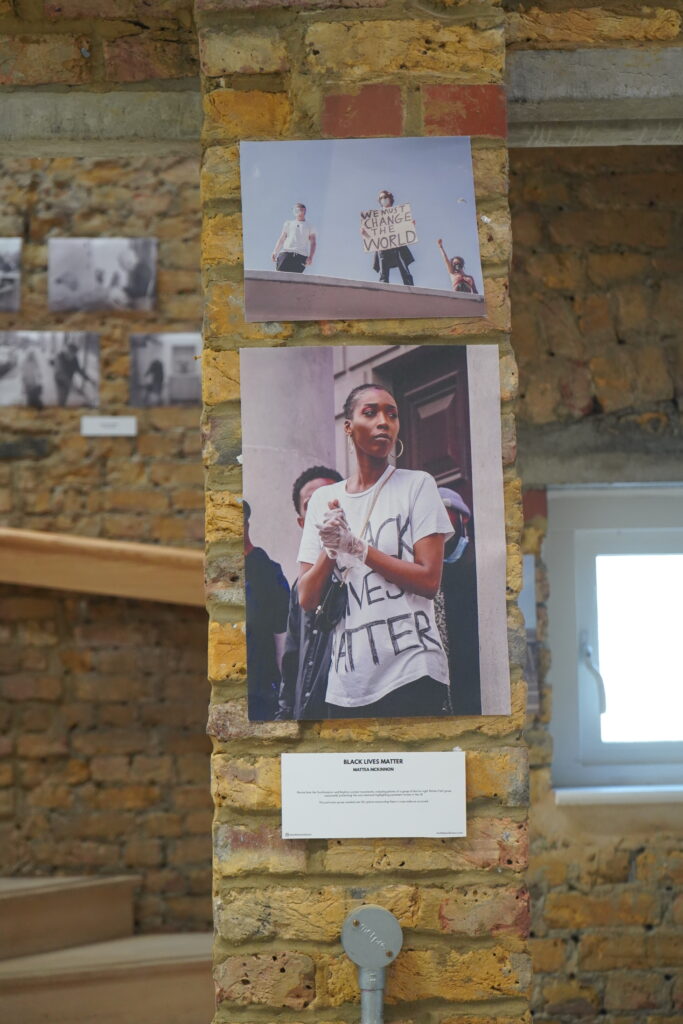
The exhibition ‘COVID-19 & Beyond’ originated from an international open call launched by Cinzia D’Ambrosi, founder and director of the Photojournalism Hub, during the peak of the pandemic. Curated by D’Ambrosi alongside assistant curator Ella Khalek, the project was designed with a specific focus on advocacy through the lens. It features the work of photographers from across the globe, including Iran, Argentina, the Republic of Congo, and the UK documenting how the crisis intensified structural inequalities and social injustices. To provide a structured narrative for these global stories, the works were categorized into three primary themes: The Front Line: Focusing on care homes and the experiences of essential workers. The Street: Documenting public movements, including Black Lives Matter protests and anti-vaccination demonstrations. The Home: Exploring domestic themes, including the impact of lockdown on gender, domestic abuse, and specific demographics such as youth and the elderly.
The COVID-19 exhibition project was a significant success, effectively merging professional photojournalism with citizen-led responses. By utilising a multi-platform approach comprising of public workshops, a live event at Riverside Studios, a physical exhibition, and a publication the project created a vital space for public reflection. The project successfully addressed the pandemic’s role as a precursor to ongoing social justice issues, including health disparities, loss of freedom of speech, and systemic inequalities. The heart of the project lay in its mission to empower those impacted by injustice whether through grief, long COVID, or social marginalisation by providing a space where their lived experiences could be heard. By merging professional photojournalism with citizen-led responses, the project moved beyond traditional observation into active participation and reflection. This was achieved through a multi-platform approach; preparatory work included collaborative public workshops at the Sulgrave Club in Shepherd’s Bush and a live ‘In Focus’ event at Riverside Studios, featuring photographers Chiara Fabbro and Ruth Toda-Nation. The exhibition was hosted at The Lodge Gallery and the Sands End Arts & Community Centre (SEACC) in Fulham from March 12–15, 2026. With over 130 attendees on the opening night alone, the event showcased the work of photographers from across the world, including Iran, Argentina, The Republic of Congo, the UK and the wider European continent and featured notable photographers, including Chiara Fabbro, Cinzia D’Ambrosi, David Gilber Wright, Angela Christofilou and Ruth Toda-Nations. To capture the community’s response, interactive feedback boards were installed with dl-sized cards to capture spontaneous public thoughts and responses to specific prompts regarding emotional impact and key takeaways.
Photo Copyright Antonio Silvestri
The exhibition contributed to community well-being and active engagement by transforming the pandemic narrative from one of isolation into a collective, creative experience. The workshops and feedback cards revealed deep-seated emotional impacts that continue to affect the public, including how social relationships have not yet returned to pre-pandemic levels of “human touch” and connection. Significant feedback was gathered regarding the trauma of loss. One notable respondent detailed her mother’s illness and death, highlighting concerns that her mother’s treatment in care was negatively impacted by racial profiling. The project established a strong crossover with the Covid-19 Bereaved Families for Justice group (part of the official COVID Inquiry), identifying a shared need for storytelling to drive political and social advocacy. The initiative successfully addressed the pandemic’s role as a precursor to ongoing social justice issues, including health disparities, loss of freedom of speech, and systemic inequalities. It comprehended various events and activities, including Collaborative Public Workshops integrating public voices with professional photographers hosted at the Sulgrave Club in Shepherds Bush during the month of February. In Focus photography event at Riverside Studios in Hammersmith featuring photographers Chiara Fabbro and Ruth Toda-Nation presenting their poignant photography work followed by Q&As.
The project’s legacy is preserved in the ‘COVID-19 & Beyond’ photobook, available in both print and digital formats.
Photo Copyright Antonio Silvestri
Selected media & press coverage:
The Londonist: Featured as a ‘top place to go’ in London. PAN (Photo Archive News): National agency writes an article featuring the exhibition. Art Rabbit: Prominent listing on this specialist photography and arts platform. Local Government: The Hammersmith & Fulham Council published articles and interview with Cinzia D’Ambrosi supporting the project during its development. Photojournalism Hub Journal:Injustices & Inequalities: Covid-19 Photojournalism Hub: Exhibition ‘Covid-19 & Beyond’ No26.com Article The Truth behind the masks Covid-19 & Beyond exhibition opens in London
Outlook and future steps
The COVID-19 & Beyond exhibition stands as a primary visual and research study for our core mission: bridging the gap between professional photojournalism and the lived experiences of the community. It has made a significant impact on arts, culture, and heritage by transforming a global health crisis into a documented cultural legacy. It moved beyond the traditional “news cycle” to create a permanent, artistic record of the pandemic’s social consequences. We believe that reporting should not be something done to a community, but with them. By integrating our ‘Citizen Photojournalism’ program alongside professional work, we move beyond mere observation into active participation. By documenting health disparities, widening inequalities, and the increasing threats to freedom of speech, this exhibition functions as both a visual archive and a movement for social justice. We provide a platform for those the system has historically overlooked from the elderly in care homes to refugees on the Balkan route capturing the human stories that data-driven reporting often misses. We do not view this exhibition as a closed event, but as an ongoing conversation. We will continue to speak to and with the public through images. We will use the momentum from our photobook and digital reach to keep these social justice themes in the public eye. This is not a closed event, but an ongoing conversation. We are committed to using the momentum from our photobook and digital reach to keep these themes in the public eye. We remain dedicated to providing local and global photographers with the visibility needed to challenge the status quo and inspire tangible change. “This exhibition serves to highlight and advocate for a deeper understanding of the widening inequalities impacting communities globally. By uniting people through the power of visual storytelling, we have created a vital channel for voices that often go unheard. Advocacy is the catalyst for both understanding and systemic change; to that end, we remain committed to documenting the ongoing stories of COVID-19 and its lasting impact on social justice. Our mission is to foster the growth of “Citizen Photojournalism, a movement dedicated to making media more democratic, accessible, and authentically rooted in news from the ground up.” – Cinzia, Photojournalism Hub director and founder.
Photojournalism Hub presents ‘COVID-19 and Beyond’, a landmark photography exhibition exploring the lasting legacy of the pandemic.
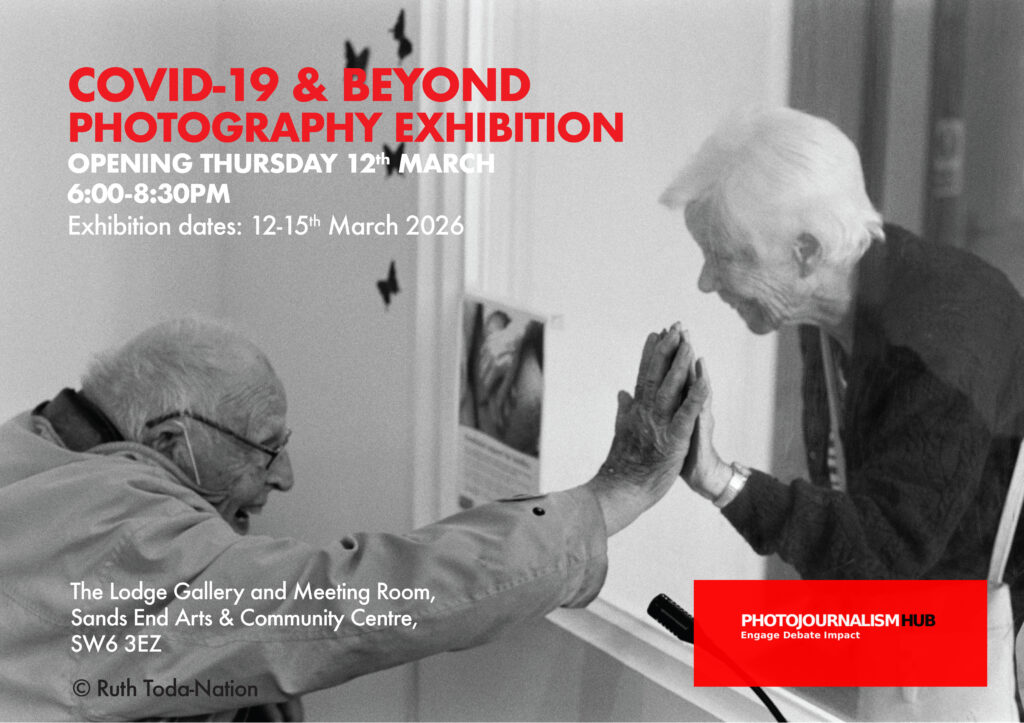
DATES: 12–15 March 2026 The Lodge Gallery and the Meeting Room Sands End Arts & Community Centre London SW8
Photojournalism Hub is delighted to present COVID-19 & Beyond, a powerful photography exhibition that reflects on one of the most pivotal moments in recent history and the profound, lasting consequences that continue to shape our world today. Emerging from an international Open Call launched by the Photojournalism Hub’s director Cinzia D’Ambrosi, during the height of the COVID–19 pandemic, this exhibition marks the first time this body of work is brought together in a public, physical space. It is both a long-awaited and necessary moment. COVID–19 & Beyond brings together a compelling body of work by photographers who documented lived realities and bore witness to how the pandemic did not affect everyone equally, but instead exposed and intensified existing injustices and structural inequalities locally in London and globally. COVID–19 marked a shared global crisis, however, its impact was deeply unequal. Marginalised communities faced disproportionate risks, losses, and restrictions, whilst long standing issues around housing, immigration, race, women’s rights, access to healthcare, mental health, and freedom of expression were further entrenched. For many, the repercussions are still felt today physically, emotionally, economically, and politically. Through photography, personal testimonies and reflections, COVID–19 & Beyond amplifies voices that were too often excluded from dominant pandemic narratives. The exhibition not only looks back at an extraordinary and traumatic period, but also asks urgent questions about the present and the future: Where are we now? What has changed? What has been normalised? And where are we heading?
“The pandemic acted as a catalyst accelerating social change, widening inequality, and reshaping our relationship with power, rights, and accountability,” says Director and Curator Cinzia D’Ambrosi. “In many ways, it forced humanity to confront its own fragility, marking a moment when collective survival, dignity, and justice were fundamentally challenged. Yet many questions remain unanswered. The struggle did not end when lockdowns were lifted.”
COVID-19 & Beyond is more than an exhibition. Curated by Cinzia D’Ambrosi in collaboration with Ella Khalek, the exhibition combines visual responses from community workshops and a research-led online journal to foster deeper understanding, collective reflection, and long-term impact. The exhibition also strongly demonstrates the Photojournalism Hub’s ongoing work in using documentary photography as a means to sustain dialogue, research, and creative engagement around social injustice and inequality.
Exhibiting photographers: Aidan Brooks, Angela Christofilou, Barbara Traver, Chiara Fabbro, Cinzia D’Ambrosi, David Gilbert Wright, Erhan Us, Erica Dezonne, Flaviana Frascogna, Gemma Mancinelli, Joanna Olivia Fountain, Kasangati Godelive, Krzysztof Maniocha, Mattea McKinnon, Nic Madge, Omur Ozkoyuncu, Rueda Photos (Daiana Valencia and Celeste Alonso), Ruth Toda-Nation, Sabrina Merolla, Sebastian Ambrossio, Thabo Jaiyesimi, Valeria Luongo.
Curators Curator: Cinzia D’Ambrosi Curatorial Assistant: Ella Khalek
About the Photojournalism Hub The Photojournalism Hub is a west London-based Community Interest Company (CIC) dedicated to using documentary photography as a tool for social change. By providing training, research, and a platform for sharing independent, courageous and powerful photojournalism and documentary photography, the Hub advocates for human rights and social justice.
About the CuratorCinzia D’Ambrosi is a multi award-winning documentary photographer and the founder of the Photojournalism Hub. Her work focuses on state violence, migration, and structural inequality. She has been widely published and exhibited internationally, focusing on photography’s power to drive social change.
High-Resolution Images A selection of high-resolution images from the exhibition is available for media use upon request. To request images or an interview with the curator or featured photographers, please contact cinzia@photojournalismhub.org.
IN FOCUS is an event series by the Photojournalism Hub in collaboration with Riverside Studios that presents committed, independent contemporary documentary photography. This edition brings together two visual storytellers whose practices engage deeply with questions of identity, migration, memory, and place. Through distinct yet complementary approaches, Citlali Fabián and Jai Toor use photography to navigate personal and collective histories, examining how images can hold lived experience, cultural inheritance, and emotional truth. Their work moves between documentation and imagination, reflecting on displacement, diaspora, and the meaning of home across generations and geographies.
Citlali Fabian A Yalalteca (indigenous from Mexico) visual storyteller. She uses photography to explore ways of addressing identity and its connections with territory, migration, and community bonds. Fabián is a 2024 BERTHA FOUNDATION Grantee, 2021 Photography and Social Justice Magnum fellow, a National Geographic Society explorer, with the project “I’m from Yalalag, a photo essay to explore the development of our Zapotec identity.” In 2021, she was awarded by the Art Council of England with a Develop Creative Practice Grant. In 2023 World Press Photo Contest Regional Jury. A 2020 Visura mentee. She was also named one of the Discoveries of the Meeting Place of FotoFest 2018 Biennale. Her work has been shown in solo and collective exhibitions in Mexico, USA, Spain, and Argentina. Her work has been covered at The New York Times. And also has been appeared in different media like The LA Times, The Guardian, Buzzfeed, Remezcla, Revista Cuartoscuro, and IM Magazine among others. Her Mestiza series was selected as one of the New York Times Lens blog’s “13 Stories That Captured Photography in 2018” and as part of “10 Years of Photography, and Lens”. She is also a member of Women Photograph and Indigenous Photograph collectives. Her work is part of the INBA/Toledo Collection, the Museum of Contemporary Photography of Chicago, and the Wittliff Collections at Texas State University.
Jai Toor (b. 1998) is a British-Indian photographer and artist based in the UK. His practice explores the interplay of diaspora and fantasy within the fabric of everyday surroundings. Working across documentary, fashion, and music, Toor employs a multifaceted approach that integrates research, analogue processes, text, and archival photographs to construct layered visual narratives. Jai Toor’s practice centres around long-form photographic projects that often begin close to home — both literally and emotionally, before expanding outward. As someone who has lived across India and the UK, in many different homes, I’ve never felt a singular sense of place. This transient experience of “home” underpins much of my work, where themes of diaspora, migration, family, loss, and identity recur. He is particularly drawn to overlooked stories, fragments of personal or collective memory that might otherwise go undocumented. Photography, for me, is a way of capturing both presence and absence; a medium that can preserve histories, confront traumas, and evoke longing. He works across documentary, fashion, and music, but his approach remains consistent: research-led and open to intuition. His projects often begin with reading, writing, and conversations, forming a kind of text-based map that guides me visually. I draw from national archives, interviews, and everyday encounters, weaving together photographs, text, and found materials. He uses analogue and digital photography interchangeably, but shooting on film allows him to slow down and connect more intentionally with the people and places he documents. He sees his work as semi-fictional, a space where documentation, re-imagination, and emotional truth coexist. He leans into ambiguity, allowing the viewer to enter the work without a fixed outcome, but with enough guidance to feel immersed. Collaboration is essential to this process: He often enters personal or communal spaces where trust, exchange, and shared authorship become part of the narrative. Ultimately, he is interested in how photography can hold contradictions, between fact and feeling, history and fantasy, familiarity and displacement, and in how storytelling can honour both the known and the unknowable.
IN FOCUS is presented by the Photojournalism Hub in collaboration with Riverside Studios, bringing to the public compelling and thought-provoking contemporary documentary photography and photojournalism.
New exhibition set to explore the hidden inequalities exposed by the Covid pandemic. You can help make it happen!
The borough’s local Photojournalism Hub is inviting you to support its new exhibition and workshops, entitled: Covid-19 and Beyond. It is due to open in Fulham once the hub has raised enough funding – details below on how you can support.
The new exhibition and workshop series aims to give a voice to those most affected by Covid, said Cinzia D’Ambrosi, the hub’s founder and a multi-award-winning photojournalist.
Raised in Italy, Cinzia has dedicated her career to using photography for social change. Her work has earned international recognition, including the Spiga d’Argento from FIDAPA (Italy), awarded for promoting peace through photojournalism and documentary photography.
The hub is one of many community-led groups that receive financial support from Hammersmith & Fulham Council as part of our commitment to building a stronger, safer and kinder borough.
Inequalities
“The pandemic exposed deep inequalities that many people still live with every day,” said Cinzia. “Through this exhibition, we want to give those affected a platform – and start a conversation that leads to real change.”
It features striking images and personal testimonies gathered during the pandemic, shining a light on issues such as housing, race, immigration status, women’s rights and mental health. It also hopes to address the deepened and long-standing divides, widening inequalities, and the curbing of freedoms such as freedom of speech that have arisen from the pandemic. The free community workshops will invite residents to share their own stories, said Cinzia, while schools will take part in guided tours. Meanwhile, panel discussions will bring together experts and local voices to keep the conversation alive. She said: “This project is about helping people in ways that count. And empowering under-represented voices in our communities and encouraging a shared understanding. By creating a platform for dialogue, we hope to strengthen community ties and inspire change.”
Founder of Photojournalism Hub, Cinzia D’Ambrosi
Impact
The Photojournalism Hub has a proven track record of telling powerful stories in H&F. It’s done this through two free documentary photography courses for residents. These were initially funded by the NHS and delivered in partnership with H&F Council which saw more than 60 young people learn photography, how to build portfolios, and publish their work in print and online. Some of these young people have gone on to study photography at university, while others have secured paid roles, including photographing major events like The Great Exhibition Road Festival. Cinzia says the hub empowers people to tell their own stories: “Through workshops, mentoring, and our community photography magazines, we give space to local voices. It’s about democratic storytelling – where residents shape the narrative.” Beyond its local work, the Photojournalism Hub also collaborates globally, sharing powerful stories through events like the In Focus series at Riverside Studios. She added that the hub also acts as historical archive, with many photographs and testimonies submitted during the pandemic – forming a unique record of lived experience. “Above all, I want the Hub to be a space where stories take shape and inspire positive action. Photojournalism can build real bridges between communities, perspectives, and lived experiences,” says Cinzia. “It gives people the tools to document real stories, challenge mainstream narratives, and spark meaningful dialogue.”
Students taking their photography course
The journey begins with selecting the final photographs and stories from an open call. This campaign is part of H&F Council’s wider support for community-led projects that make our borough a better place for everyone. Please support the campaign on Spacehive. Support ‘Covid-19 and beyond’
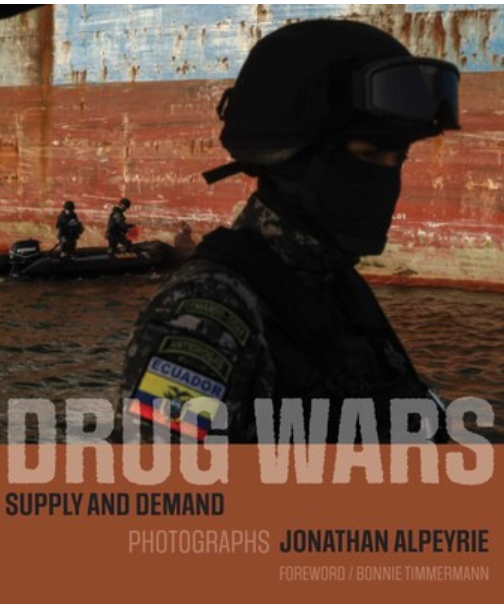
In this interview with Cinzia D’Ambrosi, founder and director of the Photojournalism Hub, photojournalist Jonathan Alpeyrie reflects on his years documenting some of the world’s most dangerous conflicts and his latest investigation into the drug wars. Known for his immersive, on-the-ground approach and his ability to reveal the human stories behind global struggles, Alpeyrie discusses why he felt compelled to take on one of the most dangerous and underreported subjects in contemporary journalism. The interview offers a rare insight into the risks and deep commitment that underpin Alpeyrie’s work as he brings visibility to stories often hidden from the public eye.
The drug trade is a notoriously difficult and dangerous subject to cover, with limited access and huge personal risk. What drew you to this topic, and why did you feel it was important to take on, despite the danger?
The drug trade is an incredibly difficult and dangerous subject to cover — access is limited, the environment is unpredictable, and the personal risks are significant — but I felt compelled to take it on. What drew me to this topic was the hidden human cost behind the headlines: the communities trapped between cartels and law enforcement, the young men pushed into cycles of violence, and the corruption that quietly shapes daily life. Having spent much of my career documenting conflict, I saw the drug war as a global struggle that is often misunderstood or overlooked, yet profoundly consequential. Despite the danger, I believed it was essential to capture these realities from the ground, to show people what this conflict truly looks like and how deeply it affects those who live within it.
It is also not a subject that is widely published or visually documented, at least not at this level of intimacy. Did that sense of underexposure influence your decision to pursue it?
the lack of visual documentation was a major factor in my decision to pursue this project. For a conflict as far-reaching and destructive as the drug war, I’ve always been struck by how little intimate, on-the-ground imagery exists. Most coverage stays at the surface, focusing on sensational moments rather than the human reality beneath them. That sense of underexposure pushed me to go deeper, to gain access to places and people rarely seen, and to document the everyday rhythms of a war that is often invisible to the outside world. I felt there was a gap that needed to be filled — not for shock value, but to give context, nuance, and humanity to a subject that affects millions yet remains largely hidden.
Your career has taken you into war zones and conflict areas around the world, including your experience of captivity during the Syrian Civil War. What drives you to choose these extremely challenging, often high-risk stories?
What drives me toward extremely challenging and high-risk stories is a combination of curiosity, responsibility, and a belief that certain realities demand to be documented, no matter the difficulty. Throughout my career — whether covering conventional wars or navigating the criminal conflicts of the drug trade — I’ve been drawn to places where the human experience is laid bare. My captivity in Syria only deepened that conviction. It reminded me how fragile life is, but also how important it is to shed light on the people living through these circumstances every day, without the option to leave. I choose these stories because they matter, because they shape the world in ways most people never see, and because I feel a duty to bring those unseen truths to the forefront with honesty and respect.
Do you see a thread that connects your past conflict coverage with this investigation into the drug wars? Is there a continuity in the types of human conflict you are drawn to document?
You are known for deeply immersing yourself in the environments you photograph. What role does immersion play in your work, and how does it shape the stories you can tell?
Yes, there is absolutely a thread connecting my past conflict coverage with my work on the drug wars. Whether I’m documenting a front line in a conventional war or following law-enforcement units and criminal groups in the midst of the drug trade, I’m ultimately drawn to the same fundamental human dynamics: power, fear, survival, and the way ordinary people are caught in forces far bigger than themselves. The drug war may not look like a traditional battlefield, but its impact is just as devastating and its structures of violence are just as complex. For me, the continuity lies in exploring how societies fracture under pressure, how individuals navigate danger, and how these conflicts shape communities in lasting ways. The settings change, but the human stories — the ones that reveal resilience, suffering, and moral ambiguity — are what consistently pull me in.
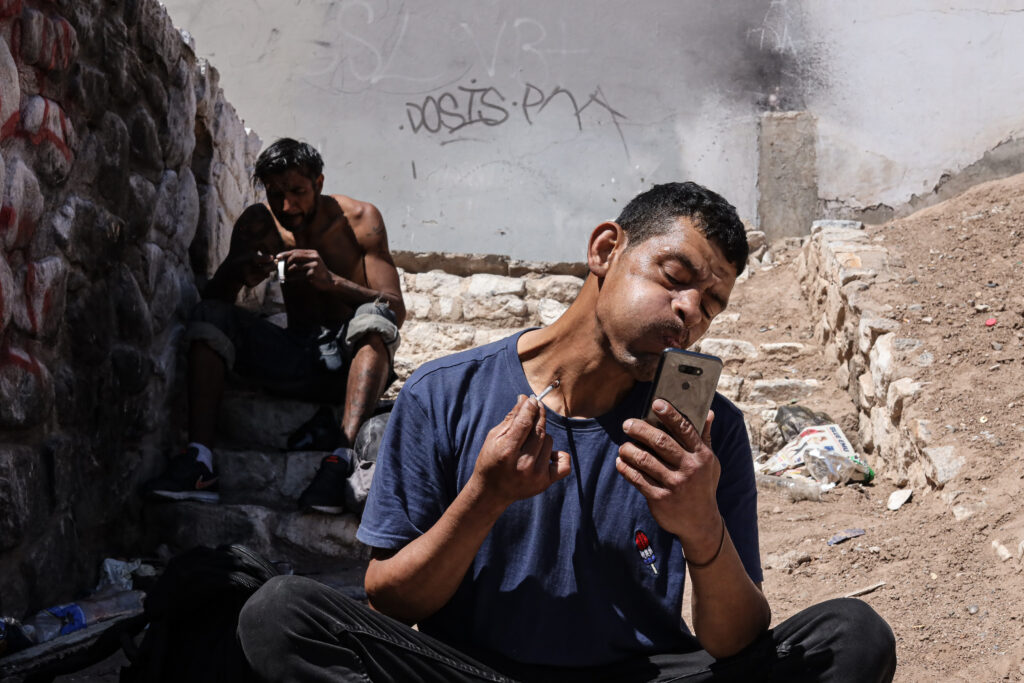
With the ongoing drug war tearing apart Mexico, it’s Northern border with the USA has been for decades now a strategic location in order to pass drugs and migrants into the USA, making the area a highly lucrative spot in Mexicali, Baja California , Mexico, March 28, 2023. In recent years, Mexico has seen an intense rise in drug consumption within its population group, which is a new phenomenon as Mexicans were not known for drug use. Photographer: Jonathan Alpeyrie
To capture what you did for this book, you clearly needed extraordinary levels of access. How did you build trust, navigate hostile environments, and gain proximity to people and places that are usually closed off to outsiders?
Gaining the level of access required for this book was a slow, deliberate process built on trust, patience, and a deep respect for the people allowing me into their world. I’ve spent more than two decades working in hostile environments, and over time I’ve learned that the only real currency in these situations is credibility. I approach everyone — whether law-enforcement officers, community members, or individuals connected to the drug trade — with honesty about who I am, what I’m doing, and why I’m there. I never rush access, and I never pretend to understand their reality better than they do. Bit by bit, that openness creates space for genuine relationships. Navigating dangerous environments requires vigilance, humility, and a willingness to disappear into the background when necessary. I make myself unobtrusive, follow local rhythms, and rely heavily on the trust of people who know the terrain far better than I ever could. In many cases, it was the respect I showed for their work and their risks that allowed me to get close to situations normally closed off to outsiders. Ultimately, the access came from demonstrating that I was there to observe truthfully and responsibly — not to sensationalize, but to document a world most people never see.
Was there a particular encounter or story from this project that stayed with you?
One encounter that has stayed with me was a long night spent with a small group of local residents who lived directly between rival criminal factions. They weren’t police, traffickers, or soldiers — just ordinary people trying to survive in the middle of a conflict that had nothing to do with them. Listening to them talk about their routines, their fears, and the small strategies they used to keep their families safe was incredibly powerful. It reminded me that behind every headline or statistic, there are real lives shaped by forces they can’t control. That night underscored why I took on this project in the first place: to show that the drug war isn’t an abstract issue, but a daily reality for countless people whose stories rarely make it into the public eye. That human element stayed with me long after I left.
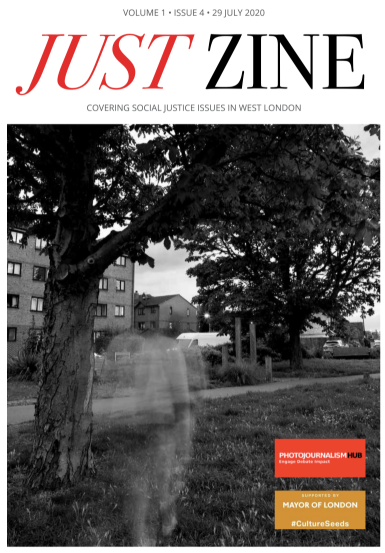
In this issue of ‘Just Zine’, we focus on domestic abuse, a deeply important and urgent issue affecting countless lives. The Covid-19 global outbreak and subsequent lockdown measures have left many women and men in vulnerable situations, some in dire need of support yet unable to reach out or be reached. Understanding the scale of this crisis continues to challenge governments, charities, and communities alike. Choosing to focus on domestic abuse was not an easy editorial decision.
The issue is complex, with many forms and dimensions of violence and control. As an editorial team, we do not claim to have all the answers, nor the ability to cover every aspect. However, through this issue, we offer a space for reflection, awareness, and empathy. Recognising and understanding the scale of this problem is itself a vital step forward. This issue of Just Zine stands as a remarkable testament to the commitment, sensitivity, and talent of our young team. Among its diverse and powerful content, you will find articles and photo stories exploring honour-based abuse, and experiences of both male and female survivors of violence. We also feature interviews with Marco Groves, CEO of the National Centre for Domestic Abuse, and poet Sir Troy Cabida.
The visual work in this issue spans from compelling photography of the Trans Rights protests in London to the deeply moving photo story “Missed Opportunities,” capturing a chance encounter with a victim of abuse. Additionally, we include children’s experiences of lockdown, creatively presented by two of our youngest contributors. Through their words and images, the contributors of Just Zine continue to raise awareness, spark dialogue, and inspire change.
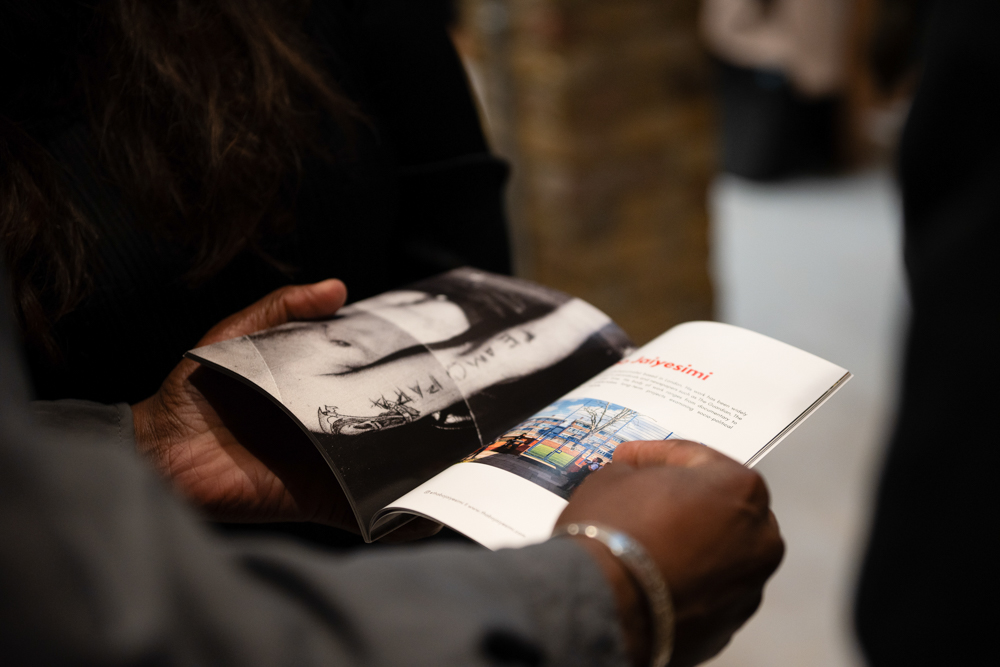
Proceeds from the sale of the Photojournalism Hub 2026 Just Zine will fund bursaries for portfolio reviews for young disadvantaged photographers and a grant supporting the development of an emerging photographer’s photojournalism project.
The Photojournalism Hub in partnership with the Sulgrave Youth Club is offering a unique free documentary photography and photojournalism course for young people as part of the celebrations marking Sulgrave Youth Club’s 100th anniversary. The project is free for young people to join and it is part of the celebrations leading up to the 100th anniversary of the Sulgrave Youth Club.
We are looking for passionate local young people aged 16–30 who dream of building a career in media or the creative industries and want to gain hands-on experience in documentary photography, video, and sound recording.
The programme unfolds in three dynamic phases, offering
– Practical training in documentary photography and visual storytelling – One-to-one mentorship – Specialist sessions in exhibition curation and public presentation
Participants will be offered the opportunity to see their work published and showcased online, in print, and at the Sulgrave’s Centenary Exhibition!
By the end of the course, participants will have developed a strong portfolio, professional experience, and an enhanced CV opening doors to exciting pathways in photography, journalism, and the wider creative sector.
November – January: Photography and Video Workshops
January – June: One to one mentorship with project review and presentation Curatorial workshop (Date to be confirmed)
June – August Exhibition and post exhibition involvement in the various aspects learning how to present and manage an exhibition. There will also be opportunities to be hired as photographers during the three days Sulgrave Centenary event in June 2026.
Facilitators Workshops will be delivered by Cinzia D’Ambrosi, founder and director of Photojournalism Hub and an experienced photojournalist, with support from guest photographers and video professionals.
Why join? This is your chance to gain professional level experience, build your creative skills, and be part of a large public event.
The project is kindly supported by the King Charles III Coronation Youth Fund:
Shadow Photography Project Coordinator‘Lens on a Century’
Project: Lens on a Century – Documentary Photography Workshops & Exhibition Organisation: Photojournalism Hub Location: Sulgrave Youth Club, 287 Goldhawk Rd, London W12 8EULondon Rate: £13 per hour Eligibility: Young people aged 18–25 Contract: Freelance, project-based (flexible hours)
About the Role We are seeking a motivated young person to join the Photojournalism Hub as a Shadow Project Coordinator. This is a learning-focused role designed to support the delivery of ‘Lens on a Century’ photojournalism and documentary photography project, which includes documentary photography workshops and a public exhibition celebrating the Sulgrave Youth Club’s 100-year history and community impact. The successful candidate will shadow the Project Lead (Cinzia D’Ambrosi) and gain hands-on experience in coordinating and supporting a community-based photography project. This role is particularly suitable for someone interested in photography, community engagement, or cultural production, and who would benefit from close mentoring and practical experience.
Key Responsibilities Under guidance and supervision, the Shadow Project Coordinator will support: The planning and delivery of documentary photography workshops Assisting in coordinating activities with the participants of Lens on a Century project. Basic project administration (emails, notes, timelines, documentation) Assisting with evaluation and reflective learning from the project Supporting exhibition preparation
What You will Gain Direct mentoring from an experienced documentary photographer and project director Practical experience in delivering a community-focused cultural project Insight into exhibition production and public engagement Skills in coordination, communication, and arts project delivery A supportive environment that values lived experience, creativity, and learning
Who We are Looking For Aged 18–25 Based in Hammersmith & Fulham Interest in photography, arts or community projects Good communication skills and a willingness to learn Reliable, organised
Desirable An interest in documentary photography or visual storytellingLived experience of barriers to access in arts, culture, or educationWe particularly encourage applications from young people who are underrepresented in the cultural sector.
Support & Accessibility We are committed to making this role accessible. Adjustments and support can be discussed to ensure the role is inclusive and responsive to individual needs.
How to Apply To apply, please email us at admin@photojournalismhub.org with: Your name, age, and your London postcode. A few lines telling us why you would like to apply for this role and a CV.
We are much more interested in your interest, and motivation than in formal experience. There is no requirement to have worked on similar projects before.
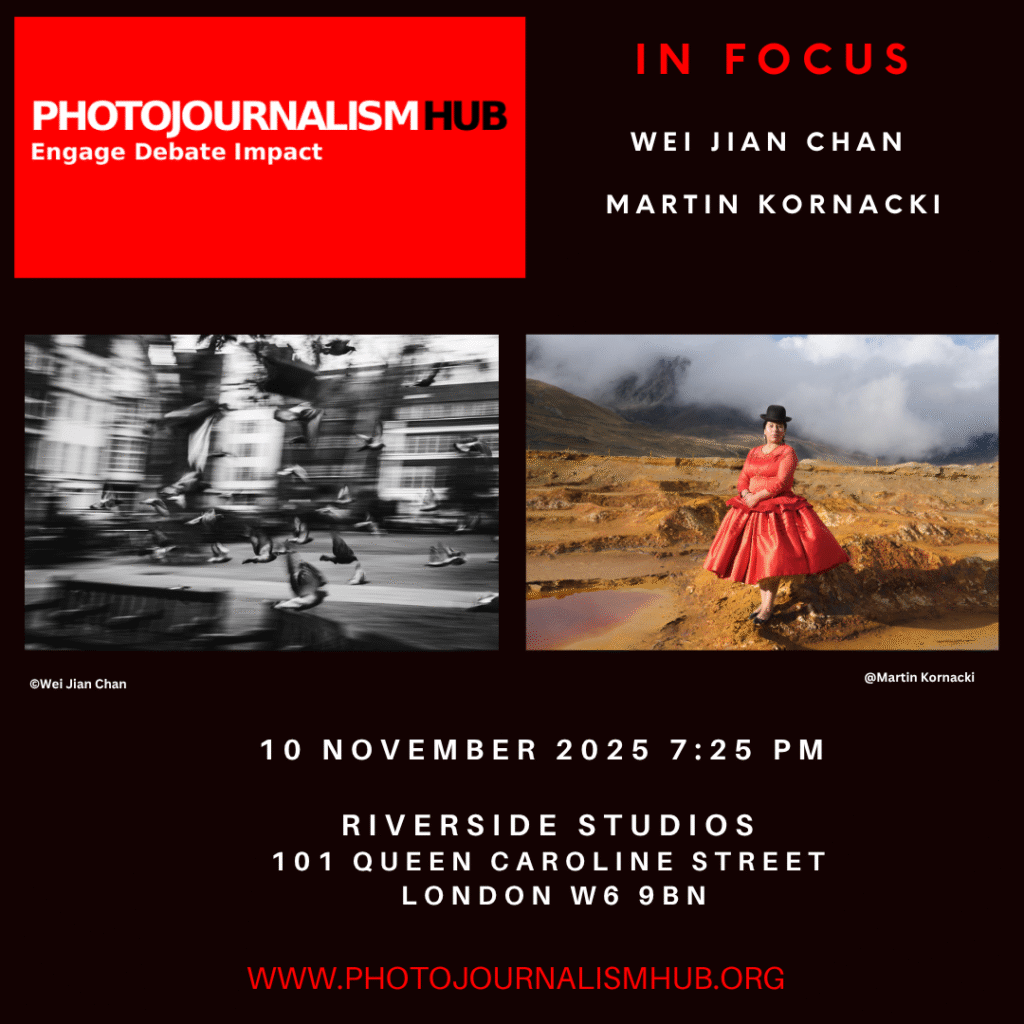
This edition of IN FOCUS brings together two photographers whose practices, while distinct in subject and style, both explore how history, memory, and identity shape lived experience. Marcin Kornacki’s long-term documentary projects in Haiti and Bolivia investigate the legacies of political violence and the endurance of communities in unstable landscapes. In contrast, Wei Jian Chan’s Journey to the West reflects on the personal journey of migration, using the formal language of street photography to evoke dislocation and belonging. Together, their presentations offer powerful insights into working independently in challenging environments, and into photography’s ability to bridge the political and the personal.
Marcin Kornacki is a London-based documentary photographer and UAL Photojournalism and Documentary Photography MA graduate whose work explores memory, landscape, and the marks of collective history. His practice draws stories to the surface through close attention to place and the unpredictability of encounter. His current projects focus on sites where political violence and colonial legacies remain alive in land and memory. His ongoing work in Haiti documents its capital Port-au-Prince as it descended into gang control, tracing the layered aftermath of revolution, foreign intervention, and daily survival, documenting both the gangs terrorising the city as well as the people enduring the conflict. In Bolivia, he photographs the mining communities around La Paz, focusing on Milluni, site of a government-led miners’ massacre in 1965, examining how resistance and political narratives endure and develop across generations. Grounded in sustained fieldwork and research, Martin’s photography connects personal testimony with broader historical forces. His images invite reflection on how memory is shaped, how trauma is carried, and how communities protect identity in the face of erasure. His talk aims to focus on the practical aspects of working independently with little training and no official support in conflict zones and politically unstable regions, reflecting in particular on the mistakes he has made, and the lessons he has learnt during his most recent work in Haiti and Bolivia.
Wei Jian Chan (b.1991) is a Singaporean-born photographer based in London, whose work seeks to find beauty in the chaos of modern life. Wei Jian first picked up a camera at the age of 14 while growing up in Singapore. Over the years, as he moved to Oxford to attend university and to London for work, the camera has been his constant companion. In his time behind the camera, photography has grown from a pastime into a source of inspiration and a passport to new experiences. Working primarily in black-and-white, Wei Jian utilises both traditional wet darkroom processes and modern digital techniques in his work. His work frequently incorporates elements of geometry, architecture, and motion. Wei Jian’s photography has been exhibited in various locations in the UK and Europe, and has been acquired to form part of the permanent collection of the Kiyosato Museum of Photographic Art. His work has also been featured by numerous outlets, including The Guardian, Deutsche Welle and National Geographic. Wei Jian will be showcasing images from his debut photobook ‘Journey to the West’, published by Setanta Books. This book features his black and white street photography, and seeks to evoke the sense of dislocation and uncertainty that Wei Jian experienced in the early years of moving from Singapore to the UK, during which he set about to integrate into a foreign culture and find his place in the world. The title ‘Journey to the West’ comes from a Ming dynasty Chinese myth about the journey of the Buddhist monk Xuanzang who travelled to the ‘Western Regions’ to obtain Buddhist sacred texts (sutras).
The event IN FOCUS is presented by the Photojournalism Hub in collaboration with Riverside Studios, bringing to the public compelling and thought-provoking contemporary documentary photography and photojournalism.
Between Gaza and Naples. A Childhood Story by Mahmoud Abu Al-Qaraya and Tylerdurdan is born from the encounter of two free voices coming from distant worlds, yet united by the same urgency to bear witness. On one side, Mahmoud Abu Al-Qaraya, a 29-year-old photographer from Gaza, who after years of hard work and recognition saw his career and his life shattered by war: his family displaced four times, the loss of his camera — his only working tool — and a daily struggle against hunger, disease, and constant bombardment. On the other side, Raffaele Annunziata, a Neapolitan photographer and artist known as tylerdurdan*, who for over a decade has combined music, images, and words as a form of cultural resistance, with the aim of denouncing injustice and restoring centrality to what makes us human. Together, they have chosen to tell — through parallel photographs — the everyday life of two little girls, one in Naples and the other in Gaza.
Soso – Gaza, 2025
Between Naples and Gaza. A Childhood Story Two distant cities, one childhood to defend.
Dede – Naples, 2025
Scenes that appear simple elsewhere (playing, going to school, having breakfast) become almost impossible under siege. Between Naples and Gaza. A Childhood Story is not only a photographic project, but a narrative and ethical bridge: to give voice to those at risk of being silenced, reminding the world that childhood is a universal right. The project also supports the campaign “Mahmoud Loves Photography, Family & Life ”, a concrete appeal to help Mahmoud and his family rebuild their life and his work as a photographer.
Wake up in NaplesWake up in Gaza
On the way to school in NaplesOn the way to school in Gaza
Between Gaza and Naples. A Childhood Story is a project bringing together two perspectives: Raffaele Annunziata (tylerdurdan), an artist from Naples, and Mahmoud Abu Al-Qaraya, a photographer from Gaza. Through parallel images, we tell childhood in two distant worlds, to remind the world that childhood is a universal right.
Soso and her friend, barefoot, play by gently touching each other and laughing. For a moment, there is nothing but joy. Dede runs and laughs with her friends, her world filled only with games and joy.
Mahmoud Abu Al-Qaraya Together, they have chosen to tell — through parallel photographs — the everyday life of two little girls, one in Naples and the other in Gaza. Scenes that appear simple elsewhere (playing, going to school, sleeping) become almost impossible under siege. Between Naples and Gaza. A Childhood Story is not only a photographic project, but a narrative and ethical bridge: to give voice to those at risk of being silenced, reminding the world that childhood is a universal right.
Mahmoud Abu Al-Qaraya is a 29-year-old photographer and online trader from Gaza, whose life has been marked by passion, tragedy, and resilience. Before the aggression of October 7, 2023, Mahmoud was building a promising career: photography and Amazon trading were not only his livelihood but also his way of capturing the beauty of his city and telling the story of his people. Since the beginning of the war, his family has been displaced four times; he lost his home, his camera — the starting point of his entire work — and all of his savings were consumed. Many of his friends and relatives have been killed or remain missing. Mahmoud himself was ill, and airstrikes — but he holds on to his dignity, his art, and his voice. He was abducted and tortured for two weeks, an experience that left deep scars. Despite all this, he keeps on fighting: every day he faces hunger, thirst. His mission is clear: to use photography not just to witness pain, but to carry hope — so the world can see, remember, and act. Through Between Naples and Gaza. A Childhood Story, Mahmoud aims to share both his story and that of those who, like him, live under the weight of conflict but continue to resist with humanity.
Raffaele Annunziata is a Digital Media Strategist, author, and speaker, and the founder of Seed Media Agency, established in 2012. He holds degrees in Cultural Heritage Management and Cinema, Television and Multimedia Production, combining his artistic background with over 20 years of experience in digital communication. At Seed Media Agency, he has designed storytelling strategies that merge creativity, ethics, and digital innovation for clients across multiple industries. A passionate urban photographer, he documents reality through the lens of a Fujifilm X‑T5, crafting an authentic visual narrative. With the project ‘ Raffele Annunziata (tylerdurdan), he brings together his technological and visual expertise with music and poetry, becoming the unmistakable voice of a human author in the age of AI. With his media account tylerdurdan, he weaves photography, writing, and generative AI music into a single narrative, convinced that every artistic act is a political one — a gesture of resistance in defence of minorities and, above al, of the Palestinian cause.